


Article by
Jesper Sorensen
Jesper Sorensen is a holistic health coach and founder of Pound Drop, a different approach to weight loss built around healthier habits. He has written ebooks and health articles for established publishers and has spent years studying nutrition, healthy eating and sustainable weight management.
What if the way forward isn’t another stricter plan, but less pressure? If tracking meals, following rigid rules, or starting over has left you mentally tired, overcoming diet burnout can begin with a pause to notice what isn’t working. Feeling worn down doesn’t mean you’ve failed. It may mean your approach asks for more than your everyday life can comfortably support.
You don’t have to choose between pushing through exactly as before and giving up altogether. A steadier path can start with small adjustments that make eating habits more manageable and flexible. This guide will help you spot what may be draining you, decide whether to pause or change course, and choose a next step that doesn’t depend on an all-or-nothing reset.
We’ll look at common sources of diet fatigue, then cover practical ways to reduce pressure and rebuild routines gradually. The aim isn’t perfection or a quick fix. It’s a way forward that makes room for real life, one manageable choice at a time.
Key Takeaways
- Diet burnout can reflect demands that feel unsustainable, not a lack of discipline. Notice which expectations or routines take the most energy.
- Consider whether a brief pause, a simpler routine, or a more flexible structure feels like the most manageable next step.
- For overcoming diet burnout, notice where pressure is coming from before adding new goals or rules.
- Choose one small routine and plan for ordinary disruptions so it can adapt to real life.
- Supportive structure can help you build steady habits without relying on perfect streaks or rigid food rules.
Overcoming diet burnout starts with recognizing what feels unsustainable
Feeling tired of food rules doesn’t mean you lack discipline. Keeping track of what to eat, what to avoid, or whether you’re following a plan “correctly” can take energy, especially when those demands collide with work, family, social plans, or changing appetite. If another strict reset sounds exhausting rather than encouraging, that feeling deserves attention, not blame. Overcoming diet burnout can start with noticing the pressure you’ve been carrying.
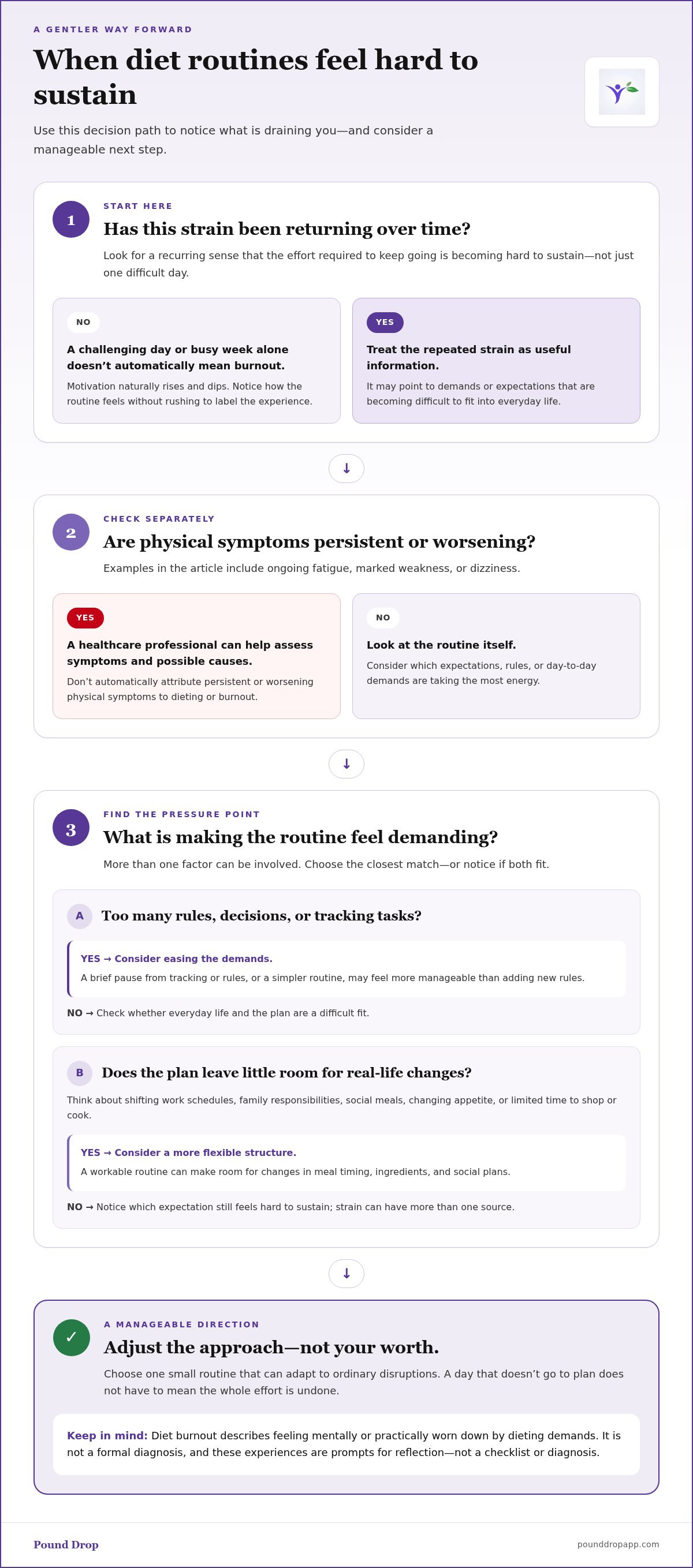
Diet burnout is feeling mentally or practically worn down by the demands of dieting, especially when that strain keeps returning over time. It isn’t a formal diagnosis, and it won’t look the same for everyone. A challenging day can happen without meaning you’re burned out. The difference may be a recurring sense that the effort required to keep going is becoming hard to sustain. General understanding burnout can offer context, but it can’t diagnose what you’re experiencing.
For a useful perspective on nutrition and burnout, watch this video:
What can diet burnout feel like?
It might show up as dread when planning meals, frustration at making food decisions all day, or difficulty maintaining routines that leave little room for change. You might find yourself thinking about the plan often, feeling discouraged when a day doesn’t go to script, or wanting a break from tracking and rules. These are possible experiences, not a checklist or a diagnosis.
Notice whether the strain keeps returning. Motivation naturally rises and dips, and one busy week or unplanned meal doesn’t automatically mean burnout. But if the same demands repeatedly feel overwhelming, or the routine is increasingly difficult to fit into ordinary life, that pattern can be useful information. You don’t need to label yourself to take it seriously.
Why another stricter plan may not feel like the answer
When a routine already feels demanding, adding rules can turn ordinary choices into tests: What should I eat? Does this fit the plan? Have I already gone off track? The more decisions a plan requires, the more mental space it may take up. That can be especially tiring when your schedule, food preferences, or responsibilities are unpredictable.
All-or-nothing expectations add another layer of pressure. If a late meeting changes dinner or a weekend doesn’t follow your usual routine, it may feel as though the whole effort has been undone. Often, a plan’s lack of flexibility, not a personal shortcoming, makes it hard to resume. Look instead for small adjustments that fit the life you have. These practical weight loss tips offer examples of manageable changes without making a perfect routine the goal.
Why dieting can become draining, even when you want to make progress
Wanting to make progress and feeling tired of the process can both be true. Dieting may become draining for different reasons: a routine involves too many decisions, expectations feel hard to meet, or daily life leaves little room to follow the plan. These pressures can overlap, but no single explanation applies to everyone. Looking closely at what’s demanding can help you decide what might need to change.
The pressure of rules, tracking, and all-or-nothing expectations
Some approaches ask you to make frequent choices about meals, portions, timing, or whether a food fits a set of rules. Tracking can become another task to remember, especially on days already full of responsibilities. Each choice may seem small, but repeated effort can feel tiring when there’s little flexibility or when you feel you need to get every decision right.
Perfection-based expectations can make an ordinary disruption feel much bigger than it is. You planned to prepare dinner, but work ran late. A meal didn’t match the plan, so it feels as though the day has been spoiled. That interpretation can make it harder to return to a routine that could simply be adjusted. Stronger U Nutrition discusses common experiences involved in recognizing diet burnout, but signs are prompts for reflection, not a diagnosis. Burnout may be a signal that an approach needs adjusting, not proof that you’ve personally failed.
When life and a diet plan do not fit together
A routine can feel manageable when the week is predictable and much harder when it isn’t. A shift changes your meal break. A friend suggests eating out. Family responsibilities take the time you expected to spend shopping or cooking. If a plan offers only one “right” way to handle these moments, following it may require constant workarounds.
That friction doesn’t mean you weren’t committed enough. It may mean the plan leaves too little room for your actual circumstances. A more workable routine can make space for variation: meal timing can shift, ingredients can change, and a social meal can fit without becoming a reason to abandon your intentions. If food decisions have also begun to feel tense or loaded, rebuilding your relationship with food can offer a gentler perspective.
Emotional strain and physical symptoms aren’t interchangeable. Feeling frustrated or overwhelmed by food rules may point to a routine worth reconsidering. But ongoing fatigue, marked weakness, dizziness, or other persistent or worsening symptoms shouldn’t automatically be attributed to dieting or burnout. A healthcare professional can help assess physical symptoms and possible causes. Addressing those separately can be part of overcoming diet burnout with care, rather than asking a new set of food rules to solve everything.
If some structure feels supportive rather than restrictive, self-guided habit-building resources can offer a steadier framework for everyday choices.
A pause, a reset, or a new approach: what can help with diet burnout?
There isn’t one right response to feeling worn down. You might step back from some demands for a while, simplify your current routine, or replace a rigid plan with flexible structure. The useful question isn’t, “Which option should everyone choose?” It’s, “What feels manageable and supportive for me right now?” These are personal choices, not clinical treatments or guarantees of a particular result.
A pause doesn’t have to mean abandoning every habit or deciding what comes next today. It could mean taking a break from tracking or loosening expectations while you notice how the change feels. Simplifying means keeping the parts of your routine that help and reducing steps that feel burdensome. A new approach may make sense if the current plan repeatedly clashes with your life.
| Option | May feel appropriate when… | A gentle first step |
|---|---|---|
| Take a pause | The effort or pressure feels too intense to assess clearly. | Step back from a demanding feature, such as frequent tracking, and notice what you need. |
| Simplify | Some habits help, but the full routine feels like too much. | Keep one supportive habit and reduce unnecessary decisions around it. |
| Choose flexible structure | The plan’s rules leave little room for your schedule or preferences. | Set a few adaptable intentions instead of expecting every day to look the same. |
How to decide whether to pause or adjust
Start by naming the parts that take the most energy. Is it recording every choice, planning meals far ahead, or feeling that one change ruins the whole day? Then ask whether stepping back from that demand feels more helpful, or whether a smaller adjustment could bring enough relief. You don’t need to settle the long-term plan immediately. A pause isn’t proof of failure, and it doesn’t predict what will happen next.
As you consider overcoming diet burnout, look for a next step that feels possible on an ordinary, imperfect day. If you simplify, make the change specific: fewer decisions, more flexibility, or one routine that fits your schedule. If even that feels like too much, allow yourself time to reassess rather than turning the pause into another rule to follow perfectly.
When extra support may be important
Self-reflection can help you understand what feels demanding, but it can’t identify every cause of physical or emotional distress. Talk with a qualified healthcare professional about persistent fatigue, symptoms that concern you, or changes that interfere with daily life. If worries about eating or weight feel distressing or disruptive, reaching out for appropriate professional support can also help. An app or self-guided resource may offer structure, but it isn’t a substitute for clinical care.
You’re allowed to choose the option that meets you where you are, then adjust as you learn more about what works. The aim isn’t to make a perfect decision. It’s to reduce pressure enough to find a steadier next step.
How to recover from diet burnout with small, realistic steps
After noticing what feels draining, resist the urge to replace it with a long list of new rules. A more useful reset is small enough to try during an ordinary week and flexible enough to change if it adds pressure. These steps aren’t a test. They’re a way to learn what supports you and what may need adjusting.
A gentle reset: notice, simplify, and choose one next step
Move through the sequence at your own pace. You can pause at any step rather than pushing ahead before you’re ready.
- Notice the pressure. Name one expectation that feels especially demanding. It might be tracking every choice, planning far ahead, or expecting your routine to stay unchanged when your schedule shifts. Naming it can help you decide what deserves attention.
- Simplify that expectation. Ask what a less demanding version could look like. Could you reduce the detail you record, leave more room for spontaneous plans, or stop treating a schedule change as a reason to abandon the day? Choose an adjustment that eases pressure rather than adding another task.
- Pick one routine to experiment with. Make it specific and manageable, such as setting aside a moment to think about the day ahead or keeping a familiar habit that already feels supportive. Treat it as an experiment, not a rule you must follow perfectly.
- Notice how it feels before adding more. After trying the routine, ask whether it made daily life feel steadier, more complicated, or about the same. You don’t need a daily scorecard. An occasional, honest check-in can help you decide whether to keep, adjust, or let go of the experiment.
Keep the experiment small enough to work on a busy day. If it requires ideal timing or extra energy you rarely have, that’s useful information. Adjust the routine to fit your circumstances rather than deciding you need more discipline. This is a practical part of overcoming diet burnout: finding a next step that supports you without recreating the strain you’re trying to ease.
Make room for imperfect, real-life weeks
Plans meet real life: a schedule changes, an errand takes longer than expected, or you simply don’t have the capacity you anticipated. When that happens, return to your chosen routine at the next natural opportunity. There’s no need to compensate, double up, or wait for a fresh start. A disruption is part of the picture, not a verdict on your effort.
Use what happened as information. Perhaps the timing didn’t work, the routine had too many steps, or the week called for a gentler version. Make one adjustment and see whether it feels more workable. This applies to activity expectations, too. If movement has become another source of pressure, weight loss without extreme exercise offers a perspective on keeping expectations realistic without prescribing a target.
Some people find a little structure reassuring. The Pound Drop App and The Method offer a self-guided approach to habit-building. Let your needs guide the pace. One workable adjustment is enough to begin.
Build a steadier path forward with support that feels manageable
Progress doesn’t have to mean a perfect streak or a dramatic transformation. A steadier path is made of routines that can flex as your schedule, preferences, and needs change. Some weeks may feel easier than others. The goal isn’t to keep every habit unchanged, but to find a way to return to what matters without turning a disruption into a reason to start over.
What supportive structure can look like over time
Helpful structure gives you a place to begin without deciding every detail for you. You might have a few regular habits that offer direction, while leaving room to adjust when the day unfolds differently than expected. A routine can be simple and still meaningful. It doesn’t need to be rigid to provide support.
Check in with yourself as you go. Does a tool or routine make choices feel clearer, or does it create another standard to meet? Does it still fit when your schedule changes? If it adds pressure, you can simplify it, change how you use it, or set it aside. Let your experience guide the adjustment rather than assuming that every tool suits everyone.
A sustainable approach can also reflect the choices you feel comfortable making over time, without depending on a quick fix. For a broader look at that perspective, weight loss without supplements explores a longer-term approach centered on habits rather than supplements.
Explore a self-guided approach at your own pace
If structure feels useful, Pound Drop offers a self-guided system built around the Pound Drop App and The Method, with The Book and The Journal as physical resources. Together, they provide a structured approach to habit formation that you can explore at your own pace. They aren’t a promise of a particular outcome, and they don’t need to replace the small steps you’ve already found helpful.
As you consider overcoming diet burnout, keep your next step modest: continue with one routine that feels supportive, adjust it when life changes, and notice whether it remains manageable. If you’d like to learn about Pound Drop’s self-guided approach, you can explore it here. There’s no need to rush. Choose what feels like a sensible fit for you right now.
Choose a next step that can grow with you
You don’t need to have your whole routine figured out before you begin. Choose one small action that feels supportive now, then let your needs guide what comes next. If a habit becomes burdensome, adjust it. If life changes, your approach can change too. Steady progress is built by returning to what feels workable, not by proving you can follow a perfect plan.
That’s the heart of overcoming diet burnout: making space for a way forward that supports your life instead of demanding that life fit a rigid set of rules. A little structure can help when it offers direction while leaving room for your choices and circumstances.
Pound Drop brings together its App and The Method with physical resources, The Book and The Journal, in a self-guided approach to habit formation. It’s designed for people who want to work at their own pace, without one-on-one coaching. If that kind of structure feels like a useful next step, Explore Pound Drop’s self-guided approach.
Go gently. You can begin with one manageable choice and build from there.
Frequently Asked Questions
What are the signs of diet burnout?
Possible signs include feeling tense before food-related decisions, avoiding activities that involve eating, or finding that a routine takes more attention than you can comfortably give it. You might also notice that thoughts about following the plan keep intruding on other parts of your day. These experiences vary and don’t diagnose burnout. Consider whether the demands are affecting your mood, time, or ability to take part in everyday activities.
How do you overcome diet burnout without starting another diet?
Begin by choosing one source of pressure to reduce rather than replacing your current plan with a new one. For instance, if advance planning feels burdensome, consider making only the decisions that genuinely help your week run smoothly. Give yourself time to see how that change feels before adding anything else. Overcoming diet burnout can involve rebuilding trust in your own needs, not finding a stricter set of instructions.
Should I take a break from dieting if I feel burned out?
A break may be a reasonable choice if continuing in the same way feels overwhelming, but there’s no single rule for what a break should involve. You might pause a demanding practice while keeping everyday routines that still feel helpful. Consider what you want space from and what would feel supportive instead. If you’re managing a health condition or following care advice, discuss changes to that care with a qualified healthcare professional.
How long does it take to recover from diet burnout?
There isn’t a set recovery timeline. How you feel may depend on what has been draining, what else is happening in your life, and whether your routines become more manageable. Rather than setting a deadline, notice whether food-related decisions are taking up less attention or whether you feel more able to adapt when plans change. If distress or fatigue persists, consider discussing it with a qualified healthcare professional.
Can you make progress without following strict food rules?
Yes. Progress can include building everyday habits that support your well-being without assigning foods a pass-or-fail label. For example, you could focus on having a reliable way to plan for busy days while allowing the details to vary. You can also review whether your routines fit your priorities and circumstances. A flexible approach may look different from one person to another, and it doesn’t require perfect consistency.
What should I do if dieting makes me feel exhausted?
First, consider whether you mean mentally worn down, physically fatigued, or both. You can reduce or pause demands that feel unnecessarily stressful, but persistent or concerning physical fatigue deserves attention beyond changes to a diet routine. Speak with a qualified healthcare professional, especially if symptoms are worsening or interfering with daily activities. They can help assess possible causes rather than assuming dieting is the only explanation.
Is diet burnout the same as losing motivation?
Not necessarily. Motivation can dip temporarily, such as during a busy week, then return when circumstances change. Diet burnout generally describes feeling worn down by the ongoing demands of an approach, even when you still care about your goals. Ask whether you’re simply less interested for now, or whether the routine repeatedly feels difficult to carry alongside daily life. That distinction can help you choose whether to rest, adjust, or seek support.


