


Article by
Jesper Sorensen
Jesper Sorensen is a holistic health coach and founder of Pound Drop, a different approach to weight loss built around healthier habits. He has written ebooks and health articles for established publishers and has spent years studying nutrition, healthy eating and sustainable weight management.
What if feeling more at ease with food didn’t mean finding a better set of rules? If eating brings guilt or anxiety, or you feel caught between restricting and eating past comfort, it can be hard to know what to trust. Learning how to rebuild relationship with food doesn’t require getting every choice right. It can start with noticing what’s happening without judging yourself for it.
You may already know that strict rules haven’t made eating feel simple. That doesn’t mean you’ve failed; it may mean a gentler approach is worth practising. This guide looks at what a strained relationship with food can involve and offers practical ways to respond with more curiosity and less blame.
You’ll find ideas for noticing patterns, tuning in to hunger, fullness, and preferences, and making room for flexibility in everyday life. You’ll also learn when extra support may be helpful. There’s no need to change everything at once. Start with one compassionate step and adapt it to what you need.
Key Takeaways
- Recognize signs that eating feels stressful and consider what a more flexible, needs-based relationship with food could look like for you.
- Explore how restriction, guilt, and attempts to compensate may affect your thoughts about food, without assuming everyone’s experience is the same.
- Learn how to rebuild relationship with food through small experiments in awareness, adapting or pausing each step to suit your needs.
- Practise compassionate ways to respond to food anxiety, setbacks, and pressure from other people.
- Choose one manageable practice, consider what support may help, and adjust your approach as you notice how it feels.
What Does It Mean to Rebuild Your Relationship With Food?
If food decisions take up a lot of mental space, or eating leaves you uneasy, that experience deserves care rather than criticism. You don’t need to prove that your struggle is serious enough to matter. Rebuilding your relationship with food means exploring what feels difficult and finding ways of eating that are more flexible, less driven by fear, and responsive to your body, preferences, culture, health needs, and circumstances.
A supportive relationship doesn’t require abandoning all structure. Regular meals, familiar routines, and health-related guidance can be helpful. The question is whether a routine supports your wellbeing while leaving room for hunger, satisfaction, changing plans, and enjoyment. There’s no single ideal way to eat, and progress doesn’t mean following intuitive eating perfectly. The intuitive eating principles offer one framework for considering internal cues, food flexibility, and self-kindness. They aren’t a test you have to pass.
Food-related distress describes worry, guilt, or difficulty around eating; it isn’t, by itself, a clinical eating-disorder diagnosis. Only a qualified health professional can assess whether someone meets diagnostic criteria. You don’t have to diagnose yourself to take distress seriously or seek support.
Signs Food Has Become a Source of Stress
Stress can show up in different ways. You might replay what you ate, feel you need to compensate after eating, avoid meals with other people, or follow rules that make everyday choices tense. Worry may also make it harder to notice hunger or fullness. These experiences are reasons to get curious, not proof that something is wrong with you.
One behavior alone can’t diagnose an eating disorder. Context matters, as do the pattern, intensity, and effect on your physical and emotional wellbeing. Instead of sorting foods into moral categories such as “good,” “bad,” “clean,” or “cheating,” notice what a rule is doing in your life. Does it help you feel cared for, or does it increase fear and make ordinary situations harder? If eating-related distress is persistent, affects daily life, or is connected to health concerns, consider discussing it with a qualified health professional.
What Progress Can Look Like in Real Life
Progress may be quiet. You might make a food choice without reviewing it afterward, adjust a routine when your day changes, or respond to a difficult meal with curiosity instead of self-criticism. You may also become more able to notice a preference, even if hunger and fullness cues still feel unclear. These are possibilities, not requirements or a checklist.
Comfort and confidence can develop gradually, and familiar worries may return along the way. That doesn’t erase what you’ve learned. If you’re wondering how to rebuild relationship with food, define what “more supportive” could mean in your own life rather than aiming for perfect eating. Your next step can be small, flexible, and shaped by what you need now.
Why Food Rules and Guilt Can Make Eating Feel Harder
Food rules often begin as attempts to feel healthier, more in control, or accepted. They can come from family messages, cultural expectations, past diets, or health advice. A rule intended to simplify eating can become difficult when it leaves little room for real life. For some people, treating a food as forbidden makes thoughts about it more persistent. If eating it then brings guilt, they may try to compensate by skipping a meal or tightening the rules again. That cycle can make food take up more attention, though it doesn’t happen to everyone.
A food struggle isn’t proof of weak willpower; it may reflect rules, emotions, circumstances, or needs that deserve understanding rather than blame. Eating in response to an emotion isn’t a moral failure, either. Food can offer comfort, connection, pleasure, or a pause in a difficult moment. Emotions can influence eating, but they don’t define a person or explain every choice. Hunger, routine, access to food, stress, and preference can all play a part, and their influence varies from person to person.
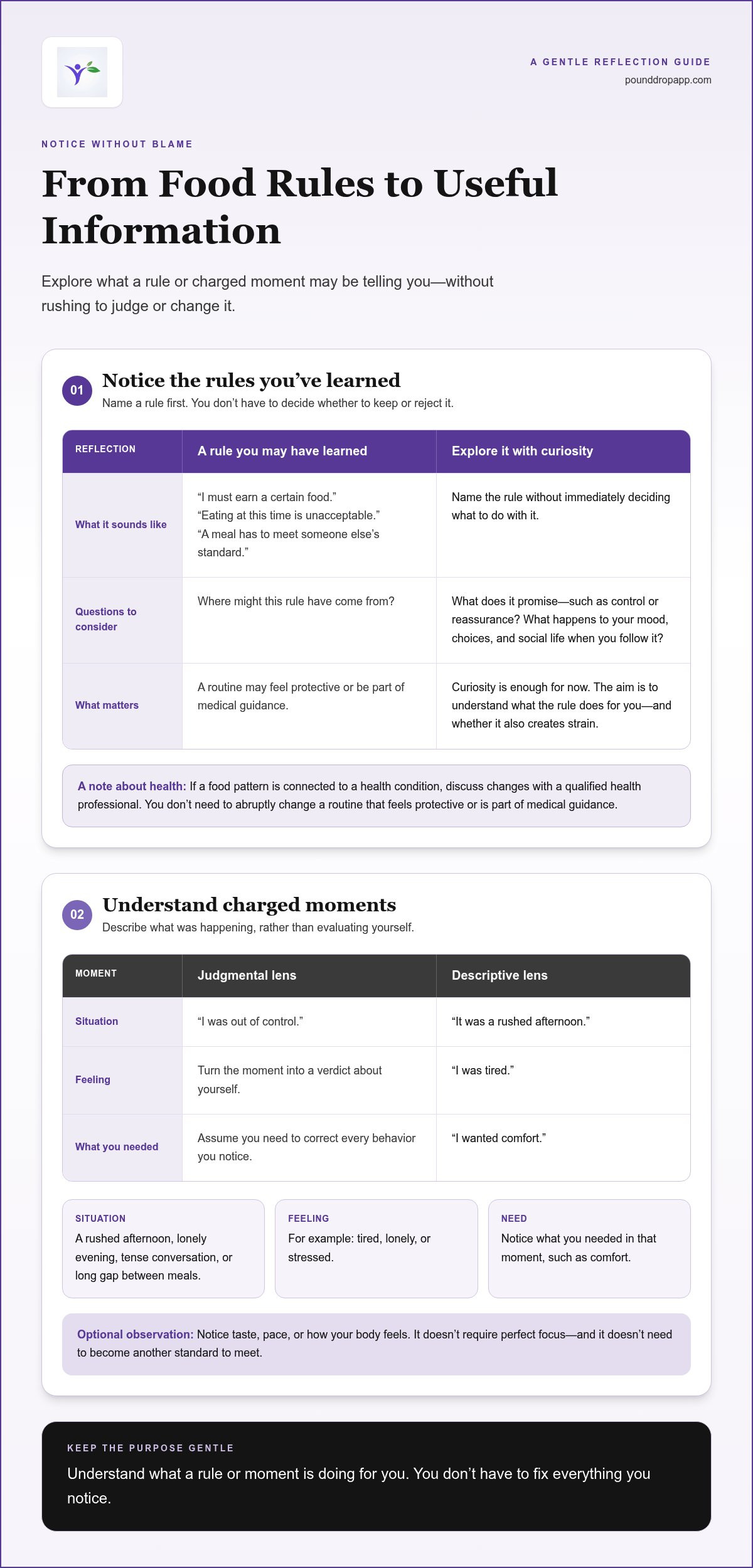
Notice the Rules You Have Learned About Food
Try naming a rule without immediately deciding whether to keep or reject it. Perhaps you’ve learned that you must earn a certain food, that eating at a particular time is unacceptable, or that a meal has to meet someone else’s standard. Ask yourself: Where might this rule have come from? What does it promise, such as control or reassurance? What happens to your mood, choices, and social life when you follow it?
Curiosity is enough for now. You don’t need to abruptly change a routine that feels protective or is part of medical guidance. If a food pattern is connected to a health condition, discuss changes with a qualified health professional. The goal is to understand what a rule does for you and whether it also creates strain, not to remove every structure from eating.
Understand Triggers Without Blaming Yourself
Notice what tends to be happening when eating feels more charged. Is it a rushed afternoon, a lonely evening, a tense conversation, or a long gap between meals? You could jot down the situation, feeling, and what you needed in that moment. Keep the notes descriptive, not evaluative. “I was tired and wanted comfort” offers more useful information than “I was out of control.” You don’t have to correct every behavior you notice.
Paying attention can mean noticing taste, pace, or how your body feels, without expecting perfect focus. Harvard T.H. Chan School of Public Health describes the benefits of mindful eating as a way to bring awareness to the experience. Treat that kind of observation as an option, not another standard to meet.
If gentle reflection feels useful, the Pound Drop App is an optional self-guided resource for noticing routines. Treat any notes as information, not a scorecard, and set them aside if tracking adds pressure.
Rebuild Your Relationship With Food: Gentle Steps
There’s no single sequence everyone needs to follow. Treat these ideas as small experiments in noticing, not instructions to complete or proof that you’re doing eating “right.” You can adapt a step, return to it later, or pause if it brings more pressure than support. The aim is to learn what feels useful in your circumstances.
Start With Curiosity, Not a Food Scorecard
After eating, you might briefly notice the situation, your feelings, and whether the experience felt satisfying. There’s no need to record every meal or reach a conclusion. If writing helps, note observations such as “I ate while working” or “I enjoyed the taste.” A weight loss tracking journal can be adapted for reflection, with notes about routines and experience rather than calories or weight.
Try this light-touch sequence. The order is flexible, and you can use just one part:
- Pause, if it feels comfortable. Before or during a meal, notice what’s present: hunger, appetite, emotion, routine, or simply an opportunity to eat. You don’t have to identify a perfect answer.
- Check in with preference. Ask what sounds appealing or satisfying right now. Practical options, availability, culture, and health needs all count. There may be more than one workable choice.
- Notice your experience. As you eat, you could observe taste, pace, or changes in comfort. You can also eat while distracted or busy; attention doesn’t have to be constant to be useful.
- Reflect without grading. Later, consider what you learned. Maybe a routine helped, a setting felt stressful, or nothing stood out. No result needs to be corrected.
Practise Flexibility in Small, Manageable Ways
Flexibility doesn’t mean ignoring your needs or making a dramatic change. It might mean noticing that you prefer a different option than usual, allowing a plan to shift when the day does, or choosing a familiar food without explaining or judging the choice. You don’t need complete certainty. Curiosity about a preference is a useful beginning.
Hunger and fullness can be difficult to read, and cues aren’t identical for everyone. Stress, schedules, health conditions, medication, and past experiences may affect what you notice. Unclear signals don’t mean you’ve failed. You can also take practical needs and established medical guidance into account. If you’re unsure how a change might affect your health, seek advice from a qualified health professional.
A gentle practice is an invitation, not another standard to pass. If you’re exploring how to rebuild relationship with food, choose one small experiment that feels manageable. Keep what helps, change what doesn’t, and give yourself permission to pause. The purpose is greater understanding, not perfect intuition or a new set of rules.
How to Handle Setbacks, Social Pressure, and Food Anxiety
Some days, old worries may return. A difficult meal or anxious moment doesn’t erase what you’ve learned, and it doesn’t mean you need to start over. Persistent distress or changes affecting your health deserve attention, too. You can respond with kindness while taking your concerns seriously.
Respond to a Difficult Eating Moment Without Punishment
If shame or anxiety rises after eating, try pausing before deciding what to do next. Name the feeling in plain language, such as “I feel worried” or “I’m uncomfortable.” Then ask what might help you feel supported in this moment. That could be returning to your usual routine, taking a few calming breaths, or telling someone you trust what’s going on.
Try not to respond by skipping a meal, exercising to make up for eating, or restarting a restrictive plan. Those responses can add pressure instead of addressing what you’re feeling. You don’t need to solve the whole pattern right now. If the distress feels hard to carry alone, reach out to a trusted friend, family member, or health professional and say, “I’m having a tough time with food and could use some support.”
Make Room for Boundaries Around Social Pressure
Comments about portions, food choices, or body size can be uncomfortable, even if someone means well. You’re allowed to keep your response brief and change the subject. For example:
- “I’d rather not discuss what I’m eating.”
- “Please don’t comment on my food or body.”
- “I’m choosing what works for me today.”
- “Let’s talk about something else.”
You don’t have to persuade someone to agree with your boundary. If a meal or gathering feels overwhelming, consider asking a supportive person to stay nearby or planning a way to take a break. Choose what feels safe and realistic for you.
Know When to Seek Eating-Disorder-Informed Support
Self-guided reflection may not be enough if food-related distress is persistent or interfering with daily life. Secrecy around eating, significant restriction, bingeing, purging, or other health concerns are reasons to seek an assessment from a qualified healthcare professional with relevant eating-disorder experience. You don’t need to know exactly what’s happening, have a diagnosis, or wait until things feel severe before asking for help.
If you’re experiencing immediate danger or urgent medical concerns, seek local emergency support now. A self-guided tool may help you reflect on habits, but it isn’t a substitute for clinical assessment or care. If a gentle, structured reflection tool feels useful alongside other support, the Pound Drop App is an optional way to notice routines without treating your notes as a scorecard.
Build a Supportive Food Relationship That Fits Your Life
You don’t need a strict program to keep learning about yourself. Choose one small practice that fits the life you have now, and leave room to adjust it as your needs change. Think of your plan as a working note, not a promise to follow a particular routine perfectly.
Create a Personal Plan That Leaves Room for Change
Choose one low-pressure practice, such as noticing what makes a meal feel more comfortable or pausing to name a food preference. Decide when you’ll check in with yourself about how it feels. That might be after trying it a few times or at a moment that naturally fits your routine. You’re looking for information, not a pass-or-fail result.
At your check-in, ask questions that focus on your experience:
- Did this help me notice something useful?
- Did it feel manageable in my actual day?
- Did it increase worry or self-criticism?
- Would I like to continue, adjust it, or try something else?
If a practice increases anxiety or feels unsustainable, changing or stopping it is a thoughtful response. You might choose a simpler reflection, take a break from tracking, or look for professional support. Progress can be as modest as noticing a preference, allowing a routine to flex, or reaching out for help. It doesn’t have to involve weight or a particular way of eating.
Use Self-Guided Resources Without Turning Them Into Rules
Some people like having a place to reflect on routines; others prefer to keep things informal. Either is valid. Pound Drop’s self-guided weight-management resources include The Method, The Book, The Journal, and the Pound Drop App. These tools can support habit reflection, but they aren’t clinical care or a requirement for improving your relationship with food.
If you write things down, focus on what you noticed and what might support you, rather than grading your choices. You could note that a rushed schedule affected your meal, or that eating with a friend felt enjoyable. If recording details starts to feel like monitoring or raises anxiety, set it aside. No tool is worth adding pressure.
For broader context on sustainable approaches that don’t rely on supplements, explore this guide to weight loss without supplements. It’s one perspective, not a universal prescription; your health needs and circumstances matter. Learning how to rebuild relationship with food can include deciding which advice or tools feel supportive and which don’t.
If structured reflection suits you, explore Pound Drop’s self-guided tools as an optional way to notice habits. Choose a practice, review how it feels, and revise it when life or your needs change.
Let Your Next Step Be Small and Yours
You don’t have to map out the whole journey today. Choose one gentle question to carry with you: “What would feel supportive right now?” The answer may change from one day to the next. That’s not inconsistency; it’s part of making room for your real life.
If you’re wondering how to rebuild relationship with food, make your next step an act of attention rather than another promise to get everything right. Notice what helps you feel more at ease, and give yourself permission to adjust when your needs shift. If the process feels difficult to manage alone, seeking qualified support is a meaningful step, not a setback.
For a little structure as you reflect on your habits, explore Pound Drop’s self-guided tools. Choose the Pound Drop App, The Method, The Book, or The Journal as a resource for self-guided habit reflection. Move at your own pace, keep what feels useful, and leave the rest.
Frequently Asked Questions
Can you rebuild your relationship with food without dieting?
Yes, you can work toward a more comfortable relationship with food without following a weight-loss diet. Start by noticing whether advice you encounter supports your wellbeing or leaves you anxious and preoccupied. Some people still use routines or health guidance that matter to them; the aim isn’t to replace every structure, but to make choices with less fear and more room for individual needs. How to rebuild relationship with food is a personal question, and the process can be gradual.
Is it normal to feel guilty after eating?
Some people experience food guilt, but you don’t have to dismiss it or assume it means you did something wrong. Notice what the guilt might be connected to: a comment, a belief about what you “should” eat, or worry about your body. If guilt is frequent, intense, or shaping your daily choices, consider talking it through with a qualified health professional. You deserve support without having to justify your feelings.
How long does it take to improve your relationship with food?
There’s no set timeline. Your experience may depend on factors such as past dieting, current stress, health needs, and the support available to you. Rather than judging progress by a deadline, look for small changes that matter to you, such as feeling less preoccupied during a meal or asking for support sooner. If a practice isn’t helping, you can adjust it. Progress doesn’t have to be constant to be meaningful.
Can intuitive eating help if I struggle to notice hunger?
It may offer ideas to explore, but you don’t need clear hunger or fullness signals to begin learning about your needs. Cues can be hard to recognize for many reasons, including stress, health conditions, medication, or disrupted routines. You can also consider practical factors, such as when food is available or what feels manageable. If you have medical concerns or uncertainty about eating safely, discuss your situation with a qualified healthcare professional.
What should I do if food anxiety is affecting my health?
Contact a qualified healthcare professional and explain how anxiety is affecting your eating, daily activities, or physical wellbeing. A clinician can assess your needs and discuss appropriate support; you don’t have to figure out a diagnosis on your own. If you’re experiencing immediate danger or urgent medical concerns, seek local emergency support. Self-guided reflection may help you organize what you want to share, but it shouldn’t replace medical assessment or care.
How can I support someone who feels anxious about food?
Listen without commenting on their body, portion, or food choices. You could ask, “Would you like company, a distraction, or help finding support?” Respect their answer, and avoid pressuring them to explain more than they want to. If you’re worried about their health, gently share what you’ve noticed and encourage them to speak with a qualified healthcare professional. Offer practical help, such as accompanying them to an appointment, if they welcome it.
Do I need a diagnosis before asking for help with eating concerns?
No. You can seek help because eating feels distressing, confusing, or difficult to manage, even if you don’t know why. A qualified healthcare professional can listen, assess your concerns, and help identify possible next steps. You might start by describing one concrete example, such as avoiding a shared meal or worrying afterward. Asking early is reasonable; you don’t have to wait for things to become severe.


