


Article by
Jesper Sorensen
Jesper Sorensen is a holistic health coach and founder of Pound Drop, a different approach to weight loss built around healthier habits. He has written ebooks and health articles for established publishers and has spent years studying nutrition, healthy eating and sustainable weight management.
What if weight loss didn’t require another product to buy? If supplement claims have left you wondering what’s truly necessary, you’re not alone. Weight loss without supplements can start with everyday habits, and progress doesn’t depend on following strict rules perfectly.
It’s understandable to want a simple answer, especially if past attempts felt complicated or hard to maintain. Supplements may be marketed as shortcuts, but they aren’t a substitute for repeatable routines. Their claims deserve a thoughtful look before you spend money or change your habits.
This guide explains what supplements can and can’t do, which claims to question, and how to build a realistic routine without relying on products. You’ll find practical ways to shape eating patterns, add movement, and reflect on habits. A self-guided structure can help you practice consistency without turning the process into another set of rigid rules. Start small, adjust as you go, and remember that sustainable progress doesn’t require perfection.
Key Takeaways
- Weight loss without supplements can center on everyday habits rather than products marketed as shortcuts.
- Notice how eating patterns, movement, sleep, and stress shape your routines and choices.
- Question bold supplement claims, and distinguish research on an ingredient from evidence about a finished product.
- Build a flexible first-week routine by choosing one eating habit, one movement opportunity, and one way to reflect.
- Use structure to support consistency while keeping expectations realistic and your judgment part of the process.
Can You Lose Weight Without Supplements? What They Can and Cannot Do
Yes. Many people can pursue weight loss without weight-loss supplements. A product isn’t a prerequisite for building habits that support weight management, and choosing not to take one doesn’t mean you’re missing an essential step. Health, daily routines, and personal circumstances all matter, so outcomes vary. No approach can promise the same result for everyone.
It helps to separate products from practices. Weight-loss supplements are products marketed to influence appetite, metabolism, fat absorption, or body weight; they aren’t the everyday behaviors that support weight management. Those behaviors may include eating patterns, movement, and sleep. For a broad overview, weight loss can refer to intentional changes as well as weight changes that happen for other reasons.
This video discusses a proposed approach to lasting weight loss. Assess its claims thoughtfully, and don’t treat them as a substitute for individualized medical advice.
What counts as a weight-loss supplement?
The term can cover capsules, powders, drinks, or other products promoted for weight management. Products may claim to affect appetite, energy use, or how the body absorbs fat. That marketing purpose doesn’t establish that a product works or is suitable for you. Ingredients, research, and possible risks differ, so don’t treat all supplements as interchangeable.
Supplements are also different from prescribed medicines, which are used under a clinician’s direction, and from nutrients recommended to address a diagnosed deficiency. A supplement shouldn’t replace prescribed treatment or clinical care. In the United States, the FDA doesn’t approve dietary supplements for safety and effectiveness before they’re marketed. That’s one reason to look beyond a confident label or dramatic promise.
Are supplements required for weight loss?
No. Supplements aren’t a universal requirement for pursuing weight loss. A product might be marketed as a shortcut, but it can’t guarantee lasting change or take the place of routines that fit your life. A self-guided structure, such as a journal for noticing patterns and reflecting on habits, may help you practice consistency without making a product the center of the process.
Start with what feels workable, not an all-or-nothing plan. Eating patterns, activity, sleep, stress, health conditions, and medications can all influence what feels realistic and appropriate. If you have a health concern, take medication, are considering a supplement, or plan a major dietary change, discuss it with a qualified clinician. They can help you consider your individual context. Progress doesn’t require perfection, and it shouldn’t come at the expense of your health.
What Supports Weight Loss Without Supplements? The Everyday Factors
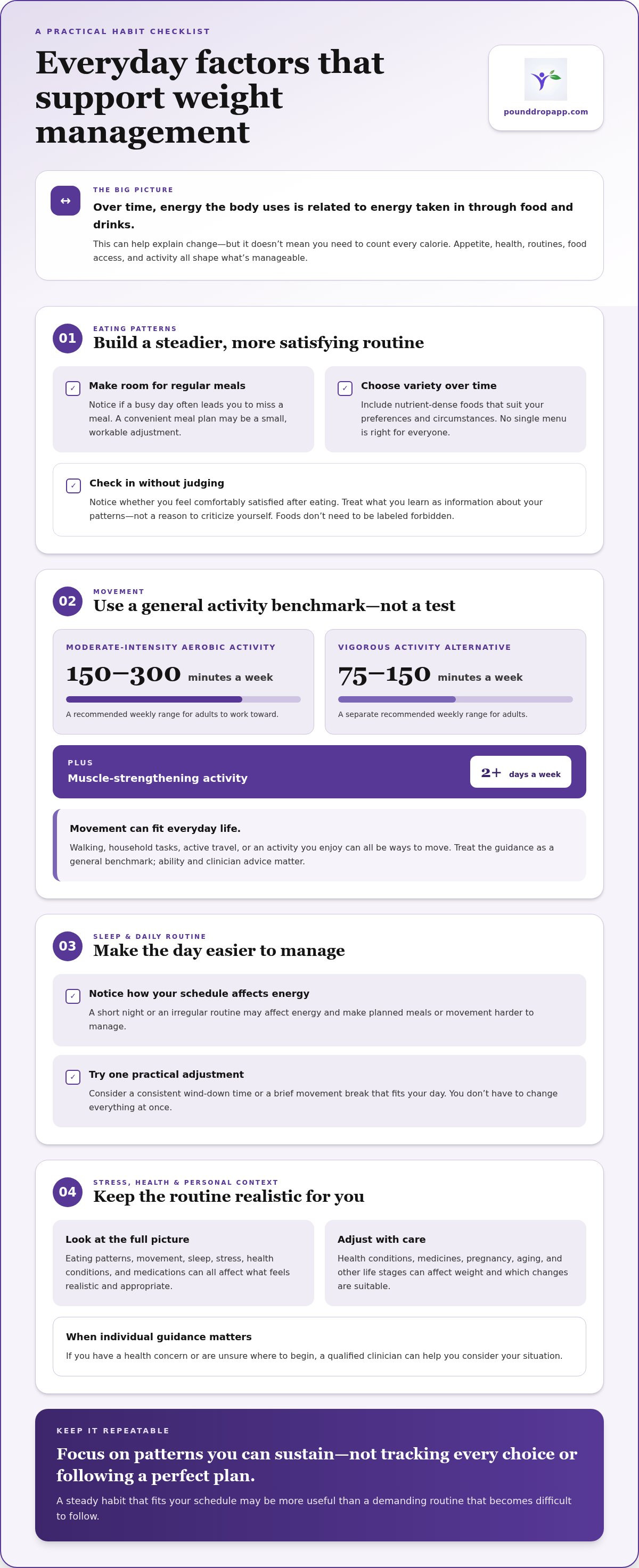
Weight management is influenced by energy balance: over time, the energy the body uses is related to the energy it takes in through food and drinks. That idea can help explain change, but it doesn’t mean you need to count every calorie. Appetite, health, routines, food access, and activity all shape what’s manageable. Focus on patterns you can repeat rather than tracking every choice.
Eating patterns, movement, sleep, and stress can work together to shape appetite, energy, daily choices, and the routines that support weight management. There’s no single perfect combination. A steady habit that fits your schedule may be more useful than a demanding plan that quickly becomes difficult to follow. Mayo Clinic’s Weight loss strategies for success also emphasizes practical, sustainable changes.
How eating patterns can support steady progress
Regular, satisfying meals can make a day feel more settled. Aim for variety over time, including nutrient-dense foods that suit your preferences and circumstances. No particular menu is right for everyone, and foods don’t need to be labeled forbidden to make room for supportive choices.
Notice what your usual routine looks like. Do you often miss a meal because the day gets busy? Do you feel comfortably satisfied after eating? Those observations can point to small adjustments, such as planning a convenient meal or pausing to check in with hunger and fullness. Treat this as learning your patterns, not judging them.
Why movement, sleep, and routine matter
Movement can support health without serving as punishment for eating. Walking, household tasks, active travel, or an activity you enjoy can all be ways to move. U.S. guidance recommends adults work toward 150-300 minutes of moderate-intensity aerobic activity a week, or 75-150 minutes of vigorous activity, plus muscle-strengthening activity on two or more days. Treat this as a general benchmark, not a test; ability and clinician advice matter.
Sleep and daily schedules matter, too. A short night or irregular routine may affect energy and make planned meals or movement harder to manage. Rather than changing everything, try one practical step, such as setting a consistent wind-down time or choosing a brief movement break that fits your day.
Health conditions, medicines, pregnancy, aging, and other life stages can affect weight and what changes are appropriate. If you have a health concern or are unsure where to begin, a qualified clinician can help you consider your situation. For structure as you practice habits, the Pound Drop App offers self-guided support. Start with one manageable choice, then build from there.
Weight-Loss Supplement Myths: What to Question Before Believing a Claim
A product marketed for weight loss isn’t automatically necessary, effective, or right for you. A claim about one ingredient doesn’t prove that a finished product leads to meaningful, lasting results. Research may examine an ingredient in a specific form, amount, or group of people. A product may differ, and its formula may combine several ingredients. That gap matters.
Marketing language alone can’t establish that a supplement is effective or safe for a particular person. This doesn’t mean every supplement is ineffective or unsafe. Evidence and potential risks vary. It means claims deserve a closer look before you spend money or change your routine.
Does “natural” mean a supplement is safe?
No. “Natural” describes how a product or ingredient is presented, not whether it’s safe, high quality, or suitable for you. A supplement may still affect your health or be a poor fit alongside your circumstances. If you take medication, are pregnant, have a health condition, or feel unsure, speak with a qualified clinician or pharmacist before using one. They can help consider your individual situation.
How to assess a weight-loss product claim
Pause when a claim promises effortless change, guaranteed outcomes, or dramatic results on a tight timeline. Those phrases don’t show what evidence supports the product. Look for clearly identified ingredients and research in people that relates to the specific product and the outcome being claimed. If the evidence only concerns one ingredient, it may not tell you whether the complete formula works as advertised.
- Check what’s actually in it. Are the ingredients clearly named, or does the label rely on vague descriptions?
- Look for relevant human evidence. Does the research examine the finished product, or only a similar ingredient under different conditions?
- Notice what’s missing. Are limitations, possible risks, and realistic expectations explained, or does the message focus only on benefits?
Be cautious with phrases such as “clinically proven” if the claim doesn’t make clear what was studied and what the evidence showed. A testimonial may describe one person’s experience, but it can’t tell you what another person will experience. A scientific-sounding explanation isn’t the same as proof of lasting results.
For weight loss without supplements, you don’t need to settle every debate about a product before taking a practical next step. You can focus on habits that fit your life rather than trying a product based on a bold promise. If you’re considering a supplement, bring the label and your questions to a clinician or pharmacist, especially if health or medication concerns apply. A careful pause is a useful choice, not a setback.
How to Start Losing Weight Without Supplements: A Realistic First-Week Plan
A first week doesn’t need a strict menu, an intense workout schedule, or a promise of quick results. The aim is to learn what fits your life and practice a few supportive actions. For weight loss without supplements, start with one eating routine, one movement opportunity, and one reflection habit. Keep each small enough to repeat on an ordinary, busy day.
Choose small habits that fit your current life
Before changing anything, notice how your days already work. Maybe lunch gets pushed aside during work, or you spend long stretches sitting. Pick one realistic adjustment and make it specific. For example, decide when you’ll pause for lunch, take a short walk after a regular activity, or jot down a brief end-of-day reflection. Adapt the plan when your schedule changes.
- Days 1-2: Notice your usual meal rhythm, opportunities to move, and what tends to disrupt your routine. No judgment required.
- Days 3-4: Choose one eating routine to practice, such as setting aside time for a meal you often rush or miss.
- Days 5-6: Add a movement opportunity that feels accessible, such as walking part of an errand or stretching during a break. Choose an activity that works for your ability and circumstances.
- Day 7: Reflect on what felt manageable and choose whether to continue, adjust, or simplify. You don’t have to add another habit yet.
This sequence is a flexible guide, not a test. If a day doesn’t go as planned, return to the habit at the next opportunity. A smaller version can help on unpredictable days: a brief walk instead of a longer one, or a simple note instead of a detailed review. Choose a starting step you can realistically practice.
Review patterns without turning tracking into pressure
Reflection can help you learn what supports your routine, but tracking should feel useful, not punishing. You might note whether you practiced your chosen habits, how your energy felt, or what made the day easier. There’s no need to record everything or judge a single day as success or failure. For ideas on choosing a reflection approach, see this weight loss tracking journal guide.
At the end of the week, ask practical questions: Was the habit clear? Did it fit my schedule? What got in the way, and what would make it easier next time? If recording food, activity, or weight causes distress, step back from tracking and consider seeking support from a qualified professional.
Adjust a goal if it repeatedly feels unworkable; making it smaller is a sensible way to keep learning. If you develop concerning symptoms, have a health condition, take medication, or aren’t sure whether a change is appropriate, speak with a qualified clinician before continuing. The Pound Drop App provides self-guided structure as you practice habits.
Build a Supplement-Free Weight-Loss Routine With Structure, Not Pressure
Sustainable weight management isn’t built on one perfect week. It grows from behaviors you can return to when plans change, energy dips, or life gets busy. A routine gives those behaviors a place in your day, while realistic expectations leave room to adjust. Progress can look different from one person to another, and no tool or method can promise a particular outcome.
For weight loss without supplements, a useful framework can turn a broad intention into small actions you can practice. That might mean choosing a routine for meals, finding movement that fits your abilities, and setting aside a moment to reflect. Structure isn’t a strict rulebook. It makes your next step easier to see.
Why a repeatable method can feel easier than starting over
Starting from scratch each Monday can make ordinary disruptions feel like failure. A simple method offers a gentler alternative: choose a habit, practice it, notice how it fits, then adapt if needed. If a busy day interrupts your plan, return to the next opportunity rather than waiting for a fresh start. This flexible practice keeps attention on what you can learn and repeat.
A framework should support your judgment, not replace it. A simple weight loss methodology can offer ideas for building habits while leaving room for your preferences, health needs, and changing circumstances. If a routine feels too demanding, simplify it. If it stops serving you, revise it. Consistency doesn’t mean doing everything perfectly.
How Pound Drop tools fit a self-guided approach
Pound Drop’s self-guided system includes the Pound Drop App, The Method, The Book, and The Journal. These digital and physical resources are designed to support structured lifestyle changes and habit practice. They’re optional tools for reflection and follow-through, not medical treatment, a guarantee of weight loss, or a replacement for care from a qualified clinician.
You can use a framework to clarify a habit you want to practice, reflect on what made it easier, or find a way back after a disruption. A beginner weight-loss app guide can also help you think about the role of habit-focused tools without turning them into another source of pressure.
For a gentle next step, choose one behavior you’d like to practice this week and decide when it might fit. Keep the plan flexible, and seek clinical guidance when health concerns call for it. To put lifestyle habits into practice with a self-guided structure, explore the Pound Drop approach at your own pace.
Let Your Next Step Be Small and Sustainable
You don’t need to solve every part of weight management today. Choose a direction that feels supportive, then give yourself room to learn what works in your real life. Weight loss without supplements can involve building trust in your ability to make thoughtful choices, adjust when needed, and keep going without demanding perfection.
For some people, a clear framework makes the process feel less scattered. Pound Drop’s self-guided approach centers on habit formation, with digital and physical tools including the app, book, and journal. These resources offer structure for reflection and practice while leaving your choices in your hands. They aren’t a substitute for clinical care, and they can’t promise a particular result.
If you’d like a self-guided routine for practicing lifestyle habits, explore Pound Drop’s approach. Take what feels useful and move at a pace that respects your circumstances. Steady progress doesn’t ask you to be perfect; it starts with a next step you’re ready to take.
Frequently Asked Questions
Can you lose weight without supplements?
Yes, weight loss without supplements is possible for many people, though results and the best approach vary. Begin by choosing a manageable change, such as making lunch more consistent or adjusting an everyday eating habit if that feels appropriate. If weight changes are affected by a health condition or medication, a clinician can help you consider a safe, realistic approach for your circumstances.
Do you need supplements to lose belly fat?
No, supplements aren’t required to address abdominal fat, and a product can’t promise that fat will come off from one specific area. Where your body stores and loses fat varies, so changes may not appear evenly. Instead of judging progress by one body area, consider whether your routines feel manageable. Discuss concerns about abdominal changes with a clinician, especially if they’re sudden or unexplained.
Can you lose weight without counting calories?
Yes. Calorie counting is one way to monitor intake, but it isn’t the only way to make changes. You might notice whether meals are satisfying, how often you eat while distracted, or whether drinks and snacks fit your needs. Try one adjustment at a time, such as eating at a table more often. If tracking feels stressful, use other measures of routine and wellbeing instead.
How long does it take to lose weight without supplements?
There’s no set timeline that applies to everyone. Body changes depend on personal health, daily routines, and other circumstances, and short-term fluctuations don’t necessarily show a lasting trend. Give a new habit time to become part of your routine rather than expecting a particular result by a deadline. If weight loss is rapid, unintentional, or accompanied by concerning symptoms, seek advice from a qualified clinician.
Are natural weight-loss supplements safe?
Not necessarily. “Natural” doesn’t establish that a supplement is safe, suitable, or free from interactions. Ingredients and possible effects can differ from product to product and from person to person. If you take medication, have a health condition, are pregnant, or are uncertain about an ingredient, discuss the specific product with a clinician or pharmacist before using it. Don’t rely on marketing language as a safety assessment.
Can you lose weight without exercise or supplements?
It may be possible for some people to lose weight without a formal exercise routine or supplements. Eating patterns can influence energy intake, while movement also supports health in ways beyond weight management. If structured exercise isn’t accessible or suitable, don’t treat that as a personal failure. Consider everyday movement that works for your ability, and ask a clinician for guidance if pain or a health condition limits activity.
Should I stop taking a prescribed supplement to lose weight?
Don’t stop a prescribed or clinician-recommended supplement for weight-loss reasons without first discussing it with the person who recommended it. It may have been suggested to address a specific health need, and stopping could affect your care. Ask what it’s intended to do, whether it remains appropriate, and whether it could interact with other products or medicines. A pharmacist can also help answer questions about ingredients and interactions.


