


Article by
Jesper Sorensen
Jesper Sorensen is a holistic health coach and founder of Pound Drop, a different approach to weight loss built around healthier habits. He has written ebooks and health articles for established publishers and has spent years studying nutrition, healthy eating and sustainable weight management.
What if a growling stomach isn’t the only reason hunger feels urgent? Overcoming the fear of feeling hungry between meals can start with noticing what your body is telling you. Physical hunger often builds gradually and eases after eating, while anxiety can bring similar sensations that may persist even after a meal.
If the thought of getting hungry away from food makes you uneasy, it can be hard to set that worry aside. Past experiences with food, stress, or unpredictable routines may shape how safe it feels to wait for your next meal. You don’t have to judge your feelings or ignore hunger to understand them.
This guide will help you pause, notice your body’s cues, and consider how long it’s been since you ate. You’ll also learn to spot patterns linked to stress, plan supportive meal timing, and keep convenient foods nearby. Small, practical steps can make hunger feel more manageable and help you respond with care rather than fear.
Key Takeaways
- Notice whether hunger builds gradually and eases after eating, or arrives suddenly alongside stress or anxiety.
- Consider how past food insecurity or difficult experiences may shape your sense of safety around meals and snacks.
- Use the time since your last meal as one clue, while responding to your body rather than following a rigid schedule.
- Describe hunger-like sensations and notice whether they tend to appear during particular feelings or situations.
- Keep convenient foods nearby so you can respond calmly when hunger arrives between meals.
Experiences that can lead to fear of hunger
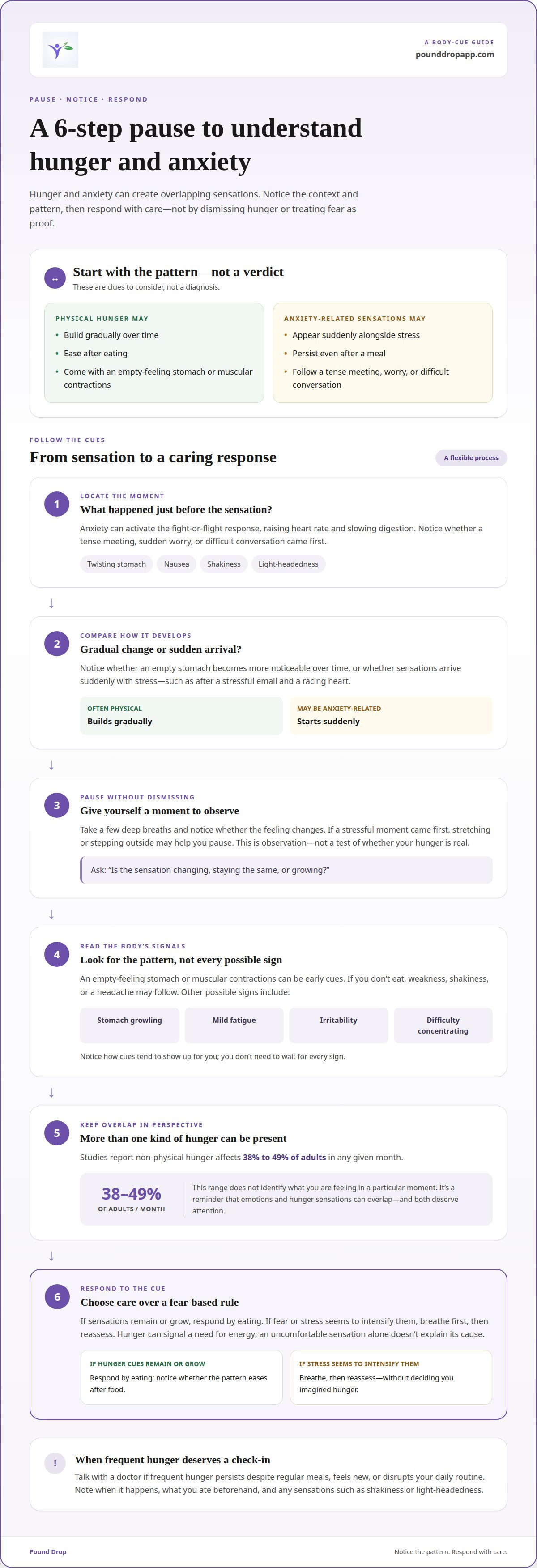
Talk with a doctor if frequent hunger persists despite regular meals, feels new, or disrupts your daily routine. Note when it happens, what you ate beforehand, and any sensations, such as shakiness or light-headedness.
Yes. Food insecurity or disordered eating can make hunger feel threatening. Someone recovering from food insecurity may plan around food to feel sure they won’t be deprived again. Talking with trusted loved ones can help ease the fear of being judged.
- Notice what happened before the sensation. Anxiety can activate the body’s fight-or-flight response, raising your heart rate and slowing digestion. A tense meeting, sudden worry, or difficult conversation may come before a twisting stomach, nausea, shakiness, or light-headedness. Note the situation and sensation to spot patterns.
- Compare how the feeling develops. Physical hunger tends to build gradually and ease after eating. Anxiety-related sensations may appear suddenly and persist after a meal. Notice, for example, whether an empty stomach becomes more noticeable over time or appears alongside a stressful email and a racing heart.
- Pause briefly with the sensation. Take a few deep breaths and notice whether the feeling changes. If a stressful moment came first, try stretching or stepping outside. If the sensations remain or grow, respond by eating. This pause lets you observe without treating anxiety as proof that you imagined hunger.
- Remember that non-physical hunger is common. Studies report that it affects 38% to 49% of adults in any given month. That range doesn’t identify what you’re feeling in a particular moment. It can, however, remind you that emotions and hunger sensations can overlap, and both deserve attention.
- Treat hunger as useful information about energy needs. An empty-feeling stomach or muscular contractions can be early cues. If you don’t eat, weakness, shakiness, or a headache may follow. Stomach growling, mild fatigue, irritability, and difficulty concentrating are also possible signs. Notice the pattern instead of waiting for every sign to appear.
- Respond to the cue, not a fear-based rule. Hunger is one way your body signals a need for energy, but an uncomfortable sensation alone doesn’t explain its cause. If gradual hunger eases after food, that pattern offers useful information. If fear or stress seems to intensify the sensation, breathe first, then reassess.
Relearning body cues during eating disorder recovery
During recovery, body cues can feel unfamiliar or difficult to interpret. Use practical steps to respond with care as you rebuild trust in your body.
- Rebuild a record of cues with support. Note what you feel, what was happening, and what helped. Low energy, difficulty concentrating, and irritability can be possible signs of dipping blood sugar, but they don’t explain every sensation. A dietitian, therapist, or recovery team can help you understand patterns without turning each feeling into a test.
- Explore the fear beneath the cue. Therapy, including CBT, can help you notice thoughts that connect hunger with losing control or breaking a food rule. You can examine where those beliefs came from and practice responding without self-criticism. Discussing diet-culture messages with a therapist may also clarify why a normal body sensation feels threatening.
Try Preventive or Clock-Based Eating
Choose a flexible eating routine that offers reassurance, especially if past food insecurity makes waiting feel unsafe. Planning food ahead can help you trust that nourishment will be available, rather than feeling you must prevent every hint of hunger. Notice whether the routine supports recovery or becomes a strict rule that overrides your body’s cues.
Notice Comfort Eating Without Self-Judgment
When you reach for food during sadness, stress, or loneliness, pause and name the feeling without labeling yourself as bad or out of control. Eating for comfort can be one response to an emotion; it doesn’t erase physical hunger or make you undeserving of food. Ask what would support you now, such as eating, resting, or talking with someone you trust.
Consider Fuel Reserves and Delayed Eating
Your body can draw on fuel reserves if you can’t eat immediately when hunger strikes. That doesn’t mean you should ignore hunger or deliberately delay eating. Low energy, trouble concentrating, and irritability may accompany dipping blood sugar. If you feel very hungry, choose food intentionally and take your time as you eat.
- Check whether your eating is nourishing enough. Distraction isn’t a useful substitute when your diet lacks adequate protein, carbohydrates, fat, and fiber. A balanced plate can include half fruits and vegetables, a quarter protein, and a quarter grains or starchy carbohydrates. These proportions are a general guide, not a recovery rule. Cancer treatment, for example, may increase protein needs and make eating more challenging. Discuss your needs with your recovery team.
A steady, self-guided routine can help you practice these steps over time. Explore a self-guided approach as you build habits that feel workable.
Checking the time since the last meal or snack
Use elapsed time as one clue, not a rigid schedule. The clock can add context, but it can’t decide on its own whether you’re hungry or what your body needs.
- Recall when you last ate. Check when you had your most recent meal or snack, then notice how you feel now. If you ate recently, consider whether a stressful moment or another feeling appeared alongside hunger. If several hours have passed, physical hunger may be more likely. When overcoming the fear of feeling hungry between meals, use the time as information, not a verdict about what you should feel.
- Use the three-to-four-hour range as a prompt. If you haven’t eaten in 3-4 hours, consider whether you’re hungry. This range is a reason to pause and assess, not a required interval or instruction to eat automatically. For example, at a busy desk, notice whether hunger is building or whether worry about being unable to eat later is driving urgency.
- Avoid eating by the clock alone. Don’t make yourself eat every three hours simply because the clock says so. Equally, don’t use the clock to dismiss hunger because less time has passed. If you feel hungry after a shorter interval, consider what your day has involved and whether your previous meal or snack met your needs. Let the clock inform your choice, not control it.
- Adjust for the shape of your day. Compare a quiet morning at home with a day of errands, work, or travel. The same time since eating can feel different when your activity and routine change. If a meeting runs late, consider elapsed time alongside your current sensations when deciding whether a snack would help. A planned schedule can support you, but it needn’t become a test.
- Make a calm choice when several hours have passed. If your last meal was several hours ago and you feel hungry, eating is a reasonable response. Choose an available food, sit down if you can, and notice how you feel afterward. If the sensation doesn’t ease, note that for later reflection. These observations can make overcoming the fear of feeling hungry between meals more manageable, without relying on a fixed meal timer.
Eve Lahijani says that when several hours have passed since someone’s last meal, they are likely to be physically hungry rather than eating emotionally. Treat this as one possibility to compare with what you notice, not a label that settles the question. Ask whether hunger is present, and let your answer reflect the moment rather than judging yourself.
The article advises checking for hunger instead of automatically eating every three hours. Use that distinction when a familiar timetable starts to feel like a rule: pause, notice your body, and decide whether food seems helpful now. If the answer is unclear, keep the question open and revisit it after attending to what you’re doing. The aim is to make room for hunger cues without letting the clock or an emotional explanation become a reason to disregard them.
Identifying bodily sensations linked to feelings
Use a short observation routine to distinguish physical sensations from the feelings or situations that may accompany them.
- Pause and locate the sensation. Notice whether it’s in your stomach, head, hands, or somewhere else. An empty-feeling stomach or muscular contractions can be early hunger cues. For example, describe whether your stomach feels hollow, tight, or gently unsettled instead of deciding immediately what the sensation means.
- Describe the feeling in specific terms. Eve Lahijani recommends describing sensations by their texture, temperature, and color. You might write, “warm, fluttery, and pale yellow,” or “cool pressure behind my eyes.” These details aren’t a diagnosis. They create a clearer record than a general label such as “bad” or “hungry.”
- Notice whether other physical signs appear. Stomach growling, mild fatigue, irritability, and difficulty concentrating can occur with hunger. If you haven’t eaten, weakness, shakiness, or a headache may also develop. Note which signs appear together, such as an empty stomach followed by trouble focusing during an afternoon task.
- Name the emotion present at the same time. Ask whether fear, stress, sadness, or another feeling was already there. Before a difficult conversation, for example, you might notice a fluttering stomach and a sense of dread. Naming both doesn’t make the physical sensation less real. It helps you see whether they appear together.
- Track the setting and timing. Write down where you were, what you were doing, and when the sensation started. A brief note such as “tight stomach before a work call” gives you something concrete to compare later. Include whether you had eaten recently, as that context can help you interpret recurring patterns.
- Look for repeated links, not a single explanation. Review your notes for recurring situations, such as a commute, a stressful task, or a long gap between meals. One episode can have several contributing factors. Patterns across different days may help distinguish a familiar emotional trigger from sensations that tend to follow a missed meal.
- Choose a response based on what you observe. If hunger signs are present, respond by eating rather than trying to prove the sensation is emotional. If fear or stress is prominent, take a few deep breaths and notice whether the sensations change. If they persist, eating is still an option. This practice helps build a fuller picture without requiring certainty in the moment.
Keeping convenient foods on hand
Nuts, string cheese, and fruit are practical foods to keep nearby for hunger between meals. Having a ready option can make it easier to respond when hunger arrives during work, travel, or a busy day.
- Choose foods that fit your day. Pick options you can carry, store, and eat comfortably. For a desk drawer, consider a portion of nuts; for a commute, choose fruit that travels well. String cheese can work if you have a way to keep it cool. The best option is one you’ll actually have available when hunger appears.
- Set up a few useful places. Keep a snack where you’re likely to need it, such as in a work bag, desk, or kitchen. If your routine changes, take the food with you. For example, place fruit near your keys before a day of errands. Having an option in a familiar spot can ease the worry of having nothing to eat.
- Make a small plan for unpredictable moments. Think about when meals may be delayed, such as during a long appointment or busy afternoon. Choose a portable food before leaving, rather than waiting until hunger feels urgent. This doesn’t mean every day must follow a schedule. It’s a practical way to know an option is available if you want it.
- Keep variety without turning snacks into rules. Rotate between nuts, string cheese, and fruit, or choose another convenient food you enjoy. You don’t need to pick a “perfect” snack or use food to prove you can wait longer. If one option doesn’t appeal when you’re hungry, another choice can make it easier to respond without judgment.
- Notice whether the food meets the moment. Eat at a pace that feels manageable, then check in with yourself. If you remain hungry, a small snack may not have been enough for your needs. The aim isn’t to make food last a prescribed amount of time. It’s to have a realistic option and respond to your experience.
- Use a simple routine to remember supplies. When you unpack your bag or prepare for the next day, notice whether your usual snacks are there. Replace what you used and keep choices within easy reach. These small resets make food access part of an ordinary routine, rather than a last-minute response to fear.
For help building steadier routines around food choices, explore a practical way to support your progress.
Pound Drop
Pound Drop offers a self-guided system for building steady lifestyle habits, which can support your efforts to respond to hunger with more confidence. The Method provides a structured approach, while the Pound Drop App, The Book, and The Journa offer tools to support your progress. These resources may suit you if you want to reflect on routines, notice patterns, and practice changes at your own pace. They aren’t a replacement for care from a recovery team when you’re healing from disordered eating or food insecurity. If you’d like to learn more about using Pound Drop’s tools alongside your goals, contact Pound Drop.
Build confidence one moment at a time
Overcoming the fear of feeling hungry between meals doesn’t require perfect certainty about every sensation. Let your next opportunity to eat be a small practice in responding with curiosity. Notice what you feel, choose a supportive next step, and allow the experience to teach you something. One moment won’t define your progress. Repeated, compassionate practice can make new responses feel more familiar.
If you want a self-guided structure for building sustainable habits, Pound Drop offers The Method, the Pound Drop App, and The Book. These resources can support lifestyle changes at your own pace. Choose the support that feels useful for your next step, not an ideal routine you feel pressured to follow.
Ready to explore whether this approach fits your goals? Contact Pound Drop to learn more. Keep moving forward gently, one choice at a time.
Frequently Asked Questions
Why do some people fear feeling hungry between meals?
Past experiences can connect hunger with uncertainty, deprivation, or loss of control. Someone who has experienced food insecurity, for example, may worry that food won’t be available later and feel safer carrying a snack. Diet-culture messages can also make ordinary appetite feel like a problem to manage. Recognizing where the fear may come from can help you respond with compassion instead of blaming yourself.
How can you tell normal hunger from anxiety or a medical problem?
Look at the pattern, while remembering that sensations alone can’t provide a diagnosis. Hunger may gradually grow, while anxiety may rise suddenly during a stressful situation. Notice whether the feeling changes after eating and whether it repeatedly appears alongside worry or other symptoms. If frequent hunger is new, persists despite regular meals, or disrupts daily life, share those details with a doctor for assessment.
What practical steps help tolerate hunger between meals?
Start with a brief pause and notice what you feel, rather than demanding certainty about its cause. Take a few slow breaths, name any emotion present, and consider whether eating would help. If you’re away from home, a portable snack can offer a practical option. You might also jot down a short note afterward about where you were and what response felt supportive, so you can learn from the experience.
How often should adults eat, and are snacks necessary?
There isn’t one meal schedule that fits every adult, and snacks aren’t automatically necessary. Use hunger, daily routine, and access to food to guide your choices rather than eating by the clock alone. If it has been 3-4 hours since you ate, consider whether hunger is present. A snack can be useful during a long appointment or delayed meal, but it doesn’t need to follow a universal timetable.
What are safe ways to adjust meal timing without restrictive dieting?
Make small changes to fit your actual routine, not to ignore hunger. If an afternoon meeting often delays lunch, bring a snack or plan a convenient meal option. Note how timing affects your energy, concentration, and comfort, then adjust gradually. Don’t treat a schedule as a limit on when you’re allowed to eat. If you’re in eating-disorder recovery, make timing changes with support from your recovery team.


