


Article by
Jesper Sorensen
Jesper Sorensen is a holistic health coach and founder of Pound Drop, a different approach to weight loss built around healthier habits. He has written ebooks and health articles for established publishers and has spent years studying nutrition, healthy eating and sustainable weight management.
Happy hour can fit into steady progress without making food or drinks the focus of the whole event. Navigating happy hour appetizers without blowing your progress comes down to practical choices: eat beforehand if you’re hungry, pace drinks with water, choose snacks with protein or vegetables, go easy on fried or heavily sauced dishes, and keep your attention on the people you’re with.
It’s understandable to worry that an unplanned plate of appetizers could undo your efforts. One evening doesn’t define your progress, and you don’t need to make perfect choices to enjoy time with friends. A little preparation can help you arrive feeling settled and choose what sounds satisfying.
Here are simple ways to prepare, build a more balanced snack plate, and make food and drink choices that feel manageable. You’ll also find ways to let conversation take the lead, so happy hour feels social rather than like a test of willpower.
Key Takeaways
- Alternate alcoholic drinks with water to pace yourself and make more mindful choices throughout happy hour.
- Have a filling meal or snack before you go so you’re less likely to arrive overly hungry.
- Build a snack plate with protein and vegetables, and share dishes to keep portions comfortable.
- Choose less-fried, lightly sauced options when they’re available, without expecting every choice to be perfect.
- Let conversation and company be the focus, so food becomes one part of the gathering rather than the main event.
1. Alternating alcoholic drinks with water
Make water part of your happy-hour rhythm. After an alcoholic drink, order a glass of water before deciding whether to have another drink or return to snacks. Alternating this way can slow your drinking, support hydration, and help you keep track of what you’ve had. Water doesn’t remove alcohol from a drink, but it gives you a simple pause between alcoholic beverages.
Try an easy routine to remember: enjoy a drink, have water, then decide whether you want another. Keep water beside you throughout the evening, not only when you feel thirsty. If friends are ordering another round, pause with your water first. That break can help you choose what you want instead of following the group’s pace. Giving yourself that moment to decide is a useful part of navigating happy hour appetizers without blowing your progress.
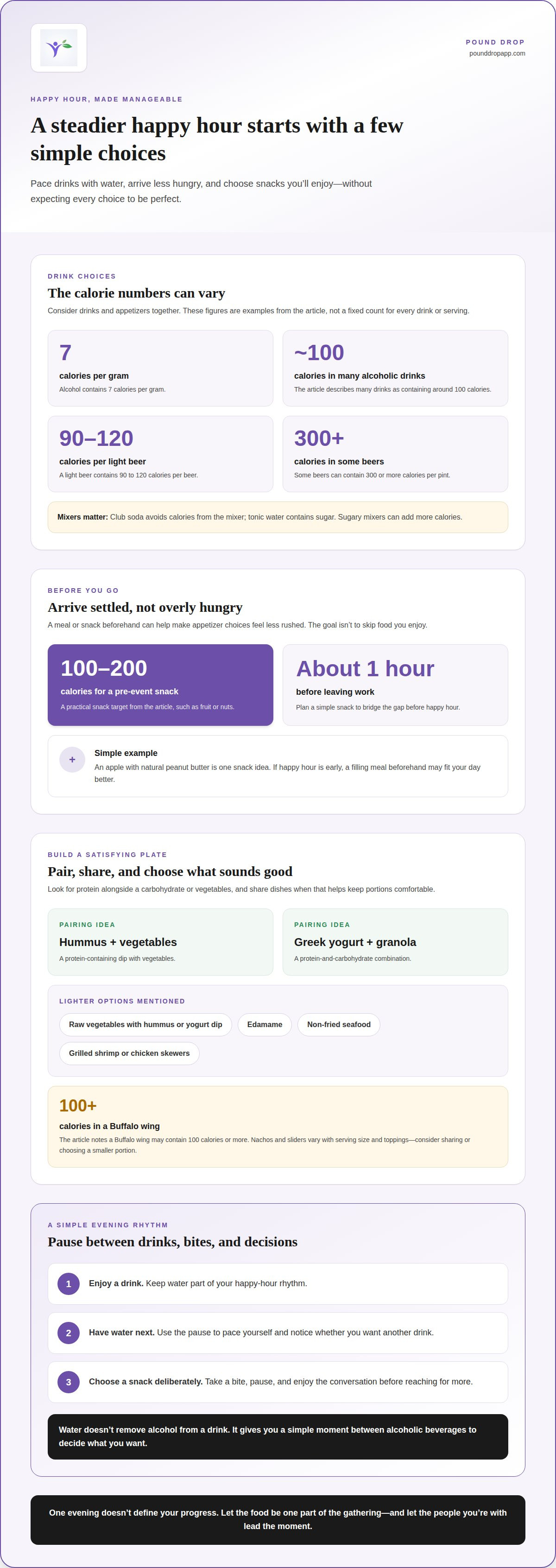
Drink calories also shape the room you have for appetizers. Alcohol contains 7 calories per gram, and many alcoholic drinks contain around 100 calories. Light beer contains 90 to 120 calories per beer, while some beers can contain 300 or more calories per pint. Sugary mixers can add more; club soda avoids calories from the mixer, while tonic water contains sugar.
How do alcohol calories affect a happy-hour food budget? They account for some of the energy you might otherwise allow for food, so consider your drink and snack choices together. A vodka soda with club soda, for example, avoids calories from a sugary mixer, while a creamy cocktail may contribute more overall.
What are the lowest-calorie happy-hour appetizers? Raw vegetables with hummus or yogurt dip, edamame, and non-fried seafood are lighter options to consider. Grilled shrimp and chicken skewers are other possibilities on the menu.
How many calories are in popular bar appetizers like wings, nachos, and sliders? A Buffalo wing may contain 100 calories or more. Nachos and sliders vary with serving size and toppings, so choose a smaller portion or share rather than assuming every plate has the same calorie content.
Water can also help make the evening feel more deliberate. Salty bar snacks may encourage faster drinking, so pause with water between bites and drinks. If you’re considering a second beer or cocktail, finish a glass of water first and notice whether you still want it.
Think of alternating drinks with water as a practical routine, not a rule you have to follow perfectly. A glass of water between alcoholic drinks, along with water throughout happy hour, can help you pace yourself while staying present with friends and enjoying the snacks you choose. This can make navigating happy hour appetizers without blowing your progress feel more manageable.
2. Eating before happy hour
Arriving at happy hour very hungry can make a basket of appetizers especially tempting. Eating a filling meal earlier in the day can help you feel more settled when food arrives. If several hours pass between lunch and meeting friends, have an afternoon snack before leaving work. The goal isn’t to skip appetizers you enjoy. It’s to arrive ready to choose what sounds good, rather than being driven by immediate hunger.
Plan the snack for about an hour before leaving work. Aim for 100-200 calories, using a simple option such as fruit or nuts. An apple with natural peanut butter is one practical example. Keep it easy to eat during a work break, and choose something that feels satisfying enough to bridge the gap before happy hour. That small pause in your day can make the first appetizer decision feel less urgent.
A pre-event snack works best as part of your usual eating routine, not as a replacement for dinner. If happy hour is early, a filling meal beforehand may suit your schedule better. If you’ve already eaten lunch, fruit or nuts can be a convenient snack. Consider when you last ate and how long the gathering may last. Those everyday details can help you decide whether a meal, a snack, or both makes sense.
Mindful eating can help you notice your experience while enjoying conversation. At happy hour, take a bite, pause, and notice the taste and how satisfying it feels before reaching for another. Eating slowly gives your brain time to register satisfaction. You don’t need to stop talking or turn the meal into a formal exercise. Simply set down your snack between bites, listen to a friend’s story, then decide whether you want more.
For example, if you’ve already eaten an apple with natural peanut butter, you can look over the appetizer options without rushing. Choose a snack that appeals to you, then take time to enjoy it. If you’re still hungry, have more. If you feel satisfied, return your attention to the conversation. This approach makes room for both food and friends, without treating either as a test.
Eating beforehand also gives you a moment to consider what would feel good at the gathering. Before leaving, decide whether a light snack or a filling meal makes sense for your day. Then arrive ready to enjoy appetizers because you want them, not because you’ve gone too long without eating. A steady routine is easier to maintain than trying to compensate later for hunger or rushed choices.
Keep your plan flexible. A workday can run late, lunch may be smaller than expected, or the group may order food sooner than planned. Use hunger as useful information: if you need food, eat; if you’re comfortably satisfied, take your time. A snack before happy hour isn’t a promise to eat less at the table. It’s a practical way to make eating feel more intentional while you enjoy the evening.
3. Balancing snacks with carbohydrates and protein
Pairing snacks can feel more satisfying than grazing on one type of food. Look for protein alongside a carbohydrate or vegetables, such as hummus with vegetables or Greek yogurt with granola. These combinations add variety and give you a clear choice to enjoy, rather than repeatedly reaching for whatever is nearby. Protein-containing appetizers such as shrimp cocktail, meatballs, and hummus can also help you feel full.
At home, try pairing almonds with apple for a snack. Another option is 4-6 ounces of Greek yogurt with a small handful of granola. These examples combine foods with different textures and make portions easier to see. At happy hour, look for similar pairings: grilled shrimp with vegetables, hummus with a vegetable platter, or chicken skewers with a side of vegetables.
How can you handle happy hour appetizers without feeling deprived or overeating? Choose a dish you genuinely want, add a protein or vegetable option, and serve yourself a portion instead of eating straight from a shared bowl. You can enjoy the food while staying aware of what you’ve chosen.
Portion awareness starts with what you can see. If the group orders several dishes, ask for a small plate or use a napkin to serve yourself. Put a few pieces on your plate, then pause before taking more. A visible portion can help you keep track and prevent automatic handfuls while you’re talking or drinks are being ordered.
Shared snack bowls can make it hard to notice how much you’ve eaten, especially when they’re within easy reach. Move the bowl farther from your seat, or take a portion and leave the bowl with the group. With a plate in front of you, you can notice each bite and decide whether you’re still hungry. This is a practical adjustment, not a reason to avoid the snack.
For a group order, suggest sharing dishes such as grilled shrimp, chicken skewers, hummus, or a vegetable platter. Sharing lets you taste different options without keeping a large serving in front of you. If you’d rather have more of one appetizer, that’s fine too. Serve yourself a comfortable amount, eat at a pace that lets you notice how you feel, and decide whether you want more.
Nutrition doesn’t require perfect combinations at every gathering. A plate with hummus, vegetables, and a few bites of another appetizer can be a balanced starting point. If the group orders a dish without protein, add a protein-rich choice where available. Then return your attention to the conversation, knowing you can make another mindful decision when you’re ready.
4. Avoiding fried and heavily sauced foods
Fried coatings, rich sauces, and generous toppings can make a small appetizer feel heavier. Look at how a dish is prepared, not just its name. A grilled or steamed option may be a better fit than its fried version, while sauces and cheese served on the side let you decide how much to add. This keeps your choice flexible, without turning the menu into a list of forbidden foods.
At a restaurant, lighter options can include non-fried seafood, edamame, or crudités with hummus or yogurt dip. Chicken satay without sauce is another choice. If you want nachos, consider sharing a loaded plate and choosing the toppings you enjoy most. You can also look for an appetizer with vegetables or seafood instead of making fried food the centerpiece.
To make a swap, compare preparation and toppings: choose grilled rather than fried, ask for sauce on the side, or request less cheese. Depending on the dish and ingredients, these changes can reduce calories, sodium, or saturated fat. A side of sauce also lets you control each bite instead of having the whole plate coated.
What are the healthiest happy-hour appetizer options at restaurants? Consider non-fried seafood, edamame, or vegetables with hummus or yogurt dip. Chicken satay without sauce is another option. Choose what sounds satisfying and fits your preferences.
What questions can you ask a server to make appetizers lighter? Ask whether a dish can be grilled instead of fried and whether cheese or sauce can be served on the side. For loaded nachos, ask which toppings can be served separately or left off.
Small details can change how an appetizer feels. Chips and fried cheese may be filling without being as satisfying as you hoped, so consider sharing them or choosing a different dish. Buffalo wings may contain 100 calories or more per wing, which makes portion size worth considering. If wings are what you want, share an order and pair it with a less-heavy option.
Menus also invite simple adjustments beyond the food itself. If a dish arrives covered in sauce, use a little at a time instead of adding more automatically. If cheese is the main topping, ask for it on the side or choose a smaller portion. A light beer won’t change how your appetizer is prepared, so base your food choice on the dish you’ll enjoy. You don’t need to avoid every fried or rich item. Choose deliberately, share when it suits you, and enjoy the meal.
5. Focusing on socializing rather than food
Give happy hour a purpose beyond the menu: catching up with a friend, welcoming a coworker, or celebrating a small win. Before ordering, choose someone you want to hear from and ask about something specific, such as a recent project or weekend plan. Conversation shifts your attention toward company, making appetizers part of the gathering rather than its main activity.
Talking also creates natural pauses between bites because you’re listening or responding instead of eating at the same moment. Try putting down your fork while a friend tells a story, then return to your food when the conversation pauses. That simple rhythm can help you notice what you’re eating without making the meal feel like a task.
Make the setting work for you. Choose a seat where you can hear the group comfortably, rather than sitting beside a shared platter. If chicken skewers, mozzarella bites, and shrimp arrive together, take a moment to join the conversation before deciding what you’d like. You can still enjoy an appetizer. You’re simply making space to choose it intentionally.
Try a conversation-first routine: greet everyone, order a drink, and ask a question before reaching for a snack. When the dishes arrive, serve yourself a portion and move the platter back toward the center of the table. If someone asks about your choice, share what you enjoy about it, then ask what they ordered. The meal stays social, and you’re less likely to nibble automatically while your attention is elsewhere.
Activities can give your hands and attention something besides food to do. At a venue with pool or darts, suggest a game between conversations. If the group stays seated, help keep the discussion moving by asking open questions and listening to the answers. You don’t need to avoid the table or rush through your food; use the gathering’s natural activities to vary the evening.
Socializing doesn’t mean ignoring hunger or pretending food isn’t enjoyable. If you’re hungry, eat an appetizer and pay attention to its flavor. If you feel satisfied, pause and rejoin the conversation. A shared plate of shrimp can be both something tasty and a way to connect, without requiring you to keep eating after you’ve had enough.
Choose one small intention before your next gathering, such as asking a friend about their new role or joining a game after ordering. That gives your attention a meaningful place to go. For more support in building steady routines around everyday choices, explore practical habit support.
Pound Drop
Pound Drop offers a structured, self-guided approach to building lifestyle habits that can carry into social occasions. The Method, the Pound Drop App, The Book, and The Journal provide tools for working with your progress and everyday choices, including your happy-hour routines. They can help you make practical habits more consistent, without expecting every gathering to go exactly as planned. Enjoy time with friends, make a thoughtful choice, and return to your usual routine afterward. Progress comes from the patterns you practice over time, not one appetizer order. Explore Pound Drop’s tools to find a practical way to support your goals.
Carry your progress into your next gathering
The next happy hour is an opportunity to practice one choice that feels realistic for you. You might decide to slow down, pause before ordering, or give more attention to a friend’s story. A small intention can make navigating happy hour appetizers without blowing your progress feel less like a test and more like part of everyday life.
Your routine doesn’t need to be perfect to be worth continuing. If an evening goes differently than planned, let it be one experience, then return to the habits that support you. Practicing choices that fit your social life can help make progress feel more sustainable and personal over time.
If you’d like support building steady habits around everyday decisions, contact Pound Drop. Take the next step at your own pace, and keep making room for both your goals and the people you enjoy spending time with.
Frequently Asked Questions
How can I estimate calories and portions when menu nutrition facts are unavailable?
Estimate by considering the portion and its main components, rather than guessing an exact calorie figure. Note whether the dish is fried, breaded, topped with cheese, or served with a rich dip, and consider how much you’ll actually eat. A small grilled skewer, for example, differs from a large breaded platter with sauce. Treat your estimate as a planning aid, not a precise measurement.
How can I enjoy happy hour appetizers while meeting weight-loss or fitness goals?
Choose an approach you can repeat, even when the evening doesn’t go exactly as planned. Before ordering, decide what you’d most enjoy and how you’ll stay attentive to your hunger and satisfaction. You might share an appetizer you’re excited about, then focus on conversation instead of continuing to pick at the table. One social meal can fit into a broader routine without requiring you to compensate afterward.
How many appetizers should I order or share to manage portions?
Choose the amount based on whether appetizers are a snack or your meal, how many people are sharing, and how filling the dishes are. For a casual snack, start with a shared selection that gives everyone a taste, then pause before ordering more. If appetizers are dinner, include options that feel substantial. Agreeing on what to share before ordering can make portions easier to manage.
Which sauces, dips, and cooking methods add the most calories?
Frying, heavy cheese toppings, and rich or sugary sauces can make an appetizer more energy-dense than a grilled or lightly dressed version. A dish with sauce on the side gives you more control over how much you use. For instance, compare plain grilled chicken with breaded chicken covered in creamy sauce. Ingredients and serving size both matter, so consider the whole dish rather than judging by its name.


