


Article by
Jesper Sorensen
Jesper Sorensen is a holistic health coach and founder of Pound Drop, a different approach to weight loss built around healthier habits. He has written ebooks and health articles for established publishers and has spent years studying nutrition, healthy eating and sustainable weight management.
A comfort-food craving can be a response to relationship stress, not a sign that you lack willpower. Learning how to cope with food cravings caused by relationship stress starts with pausing to notice whether you’re physically hungry or responding to an emotion. From there, you can identify what set off the urge and choose a calming next step, such as taking a walk or reaching out to someone you trust.
It makes sense that tension, worry, or loneliness can change how food feels. Eating may bring brief comfort, but it doesn’t resolve the stress underneath, and judging yourself afterward can make things harder. You don’t need to treat every craving as a problem or rely on strict rules. A little curiosity can help you understand what you need in that moment.
This article explains what food cravings are, how relationship stress can affect appetite, and how to recognize emotional and environmental triggers. You’ll also find practical ways to use movement, social connection, and simple reflection to respond with more care and build manageable habits over time.
Key Takeaways
- Small, calming activities and time with supportive people can offer alternatives when stress makes eating feel automatic.
- Noticing the feelings and situations around an eating urge can help reveal patterns without turning them into a reason for self-criticism.
- Stress may affect appetite and cravings, so steady routines can be more helpful than responding with strict food rules.
- Food sights, smells, fatigue, and social situations can all play a part; recognizing your personal triggers makes it easier to plan ahead.
- When stress keeps returning, simple practices such as breathing, meditation, or gentle movement can become part of a more sustainable coping routine.
1. Exercise, social connection, and walking as stress management
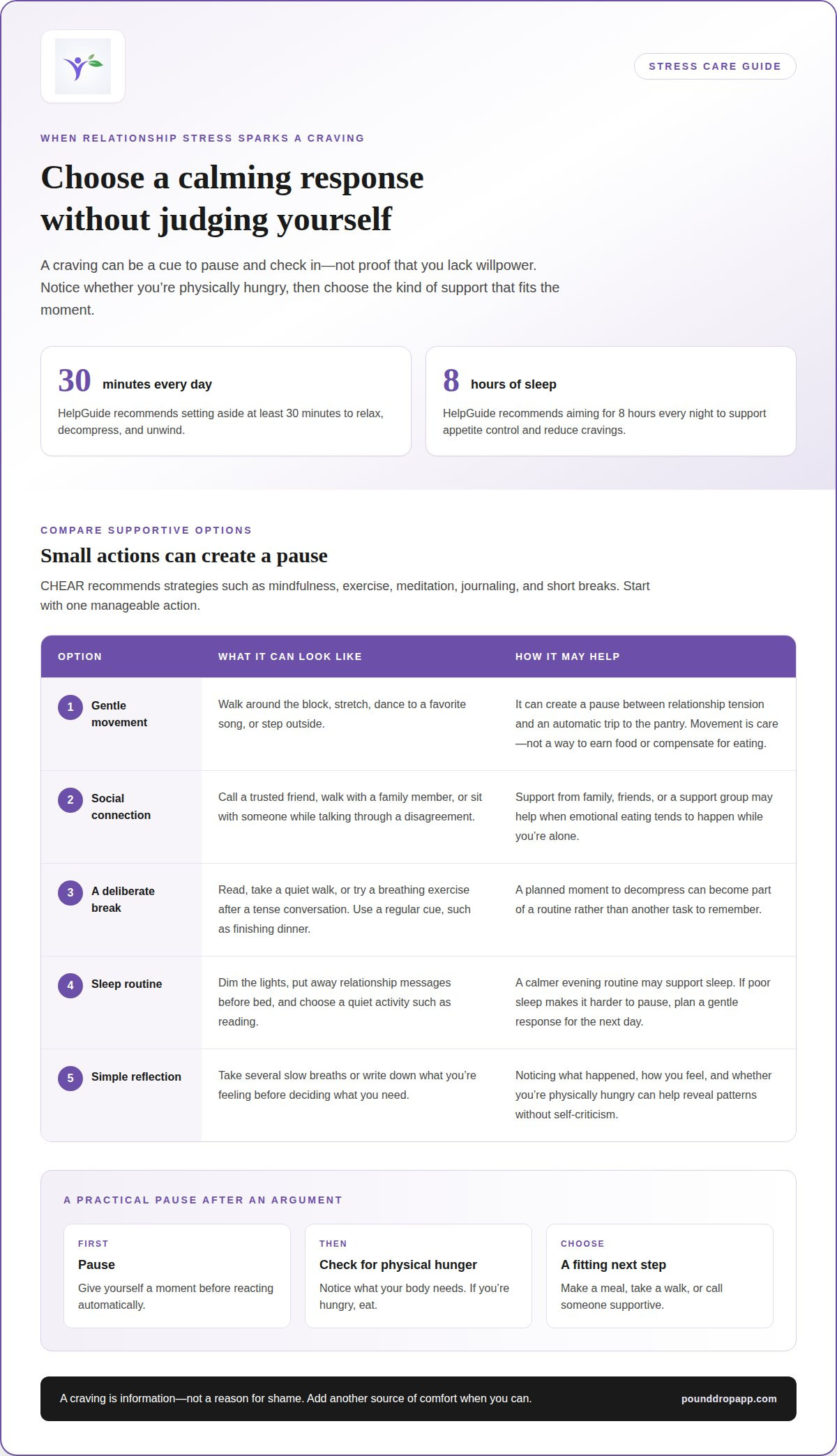
Mindfulness, exercise, meditation, journaling, and short breaks can help manage stress-related cravings. The Center for Healthy Eating and Activity Research (CHEAR) recommends these strategies. Start with one small action: step outside for a walk, take several slow breaths, or write down what you’re feeling before deciding what you need.
Movement can create a pause between relationship tension and an automatic trip to the pantry. Choose an activity that feels manageable, such as walking around the block, stretching, or dancing to a favorite song. If you’re hungry, eat. Movement isn’t a way to earn food or compensate for eating. Think of it as one option for shifting your attention and caring for yourself during a difficult moment.
Social connection offers another way to respond to stress. You might call a trusted friend, walk with a family member, or sit with someone while talking through a disagreement. Support from family, friends, or a support group may help if emotional eating tends to happen when you’re alone. A simple message such as “I’m having a hard evening; can we talk?” can make reaching out feel more doable.
Build in a deliberate break before stress peaks. HelpGuide recommends setting aside at least 30 minutes every day to relax, decompress, and unwind. That time could include reading, a quiet walk, or a breathing exercise after a tense conversation. Pick a regular cue, such as finishing dinner or putting your phone down, so relaxation becomes part of a routine rather than another task to remember.
Sleep belongs in a stress-management plan, too. HelpGuide recommends aiming for 8 hours of sleep every night to support appetite control and reduce cravings. A calmer evening routine may help: dim the lights, put away relationship messages before bed, and choose a quiet activity such as reading. If poor sleep leaves you feeling less able to pause, try planning a gentle response to cravings for the next day.
Make your plan specific enough to use when emotions run high. After an argument, for example, pause, notice whether you’re physically hungry, and choose between making a meal, taking a walk, or calling someone supportive. If eating feels like your only source of comfort, add another before judging yourself. Repeated emotional eating that feels hard to control, including binge eating, deserves compassion and attention, not shame.
2. What is emotional eating?
Emotional eating means using food to feel better during stress, anger, loneliness, boredom, or fear. The urge may arrive quickly after a tense exchange, even when your body isn’t hungry. For example, you might reach for a sweet snack after an argument because eating briefly distracts you from hurt or worry. That response is understandable, but it may not address the underlying feeling.
Relationship conflict can make this pattern feel automatic. A difficult conversation, unanswered message, or recurring disagreement may prompt someone to seek familiar comfort food. The Center for Healthy Eating and Activity Research says emotional eating becomes problematic when it serves as the main coping skill for emotions. To spot a pattern, note what happened, what you felt, whether you were physically hungry, and what you ate.
Couples can discuss cravings without blame by describing their own feelings and needs rather than criticizing each other’s eating habits. Try saying, “I feel unsettled after our disagreement, and I’m noticing an urge to snack. Could we talk when we’re both ready?” A calm conversation can make the stress visible without turning food into a test of willpower or a source of conflict.
Children may also turn to food during stressful changes, such as family arguments or a difficult school day. Respond with curiosity: “You seem upset. Do you want to tell me about school?” Keep meals and snacks calm, avoid labeling a child as “good” or “bad” for eating, and offer connection alongside food. If changes in appetite or eating habits continue to concern you, discuss them with the child’s healthcare professional.
Emotional eating can bring short-lived relief, followed by guilt, shame, or lower self-esteem. That distress may then contribute to another urge to eat. You don’t need to diagnose yourself based on a craving. If eating feels difficult to control, happens repeatedly in response to emotional struggles, or causes significant distress, seek support from a mental health professional. A registered dietitian may also help you understand eating patterns and build practical food routines.
Cravings alone can’t establish binge eating disorder or another health condition. Repeated emotional eating may develop into binge-eating behaviors that feel difficult to control, so recurring episodes or distress are reasons to seek professional assessment rather than blame yourself.
In the United States, possible starting points include community mental health clinics, university training clinics, and nonprofit counseling services. Ask whether they offer sliding-scale counseling or support groups, and consider a registered dietitian for food-related guidance alongside emotional support.
3. Stress-related appetite and cravings
Relationship stress can affect appetite in different ways. After a tense conversation, you might lose interest in dinner, then feel drawn to sweets later. Stress can prompt the body to release cortisol, which may increase appetite and cravings for foods high in fat and sugar. This response doesn’t mean you’ve failed or that your weight is determined by one difficult evening. It’s one possible reaction to pressure, and noticing it can help you choose what to do next.
Sleep can shape hunger signals, too. Ghrelin stimulates hunger, while leptin signals fullness; sleep deprivation can increase ghrelin and decrease leptin. If a poor night leaves you searching for snacks the next afternoon, treat sleep as part of your appetite routine. Aim for 7-9 hours each night, and practice sleep hygiene with a steady bedtime and a quieter wind-down. Better rest won’t remove relationship stress, but it can support a steadier response to it.
Food can also feel rewarding. Dopamine is released when people eat foods they enjoy, reinforcing pleasure and motivation to seek that satisfaction again. That helps explain why a familiar snack may seem especially appealing after an upsetting exchange. It doesn’t prove that a craving signals a need for a particular nutrient; research does not fully support that theory. The urge may reflect emotion, habit, or the food’s appeal instead.
Try a short pause to understand what the craving is asking for. Ask yourself whether you feel physical hunger, thirst, or an emotion such as worry. Thirst can sometimes be mistaken for hunger, so have some water if you’re unsure. If you’re not physically hungry, take a walk or read for 15 minutes before deciding. A 20-minute distraction may give a craving time to ease. You can still choose to eat afterward.
Strict food rules may make the situation harder. Overly restricting calories, repeating the same meals, or removing every treat can increase cravings, especially during emotional stress. Instead, keep regular meals in mind and avoid treating a craved food as forbidden. If you decide to have it, pairing it with a food containing protein or fiber can make the snack more satisfying. The goal is a considered choice, not punishment or a test.
For a clearer picture, record a few details when your appetite changes: the situation, your feelings, sleep quality, and what you ate. For example, you may notice that conflict followed by poor sleep often comes before an afternoon craving. These patterns can help you decide whether rest, a meal, hydration, or a calming activity would meet your immediate need. Gentle exercise can offer another response to stress, while eating remains appropriate when you’re hungry.
4. Identifying emotional and environmental triggers
A craving can start with a feeling, a setting, or a routine. Relationship tension may bring anxiety or other difficult emotions; boredom, fatigue, food smells, social pressure, and media can also cue an urge to eat. Look for what happened just before the craving. For example, notice whether it followed a difficult text exchange, seeing snacks on the counter, or watching a food-focused video. The trigger may be emotional and environmental at the same time.
Physical hunger and emotional hunger can feel different. Physical hunger often builds gradually and can be satisfied by a range of foods. An emotional urge may feel sudden and specific, such as wanting a particular sweet snack after a disagreement, even when you recently ate. CHEAR advises pausing during a craving to consider whether physical hunger or another emotion is driving it. That pause isn’t a test. It’s a way to gather information before choosing what would help.
Use a simple trigger check when an urge appears: name the feeling, notice your surroundings, and consider when you last ate. If your stomach feels hungry and a meal would satisfy you, respond to that need. If anxiety, loneliness, or frustration seems central, identify the feeling more precisely. “I’m worried we haven’t resolved our disagreement” gives you clearer information than “I need food,” without making eating a failure.
Environmental cues can quietly shape eating habits. A bowl of treats beside your desk, the smell of food during your commute, or a habit of snacking during a particular show can prompt eating before hunger registers. Social settings can add pressure, too, such as accepting food to avoid awkwardness. Notice which cues recur. Then choose a gentle adjustment, like moving snacks out of immediate view or choosing a different activity when a familiar cue arises.
Food can also soothe or distract from a difficult emotion. After conflict, eating may briefly shift your attention away from hurt, but the unresolved concern can remain. Try asking, “What am I hoping this food will help me avoid or feel?” If the answer is a conversation, a boundary, or reassurance, write down one small next step. You can still choose to eat; recognizing avoidance simply gives you another way to respond.
Patterns become clearer when you compare situations rather than judge individual choices. Briefly record the trigger, feeling, hunger, and setting. For example, you might discover that boredom during solo evenings prompts grazing, while anxiety after specific conversations leads to urgent cravings. Use that observation to plan a response that fits the trigger. If seeing food is the cue, change the setting; if a relationship concern is central, make space to address it when you feel ready.
5. Chronic stress and comfort-food cravings
Ongoing relationship strain can make comfort food feel like a reliable pause from difficult emotions. A familiar snack may offer pleasure or distraction, especially after recurring conflict, uncertainty, or loneliness. That short-term comfort doesn’t resolve the underlying stress. It can, however, become a repeated coping habit if food is the main response available during hard moments.
Notice how ongoing stress affects your routine, not just your cravings. You might skip lunch after an argument, then feel drawn to snack late in the evening. Or you may keep eating while replaying a difficult conversation. Record the situation, your feeling, and what happened next. After several entries, look for a pattern you can respond to, such as preparing a meal before a stressful evening or planning a calming activity afterward. Learning how to cope with food cravings caused by relationship stress can start with noticing what tends to happen before the urge.
Make room for comfort without relying on only one source. Yoga, meditation, and deep breathing are options for easing stress. Try a brief breathing practice before entering a difficult conversation, or stretch after stepping away from an argument. These practices don’t need to replace food. They give you another way to care for yourself while you decide what you need.
Food rules can add pressure when stress is already high. Overly restricting calories, repeating the same foods, or removing all treats may increase cravings, particularly during emotional strain. Instead of labeling comfort foods as forbidden, choose how to include them thoughtfully. If a craving remains, you might enjoy the food alongside something containing protein or fiber, rather than turning the moment into a test of restraint.
Plan small comforts before a difficult moment arrives. For example, keep a book near your usual evening snacking spot, prepare ingredients for a satisfying meal, or arrange a call with someone supportive after a tense discussion. These choices make coping easier when your mental energy feels low. They also help separate comfort from automatic eating without requiring you to deny that food can be enjoyable.
If you eat more than you intended, respond with kindness rather than punishment. Return to your usual routine at the next meal and consider what might help in a similar situation. Perhaps the argument needs a calmer follow-up, or you need time to unwind before deciding about food. If emotional eating frequently leads to overeating or feels difficult to control, professional support can help address both the behavior and its emotional context.
The goal isn’t to remove comfort food from your life. It’s to build more than one reliable coping habit, so relationship stress doesn’t have to dictate your next choice. When considering how to cope with food cravings caused by relationship stress, remember that a realistic plan can include food, rest, movement, and connection, adjusted to what the moment calls for.
Pound Drop
Pound Drop offers a self-guided approach to building lifestyle habits while working toward weight-loss goals. If relationship stress is affecting your eating patterns, the Pound Drop App, The Method, The Book, and The Journal can support a more structured way to reflect on progress and practice steady changes. These tools may suit you if you prefer working independently and want a framework to return to as routines shift. They aren’t a substitute for mental health support when relationship distress or eating feels difficult to manage. You can use the ideas in this article alongside a gradual approach, without expecting every craving to disappear. For a self-guided next step, explore Pound Drop’s tools.
Choose a steady next step
Change doesn’t have to begin with a perfect plan. The next time relationship stress affects your eating, choose one small response that feels realistic for that day. You might write down what you need before starting a difficult conversation, or decide on a calming evening routine that leaves room for flexibility. The aim isn’t to control every craving. It’s to create more space between a hard moment and your usual reaction.
Learning how to cope with food cravings caused by relationship stress can mean practicing, noticing what helps, and adjusting as life changes. Some days, a useful step may be asking for support. On others, it may simply be treating yourself with less judgment and returning to a routine that works for you.
If a structured, self-guided approach would help you keep building sustainable habits, contact Pound Drop. You can begin with one manageable choice and build from there. Progress can be quiet, practical, and still meaningful.
Frequently Asked Questions
What Are Food Cravings?
Food cravings are strong urges for a particular food or type of food. They can appear alongside physical hunger, but they can also arise from mood, routine, or a reminder, such as passing a bakery after work. A craving doesn’t by itself show that your body needs a specific nutrient. Notice what the urge is for and what was happening beforehand; that context can help you decide how you want to respond.
What is emotional eating?
Emotional eating is eating in response to feelings rather than primarily to physical hunger. For instance, someone might snack after a lonely evening, even though dinner was satisfying. The distinction isn’t about whether a food is “good” or “bad.” It’s about what prompted the choice and whether eating is becoming the main way to manage distress. If the pattern feels troubling or hard to change, support can help.
How Do You Fight Those Cravings?
You don’t have to fight a craving or prove you can ignore it. Try making a deliberate choice: step away from the activity linked to the urge, take a moment to settle, then decide whether you want food. If you do, sit down and eat without multitasking so the experience feels intentional. If the craving keeps returning during relationship conflict, consider what support or conversation might address the strain itself.
How to get back on track?
Return to your usual eating routine at the next opportunity instead of trying to make up for an episode. Skipping a meal may bring a headache, and it doesn’t resolve the stress behind the eating. You could prepare a familiar meal, refill your water, and make one note about what you want to handle differently next time. A difficult moment is information, not proof that you’ve lost progress.
What to Do?
If a craving arrives after a difficult interaction, give yourself a brief, neutral pause. Ask what would help most right now: food, a quiet moment, practical help, or a conversation later. Choose one manageable action, such as moving to another room or writing down what you want to say. If you’re physically hungry, eating is a valid response. You don’t need to settle the relationship issue before caring for yourself.
How does relationship stress trigger food cravings and emotional eating?
Conflict can bring up feelings such as anger, fear, or loneliness, and eating may become a familiar way to seek comfort or shift attention. If a particular disagreement repeatedly precedes a craving, the sequence can become a habit: tension, food, brief relief. Recognizing that sequence helps separate the relationship concern from the eating choice. You can then decide whether food, emotional support, or a calm follow-up conversation fits your immediate need.
How can I tell emotional hunger from physical hunger?
Physical hunger often grows over time and may be satisfied by different foods; emotional hunger can feel sudden and focused on a specific comfort food. These clues aren’t a diagnosis, and both kinds of hunger can happen together. Try checking when you last ate and what sensations you notice in your body. If you’re unsure, take a moment to observe rather than making a rule about what you’re allowed to eat.
What are practical ways to cope with cravings without restricting food?
Keep eating flexible rather than banning foods you enjoy. You might include a craved food with a meal or snack, then eat somewhere you can pay attention instead of grazing while working. Make the choice before opening a package, and put distractions aside if that feels helpful. If emotions are driving the urge, add a non-food source of care, such as contacting someone supportive, without making food off-limits.


