


Article by
Jesper Sorensen
Jesper Sorensen is a holistic health coach and founder of Pound Drop, a different approach to weight loss built around healthier habits. He has written ebooks and health articles for established publishers and has spent years studying nutrition, healthy eating and sustainable weight management.
Food may seem like the quickest answer to boredom or loneliness, but it may only distract from what you’re feeling. Learning how to stop emotional eating when bored or lonely starts with noticing whether you’re physically hungry or looking for comfort, stimulation, or connection. Emotional eating is a learned response to feelings, not proof that you lack willpower.
If eating has become an automatic way to fill quiet moments or ease difficult feelings, approach the pattern with curiosity rather than blame. Noticing what you feel is a practical first step toward understanding what you need next.
This article explains emotional eating and how to recognize hunger, moods, and situations that may trigger it. You’ll find practical ways to respond to boredom or loneliness, track patterns, and seek support when changing the habit feels difficult alone.
Key Takeaways
- Notice how celebrations, social pressure, and everyday feelings can shape eating habits without treating the pattern as a personal failure.
- Pause before reaching for food and check whether physical hunger or an emotional need may be present.
- Track moods and eating patterns to spot triggers, then try a response that fits the feeling underneath.
- Consider support from a healthcare provider, dietitian, or therapist when emotional eating feels persistent or difficult to manage alone.
1. What is emotional eating?
Emotional eating means turning to food in response to feelings rather than physical hunger. Boredom, loneliness, sadness, stress, and even excitement can prompt it. You might reach for comfort food during a quiet evening, after a difficult conversation, or at a celebration. This pattern can develop over time; it isn’t simply a lack of willpower.
Celebrations and social pressure can make eating feel automatic. At a wedding, for example, you may keep eating because dessert is being served or everyone else is having another slice. A party may also connect happy feelings with food. Notice the situation without judging yourself: what was happening, who was there, and what did you feel before eating?
To identify emotional eating triggers, keep a brief food-and-mood journal. Record what and when you ate, whether you felt physically hungry, and what was happening beforehand. For boredom, note the time, activity, and feeling, such as “quiet afternoon, scrolling on my phone, wanted a snack.” Reviewing your entries can reveal recurring links between moods, situations, and eating habits.
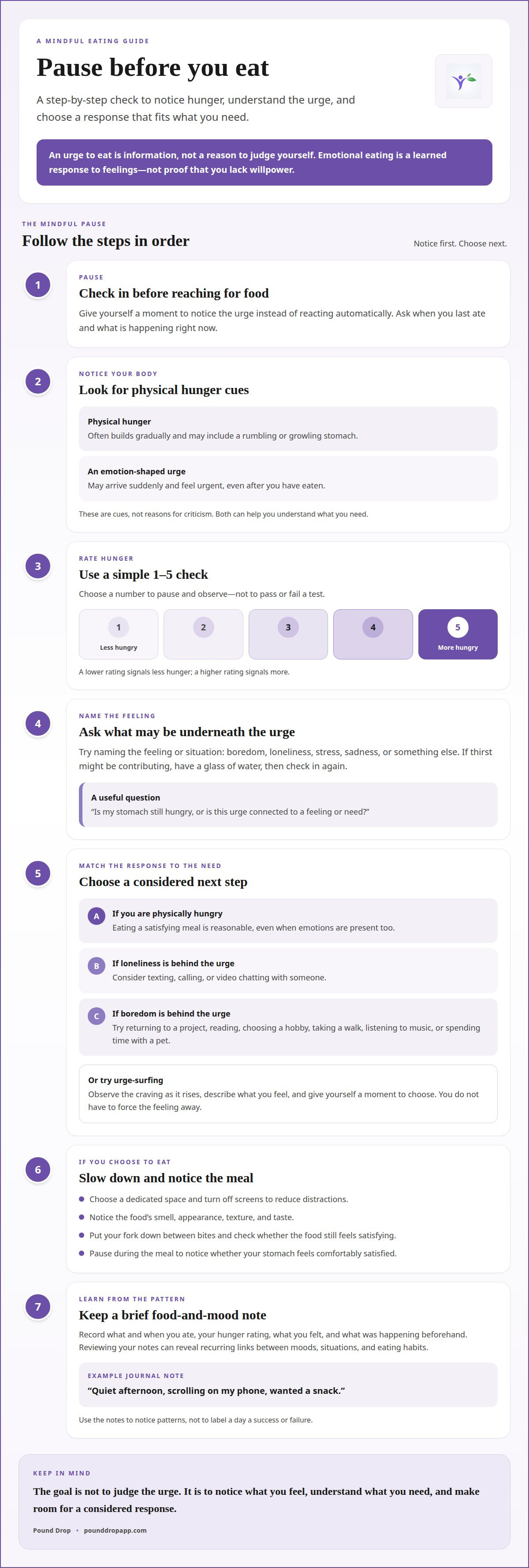
Pause mindfully before eating. Check for physical signs, such as a growling stomach, and name what you’re feeling. If you choose to eat, slow down and notice the food’s taste, smell, and texture. This can help you distinguish enjoying a meal while hungry from eating quickly to change an uncomfortable mood. Exercise, a call with a friend, or another activity may better meet the need behind a boredom-driven urge.
Emotional eating may involve eating more than intended, often including sweet, fatty, or high-calorie foods. It can follow negative feelings, but can also happen at social events and during positive moments. Short-lived comfort may be followed by guilt or shame, making the pattern harder to understand. A journal can help you record what happens without labeling a day a success or failure.
When can emotional eating be a sign of binge eating disorder? Repeatedly eating very large amounts after already feeling full can be a warning sign, especially if the episodes feel difficult to control. Emotional eating alone doesn’t establish a diagnosis. A healthcare professional can assess what’s happening and discuss support.
2. Mindful eating and awareness of hunger and fullness
A brief pause before eating can help you distinguish physical hunger from an urge shaped by emotion. Physical hunger often builds gradually and may include signs such as a rumbling stomach. Emotional hunger can arrive suddenly and feel urgent, even after you’ve eaten. Neither cue calls for criticism; each offers information about what you need.
Try this check before reaching for food: notice when you last ate, look for a physical hunger sign, and name your current feeling. You can rate hunger on a scale from 1 to 5, where a lower rating signals less hunger and a higher rating signals more. The number isn’t a test. It’s a simple way to pause and observe your behavior.
If thirst might be contributing to the sensation, start with a glass of water, then check in again. Ask whether your stomach still feels hungry or whether the urge is tied to boredom, loneliness, or another emotion. Emotional hunger may seem to demand immediate comfort, while physical hunger can usually wait as you decide what to eat.
Mindfulness can help you notice urges and eating cues before reacting automatically. Urge-surfing puts that pause into practice: observe the craving as it rises, describe what you feel, and give yourself a moment to choose. You don’t have to distract yourself or force the feeling away. The aim is to make room for a considered response.
When you eat, reduce distractions by choosing a dedicated space and turning off screens. Notice the food’s smell, appearance, texture, and taste. Put your fork down between bites and check whether the food still feels satisfying. Eating slowly can make fullness easier to notice than eating while scrolling or watching a show.
Fullness is a useful cue, not a rule you need to follow perfectly. Pause during a meal and ask whether your stomach feels comfortably satisfied. If you’ve eaten recently and don’t notice physical hunger, consider whether you’re seeking comfort or stimulation instead. If you are hungry, eating a satisfying meal is reasonable, even when emotions are present too.
A short note in a journal can help you reflect on these check-ins: record your hunger rating, feeling, and what happened after pausing. Over time, that record may make recurring cues easier to recognize. For another structured way to support weight-loss habits, explore the Pound Drop App.
3. Stress, sadness, loneliness, boredom, and fatigue as triggers
Food can become a quick response to stress, loneliness, or boredom when those feelings are difficult to sit with. After a tense workday, someone might snack while replaying a disagreement, even without physical hunger. A quiet evening might prompt eating simply to add stimulation. Triggers vary, so noticing the feeling and situation can clarify what food is doing in that moment.
Stress may make comfort food especially appealing. Chronic stress can raise cortisol, a hormone that may contribute to cravings for high-calorie foods. Sadness and anxiety can also lead someone to seek temporary comfort or distraction through eating. The relief may not last, and overeating may leave the original worry untouched. Naming the emotion, such as “I feel anxious about tomorrow,” makes it more specific than a general urge to eat.
Loneliness may point to a need for connection, while boredom may signal a need for interest or activity. Houston Methodist dietitian Kasey Kilpatrick recommends texting, calling, or video chatting with someone when loneliness is behind the urge. For boredom, return to a project, read a book, or choose a hobby. A walk, music, or time with a pet can also shift your focus.
Fatigue can shape cravings too. When you’re tired, your body may seek quick energy from sugary foods or carbohydrates. If you notice this pattern after a demanding day, consider whether rest or a calmer routine would address the need more directly. A short walk can offer a change of pace when stress builds, while a quiet place may help you settle before deciding what would feel supportive.
For stress, Kilpatrick suggests breathing exercises, meditation, or walking somewhere quiet. Keep a five-minute mindful breathing exercise ready for moments when familiar triggers appear. You might also try slow breaths before entering the kitchen, then decide whether you need food, a pause, or another form of comfort. If the feeling is overwhelming, Kilpatrick says it’s okay to wait until you feel more settled before choosing another coping strategy.
Choose specific alternatives before the next difficult moment. For example, decide to call a friend after a lonely evening or work on a small project when boredom starts. For sadness, Kilpatrick suggests making a gratitude list or watching comedy. These actions don’t require denying how you feel. They offer another response, so eating doesn’t have to carry the full weight of stress, anxiety, or disconnection.
If emotional eating feels persistent or overwhelming, consider discussing it with a healthcare professional. Emotional eating alone doesn’t establish an eating disorder, but support can help you understand recurring triggers and find coping strategies that fit your circumstances.
4. Support from healthcare providers, dietitians, and therapists
Support can help when emotional eating feels persistent, overwhelming, or difficult to change alone. A primary care doctor is one starting point: describe how eating relates to your mood, routine, and health concerns. The doctor can discuss these concerns and refer you to a suitable health professional. Bringing journal notes about when urges happen can make the conversation more specific.
A therapist can help you explore the feelings and situations connected with eating, then practice responses that don’t rely on food for comfort. Cognitive behavioral therapy, or CBT, can help people change eating habits and cope with unpleasant emotions in healthier ways. For example, a therapist might help you notice a recurring thought after conflict and develop a different response.
A registered dietitian can help you understand your eating routine and plan satisfying meals and snacks. This support can be useful if long gaps between meals, restrictive habits, or uncertainty about food are adding strain. A dietitian can also help identify practical choices that fit your daily life, rather than treating one food or one difficult day as the whole problem.
Emotional eating is not, by itself, a diagnosis of an eating disorder. Still, a therapist or doctor can help assess whether a broader concern needs attention. Eating more than the body needs over time may increase the risk of health problems, including type 2 diabetes, heart disease, high blood pressure, stroke, obesity, and some cancers. These risks are not a reason for blame; they are a reason to seek thoughtful support when eating feels hard to manage.
Food choices can support steadier energy without turning eating into a strict set of rules. Meals and snacks that include protein and healthy fats may help prevent blood sugar spikes that can lead to cravings. Snack options include fruit, vegetables with a dip, nuts, or popcorn without butter. A dietitian can help you consider how these choices fit your needs, preferences, and regular eating pattern.
Support from friends or family can also make behavior changes feel less isolating. Tell someone you trust what kind of encouragement helps, such as sharing a walk or checking in after a stressful day. If shame affects your relationship with food, a mental health professional can help you talk about it without judgment. Asking for support is a practical step, not a measure of willpower.
5. Exploring underlying emotions and loneliness
Boredom can describe an empty moment, but it may also cover a harder feeling. You might reach for snacks during a quiet evening, then notice sadness or frustration underneath. Food can briefly shift your attention from a worry or difficult relationship. The useful question isn’t “Why can’t I stop?” but “What might I need right now?”
Name the feeling before deciding what to do. Write a short phrase, such as “I feel disconnected after working alone” or “I’m avoiding a difficult conversation.” Then ask what might address that need more directly. If you’re missing connection, text someone you trust. If you feel restless, choose a small activity that gives the moment direction.
What can you do instead of eating when you feel lonely? Reach out to a friend or loved one by text, phone, or video chat, or spend time with a pet. If you can’t connect with someone at that moment, choose a comforting activity, such as reading or listening to music, while acknowledging that you still feel lonely.
Notice the difference between the first feeling and the emotion beneath it. For example, “I’m bored” might become “I’m lonely because I haven’t spoken with anyone today.” When you’re not hungry, that added detail can point to a response that fits better than eating. It can also help you understand whether cravings tend to follow particular situations, such as an argument or an unstructured evening.
Use a journal to map the pattern without judging yourself. Note the situation, the feeling you first noticed, what you did, and what you needed. An entry might read, “After a tense call, I wanted comfort food; I actually wanted reassurance.” Look for recurring links, then choose a small experiment for next time, such as taking a short walk after a stressful call or arranging a check-in with a friend.
Some habits may distract you from an emotion briefly without resolving the underlying concern. If sadness, fear, anger, or loneliness keeps returning, consider talking with a therapist. A therapist can help you explore the pattern and practice healthier ways to cope. If emotional eating feels overwhelming, persistent, or disruptive to daily life, seeking support is a constructive next step.
Progress can mean recognizing the need, even if you still eat afterward. You might notice loneliness, send a message, and then decide you also want a meal. That’s different from expecting food to solve the feeling by itself. To make reflection part of your routine, start tracking your habits alongside your weight-loss efforts.
Pound Drop
Pound Drop offers a self-guided structure for building weight-loss habits alongside the emotional eating strategies discussed here. The Pound Drop App, The Method, The Book, and The Journal provide tools to support tracking and managing progress. They may suit you if you want more consistency in everyday lifestyle changes while noticing your food patterns. Progress can start with small, repeatable steps, such as recording a habit and reflecting on what you want to practice next. If emotional eating feels overwhelming or persistent, a healthcare professional, dietitian, or therapist can support those concerns. To explore how Pound Drop may fit your goals, contact Pound Drop.
Build a steady next step
Learning how to stop emotional eating when bored or lonely is less about getting every moment right and more about building a response you can return to. A difficult evening doesn’t erase what you’ve learned. Treat each new urge as a chance to notice what matters to you and choose one manageable next step.
That step might be practicing a new habit, reflecting on what you want from a weight-loss journey, or finding appropriate support. If you’d like a structured, self-guided approach, Pound Drop’s tools can help you work toward lifestyle changes at your own pace. If emotional eating feels overwhelming or persistent, support from a healthcare professional, dietitian, or therapist remains important.
For support with your next step, reach out to Pound Drop. You don’t need a perfect plan to begin. Keep moving forward with patience, one choice at a time.
Frequently Asked Questions
What is emotional eating?
Emotional eating means using food in response to feelings or situations, rather than only to meet physical hunger. Someone might snack after an upsetting message, for example, even if they recently ate. It can also happen during pleasant occasions, such as a family gathering. This learned behavior isn’t a character flaw. Noticing what food seems to provide, such as comfort or distraction, can clarify the need behind the habit.
How to get back on track?
After eating more than you intended, return to your usual routine at the next meal rather than compensating by skipping food or restricting yourself. Acknowledge what happened, note any relevant trigger, and consider one supportive choice for later. For instance, after a difficult evening, plan a regular breakfast and decide how you might handle a similar situation next time. Self-forgiveness helps keep one episode from becoming a reason to abandon your efforts.
Why do boredom and loneliness trigger emotional eating?
Boredom can leave time feeling unstructured, while loneliness can bring a desire for comfort or connection. If eating has offered temporary relief before, your brain may learn to associate food with that pleasant shift in mood. A quiet night spent scrolling, for example, may become linked with repeated snacking. Food can briefly distract from an uncomfortable feeling, but may not address the underlying need for stimulation, companionship, or emotional support.
How can I tell emotional hunger from physical hunger?
Physical hunger often builds gradually and may include body cues, while emotional hunger can feel sudden and urgent. Recall when you last ate and whether your stomach feels physically hungry. For example, if an urge appears just after a meal following a stressful message, pause to identify the feeling before deciding what would help. Cues can overlap, so this check is for awareness, not a strict test or a reason to deny yourself food.
What are practical steps to stop emotional eating when bored?
Learning how to stop emotional eating when bored or lonely can begin with choosing an activity before the next unstructured moment. Set aside a book, creative project, or short walk as an alternative, then notice whether the urge changes afterward. If you still feel physically hungry, eat rather than treating distraction as a rule. If boredom keeps masking sadness, anxiety, or another concern, consider talking it through with someone you trust or a therapist.
How can I plan snacks and meals to reduce emotional eating?
Plan satisfying regular meals and snacks rather than relying on strict food rules that leave you feeling deprived. Include protein and fiber in meals, and choose convenient snacks such as fruit, nuts, or vegetables with dip. For example, prepare a snack before a long afternoon at home, when boredom often appears. Variety and room for an occasional treat can make a routine more sustainable than labeling foods as forbidden.
When should I seek therapy or professional help for emotional eating?
Consider professional support if emotional eating feels persistent, overwhelming, difficult to control, or disruptive to daily life. A doctor can discuss health concerns and help connect you with appropriate support. A registered dietitian may help with eating routines, while a therapist can explore emotional triggers and coping habits. Repeated episodes of eating very large amounts after feeling full also warrant discussion with a healthcare professional, who can assess your situation.
What treatments help emotional eating, such as CBT or counseling?
Cognitive behavioral therapy can help people recognize patterns between thoughts, feelings, and eating, then practice different ways to cope. Counseling can also offer space to explore issues such as loneliness, relationship stress, or anxiety that contribute to the pattern. A therapist can help you develop strategies suited to your needs. A dietitian may complement this support by helping you build a satisfying, practical eating routine.


