


Article by
Jesper Sorensen
Jesper Sorensen is a holistic health coach and founder of Pound Drop, a different approach to weight loss built around healthier habits. He has written ebooks and health articles for established publishers and has spent years studying nutrition, healthy eating and sustainable weight management.
What if a dinner invitation could fit your healthy habits without turning the meal into a negotiation? Handling dinner invitations when trying to eat healthy can be simple: let your host know about dietary needs ahead of time, offer to bring a suitable dish, and make choices that feel comfortable for you. You can be considerate of the host and still take care of yourself.
It’s understandable to wonder how to explain your choices without drawing attention away from the evening. A brief, warm message is often enough, so you can focus on enjoying time together rather than discussing every item on your plate. This guide covers offering to bring a dish, communicating graciously, planning drinks, and asking how to support your host. You’ll also find practical ways to maintain steady habits at social events without expecting every meal to go perfectly.
Key Takeaways
- Coordinate a dish with the host so it complements the meal and works for your needs.
- Prepare a brief, gracious way to explain food choices, then bring the conversation back to enjoying time together.
- If you drink alcohol, alternate each alcoholic beverage with sparkling mineral water.
- Ask what would help the host most, whether that’s bringing a dish, a preferred drink, or lending a hand.
- At dinner, build a plate that includes salad or steamed vegetables, and remember that one meal doesn’t define your habits.
1. Offering to bring a suitable dish
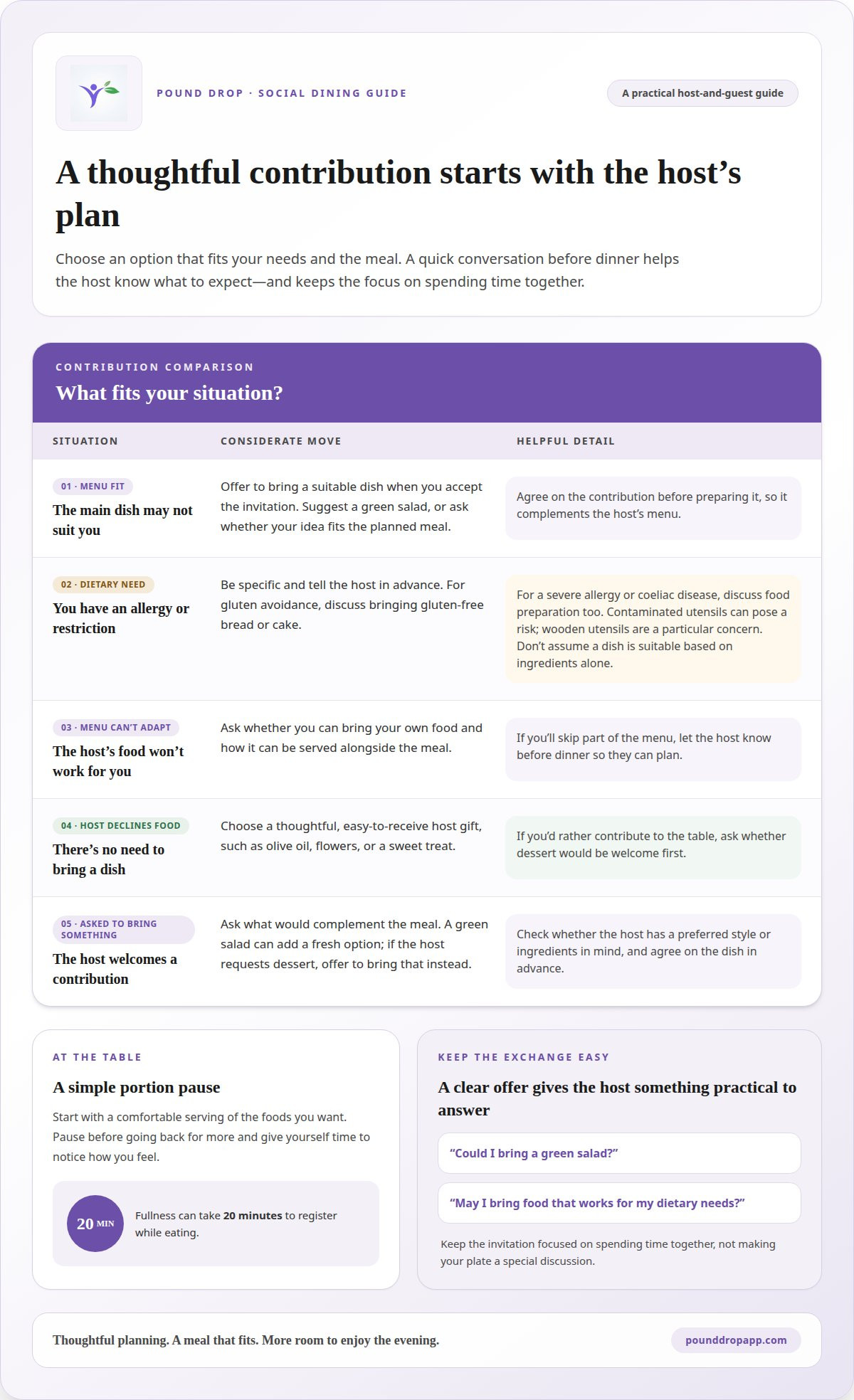
If you think the main dish may not suit your needs, offer to bring something when you accept the invitation. Tell your host what you have in mind and ask whether it fits the planned meal. A green salad, for example, can add a fresh option without changing the menu. This simple conversation helps everyone know what to expect before dinner.
Be specific about dietary needs, especially when they involve an allergy or medical restriction. If you need to avoid gluten, discuss bringing gluten-free bread or cake, and tell the host in advance. With a severe allergy or coeliac disease, discuss food preparation too. Contaminated utensils can pose a risk, and wooden utensils are a particular concern. Don’t assume a dish is suitable just because its ingredients seem right.
Bringing your own food is another option if the host’s menu can’t be adapted to your needs. Briefly explain what you plan to bring and ask how it can be served alongside the meal. If you’ll skip part of the menu, let the host know before dinner. That gives them a chance to plan instead of wondering why you aren’t taking a serving.
For a host gift, choose something thoughtful and easy to receive. Olive oil, flowers, or a sweet treat can show appreciation when the host says there’s no need to bring food. If you’d rather contribute to the table, ask whether dessert would be welcome. Checking first avoids adding a dish that clashes with the meal or creates extra work.
A green salad is a practical contribution when the host invites guests to bring something. Ask whether they have a preferred style or ingredients in mind, then choose a salad that complements the planned dishes. If the host requests dessert instead, offer to bring that. Agree on the dish before preparing it, so your contribution fits the gathering.
How can you manage portions at a dinner party? Start with a comfortable serving of the foods you want, then pause before going back for more. Fullness can take 20 minutes to register while eating, so give yourself time to notice how you feel.
Keep the invitation focused on spending time together, not on making your plate a special discussion. A clear offer, such as “Could I bring a green salad?” or “May I bring food that works for my dietary needs?” gives the host something practical to answer. If the host declines extra food, a small gift like flowers still lets you show your appreciation.
2. Keeping explanations brief and gracious
Prepare a simple sentence before you arrive, especially if you feel unsure about discussing food. For example, say, “I’m choosing lighter options tonight, but I’m glad to be here.” If you have a dietary restriction, name it clearly: “I can’t eat gluten, so I’ll skip the bread.” Practising a short phrase beforehand can help you speak calmly at the table. You don’t need to explain your whole routine or justify every choice.
Match your explanation to the situation. A medical restriction may need a direct, specific description, while a personal preference can be brief. “I’m avoiding that ingredient” is enough if the dish simply isn’t right for you. If someone asks why you’re passing on an option, you can add, “It doesn’t fit what I’m working on right now.” Then let the conversation move on.
Keep your tone warm and focus on your own choice. “That looks delicious, but I’ll pass” acknowledges the host’s effort without accepting food you don’t want. If someone encourages you to try something, “Thank you for offering; I’m comfortable with what I’ve chosen” sets a kind boundary. Avoid judging the dish or telling other guests what to eat. Personal, neutral language makes the exchange easier.
If a guest questions your choice, you don’t have to defend it. Try a brief response, then redirect: “I’m feeling good with this, thanks. How did you choose the recipe?” Asking about the host’s meal, a recent trip, or a shared interest can shift attention naturally. If the conversation returns to your plate, repeat your boundary calmly rather than adding a longer explanation.
Practise two phrases before the event: one for declining food and one for answering a follow-up. For example, “No, thank you, I’m satisfied,” and “I’m making choices that feel good for me.” These lines give you a ready response without turning dinner into a discussion about eating habits. Keep your focus on the people around the table. You accepted the invitation to share an evening, and conversation, laughter, and connection matter as much as the menu.
Even when a food isn’t dangerous for you, you may still choose to avoid it. A brief reason is enough when declining. Keep your explanation centered on your own needs, rather than judging what is being served. If a question catches you off guard, return to a courteous phrase you’ve chosen, then move the conversation along.
If you’re unsure how to describe your dietary needs, practise a polite phrase in advance so it’s ready when you need it. Keep the wording simple and respectful, without inviting a longer discussion. A dinner invitation is about being together, not just the food on the plate. Focusing on conversation and company helps you take part in the evening while making the choice that feels right for you.
3. Planning alcohol intake and alternating drinks with water
Decide what you’d like to drink before arriving, so the first offer doesn’t make the choice for you. If you plan to have alcohol, choose a comfortable pace and alternate each alcoholic beverage with sparkling mineral water. You can also start with water, then decide whether you want an alcoholic drink with dinner. A plan gives you a simple reference point as conversations and refills move around the table.
How can you handle pressure to eat more or drink alcohol at dinner? Use a warm, direct reply, such as, “No, thank you, I’m comfortable with what I have,” or, “I’m choosing sparkling water tonight.” If someone offers again, repeat your answer and shift the conversation to the meal or another topic.
Choose a nonalcoholic drink you’ll enjoy. At a gathering without alcohol, kombucha can be an option to bring or order if it suits the occasion. Sparkling water with a slice of citrus is another simple choice. Holding a drink can make it easier to join a toast or conversation without accepting a refill. You don’t need to explain why your glass contains water.
Keep your next drink in mind at the table. If you have an alcoholic beverage, follow it with sparkling mineral water before choosing anything else. Ask for water when the host offers a refill, or simply say, “Could I have sparkling water, please?” If you’d rather not drink alcohol, say so and choose a nonalcoholic option. A calm, clear response helps keep the conversation from becoming a debate.
It’s fine to decline an alcoholic drink without giving a reason. “No, thanks, I’m all set” works for a toast, while “I’ll stick with water tonight” makes your preference clear. If a friend keeps offering, repeat the same phrase instead of adding reasons you don’t want to discuss. Then ask about the host’s recipe, compliment a dish, or bring another guest into the conversation.
Before leaving home, choose a simple approach: no alcohol, or an alcoholic drink alternated with sparkling mineral water. If the menu includes a special beverage, ask what it is and decide after hearing the options. You can adjust your plan as the evening unfolds. You’re there to enjoy dinner and company, not to match another guest’s drink or pace.
People with dietary restrictions can contact dinner hosts to discuss their needs. Guests and hosts can review the different parts of the planned menu together; others in the host’s social circle may have specific food needs. Ask whether your host needs anything specific or prefers a beverage to pair with the meal. Parents should discuss a child’s severe peanut or milk allergy with the party hosts.
4. Asking the host what they need
Contact the host soon after receiving the invitation, while the menu is still flexible. Start by thanking them, then share any dietary needs and ask what would be useful. For example: “Thanks for inviting me. I have a food restriction. Could we talk through the menu and see what might work?” This gives the host time to consider options instead of making decisions at the table. It also shows that you want to make the evening easy for everyone.
What questions should you ask a host about the dinner menu? Ask what dishes they’re planning, what ingredients they contain, and whether anything can be adjusted. If an ingredient won’t work for you, suggest a simple alternative that others can enjoy too, such as replacing an unsuitable side with a shared vegetable dish.
Keep the conversation focused on practical details. Ask whether the main dish, sides, sauces, or dessert contain ingredients you need to avoid. If you have a serious peanut allergy, tell the host directly that you need to remain alert to it. For a severe allergy or coeliac disease, discuss preparation as well as ingredients, since contaminated utensils can be a concern. Clear questions help both of you understand what is manageable.
Shape your offer around the host’s needs. Ask, “Would dessert be helpful, or is there another part of the meal I can take care of?” Home cooks may feel pressure around dessert, so bringing it could ease their workload if they welcome the idea. If the host prefers a particular beverage with dinner, ask what they’d like. A specific offer is easier to answer than “Let me know if you need anything.”
If the host is a close friend, offer practical help with preparation. You could chop vegetables, prepare a side, or help organize dishes before guests arrive. Ask first whether company in the kitchen would be useful. If your host declines kitchen help, offer to keep them company or help with a small task they choose. This respects their routine while showing you care.
Your needs may not be the only ones to consider. A host might be accommodating another guest’s food preference or restriction, so discuss options together rather than assuming the menu is fixed. If your child has a severe peanut or milk allergy, speak with the party host before the event and explain the restriction plainly. If the planned food won’t work, you can discuss a suitable arrangement before anyone arrives.
5. Maintaining consistent healthy habits around social events
Healthy habits are built across ordinary days, not decided by one dinner. Before an event, choose a simple intention, such as enjoying conversation, noticing when you feel satisfied, or choosing vegetables alongside the main dish. At a restaurant, look for a meal that includes vegetables, then decide what sounds satisfying from the options. A flexible intention gives you direction without requiring the evening to follow a strict script.
How can you choose healthier options at a restaurant dinner? Look for a dish with vegetables or salad, and consider how the sides, sauces, and cooking style fit your preferences. If you’d like, ask for a side salad or steamed vegetables, then choose something you’ll enjoy.
At a dinner party or restaurant, serve yourself a comfortable portion and take time between bites. A practical guide is to fill half your plate with salad or steamed vegetables when those options are available. Then choose other dishes you enjoy, rather than treating the meal as an all-or-nothing test. If you’re still hungry, pause and decide whether another serving would feel good.
How can you balance healthy eating with occasional indulgent meals? Enjoying an indulgent meal each week doesn’t mean you’ve lost control or need to compensate afterward. Return to your usual habits at the next meal instead of skipping food or setting stricter rules. Handling dinner invitations when trying to eat healthy is about building flexibility into your routine, not expecting perfect choices.
Consistency also means making room for real social moments. If dessert doesn’t appeal, a gracious “I had a big lunch, so I’ll pass, but thank you” can close the offer without criticizing the host. If someone comments on your plate, answer briefly and redirect: “I’m happy with what I chose. How did you make the sauce?” These small responses protect your comfort while keeping the focus on the shared evening.
After dinner, reflect on one useful detail rather than judging the whole event. Perhaps asking about the menu beforehand made the evening easier, or choosing vegetables helped you feel satisfied. Carry that observation into the next invitation. Handling dinner invitations when trying to eat healthy gets easier when you focus on repeatable choices across your routine instead of perfection at one meal.
For support in building steadier routines beyond social occasions, explore practical habit support as part of your ongoing approach.
Pound Drop
Pound Drop offers a structured, self-guided approach to building habits that can carry into social occasions. If dinner invitations make it harder to stay consistent, the Pound Drop App and The Method provide a framework for managing progress beyond a single meal. The Book and The Journal can also support reflection and tracking as you notice which choices feel sustainable in everyday life.
Use these tools when you want more structure around your ongoing habits, not a rigid plan for every dinner. A host’s menu may vary, and your choices can vary too. The aim is to return to routines that work for you, without treating one meal as a measure of success or failure.
For more information about how Pound Drop may support your routine, contact Pound Drop.
Carry Your Habits Into the Next Invitation
Each social event is a chance to learn what helps you feel comfortable and present. After dinner, take a moment to notice what you’d like to carry into the next gathering. Perhaps setting an intention beforehand helped you feel at ease, or focusing on connection made it easier to enjoy the evening without judging each choice. Small observations can guide your routine without turning a meal into a test.
Handling dinner invitations when trying to eat healthy doesn’t require perfect choices. Find approaches that fit your life, then return to them with patience. Your preferences may shift from one occasion to another, and that’s part of building lasting habits. Give yourself room to enjoy time with others while continuing to make choices that feel right for you.
If you’d like support as you build a steady approach to your habits, contact Pound Drop. Keep taking the next manageable step, one invitation at a time.
Frequently Asked Questions
How Can I Be a Gracious Dinner-Party Guest With Food Restrictions?
Be gracious by communicating clearly, respecting the host’s plans, and following their lead at the table. If you bring a separate dish, briefly explain which food is yours so nobody has to guess. Wait until the host sits down before beginning, and thank them for including you. If a dish isn’t suitable, decline politely without criticizing the recipe. Good manners and clear boundaries can go together.
I’ve Been Invited to Dinner - What Should I Do?
Reply to the invitation, then decide whether you need to share a dietary concern or ask about the meal. If you have a restriction, tell the host early and explain what you need to avoid. If you don’t, ask whether they’d like you to bring anything. Note the agreed plan so you can arrive prepared and avoid last-minute questions.
What can you do if you don’t know the hosts very well?
Keep your message friendly, direct, and focused on what the host needs to know. You could write, “Thank you for inviting me. I have a dietary restriction and would like to understand the menu.” Share only relevant details, then give the host time to respond. If you feel uneasy about attending after discussing the food, you can politely decline rather than force yourself into an uncomfortable situation.


