


Article by
Jesper Sorensen
Jesper Sorensen is a holistic health coach and founder of Pound Drop, a different approach to weight loss built around healthier habits. He has written ebooks and health articles for established publishers and has spent years studying nutrition, healthy eating and sustainable weight management.
A higher number on the scale is a reason to pause and notice a pattern, not proof that you’ve failed. Dealing with fear of regaining lost weight starts with responding calmly to changes, rather than reaching for strict rules or treating one meal as a setback that defines your progress.
If the possibility of regain makes food stressful or leaves you watching the scale closely, that worry can be hard to carry. You don’t need perfect control to build supportive habits. You can learn from a difficult moment, return to regular routines, and make adjustments without starting over.
This article explains how to understand everyday weight changes, rebuild trust around food, and notice progress beyond a single number. It also explores when fear may be affecting daily life and how steady habits, flexibility, and self-awareness can offer a more grounded way forward.
Key Takeaways
- Read a higher scale number in context; daily changes don’t always mean meaningful regain, so look for patterns over time.
- Treat a lapse as information, not failure. Returning to regular, supportive routines can help you rebuild confidence around food.
- Notice when fear or body-image worries are affecting everyday life, and consider seeking support rather than carrying the distress alone.
- Track progress beyond weight, including wellbeing, fitness, and habits that help you feel more capable day to day.
- Build routines around realistic, enjoyable choices so progress can adapt as life changes.
How can I trust myself around food again?
Trust grows through repeated responses, not perfect eating. A single meal can be a chance to learn, rather than proof that your progress has disappeared.
Responding to Setbacks
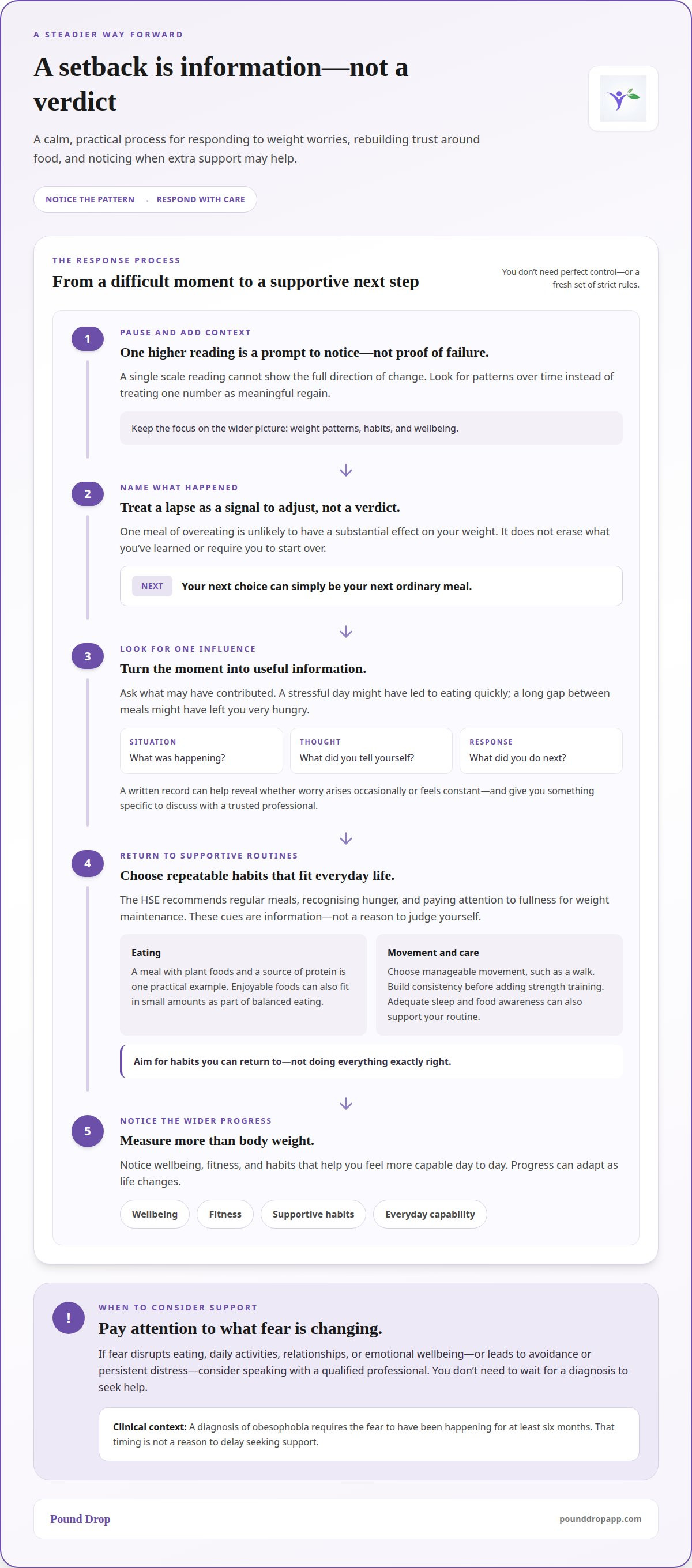
Building trust means treating a difficult eating moment as a signal to adjust, not a verdict on your ability. That distinction matters: a setback can prompt a useful response without requiring a new set of strict rules. One meal of overeating is unlikely to have a substantial effect on your weight. Your next choice can simply be your next ordinary meal.
Try naming what happened, then identify one possible influence. Perhaps a stressful day led you to eat quickly, or a long gap between meals left you very hungry. That observation gives you something practical to respond to, such as pausing during meals or returning to a steadier routine. Regaining weight doesn’t erase what you’ve learned. You can draw on past experience while staying flexible about what works now.
Developing Healthy Eating and Exercise Habits
Healthy habits are repeatable ways of eating and moving that can fit into everyday life. They matter because familiar routines offer a steadier guide than reacting to every change in appetite or motivation. The HSE recommends regular meals, recognising hunger, and paying attention to fullness for weight maintenance. A meal with plant foods and a source of protein can be one practical example of a supportive routine.
Eating well doesn’t mean avoiding every food you enjoy. The HSE says foods high in fat, sugar, and salt can be included in small amounts as part of balanced eating. For movement, choose a manageable activity, such as a walk, and build consistency before adding strength training. Adequate sleep and greater food awareness can also support your routine. The aim isn’t to do everything exactly right, but to practise habits you can return to.
Creating Safety Around Food
Feeling safe around food means making room for meals without turning each choice into a test of self-control. That matters when fear makes eating feel unpredictable or weighed down by rules. The HSE’s advice to recognise hunger and notice fullness offers a starting point: check in before eating, then pause during a meal and notice how your body feels. These cues are information, not a reason to judge yourself.
At lunch, for example, notice whether you feel physically hungry, distracted, or tense. During the meal, pause and check whether you feel comfortably satisfied. You don’t need to interpret every sensation perfectly. Calm, repeated check-ins can help you learn your own patterns. If fear of eating or regaining weight feels intense or makes daily life harder, seeking support can be a helpful next step.
Fear of Regaining Weight: Is It Keeping You From Losing Weight?
Fear can shift your attention from wellbeing to constant monitoring, restriction, or avoiding food. Understanding how worry affects your daily choices can help you decide what support and coping tools may be useful.
Fear and Anxiety About Weight Regain
Fear of regain is anxiety about gaining weight again, sometimes accompanied by worries about eating, appearance, or losing control. It matters when those thoughts begin shaping ordinary choices, such as avoiding meals with friends or exercising mainly to compensate for eating.
Notice what the fear leads you to do. For example, write down the situation, the thought, and your response after a stressful meal. This can reveal whether the concern arises occasionally or feels constant. A written record gives you something specific to discuss with a trusted professional, rather than treating every worried thought as fact.
Realistic Weight Regain Expectations
There isn’t one rate that describes realistic regain for everyone after weight loss. Weight patterns vary, and one reading cannot show the full direction of change. In the specific context of bariatric surgery, a 10-20% regain after reaching maintenance is described as common. That context should not be treated as a universal expectation for everyone.
So, what is a realistic rate of weight regain after weight loss? It depends on the person and circumstances, and one figure cannot define everyone’s experience. Focus instead on whether changes form a continuing pattern and how your habits and wellbeing are changing alongside them.
When Fear Becomes a Larger Concern
Fear may need more attention when it disrupts eating, daily activities, relationships, or emotional wellbeing. Intense fear of eating or regaining weight can be a sign that support would help. A diagnosis of obesophobia requires the fear to have been happening for at least six months, but you don’t need to wait that long to seek help.
Specific phobia disorders affect about 1 in 10 American adults and about 1 in 5 American teenagers at some point in life. Those figures describe specific phobias overall, not a diagnosis for any one person. If fear is driving avoidance or persistent distress, share those effects with a qualified professional.
Therapy for Fear of Weight Regain
A therapist can help you understand anxious thoughts and practise responding to them differently. Cognitive behavioral therapy can help people with obesophobia understand and manage their thoughts and emotions.
For example, a therapist might help you approach a feared food-related situation gradually, at a pace suited to treatment. You can also practise breathing exercises, muscle relaxation, meditation, or yoga as coping techniques. These approaches offer structured ways to work with anxiety rather than letting it make every decision.
Exercise can be part of a supportive routine, but it doesn’t need to repay you for eating. Choose manageable movement, such as an enjoyable walk, and notice whether it helps you feel steadier. If activity is driven by panic or body-image distress, discuss that pattern with a professional. Support can also help you find other ways to manage stress, especially if you’ve used food to self-soothe.
Responding to weight increases with manageable changes
A higher reading is a reason to consider context and patterns, not to make a sudden change. Daily weight can shift with hydration, carbohydrate intake, sodium, digestion, and food still in the body. Dealing with fear of regaining lost weight can make a fluctuation feel urgent, so pause before deciding what it means.
Long-Term Changes Versus Temporary Dieting
Long-term lifestyle changes are repeatable adjustments to eating and activity, while temporary dieting relies on rules that may be hard to sustain. This difference matters because an abrupt response can make habits feel all-or-nothing. NHS Inform recommends reviewing eating and activity levels and adjusting them when weight shows an upward trend. Look for one manageable change instead of trying to overhaul everything at once.
For example, if your routine has become less active, add a walk that fits your schedule. If meals have become irregular, work toward a steadier pattern. The HSE recognises that changing habits and routines can be difficult, so adjustments may take practice. Flexibility helps you respond to changing circumstances without treating a lapse as proof that your efforts have failed.
Checking Weight and Habit Changes
Regular weighing and recording can help reveal whether weight is changing over time, rather than prompting a reaction to one result. NHS Inform recommends this approach during weight-loss maintenance. Record your weight consistently, then review the pattern alongside recent changes in eating, movement, sleep, or daily structure.
A higher reading after a weekend away doesn’t necessarily mean substantial body-fat regain. Consider whether travel changed your meals, activity, hydration, or usual routine. Your record can also include non-weight progress, such as more consistent walks or meal routines.
Ask what changed before deciding what to change next. Has work disrupted meal timing? Has poor sleep made movement harder? Choose a response that addresses the pattern you notice. If activity has dropped, a brief walk may be more practical than an ambitious exercise schedule. If stress has affected eating, consider what could make regular meals easier. Small, relevant adjustments are easier to assess than several new rules introduced together.
Weight-loss medication adds another consideration. If you’ve recently reduced, changed, or stopped medication, speak with the clinician managing your treatment. They can consider the timing of the change alongside appetite, eating patterns, and weight trends. For anyone dealing with fear of regaining lost weight, treating a medication change as information to discuss can be more constructive than blaming yourself.
Keep physical and mental progress in view. A diary might record energy, fitness, mood, waist measurement, and habits alongside weight patterns. For example, note whether walking feels easier or meals are more regular. These details can show how your routines affect your wider wellbeing. If weight trends upward, review your record, choose one manageable adjustment, and notice how it fits your life.
Finding measures of progress beyond body weight
A scale reading is one measure, not a complete account of progress. Looking at weight patterns alongside wellbeing, waist measurement, fitness, and everyday habits can give you a broader view of maintaining change.
How can you set a healthy weight range instead of fixating on one number? Consider weight patterns over time alongside how you feel, your waist measurement, fitness, and habits. A useful range is personal, not something to guess from one weigh-in. Discuss health measures with a qualified professional when you need guidance tailored to you.
Choose measures connected to everyday life. For example, note whether walking feels easier, you have more energy for daily tasks, or regular meals fit your routine. These observations capture changes a scale cannot describe. They can also help reveal which habits support your wellbeing, even when your weight varies.
A simple progress record can include several kinds of information:
- Weight pattern: Record readings consistently, then look at the direction over time rather than interpreting one result alone.
- Physical measures: Note waist measurement or how fitness activities feel, such as climbing stairs or taking a walk.
- Daily habits: Track routines you want to maintain, such as regular meals, enjoyable movement, or adequate sleep.
- Wellbeing: Write down changes in energy, mood, or confidence during ordinary activities.
Keep the record descriptive, not judgmental. Instead of writing “good” or “bad” beside a meal, note what happened: “I ate lunch before errands and felt focused afterward.” This connects a specific behavior with your experience. Over time, these details can show which choices feel sustainable, without turning every day into a test.
Weight loss can feel closely tied to self-worth, especially if the scale has become your main sign of success. For some people, dealing with fear of regaining lost weight starts with separating a measurement from personal identity. A changing number describes weight, not your patience, relationships, or ability to learn. You might value keeping up a walking routine even during a week when your weight doesn’t move as expected.
Use the measures together, not as competing scorecards. If weight shifts while fitness, energy, and routines remain steady, record both facts before deciding what they mean. Dealing with fear of regaining lost weight can also mean noticing progress in skills and routines, not only scale changes. If several measures change in a way that concerns you, review the pattern and consider what support or habit adjustment could help.
Shifting focus from weight to sustainable habits
A scale can draw attention toward losing more, even when your broader wellbeing deserves attention too. Healthy Ireland recommends choosing enjoyable activities and finding ways to include them in everyday life. That shifts the question from “How do I change the number?” to “What routine can I keep practising?”
Habits create a steadier focus because they describe actions you can repeat. For example, you might plan a regular breakfast, take an enjoyable walk, or make time for a strength activity that suits your day. These choices won’t necessarily change your weight immediately. They can still support a more balanced relationship with food, movement, and progress.
Try choosing one habit in each area, then make it specific enough to practise:
- Eating: Choose a regular meal routine that works with your schedule, such as sitting down for lunch during a work break.
- Movement: Pick an activity you enjoy, like walking with a friend or dancing at home, and make space for it in your usual week.
- Awareness: Notice what helps the habit happen, such as preparing walking shoes beside the door.
- Reflection: Record what you practised and how it felt, instead of judging the day by calories alone.
Focus on patterns, not perfection. If a busy day disrupts your planned walk, identify another opportunity that fits, such as walking part of your journey home. If meal timing changes, return to your usual routine at the next meal. This flexible response makes habits easier to resume than rules that depend on every day going exactly as planned.
Notice when weight loss becomes your only measure of success. Dramatic weight loss can leave some people increasingly focused on losing more and preoccupied with the scale. A useful check is to ask what else matters this week: perhaps having energy for errands, enjoying a meal with family, or keeping up a movement routine. These examples recognise progress without making body weight a measure of personal worth.
Calories can be one part of how people think about eating, but constant attention to them may not help everyone build a calmer routine. Consider whether your current approach supports regular eating, enjoyable activity, and mental wellbeing. If tracking makes you more anxious or rigid, shift your record toward actions you can practise, such as eating meals at regular times or taking walks you enjoy.
Choose a small habit, connect it to a familiar part of your day, and notice what helps it continue. Track habits that support lasting progress as you practise a routine focused on more than the scale.
Pound Drop
Pound Drop offers a structured, self-guided approach to building weight-management habits over time. If you want practical support for tracking progress and putting sustainable routines into practice, explore the Pound Drop App, The Method, The Book, and The Journa. Together, they offer different ways to engage with the system and reflect on progress beyond a single scale reading.
This approach may suit you if you’re ready to work independently and want structure for turning intentions into repeatable habits. It isn’t a substitute for professional support when fear around food or weight disrupts daily life. Choose the format that feels most useful for your routine, then focus on steady practice rather than perfection.
If you’d like a structured next step, explore Pound Drop’s app, The Method, The Book, or The Journa.
Choose a Next Step That Feels Sustainable
Your next step doesn’t need to solve everything at once. Choose one practice you’re willing to return to, even when a week feels unsettled. You might pause before reacting to a worry, write down what you need from your routine, or decide what kind of support would feel useful. Keep the goal realistic: a plan you can revisit is more helpful than a promise to do everything perfectly.
Dealing with fear of regaining lost weight can also mean making room for support while building confidence at your own pace. If you’d like a structured way to keep working on your habits, explore the Pound Drop App, The Method, The Book, or The Journa.
Contact Pound Drop to explore your next step. Progress can be gradual, and you can keep moving forward with patience.
Frequently Asked Questions
How can I best learn to cope with a fear of getting fat?
Start by noticing what triggers the fear and what it urges you to do. If a restaurant meal prompts thoughts about losing control, pause and take a few slow breaths before deciding what you need. Cognitive behavioral therapy can help you work with distressing thoughts, while relaxation exercises or meditation offer coping practices. If fear affects everyday choices, consider talking with a qualified mental health professional about support.
How can I stop obsessing over the number on the scales?
Reduce opportunities for repeated checking and give your attention another focus. If you weigh yourself several times in a day, consider putting the scale away between planned check-ins. Keep a short record of actions you value, such as joining a friend for a walk or eating with less stress. If scale-related thoughts continue to dominate your day, share that pattern with a mental health professional.
How do I enjoy social occasions without worrying about weight regain?
Make the occasion about connection, not a test of eating perfectly. For example, at a family dinner, choose a seat beside someone you enjoy talking with and take part in the conversation. You can decide what you’d like to eat without compensating before or afterward. If a food-focused gathering feels difficult, plan a quiet break or arrange to arrive with someone you trust.
How often should I weigh myself during maintenance?
NHS Inform recommends weighing regularly and recording results to notice changes over time, rather than reacting to a single reading. There isn’t one schedule that fits everyone. A consistent routine makes comparisons more useful, but repeated weighing that increases distress may not be helpful for you. If the number feels difficult to manage, discuss another way to monitor your progress with a healthcare professional.
Quick Facts: Why Do I Keep Gaining Weight Back?
Weight may return when routines that supported weight loss become difficult to maintain or no longer fit daily life. A work change might disrupt meal patterns, while a move could reduce familiar opportunities for activity. Changes to weight-loss medication are another reason to review your plan with the clinician managing your treatment. A higher reading alone doesn’t explain what’s happening; consider the wider pattern and recent changes.
What causes a fear of gaining weight?
Fear may grow from past experiences, distress about body image, or concern that eating and weight will feel out of control. Comments from others or pressure to maintain a particular appearance may add to that worry. Triggers differ from person to person. Notice whether the fear follows a specific situation, such as trying on clothes, seeing a photograph, or anticipating a meal with others.
What causes fear of regaining lost weight after weight loss?
After investing effort in changing habits, the possibility of returning to old routines can feel unsettling. A change in how clothes fit or a family comment may bring that worry into focus, even before a clear pattern emerges. Weight changes can also affect social experiences, especially gatherings centered on food. Identifying the situations that intensify your fear can help you decide what support or coping approach would be useful.
How common is weight regain after losing weight?
A 2024 longitudinal analysis published in the journal Obesity found that 55% of adults experienced weight cycling over five years. Weight cycling describes changes in weight over time; it doesn’t tell you what will happen in an individual case or explain the reasons behind someone’s pattern. Your own experience is best understood through its context, including your habits, wellbeing, and circumstances.


