


Article by
Jesper Sorensen
Jesper Sorensen is a holistic health coach and founder of Pound Drop, a different approach to weight loss built around healthier habits. He has written ebooks and health articles for established publishers and has spent years studying nutrition, healthy eating and sustainable weight management.
A diet setback doesn’t define your worth or erase your progress. If you’re wondering how to overcome diet failure, depression, and regain confidence, start with small, steady actions: speak to yourself kindly, return to regular meals, and choose manageable movement and support from others.
It can feel discouraging when a plan slips, especially if the scale seems to tell the whole story. But progress can show up in other ways, too: more energy, a steadier routine, or taking a step that once felt difficult. You don’t have to make up for a setback by being stricter with yourself.
This article explores how self-esteem, exercise, social connection, progress beyond the scale, and regular meals can support mood and confidence as you begin again. You’ll find practical ways to get started and keep going, while making room for difficult days instead of treating them as proof you can’t change.
Key Takeaways
- Separate your self-worth from changes on the scale, and notice when harsh self-talk is affecting daily life.
- Build confidence with manageable movement and supportive social connections that feel realistic to maintain.
- Track signs of progress beyond weight, such as routines you’re keeping and activities that feel easier.
- Use regular meals as a steady part of caring for your mood, especially when a setback disrupts your routine.
- Choose one small next step, and seek professional support if low mood is making everyday life difficult.
1. How low self-esteem affects daily life and mental health
Low self-esteem can shape everyday choices, from avoiding social plans to giving up on routines after a difficult day. The NHS notes that long-term low self-esteem can affect mental health and daily life, and may contribute to depression and anxiety. This doesn’t mean a change in weight defines your worth. It does mean persistent negative thoughts deserve attention, not blame.
To understand why a diet plan became difficult to follow, look at what was happening around the setback. Note skipped meals, stressful events, low mood, or rules that felt hard to sustain. Then choose one practical adjustment, such as making meals more regular or simplifying a routine. Treat the setback as useful information, not proof of personal failure.
Dieting doesn’t automatically cause depression or anxiety, but distress can occur alongside changes in eating and weight. Notice signs such as sadness, low motivation, spending excessive time in bed, or declining ability to manage daily tasks. Avoiding difficult situations may feel safer at first, yet the NHS explains that avoidance can reinforce fears and doubts over time.
Stressful life events, including serious illness or bereavement, can affect self-esteem, and low self-esteem often begins in childhood, according to the NHS. A practical exercise is to write down at least 5 positive things about yourself, then add to the list regularly. Include examples unrelated to weight, such as keeping a promise, showing patience, or asking for support.
When considering progress, look beyond the scale. A healthcare professional can assess measures such as waist circumference, exercise endurance and stamina, blood pressure, cholesterol results, and sleep quality. Together, these offer a broader picture of health. Health-focused weight loss may also support depression management by improving metabolism and self-esteem, but a person’s value isn’t measured by weight.
Consult a healthcare professional if low mood persists or begins disrupting daily life, relationships, or responsibilities. If weight regain comes with sadness, low motivation, excessive time in bed, or declining function, clinicians can assess mood and safety. Behavioral health support may also help with depressed mood, avoidance, loss-of-control eating, or intense self-criticism.
According to the NHS, counselling and cognitive behavioural therapy can help with low self-esteem. CBT can help you notice negative beliefs and consider whether they reflect the whole picture. Learning how to overcome the depression that can follow a diet setback and regain confidence can begin with this honest assessment, followed by one small, sustainable change.
2. Exercise, confidence, and social interaction
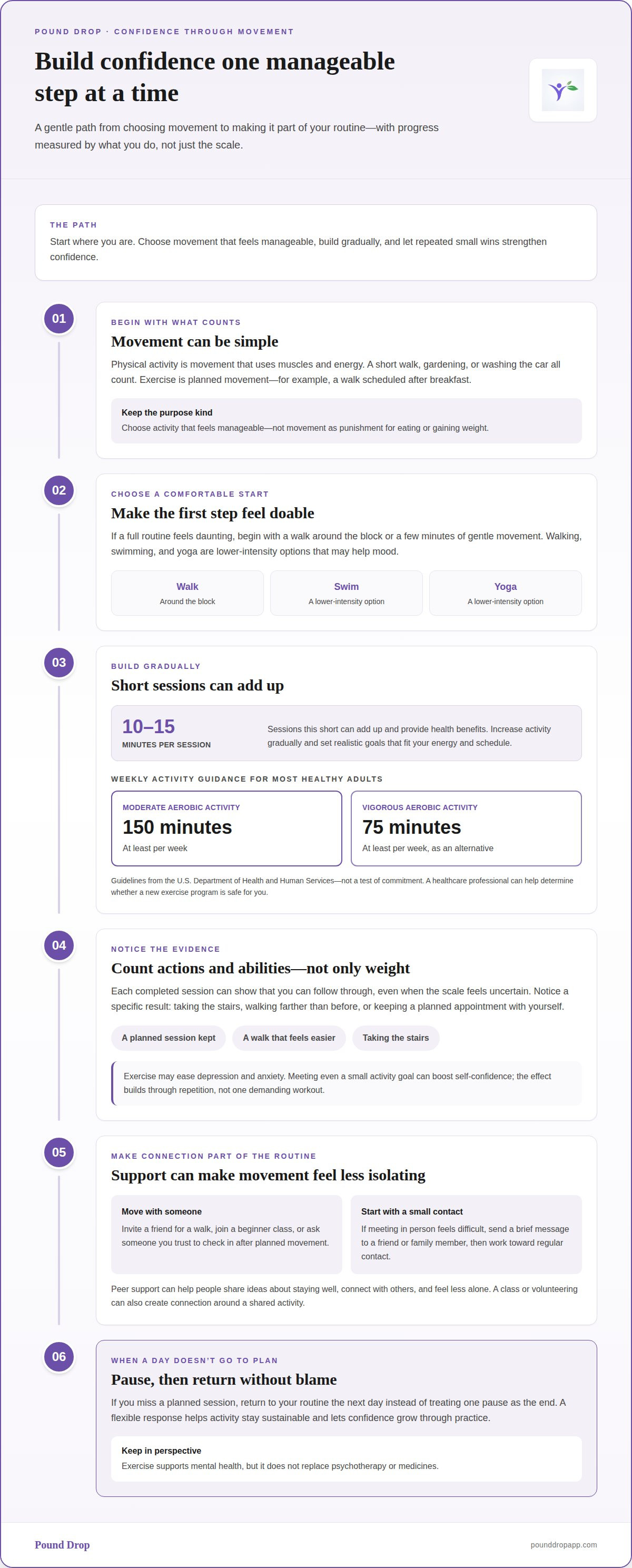
Movement can give your day structure and create a small, visible success. A short walk, gardening, or washing the car counts as physical activity because each uses muscles and energy. Exercise is planned movement, such as a walk scheduled after breakfast. Choose an activity that feels manageable, rather than using movement to punish yourself for eating or gaining weight.
For most healthy adults, U.S. Department of Health and Human Services guidelines recommend at least 150 minutes of moderate aerobic activity per week. For most healthy adults, U.S. Department of Health and Human Services guidelines recommend at least 75 minutes of vigorous aerobic activity per week as an alternative to moderate activity. These are guides, not a test of your commitment. A healthcare professional can help determine whether a new exercise program is safe for you.
If a full routine feels daunting, begin with a walk around the block or a few minutes of gentle movement. Sessions as short as 10 to 15 minutes can add up and provide health benefits. Walking, swimming, and yoga are lower-intensity options that may help mood. Increase activity gradually, and set realistic goals that fit your current energy and schedule.
Each completed session can show that you can follow through, even when progress on the scale feels uncertain. Notice a specific result: taking the stairs, walking farther than before, or keeping a planned appointment with yourself. Exercise may ease depression and anxiety, and meeting even a small activity goal can boost self-confidence. The effect builds through repetition, not one demanding workout.
Social contact can make activity feel less isolating. Invite a friend for a walk, join a beginner class, or ask someone you trust to check in after your planned movement. Peer support can help people share ideas about staying well, connect with others, and feel less alone. The NHS advises building relationships with people who are positive and appreciative, so notice how you feel after spending time with someone.
If meeting in person feels difficult, send a brief message to a friend or family member, then work toward regular contact. A class or volunteering can also create connection around a shared activity; volunteering may support self-esteem and reduce loneliness. You don’t need to explain every detail of your emotional health to benefit from company. Choose contact that feels respectful and manageable.
Exercise supports mental health, but it doesn’t replace psychotherapy or medicines. If you miss a planned session, return to your routine the next day instead of treating one pause as the end. This flexible response makes activity sustainable and helps confidence grow through practice.
3. Building confidence through nonscale progress
A scale records weight, but it can’t show every change that matters. Confidence can grow when you notice repeated actions, skills you’re building, or activities that feel easier. The NHS recommends setting a goal and taking on challenges to increase self-esteem. Choose a goal that reflects your life, such as preparing a meal at home or returning to an activity you enjoy.
Make your goal specific enough to know when you’ve done it. For example, decide to take a short walk after lunch or keep a regular bedtime. These are examples, not tests of worth. If plans change, note what got in the way and choose a smaller version for another day. Completing that next step gives you evidence that you can follow through.
Keep a simple progress record in a notebook or calendar. Each day, write down one action you took and what helped you do it. You might note that you ate lunch before work got busy, or asked a friend to join a walk. Reviewing these notes can reveal practical patterns that a single weigh-in can’t show.
You can also track how daily tasks feel. Note whether climbing stairs feels easier, you have more energy for errands, or physical activity fits more comfortably into your routine. These observations don’t replace medical measures. They’re personal markers that help you recognize your effort and changes in daily life.
Include emotional progress in your record. Write down a moment when you responded to a setback without harsh self-criticism, or contacted a friend instead of withdrawing. If symptoms such as low mood or anxiety continue to interfere with daily life, talk with a healthcare professional. Therapy, including cognitive behavioural therapy, can help address difficult thoughts and strengthen coping skills.
Notice what may affect your mood, too. A brief diary can help you see whether particular activities, places, or people leave you feeling better or worse. Mind advises avoiding alcohol and recreational drugs, which may worsen how you feel over time and make underlying problems harder to address. Recording drinking alongside your mood can help you spot a pattern to discuss with a professional.
Choose one meaningful measure to review each week, such as keeping a meal routine or making time for a hobby. Ask yourself what helped, what felt difficult, and what you want to repeat. Adjust your goal as circumstances change. Flexibility makes progress something you can practice, rather than a pass-or-fail judgment tied to weight.
4. Eating regularly to support mood
To restart healthy eating without restrictive dieting, begin by returning to regular meals and drinks. Choose familiar foods that satisfy you, then make one practical addition, such as fruit with breakfast or vegetables alongside dinner. This gives you a manageable next step without banning foods or treating eating as a test of willpower.
Depression can make everyday tasks, including shopping and cooking, feel difficult. Make your next meal easier with a simple option you already enjoy, such as soup with bread, yogurt with fruit, or a sandwich with a filling you like. If planning a meal feels like too much, focus on the immediate step: get something nourishing and a drink within reach.
Regular eating and drinking can be part of day-to-day self-care for people experiencing depression. For older adults, eating something at least every 3 to 4 hours is advised because going too long without food can worsen mood. A gentle reminder on a phone or a note beside the kettle can support that routine without turning it into a strict timetable.
Build meals around foods you can realistically access. A balanced diet includes vegetables, fruits, whole grains, lean meats, fish, and plenty of water. You don’t need to change everything at once. For example, add a piece of fruit to a meal you already eat, or choose whole-grain bread for a sandwich. Small adjustments can be more sustainable than a complete food overhaul.
Notice why a routine becomes hard to keep. A busy morning may mean you miss breakfast, while low energy may make cooking feel like a challenge. Keep an easy option available, such as fruit, yogurt, or prepared soup, and decide when it could fit into your day. The goal is a workable pattern, not a perfect menu.
Eating well doesn’t mean compensating for a setback by skipping food or imposing stricter rules. If a meal doesn’t go as planned, continue with your next usual eating opportunity. Pairing a regular meal with a short walk may help create a steady daily rhythm, but neither action needs to depend on the other.
If depression and anxiety affect your appetite or make regular meals difficult, tell a healthcare professional. They can discuss what is getting in the way and how eating fits alongside your wider care, including any medicine. You might give a specific example, such as losing interest in food or finding shopping overwhelming. That detail can make the conversation more useful.
5. How can I cope with feeling depressed after a diet setback?
Start by separating what happened from what you tell yourself it means. A missed routine or change in weight doesn’t prove you lack discipline. The NHS suggests challenging negative beliefs by writing each one down and adding evidence that contradicts it. For example, beside “I can’t follow through,” record a recent time you kept a commitment, however small.
Try the friend test when self-criticism takes over. Ask what you’d say to a friend facing the same setback, then offer yourself that response. “You had a hard week, and you can choose one manageable next step” is more useful than demanding a complete reset. This pause can interrupt all-or-nothing thinking and help you decide what would support you today.
Keep the next step small and specific. A clinician can help someone rebuilding confidence after weight regain identify one action to take during the week. You could also choose a consistent bedtime and wake time, or plan a realistic activity you enjoy. A gentle walk, cooking something simple, or listening to music can give the day a clear starting point.
A mood diary can help you notice whether certain activities, places, or people affect how you feel. Write a short note after a conversation, creative activity, or time outdoors. Painting, singing, dancing, and cooking are examples of creative activities that may help with managing depression. The aim is to observe your experience, not grade your mood or turn the diary into another task to perfect.
If going outside feels too difficult, open a window for fresh air and sunlight. You can also prepare a small self-care box with a comforting book, music, photos, a blanket, or encouraging notes. Keep it somewhere easy to reach, such as beside your bed. These practical options can make a difficult moment feel more manageable without requiring a full routine.
Notice whether alcohol or recreational drugs affect your mood. Mind advises avoiding them because they may worsen how you feel over time and make underlying problems harder to address. According to the NHS, talking therapies can help with low mood, worry, and depression. If sadness, low motivation, or difficulty functioning continues, discuss these changes with a healthcare professional.
Choose one supportive action to begin now, such as recording your mood or setting tomorrow’s wake time. For a structured way to keep track of daily habits, use a simple routine tracker as you work toward steadier progress.
Pound Drop
Pound Drop offers a self-guided structure for rebuilding steady weight-management habits after a setback. The Method, Pound Drop App, The Book, and The Journal give you ways to engage with its approach and track your progress. They can be a useful next step when you’re ready to reconnect with practical routines, reflect on what’s working, and focus on sustainable changes instead of trying to make up for a difficult period.
Use these tools alongside everyday steps such as regular meals, realistic activity, and noticing progress beyond the scale. If low mood is affecting daily life, support from a healthcare professional can complement your personal habit-building efforts.
If you’d like to explore a structured approach to getting started again, contact Pound Drop.
Make your next step one you can repeat
A setback can be a chance to pause, learn, and choose what comes next. You don’t need to solve everything today. Pick one action that feels possible, then let consistency grow through practice rather than pressure. Learning how to overcome diet-related depression and regain confidence can begin with treating yourself as someone worth caring for, even when progress feels uneven.
As you move forward, shape your approach around real life. Adjust a routine when circumstances change, and notice when you need more support. A difficult stretch doesn’t erase what you’ve learned or stop you from beginning again. The next step can be small and still matter.
If you’d like to explore a steady approach to rebuilding your habits, contact Pound Drop. You can keep moving forward at a pace that feels sustainable.
Frequently Asked Questions
How do I get started and stay with it?
Start with one routine that fits a typical day, then decide on a fallback for when plans change. For example, if an evening workout gets interrupted, choose a short walk during lunch instead. Review the plan weekly: keep what worked, adjust what didn’t, and avoid adding several new goals at once. A flexible routine makes it easier to resume after illness, travel, or a demanding week.
What are realistic, evidence-based weight-loss goals and timelines?
There isn’t one timeline that suits everyone. A realistic goal depends on your health, starting point, daily routine, and how well a change fits your life. Discuss weight-related goals with a healthcare professional, especially if you have a health condition or take medicine. You can also agree on measures beyond weight, such as stamina or sleep. Review changes over time and adjust your approach if it disrupts your wellbeing.
How can I rebuild confidence and self-esteem after regaining weight?
Reconnect confidence with choices and qualities that aren’t determined by weight. Pick a role or value you care about, such as being a reliable friend, and take an action that reflects it. You might call someone you’ve missed or complete a task you’ve been postponing. Keep a private record of these actions. If weight-related comments affect you, prepare a simple boundary, such as, “I’d rather not discuss my body.”
When should I seek a doctor or therapist for depression related to weight or dieting?
Arrange professional support when low mood, anxiety, or self-criticism persists or interferes with work, relationships, sleep, or daily care. Contact a healthcare professional promptly if you notice declining function, loss of motivation, or spending excessive time in bed. Describe what changed, when it began, and how it affects your day. If you feel unsafe or might harm yourself, seek urgent help from local emergency or crisis services.
What evidence-based treatments help with binge eating or repeated dieting cycles?
A healthcare professional can assess what is happening and discuss suitable treatment options. For low self-esteem and difficult negative thoughts, cognitive behavioural therapy can help people examine beliefs and develop different ways to respond. According to the NHS, talking therapies can also help with low mood, worry, and depression. Clearly describe episodes of loss-of-control eating, restrictive patterns, and emotional triggers so care can address the full picture.
How can I set sustainable nutrition and exercise habits after a setback?
Design habits around cues already present in your day. For instance, set out walking shoes beside your work bag, or decide which simple meal you’ll have after a late shift. Make the plan easy to restart after interruptions, and track whether it feels practical rather than demanding. If pain, fatigue, a medical condition, or medication affects activity or eating, discuss adaptations with a healthcare professional before changing your routine.


