


Article by
Jesper Sorensen
Jesper Sorensen is a holistic health coach and founder of Pound Drop, a different approach to weight loss built around healthier habits. He has written ebooks and health articles for established publishers and has spent years studying nutrition, healthy eating and sustainable weight management.
A gentler reset often starts with loosening food rules, not tightening them. Shifting from food deprivation to a food nourishment mindset takes practice: allow foods without moral labels, notice emotions with curiosity, and give new habits time to grow. A supportive food environment can make those choices feel more manageable.
If food has felt tangled up with guilt or strict rules, it’s understandable that a different approach may feel uncertain. You don’t have to get everything right at once. Small, steady choices can help you build a more nourishing relationship with food.
Here, you’ll find ways to move beyond “good” and “bad” labels, seek support when eating feels difficult, and give habits time to become part of daily life. You’ll also learn how simple changes to your food environment can support choices that feel satisfying, practical, and sustainable.
Key Takeaways
- Replace “good” and “bad” food labels with curiosity about what you enjoy and how you feel.
- Notice when restriction or difficult emotions are shaping eating, and consider support that helps you find a steadier approach.
- Give new habits room to develop through small, repeatable choices rather than expecting instant change.
- Make nourishing options easier to choose by shaping your food environment and preparing simple meals ahead.
- Build satisfying meals with a variety of foods, including sources of protein that suit your eating pattern.
1. Avoiding moral labels for food and emotions
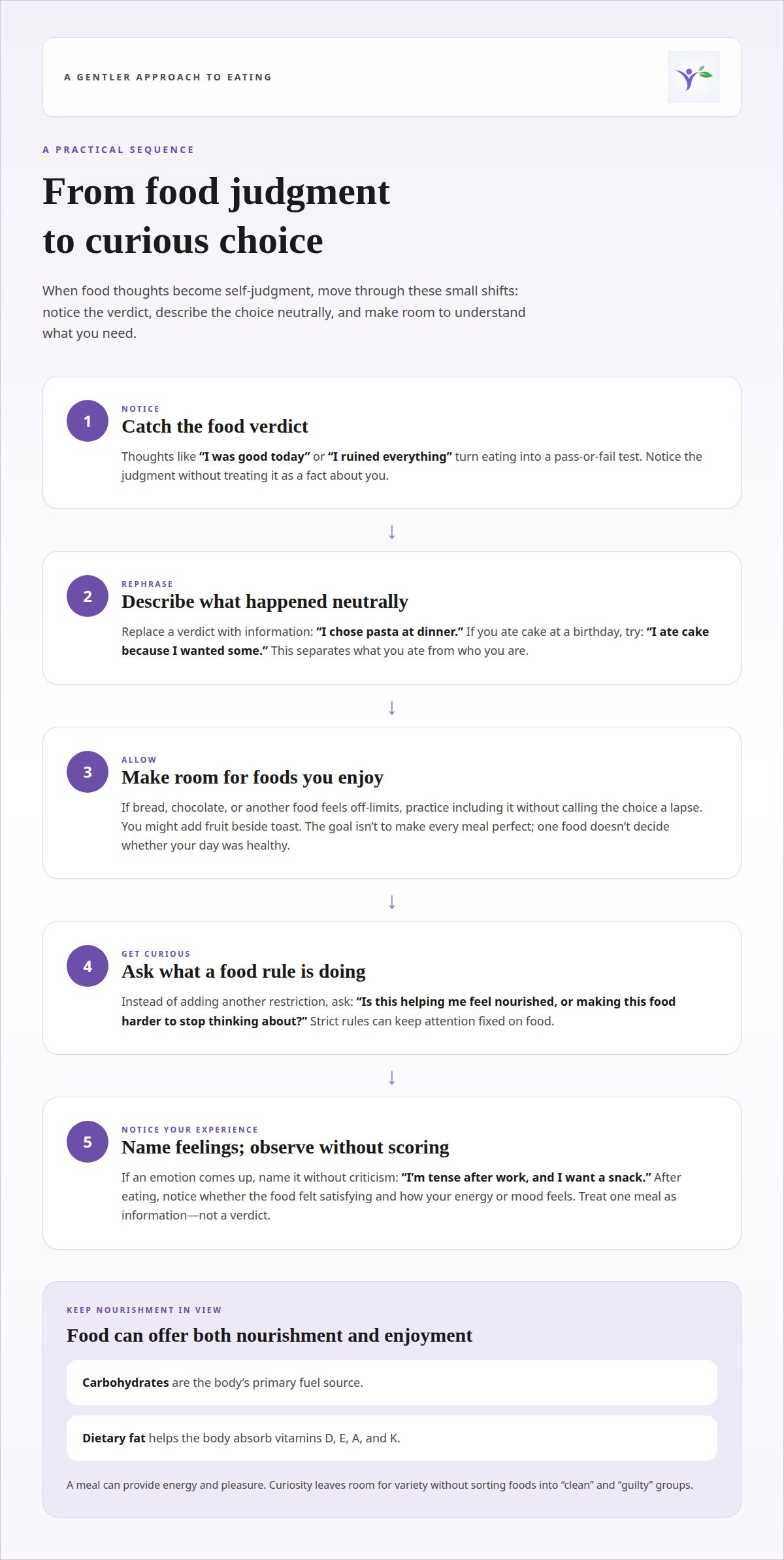
Calling a food “bad” can turn an everyday choice into a judgment about yourself. For example, eating cake at a birthday may trigger guilt if you treat cake as forbidden. Try describing what happened without a verdict: “I ate cake because I wanted some.” This separates what you ate from who you are, leaving room to notice your preferences without self-blame.
Guilt often shows up in familiar thoughts: “I was good today” or “I ruined everything.” Those phrases make food sound like a test you can pass or fail. When you notice one, pause and replace it with a neutral description. “I chose pasta at dinner” gives you information. “I failed” adds punishment without helping you understand your choice.
Permission can soften strict food rules. If you’ve labeled bread, chocolate, or another food off-limits, allow yourself to include it without calling the choice a lapse. You might pair a familiar food with something satisfying, such as adding fruit beside toast. The goal isn’t to make every meal “perfect,” but to reduce the sense that one food determines whether your day was healthy.
Restriction can also keep your attention fixed on food. When the brain perceives famine, it may focus more on food and eating to manage perceived starvation. That can make a strict rule mentally consuming. Instead of responding with another rule, ask what the rule is doing. Is it helping you feel nourished, or making a particular food harder to stop thinking about?
Food supports the body in different ways, so moral categories overlook useful details. Carbohydrates are the body’s primary fuel source. Dietary fat helps the body absorb vitamins D, E, A, and K. When you eat, consider nourishment alongside enjoyment: a meal can provide energy and pleasure. This wider view makes room for variety without sorting foods into “clean” and “guilty” groups.
Use the same neutral approach with emotions. If sadness, stress, or boredom comes up before eating, name the feeling without criticizing yourself. For example: “I’m tense after work, and I want a snack.” Then take a moment to notice what you need. Food may be part of your response, but recognizing the emotion can help you choose more consciously.
Curiosity offers a practical next step. After eating, notice whether the food felt satisfying and how your energy or mood feels. Avoid turning that observation into a score. One meal is information, not a verdict on your character or health. Over time, this practice can help you understand patterns while leaving space for flexibility, pleasure, and changing needs.
Seeking support for emotional eating and restrictive dieting
Restrictive dieting can make eating feel like a cycle of strict rules and rebound eating. Restriction may lead to bingeing before eating settles into a more balanced middle ground. That risk is one reason to avoid responding to overeating by imposing tighter limits. A more useful first step is noticing which rules create pressure, such as avoiding entire food groups or treating one snack as a failure.
Support can help you understand what happens before and after difficult eating moments. A qualified health professional can help explore patterns, while a trusted person may offer a calm, nonjudgmental space to talk. For example, describe a situation plainly: “I skipped lunch, then felt out of control around snacks.” That gives you something specific to examine without turning it into blame.
Food flexibility means challenging black-and-white rules in manageable steps. If a meal feels safe only when it includes familiar foods, try adding one food that brings anxiety alongside something familiar. For example, serve your usual sandwich with a food you’ve been avoiding. The aim isn’t to force yourself through distress. It’s to make room for choice and learn what feels workable.
When a food rule appears, try replacing it with a curious question. Instead of “I can’t eat that,” ask, “What do I expect will happen if I include it?” This shift can reveal whether the rule serves your needs or adds pressure. Autonomy and choice can support lasting behavior changes, so decisions should feel like yours, not punishments imposed by a rigid plan.
Mindful eating can also help you notice hunger and satisfaction without turning meals into a test. Bring attention to taste, texture, and the pace of eating. One practical approach is to pause after finishing a meal, then wait fifteen minutes before deciding whether you want more. That pause gives your body time to assess hunger. It isn’t a rule that you must stop eating.
For a manageable start, make one meal a day distraction-free. Put away a screen, sit down, and notice the meal’s smell, flavor, and texture. Even a familiar lunch can be an opportunity to observe your experience. If your attention wanders, gently bring it back to eating. Mindfulness is a practice, not a requirement to feel calm or focused with every bite.
Use setbacks as information about what needs attention, not proof that you’ve failed. If stress leads you to eat past comfort, note the context: perhaps a rushed day, a strong emotion, or a skipped meal. Then consider one supportive adjustment for next time. If the pattern feels difficult to manage alone, sharing these observations with a qualified professional can help you explore practical next steps.
3. Allowing more time for sustainable habits
A new routine usually needs repeated practice before it feels natural. Habit-formation research suggests that establishing a new habit takes an average of 66 days. Treat that figure as a broad reference, not a deadline. Missing a planned breakfast or changing your routine during a busy week doesn’t erase earlier practice. It simply gives you another chance to return to the behavior.
Choose one small food-related action to practice consistently. For example, pause before lunch and ask what would feel satisfying, or add a vegetable to a familiar dinner. A specific action is easier to repeat than a sweeping goal such as “eat perfectly.” Start with a version that fits your actual schedule, then adjust it when work, family needs, or appetite changes.
A day-to-day decision mindset can make nourishing choices part of ordinary life. Before shopping, consider a few meals you enjoy and what would make them satisfying. At lunchtime, notice whether you want a quick, familiar option or something different. These small decisions build practice without requiring every meal to follow a fixed plan. Flexibility matters when plans change.
Track behaviors that support well-being rather than making weight the only measure of progress. A short journal entry might note that you ate breakfast before a busy morning, enjoyed dinner with family, or noticed hunger before choosing a snack. These observations show how your routine is developing and offer useful detail when a planned habit feels difficult to maintain.
Setbacks can point to practical changes. If a late meeting repeatedly disrupts dinner, consider keeping a simple meal option available or shifting when you prepare food. If a new routine feels demanding, scale it back until it fits more easily. For example, prepare one ingredient ahead rather than planning every meal. The next manageable choice is more useful than waiting to restart perfectly.
Allowing more time for health goals can ease pressure and support lasting habits. Instead of expecting rapid weight change, focus on actions you can continue, such as eating meals at a steadier pace or including foods you enjoy. A slower approach leaves room to learn what suits your appetite, daily routine, and preferences. Consistency grows through practice, not urgency.
Review your routine regularly, perhaps at the end of each week. Name one action that felt workable, one obstacle, and one adjustment to try next. If preparing lunch helped on workdays but not weekends, keep the weekday habit and choose a different approach for weekends. This review turns experience into a realistic next step, without treating a disrupted day as proof of failure.
4. How the food environment affects dietary choices
Your surroundings can make some food choices easier than others. According to Cornell Food and Brand Lab, people are more likely to choose convenient, tempting foods when those foods are readily available. For example, coming home hungry to find snacks within reach may shape what you eat before you consider other options. This isn’t a personal failing. It’s a cue to make your surroundings work better for your routine.
Start with one part of your day that feels rushed. If mornings leave little time for breakfast, put an easy option where you’ll see it, such as oats beside your usual mug. If you often reach for an afternoon snack, keep a satisfying option accessible at work. These changes don’t require removing foods you enjoy. They simply make more choices visible and convenient.
A supportive kitchen can offer variety without turning food into a set of rules. Store everyday ingredients where they’re easy to find, and keep foods you enjoy available, too. For instance, place fruit beside the items you use for breakfast, or keep ingredients for a familiar meal together. The aim is to make nourishment easier, not to hide every treat or create a “perfect” pantry.
Planning a few simple meals ahead can also help. Choose dishes that fit your schedule, then prepare one useful component, such as washed vegetables or cooked grains. Working Against Gravity recommends preparing simple meals in advance to create a supportive food environment. A ready-to-use ingredient can make dinner feel more manageable after a tiring day, while leaving room to change your mind.
Body image and diet culture can affect eating habits by encouraging comparison and rigid food rules. A social media post praising extreme restriction, for example, may make ordinary meals feel inadequate. Notice when a message prompts you to skip food or judge your body. You can mute accounts that intensify those pressures and make food decisions based on your needs, preferences, and daily routine.
Your environment extends beyond the kitchen. A long commute, shared meals, work breaks, and family schedules can all shape what feels practical. If a break room is full of tempting snacks, plan a satisfying snack you enjoy bringing along. If dinner time varies, keep flexible ingredients available. Small adjustments can support your choices without demanding perfect control over every setting.
Try one change to your environment at a time, then notice whether it helps. For example, prepare a simple lunch component on Sunday and see whether weekday lunches feel easier. Keep what works and adjust what doesn’t. The goal is a space that supports nourishment, pleasure, and realistic choices, not a home where food becomes another source of pressure.
5. What nutrient-dense foods provide balanced meals?
A balanced meal can include foods that meet different needs while still tasting satisfying. Protein is a building block for all cells and tissues, and it helps people feel full after eating. For example, add beans to a grain bowl, eggs beside toast, or chicken with vegetables. These are options, not requirements. Your preferences, appetite, and eating pattern can guide what belongs on your plate.
Variety matters more than finding one perfect ingredient. Current nutrition guidelines recommend including a variety of plant-based protein sources alongside lean animal meats, except for people following vegetarian or vegan eating patterns. Plant options include beans, lentils, tofu, nuts, and seeds. If you eat animal foods, eggs, fish, or lean meat can also be part of a meal. Choose combinations that feel enjoyable and practical.
Think about how ingredients work together in a familiar dish. For lunch, you might add beans to soup and serve it with bread, or include tofu in a vegetable stir-fry with rice. At breakfast, eggs with toast and fruit offer another combination. These examples show how protein foods can fit meals you already enjoy, rather than requiring a separate menu or complicated recipe.
Nutrient-dense doesn’t have to mean elaborate. A meal can start with a convenient base, such as canned beans, frozen vegetables, or ready-to-eat grains. Add a protein source that suits your preferences, then include flavors you enjoy. For instance, combine lentils, roasted vegetables, and a favorite dressing. Simple ingredients can make a satisfying meal without turning food choices into a strict checklist.
Use hunger, satisfaction, and enjoyment to guide your decisions. If a salad leaves you wanting more, consider adding a protein source, bread, or another ingredient that makes it feel complete. If a hearty meal feels right, there’s no need to make it lighter just to follow an outside rule. A nourishing approach leaves room for different appetites and changing needs.
Some days call for a quick meal; other days allow more preparation. Keep a few flexible ingredients in mind, such as lentils for soup or eggs for a simple dinner. If a planned meal changes, adapt with what’s available. A balanced pattern develops through everyday choices, not by making every plate look identical. The goal is a flexible combination that supports nourishment and pleasure.
To put these ideas into practice, choose one meal you already like and consider a protein addition that fits. You could stir beans into a familiar soup or add nuts to oatmeal. Explore a structured way to reflect on food choices as you build habits that feel manageable and nourishing.
Pound Drop
Pound Drop offers a self-guided way to put gradual food and lifestyle changes into practice. The Method provides a structured approach, while the Pound Drop App, The Book, and The Journal offer tools to support your progress. These resources may suit you if you want guidance to build routines at your own pace, reflect on your choices, and stay focused on sustainable habits.
When you’re ready to turn these ideas into a consistent approach, consider this next step. Start with the support format that feels practical for your routine, then use it to focus on steady progress rather than perfection.
If you’d like to learn more, contact Pound Drop.
Let your next choice be a starting point
Changing how you relate to food doesn’t require a dramatic reset. Choose one small practice that feels possible today, then let experience guide what comes next. Shifting from a food deprivation mindset to a food nourishment mindset can mean giving yourself room to learn, adjust, and make choices that fit your real life. Progress can be quiet. It still counts.
You don’t need to wait until every meal feels easy before taking a next step. Notice what supports you, make space for flexibility, and begin again when your routine changes. If you’d like structured support for putting these ideas into practice, reach out to Pound Drop.
Keep moving at a pace that feels steady and kind. One thoughtful choice can lead to another.
Frequently Asked Questions
How can I reset my mind about food?
Begin by identifying one food belief that feels automatic, then ask whether it reflects your needs today. For example, if you assume you must choose a salad at a restaurant, consider what else sounds satisfying. Shifting from food deprivation to a food nourishment mindset can start with noticing that you have options. You don’t need to settle every food question at once; practice making one deliberate choice at a time.
How can I rewire my brain to eat less?
Rather than trying to train yourself to eat less, build awareness of what’s happening as you eat. Notice whether you’re hungry, enjoying the food, or focused on something else. If you want another serving, pause and consider what would feel right, without treating either choice as a success or failure. This practice supports decisions based on your experience, not an automatic rule about eating less.
How can you shift from food restriction to nourishment-focused eating?
Replace one strict rule with a choice that feels supportive and realistic. If you usually avoid a certain food at lunch, consider including it alongside familiar foods and notice your experience. Shifting from food deprivation to a food nourishment mindset can involve learning which meals feel satisfying and workable. Focus on what you can practice, rather than expecting every meal to feel easy immediately.
What are practical steps to build a healthier relationship with food?
Try writing a brief note after a meal that felt tense or rushed. Record what was happening, such as a tight work deadline or a conversation that left you unsettled. Then identify one adjustment for a similar situation, like choosing a quieter place to eat. This reflection can help you recognize patterns without rating your eating or expecting every day to follow the same routine.
How can intuitive eating support a nourishment mindset?
Intuitive eating can help you consider hunger, satisfaction, preferences, and circumstances when deciding what to eat. For example, you might choose a packed snack before a long drive because it suits your plans and sounds appealing. Shifting from food deprivation to a food nourishment mindset means making room for practical preferences like these. If your cues feel unclear, give yourself time to notice them without demanding immediate certainty.
How can you stop labeling foods as good or bad?
Use specific, neutral words to describe a food or meal. You might call a soup “warm,” “filling,” or “easy to prepare” instead of assigning it a moral label. If you catch yourself thinking, “I shouldn’t have eaten that,” describe what happened instead, such as “I chose it because I was hungry.” This language can help you reflect on a choice without turning it into a judgment about yourself.


