


Article by
Jesper Sorensen
Jesper Sorensen is a holistic health coach and founder of Pound Drop, a different approach to weight loss built around healthier habits. He has written ebooks and health articles for established publishers and has spent years studying nutrition, healthy eating and sustainable weight management.
What if a big achievement deserves more than a meal you’ve labeled a “cheat”? Celebrating personal wins without sugary cheat meals can mean choosing a reward that feels meaningful to you, such as time for a favorite activity, a small non-food treat, or a memorable experience.
Food can feel like an easy way to mark a happy moment. You don’t have to rule it out, but it doesn’t need to be the automatic reward for every success. A little planning can help you recognize what you’ve achieved and celebrate in a way that supports the habits you want to build.
Here are four practical ways to reward yourself without making food the default. Choose small rewards, make time for activities or services you enjoy, and mark bigger goals with memorable experiences. Not every win needs a grand celebration. Find an option that feels personal, satisfying, and right for the moment.
Key Takeaways
- Choose a non-food reward before you reach a milestone, so celebrating feels intentional rather than automatic.
- Let friends or family share in your achievement with encouragement, or set aside time for an activity you enjoy.
- Save bigger experiences for goals that matter to you, and plan toward them at a pace that feels manageable.
- Keep food in its place as one possible part of a celebration, not the default response to every happy moment.
- Use small, personal rewards to recognize steady progress and make healthy habits feel more rewarding.
1. Non-food ways to reward personal achievements
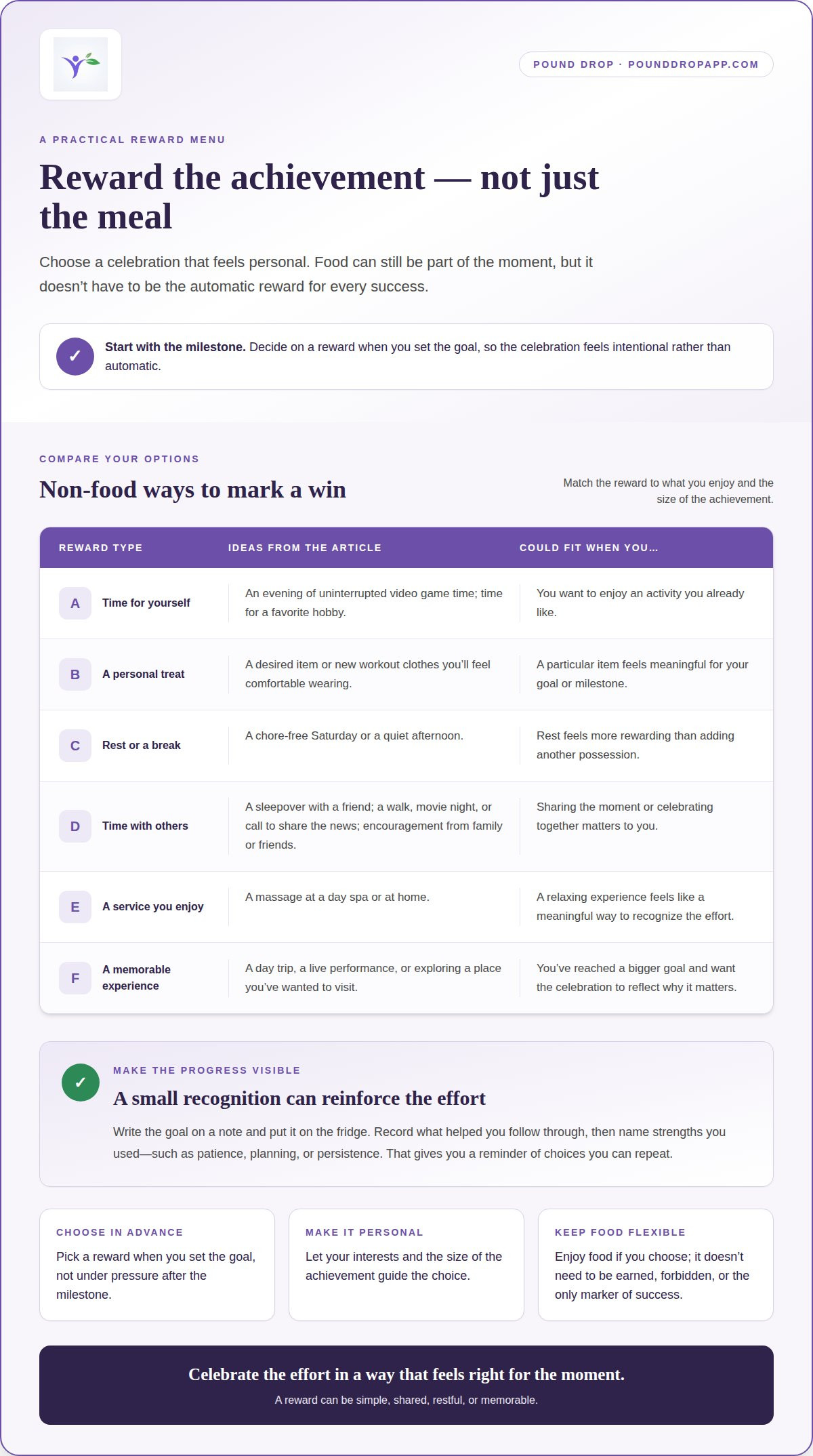
Choose a reward when you set a goal, rather than waiting until you reach it. For example, decide that completing a planned week of activity earns you an evening of uninterrupted video game time. A visible plan helps you recognize the achievement, while the reward gives you something enjoyable to anticipate.
Match the reward to your interests and the size of the milestone. A desired item, a sleepover with a friend, or a chore-free Saturday might suit different people and achievements. The best choice is personal: a quiet afternoon may feel special if you value rest, while someone else may prefer sharing the moment with family or friends.
How can I choose rewards that fit different goals and milestones? Match the reward to what you accomplished and what you enjoy. New workout clothes might mark progress toward an exercise goal, while a larger personal milestone could call for a more memorable experience. Name the achievement first, then choose a meaningful reward that doesn’t add pressure.
For smaller achievements, make your recognition specific. Write the goal on a note and put it on the fridge, then record what helped you follow through. Name three strengths you used, such as patience, planning, or persistence. This turns “I did it” into a reminder of choices you can repeat next time.
How can I celebrate progress without feeling deprived or guilty about food? Choose a non-food reward because it sounds enjoyable, not to punish yourself or make up for eating. Food can still be part of a celebration; it simply doesn’t have to be the automatic reward for every success. When celebrating personal wins without sugary cheat meals, let the achievement guide your choice.
Some rewards create a memory instead of adding another possession. Invite a friend over for a sleepover, set aside time for a favorite hobby, or plan a Saturday without chores. If you’re not sure what would feel rewarding, revisit activities you enjoyed in your late teens and early twenties, such as drawing, dancing, or playing music.
Keep a short list of options so you’re not choosing under pressure. Include a simple reward, like uninterrupted game time, and a social one, like asking family to celebrate your progress. For an exercise milestone, choose workout clothes you’ll feel comfortable wearing. Then pause to enjoy the reward and acknowledge the effort that got you there.
Choose a non-food reward when you set the goal, so the decision is ready in advance. Options include booking a massage at a day spa or at home, or asking family or friends to encourage you as you mark the achievement.
2. Avoiding food as the default response to happiness
A happy moment can include food without making it the automatic reward. Notice the pattern: after finishing a task, do you reach for something sweet because you’re hungry, or because the success feels unfinished without it? Pausing helps separate appetite from celebration. It also leaves room for other ways to recognize the achievement, such as sharing the news or taking time to relax.
Food can become a repeated response to good news. Over time, that pattern may contribute to weight gain or eating habits that don’t feel helpful. Eating in response to emotion rather than hunger can also make your relationship with food feel less settled. This isn’t a reason to judge yourself for enjoying dessert. Instead, notice whether food has become the only way you mark progress.
How do I celebrate a personal win when friends or family expect a meal or drinks? Suggest another way to spend time together, such as taking a walk, having a movie night, or calling to share the news. If everyone chooses a meal, enjoy the gathering without treating food as proof that your achievement counts.
Decide what celebration means before the next milestone. You might tell a friend, “I’d love to celebrate by spending time together, rather than making the meal the focus.” Or pair dinner with another meaningful moment, such as sharing what you’re proud of or planning an activity you enjoy. A clear suggestion gives loved ones a way to join in without guessing.
What are the risks of using food rewards or strict food rules for motivation? A food reward can reinforce eating in response to emotion instead of hunger, while rigid rules can make everyday choices feel like success or failure. Aim for flexibility: food can be part of a celebration, but it doesn’t need to be earned, forbidden, or used to measure your progress.
- After completing a task, pause and notice whether you’re hungry or simply excited.
- When sharing good news, ask a friend to celebrate with conversation or an activity.
- If a meal is part of the plan, enjoy it without making it the sole marker of success.
These small choices make celebrating personal wins without sugary cheat meals easier by giving happiness more than one expression. If a familiar food reward still appeals, you can choose it without guilt, then consider what else would make the achievement meaningful. A conversation, a relaxing evening, or time with someone you care about can each mark the moment. The goal isn’t to remove pleasure from celebrations, but to make food one option among several.
3. Celebrating bigger goals with experiences
A major goal deserves a celebration connected to the effort behind it. After completing a long-term personal project, for example, plan a memorable experience, such as a day trip, a live performance, or time exploring a place you’ve wanted to visit. Not every milestone needs an extravagant celebration. Choose something that reflects why this achievement matters to you.
Start by naming the goal and the kind of experience that would feel rewarding. If you value time with friends, plan an outing together; if you need quiet, choose a restorative day alone. Write down the idea while you’re still working toward the goal. Then you can make practical plans for timing and saving instead of inventing a celebration after the achievement.
A future experience can still be a meaningful reward when it isn’t affordable right away. One approach is to put down a 10% deposit toward a planned experience, then set aside the remaining amount over time. The deposit makes the celebration feel real, while the later plans give you something to anticipate. Choose a commitment that fits your circumstances rather than adding pressure to an already important goal.
Match the celebration to the significance of the milestone. A six-figure product launch, for instance, might call for more than a new mousepad. The principle is simple: consider what the achievement represents, then choose a celebration meaningful enough to acknowledge it. That might mean taking a special trip, attending an event, or sharing an experience with people who supported your work.
- Choose the memory: Name the activity you’d genuinely enjoy, such as a concert or a weekend visit.
- Set the timing: Decide whether you’ll celebrate immediately or plan for a future date.
- Make it workable: Break the plan into manageable steps, such as saving gradually for travel.
Experiences don’t need to be expensive to feel significant. A planned visit to a nearby place, a creative workshop, or a special day with a friend can give a milestone its own shape. Think about the conversation, setting, or shared moment you want to remember.
After reaching your goal, connect the experience with your effort. Before a planned outing, write down what you accomplished and what helped you keep going. During the experience, enjoy the occasion without treating it as a test of whether you deserve it. That pause makes the celebration part of the achievement, not just another item on your calendar.
4. Treating yourself to an activity or service
An activity or service can make an achievement feel tangible without centering the celebration on food. List the things you routinely postpone or deny yourself, such as an art class, a relaxing afternoon, or time for a favorite sport. Then choose one that fits the milestone and sounds genuinely enjoyable. A reward should recognize your effort, not become another task to complete.
For an active celebration, choose movement you already enjoy. Take a scenic walk, go dancing, or spend an afternoon cycling somewhere new. These activities let you enjoy your progress while doing something engaging. What are enjoyable ways to celebrate an achievement actively? Choose something fun, such as dancing, cycling, or exploring a local trail. Let your interests guide the pace and setting, not a need to prove anything.
Services can be rewards, too. A massage may be a thoughtful way to rest after a demanding goal. For example, you might spend twenty bucks on a special spa treatment rather than treating a low-cost pedicure as a major reward. Consider what would feel meaningful to you instead of assuming every service has the same value for everyone.
Use a simple process before booking or setting aside time. First, name the achievement, such as sticking with a routine or finishing a personal project. Next, decide whether you want energy, relaxation, or a change of scene. Finally, choose an activity or service that matches. A dance class suits an energetic celebration; a massage may better fit a milestone that took sustained effort.
- For movement: Try dancing, cycling, or a visit to a nearby trail.
- For restoration: Set aside time for a massage or an uninterrupted afternoon.
- For creativity: Book a workshop or make time for a hands-on hobby.
A reward doesn’t need to be elaborate to feel personal. If a class motivates you more than a purchase, choose the class. If you’d value a service, make the appointment part of your celebration. Consider your interests, the effort behind the achievement, and whether the activity fits your schedule. This keeps the reward connected to your life instead of turning it into a standard you must meet.
Make the experience easy to enjoy by planning one practical detail ahead. Set aside an afternoon for cycling, choose a convenient time for a massage, or pick a workshop that fits your calendar. Afterward, name what you accomplished. Pairing the activity with that reflection helps you remember both the celebration and the effort that made it meaningful.
5. What small rewards help reinforce healthy habits and motivation?
Small rewards make everyday progress easier to notice. Choose a simple marker you enjoy and connect it to a specific action. For example, use a special plate at a regular dinner after following through on a habit. The meal stays familiar, but the plate gives the achievement a moment of recognition. You’re celebrating consistency, not setting a new standard you must meet perfectly.
Match the reward to the effort and the habit. If you stick to a food routine for an entire week, a book can mark that mini-goal. If meal preparation is the hard part, a useful kitchen gadget may make future cooking or menu planning easier. Choose something you’ll actually enjoy or use, not a reward that adds clutter or another obligation.
A small food-related choice can also make an ordinary moment feel special without turning it into a sugary reward. Food doesn’t have to be excluded. A thoughtful choice can be part of a meal, rather than the automatic prize for every success.
For a reward that costs nothing, create a work playlist with a few dozen songs that remind you of success. Add tracks that help you focus, lift your mood, or bring back a moment you’re proud of. Play it while doing a routine task, or save it for after a milestone. The playlist can remind you to pause and recognize the effort behind your progress.
Try this simple pattern for a mini-goal:
- Name the action: For example, prepare meals at home as planned.
- Choose the marker: Pick a book, a special plate, or a few songs.
- Notice the result: After completing the goal, take a moment to enjoy your reward.
Keep rewards flexible. A book may feel right after a week of steady effort, while a favorite playlist may suit a busy day. If your original plan becomes impractical, choose another small marker instead of treating the change as failure. Celebrating personal wins without sugary cheat meals can be as simple as making progress visible in a way that fits your daily life.
To make this easier, record the habit and its reward together in a journal or planner. A brief note such as “planned my meals this week, choose a new book” connects the action with something you look forward to. Explore a steady approach to healthy habits as you decide what kind of structure helps you recognize progress.
Pound Drop
Pound Drop can support your next step with a self-guided structure for weight-loss habits and progress. Its system brings together the Pound Drop App, The Method, The Book, and The Journa to help you track and manage progress over time. This structure can help you notice achievements and choose celebrations that fit the habits you’re building, instead of relying on food as the automatic reward.
Choose the tools that suit how you like to reflect and stay organized. The App and Journa can support tracking, while The Method and The Book form part of the broader system. Progress doesn’t need to be perfect to count. Recognizing a small, consistent step can help you keep moving toward your goals.
For a self-guided approach to working on your progress, explore Pound Drop.
Make your next celebration feel like yours
Celebrating personal wins without sugary cheat meals can become a more personal habit when you choose a way to mark progress that feels meaningful to you. As you work toward your next goal, notice which celebrations leave you feeling recognized and ready to continue. Let that experience guide your next reward.
Pound Drop offers the Pound Drop App, The Method, and The Book for a self-guided approach to your goals. These resources can support you as you build routines and reflect on your progress.
Contact Pound Drop to discuss your goals, and take the next step at a pace that feels right for you. Every achievement deserves to be noticed, and you can find a way to celebrate that feels genuinely yours.
Frequently Asked Questions
How can I celebrate personal wins without using food as a reward?
Mark the achievement with a brief ritual that helps you remember what you did. For example, save a photo of a finished project in a “wins” folder, then add a note about the effort it took. Revisit the folder when you need a reminder of your progress. This makes your accomplishment visible without needing a purchase or meal to make it feel real.
What are healthy non-food ways to reward yourself for reaching a goal?
Choose something enjoyable that suits the effort your goal required. After a demanding stretch of focused work, you might set aside quiet time instead of adding another task. If you’ve been learning a skill, choose a small item that supports your next practice session. A fitting reward feels like a welcome pause or useful encouragement, not a new obligation or test of your commitment.
How can I build a sustainable reward system for long-term goals?
Connect rewards to actions you can repeat, rather than outcomes you can’t fully control. Choose a meaningful checkpoint, decide on a reward in advance, and keep a few alternatives for days when plans change. If you miss a checkpoint, adjust the plan and continue instead of removing every future reward. This keeps recognition tied to your ongoing effort and makes the system flexible enough for real life.


