


Article by
Jesper Sorensen
Jesper Sorensen is a holistic health coach and founder of Pound Drop, a different approach to weight loss built around healthier habits. He has written ebooks and health articles for established publishers and has spent years studying nutrition, healthy eating and sustainable weight management.
What if a week with no change on the scale doesn’t mean your efforts have stopped working? With slow and steady weight loss, progress rarely follows a neat line. Your weight can shift from week to week as hydration and digestion change, even while you’re building more consistent everyday habits.
It’s understandable to feel discouraged when the number rises after you’ve been trying. But gradual progress doesn’t mean you’re doing something wrong, and a single weigh-in can’t tell the whole story. What matters is whether your approach is realistic enough to keep practicing over time. This article explains what sustainable progress can look like, why the scale fluctuates, and how to notice change without expecting a perfectly smooth result. You’ll also find practical ways to build repeatable habits, so you can focus less on quick fixes and more on steady actions that fit your life.
Key Takeaways
- Think of slow and steady weight loss as a gradual pattern, not a promise of the same result every week.
- Hydration, digestion, sodium, and weigh-in timing can all affect short-term scale readings.
- Look at patterns over time, rather than one reading or a rigid cutoff, when considering whether progress may have paused.
- Build habits in manageable steps: notice a routine, choose one small action, practice it, and review how it fits.
- Choose a cue for your next habit and use supportive tools to reflect and stay organized, without expecting them to guarantee results.
What Slow and Steady Weight Loss Means in Real Life
Slow and steady weight loss is a gradual downward pattern in body weight over time, supported by routines you can repeat. It doesn’t require the scale to drop every week. That distinction matters. A sustainable approach doesn’t promise a particular pace, and one weigh-in can’t show whether a broader pattern is emerging.
Some public health guidance commonly describes gradual loss as about 1 to 2 pounds per week. Treat this as a general educational guideline, not a personal target or a measure of success. Individual results vary, and weight management involves more than a number. A broad overview of Weight Management Strategies also considers the behaviors and circumstances involved. Sustainable change puts the emphasis on routines that fit real life, rather than short-term restrictions that can be difficult to maintain.
Does gradual progress look the same for everyone?
No single pace suits everyone. Your starting point, health, daily routines, and circumstances can all shape what progress looks like. Work schedules, family responsibilities, access to food and movement, and changes in health can affect what feels manageable. Comparing your week-by-week results with someone else’s may create pressure without telling you much about your own experience.
General guidance can offer context, but it can’t account for individual medical needs. If you have a health condition, take medication, or feel unsure what approach is safe for you, discuss your goals with a qualified healthcare professional. Their guidance can help you consider your own circumstances.
Why the scale is only one measure of change
The scale records body weight at one moment. It doesn’t explain what caused a change, show how consistently you’ve practiced a routine, or describe your overall health on its own. Treat it as one data point, not a complete report card.
You might also notice whether a routine feels easier to keep, whether you have more energy for everyday activities, or whether your clothes fit differently. These observations can help you reflect on your experience, but they don’t prove a particular health outcome. Use them as personal context, not as substitutes for medical measures or professional advice.
For a practical starting point, choose one routine you can repeat and give yourself room to learn from it. The aim isn’t to make every week look identical. It’s to build an approach that remains workable as life changes.
Why Weight Changes Unevenly Even With Consistent Habits
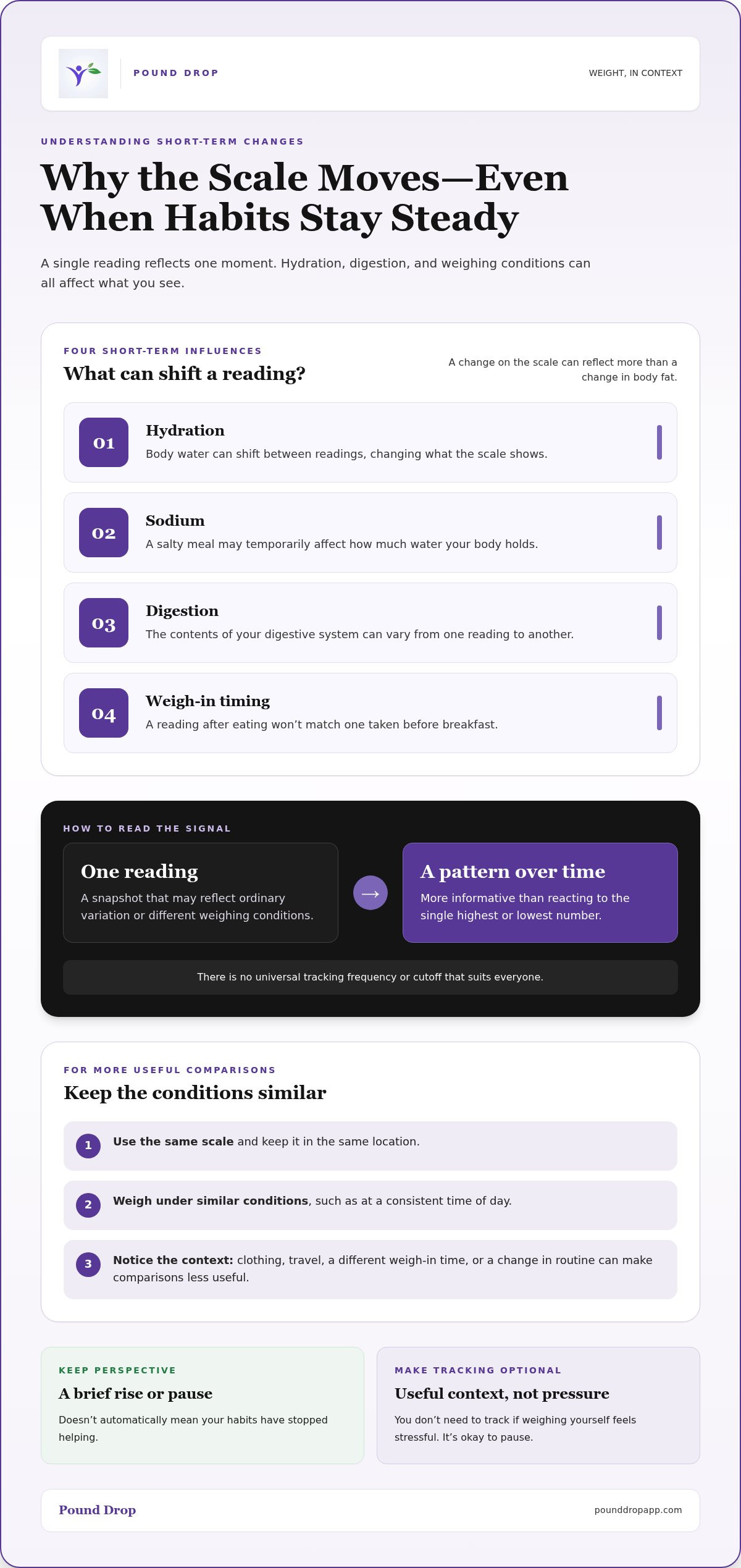
A change on the scale can reflect more than a change in body fat. Body weight includes water and the contents of your digestive system, both of which can shift between readings. That’s why a brief increase or pause doesn’t automatically mean your habits have stopped helping. Short-term readings can be noisy, while a longer pattern may tell a different story.
What can cause short-term scale fluctuations?
Hydration, sodium intake, digestion, and measurement timing can all influence what the scale shows. For example, a salty meal may temporarily affect how much water your body holds, while a weigh-in after eating won’t match one taken before breakfast. Clothing, the scale’s location, and the time of day can also make comparisons less useful. None of these factors alone explains what’s happening for you personally.
If you choose to track your weight, make readings easier to compare by using the same scale in the same location and weighing under similar conditions, such as at a consistent time of day. You don’t need to track if it feels stressful. The goal is useful context, not another source of pressure.
How to interpret a trend without overreacting
Distinguish between a few readings and a longer pattern. Imagine the scale is slightly higher after a restaurant meal, then lower again a few days later. That brief change may reflect ordinary variation. If readings remain consistently different over time, that’s more informative than reacting to the single highest or lowest number. There’s no universal tracking frequency or cutoff that suits everyone.
Keep perspective, too. A trend can help you review what’s happening, but it can’t identify the cause by itself. If a change is persistent, unexplained, or concerning, a qualified healthcare professional can help you consider it alongside your health and circumstances. If weighing yourself increases distress, it’s okay to pause or use other ways to reflect on the routines you’re practicing.
For slow and steady weight loss, interpret readings with curiosity rather than judgment. A simple note about the conditions, such as travel, a different weigh-in time, or a change in routine, may help you avoid drawing quick conclusions. If a self-guided structure would help you practice habits consistently, explore the Pound Drop App.
Slow Progress or a Plateau? How to Tell the Difference
A few unchanged readings can feel like a verdict, but they don’t necessarily mean progress has stopped. A temporary pause may reflect normal variation, changing routines, or different weigh-in conditions. It’s more useful to think of a plateau as a longer-lasting pattern, not a conclusion to draw from a handful of readings. There’s no single time limit that defines it for everyone.
Before changing your approach, look at the overall pattern and consider what else has shifted. A pause doesn’t automatically call for stricter rules or more restriction. First, understand what you’re noticing, then choose a calm next step.
| What you notice | Possible explanations | A gentle next step |
|---|---|---|
| A few readings rise or stay similar | Ordinary variation, different weighing conditions, or a change in routine | Put the readings in context; avoid reacting to one number |
| The overall pattern seems unchanged for longer | Your routines or circumstances may have shifted, or progress may simply be less visible right now | Review what feels manageable and consistent before deciding whether to adjust anything |
| A noticeable change feels unexpected or comes with other concerns | There may be factors that a scale alone can’t explain | Discuss the change with a qualified healthcare professional |
What might explain a short-term pause?
Daily schedules change. Travel, a different meal pattern, less familiar movement, or weighing at a different time can all make readings harder to compare. Normal body-weight variation can also obscure a gradual pattern. These are possibilities, not proof of what’s happening for any one person. They don’t mean you’ve been careless or done something wrong.
If you track weight, consistent conditions can make comparisons more meaningful. If tracking feels upsetting, step back from it and focus on the routines you’re practicing instead.
When should you seek individual guidance?
Consider speaking with a qualified healthcare professional if a change is persistent, unexpected, linked with symptoms, or concerning in light of a health condition. They can help interpret it in context. Seeking guidance is a practical way to care for yourself, not a sign that you’ve failed or that your habits don’t count.
With slow and steady weight loss, the most useful response to a pause is often reflection, not an immediate push to do more. Notice the pattern, consider what may have changed, and choose a next step that supports consistency and wellbeing.
How to Practice Steady Weight-Loss Habits Without Extreme Rules
Lasting routines usually grow from small choices that work in your actual day, not from a complete overhaul. Try this flexible sequence: notice what you already do, choose one manageable action, practice it, then review how it felt. The idea behind making progress without starting over is useful here: a disrupted day doesn’t erase the chance to return to a routine.
Choose small actions that fit your existing routine
Start with one change that feels realistic to repeat. For example, add a fruit or vegetable to a meal you already eat, take a short walk after lunch, set a reminder to begin winding down for bed, or prepare a simple grocery list before shopping. These are options, not rules or guaranteed ways to lose weight. Choose what fits your needs and circumstances.
Make the action easier to remember by linking it to something already in your day. A walk after lunch, for instance, has a clear cue. If work runs late or family plans change, adapt the habit: take the walk another time, shorten it, or return to it the next day. Consistency means practicing and learning, not doing everything perfectly. For another perspective, explore this guide to a weight-loss mindset shift.
Track patterns with curiosity, not judgment
You don’t need to monitor everything. If it helps, jot down the habit you chose, when you practiced it, and what made it easier or harder. A brief weekly review can reveal useful patterns. Perhaps planning a meal ahead reduces a busy-day scramble, or an evening commitment makes your original movement cue impractical. Treat your notes as information, not a score.
Then decide whether to keep the habit, adjust its cue, or try a smaller version. If reflection starts to feel like criticism, step back and choose a gentler way to check in. Support should feel respectful and encouraging; this guide to non-judgmental weight-loss support explores what that can look like.
Slow and steady weight loss is better approached through routines you can return to than extreme rules that leave little room for real life. If a self-guided structure would help you practice habits, explore the Pound Drop App.
Keep Progress Sustainable With Supportive Tools and Next Steps
A useful next step doesn’t need to be dramatic. Choose one habit to practice, connect it to a cue in your day, and decide how you’ll review whether it fits. For example, plan a short walk after a regular errand, then reflect on what made it easier or harder to follow through. The aim is to learn from your experience, not to earn a perfect score.
Tools can help organize routines and reflection, but they can’t guarantee weight loss. Their value is in helping you notice what you’re practicing and where you might want to adjust. A self-guided approach can offer structure while leaving room for your own circumstances and choices.
What can a self-guided system help you practice?
The Pound Drop App and The Method provide a structured, self-guided approach to habit formation. The Book and The Journal offer physical resources to complement the digital experience. These tools can support reflection and awareness, but they aren’t personalized coaching or a substitute for medical care. If you’re curious about how thoughts and behaviors can shape the process, this guide to books on the psychology of weight loss offers another place to explore.
Set a next step you can return to
For the coming week, choose one realistic action and decide on a cue: after breakfast, when you finish work, or while planning the next day. Keep the action manageable enough to revisit if your schedule changes. If it doesn’t fit, that’s useful information. Adjust the timing or scale it down rather than treating a disruption as a reason to give up.
At the end of the week, ask yourself: What helped? What got in the way? What would make this easier to practice next time? A compassionate review can turn everyday experience into useful learning, without making every choice a judgment about your progress. Slow and steady weight loss is supported by habits you can return to, not tools that promise a particular result.
For a self-guided resource to help you practice habits, explore Pound Drop.
Take One Steady Step Forward
Progress doesn’t have to show up as a straight line to be meaningful. Short-term scale changes can happen even as you practice consistent routines, so look for patterns over time rather than judging your effort by one reading. If a habit feels difficult to maintain, adjust it to fit your life instead of reaching for extreme rules.
Slow and steady weight loss starts with a practical next step: choose one habit, connect it to a cue in your day, and reflect on how it’s working. Repeat what feels useful. Change what doesn’t. You’re building a routine, not aiming for perfection.
Pound Drop brings together a self-guided app, The Method, and physical resources, with an approach centered on structured habit formation rather than supplements or one-on-one coaching. If that kind of structure feels right for you, explore a steadier, habit-focused approach with Pound Drop.
Choose one small practice to begin with, then use the Pound Drop App, The Method, The Book, and The Journal to support your habit-building journey.
Frequently Asked Questions
What is considered slow and steady weight loss?
Slow and steady weight loss is a gradual downward pattern over time, not a promise that your weight will drop every week. Readings can rise, fall, or stay similar for a while, even as routines become more consistent. What counts as gradual progress varies with a person’s health, starting point, and circumstances. Focus on the broader pattern and on habits you can realistically maintain, rather than expecting a perfectly predictable result.
Is slow weight loss more sustainable than rapid weight loss?
Gradual progress can give you room to build routines that fit everyday life, which may make them easier to continue than short-term, highly restrictive changes. General guidance associates a gradual rate with a greater likelihood of keeping weight off long term, but no pace guarantees lasting results. Sustainability also depends on what’s appropriate for your health and what you can maintain. A healthcare professional can help you consider individual needs.
Can you lose weight steadily without following a strict diet?
Yes, weight loss doesn’t require rigid rules for everyone. You can work on repeatable choices, such as planning a meal that fits your schedule, adding movement in a way you enjoy, or creating a more regular bedtime routine. These actions aren’t guaranteed weight-loss interventions, and individual needs differ. Start with one manageable habit, notice how it works in your life, and adjust it without treating a disrupted day as failure.
How much weight loss per week is considered healthy?
A commonly recommended general guideline for gradual weight loss is about 1 to 2 pounds per week. This isn’t a requirement or a suitable target for everyone. Progress can vary with health, starting point, and other personal factors, and week-to-week results may not follow a steady pattern. If you have a health condition, take medication, or aren’t sure what pace is appropriate, seek guidance from a qualified healthcare professional.
Why does my weight fluctuate when I am trying to lose weight?
Short-term weight changes can reflect shifts in hydration, digestion, sodium intake, or the conditions and timing of a weigh-in. For instance, a reading after a meal may differ from one taken before eating. A single change doesn’t establish a longer-term trend or explain what’s happening for you. If you choose to track, comparing readings taken under similar conditions may offer more useful context than reacting to one number.
What should I do if my weight loss has stalled?
First, consider whether you’re seeing a longer pattern or just a temporary pause in readings. Changes in routine or measurement conditions can make progress harder to interpret. Instead of immediately adding stricter rules, reflect on what habits feel manageable and whether anything in your circumstances has shifted. If the change is persistent, unexpected, or concerning, speak with a qualified healthcare professional. Getting guidance is a practical step, not a failure.
Can habits matter more than the number on the scale?
Habits matter because they show what you’re practicing, while the scale offers only one measure at a particular moment. You might reflect on whether a routine feels easier to maintain, whether you’re moving in a way that suits you, or what helps you plan meals. These observations can offer personal context, but they don’t prove a specific health outcome. Use them alongside appropriate medical guidance, not as a replacement for it.


