


Article by
Jesper Sorensen
Jesper Sorensen is a holistic health coach and founder of Pound Drop, a different approach to weight loss built around healthier habits. He has written ebooks and health articles for established publishers and has spent years studying nutrition, healthy eating and sustainable weight management.
Can a weight-loss program offer structure without making every setback feel like a personal failure? It can. A non judgmental weight loss program treats support as a steady aid, not a test of willpower. If past attempts felt restrictive or emotionally draining, it makes sense to look for an approach that leaves room for real life.
You can work toward change without being shamed into it. Respectful guidance helps you practice manageable habits, learn from difficult days, and return to your routine without starting over or blaming yourself. Structure can still matter. The difference is that it helps you decide what to try next instead of punishing you for what didn’t happen.
In this article, you’ll learn what compassionate weight-loss support can look like, how to assess whether a program is practical, and how to choose a manageable next step. We’ll also look at how the Pound Drop App, The Method, The Book, and The Journal support self-guided habit practice and reflection. Progress doesn’t require perfection. It can begin with one small, repeatable change.
Key Takeaways
- A non judgmental weight loss program treats setbacks as useful information, not proof that you’ve failed.
- Look for realistic pacing, respectful language, flexible habits, and progress reflection without all-or-nothing rules.
- When a routine is disrupted, notice what got in the way and choose a manageable adjustment instead of giving up.
- Try a simple process: choose one routine, observe how it fits your life, adjust it, then review what helped.
- Pound Drop’s self-guided app and physical resources offer tools for structured habit practice and reflection.
What Is a Non-Judgmental Weight Loss Program?
If you want support without criticism, pressure, or rules that leave no room for an imperfect day, that’s reasonable to look for. A non judgmental weight loss program offers guidance without treating body size or an interrupted routine as a measure of your character.
Rather than demanding perfection, this approach treats a setback as information. Maybe a busy evening interrupted your usual routine, or a plan didn’t fit the day you actually had. You can look at what happened and decide what might make the next attempt more workable, without labeling yourself undisciplined or starting over from zero.
For a helpful perspective on a related approach, watch this video from Ohio State Wexner Medical Center:
How does non-judgmental support differ from shame-based advice?
Shame-based advice leans on blame: “I have no willpower” or “I ruined everything.” A more neutral response gets curious: “What made this routine difficult today?” That shift focuses attention on circumstances and possible choices rather than a character judgment. Approaches such as Intuitive eating also offer a perspective on moving away from rigid diet thinking and paying attention to hunger cues. Compassion doesn’t guarantee weight change or remove every challenge. It offers a less punishing way to respond to them.
Does a supportive program still provide structure?
A non-judgmental weight-loss program can provide supportive guidance and repeatable actions, treating setbacks as information rather than moral failure. Structure doesn’t have to mean rigid rules. It might mean noticing when meals tend to get rushed, reflecting on what interrupts a planned walk, or choosing one manageable adjustment to practice. Goals and regular reflection can fit within a compassionate approach. The aim is to make the next step clear and workable, then learn from how it goes.
Why Shame and All-or-Nothing Rules Can Make Change Harder
Shame can make a difficult moment feel like a verdict: “I missed my walk, so I’m hopeless at sticking to anything.” That response isn’t universal, but for some people, self-criticism makes it harder to look honestly at what happened. Avoiding the routine or deciding the whole effort is ruined may feel easier than facing another round of blame.
All-or-nothing rules add pressure when they treat consistency as perfection. One disrupted day doesn’t erase earlier practice or dictate what you choose next. A more useful response makes room for interruptions and focuses on what could help you return to a routine.
What can happen after a routine is disrupted?
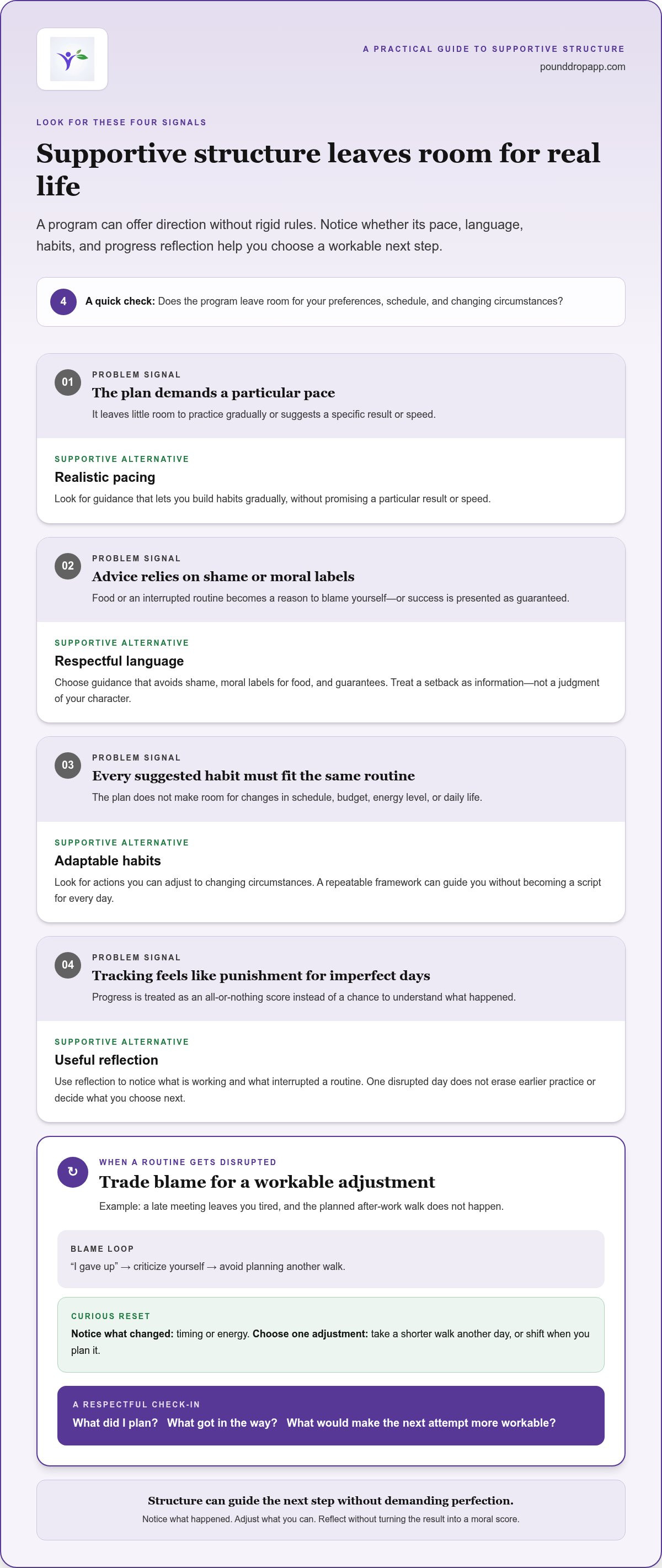
Imagine you planned a walk after work, but a late meeting left you tired. You might criticize yourself for “giving up,” then avoid planning another walk because it feels like setting yourself up to fail. Instead, notice what changed, such as the timing or your energy, and choose one next action. That could mean taking a shorter walk another day or shifting when you plan it.
How can accountability feel respectful?
Accountability doesn’t need to mean punishment. It can mean checking in with curiosity: What did I plan? What got in the way? What would make the next attempt more workable? A small commitment, such as noticing your meal routine or setting aside time to move, gives you something specific to reflect on without turning the result into a moral score.
Mindful eating, as described by Harvard T.H. Chan School of Public Health, offers a way to pay closer attention to eating experiences without judgment. That kind of observation can support reflection, though it won’t remove every challenge or guarantee a particular outcome.
If you’re practicing a reset after a disrupted routine, this weight loss mindset shift guide explores how to continue without treating a hard day as a reason to begin from scratch. You can also explore self-guided habit tools for a structured way to make reflection and repeated practice part of your routine.
What to Look for in a Non-Judgmental Weight Loss Program
A program’s tone and day-to-day design can tell you a lot about its approach. Look beyond motivational language and consider whether the guidance makes room for your preferences, schedule, and changing circumstances. A non judgmental weight loss program can offer direction without expecting everyone to follow the same plan or move at the same pace.
Which signs suggest a program respects the whole person?
Use these questions to assess whether a program’s guidance is realistic and respectful, not just encouraging at first glance.
| Supportive feature | Question to ask yourself |
|---|---|
| Realistic pacing | Does the approach leave room to practice gradually, without promising a particular result or speed? |
| Respectful language | Does it avoid shame, moral labels for food, and claims that success is guaranteed? |
| Adaptable habits | Can suggested actions fit a changing schedule, budget, energy level, or daily routine? |
| Useful reflection | Does progress tracking help me learn what’s working, rather than punish me for imperfect days? |
Consider whether the program leaves you able to make choices, rather than pressuring you to meet a single standard. Harvard T.H. Chan School of Public Health’s overview of Intuitive Eating provides context for an approach that emphasizes listening to the body and moving away from rigid food rules. It’s one perspective to consider as you decide what respectful support means for you.
How much structure is helpful without feeling restrictive?
Helpful structure gives you a repeatable framework, not a script that must fit every day. Clear guidance can help you notice a routine, choose a small action, and reflect on how it went. Inflexible rules leave little room to adapt when work, family, or energy levels shift. The right balance depends on your preferences, circumstances, and the kind of support that feels manageable.
As you compare options, pay attention to what happens when plans change. Can you adjust a habit and continue, or does the framework make a missed step feel like a reason to quit? Useful structure supports regular practice while leaving decisions in your hands. For more perspective on how reading materials may support this process, see the psychology of weight-loss books selection guide.
Pound Drop’s self-guided habit-building tools offer one way to add structure and reflection to your routine.
How to Try a Compassionate Approach in Everyday Life
You don’t need to overhaul your routine to begin. Choose one area of daily life you’d like to understand better, then treat it as a small experiment. The aim isn’t to prove you can follow a perfect plan. It’s to learn what fits and what might need adjusting.
What is one small, judgment-free first step?
Pick one behavior that feels realistic this week. You might notice when meals get rushed, what makes it easier to fit in movement, or which planning tasks tend to slip. Keep your notes descriptive rather than grading yourself. A brief record of what happened and what was going on around it can reveal patterns without turning the exercise into a success-or-failure score.
Try this simple sequence:
- Choose one routine: Pick a small area you’re curious about, such as preparing for a regular meal or finding a comfortable time to move.
- Observe it: Notice what you do and the context, including the time, your energy, and practical barriers.
- Adjust gently: Choose one change that feels workable. You might simplify the plan or shift it to a more convenient time.
- Review what helped: Reflect on what felt easier, what got in the way, and what you’d like to try next.
This sequence puts the principles of a non judgmental weight loss program into practice: pay attention, learn, and make a manageable next choice. A small experiment isn’t a test. It can show you whether the routine suits your circumstances or needs a different approach.
How can reflection support steady practice?
Use questions that invite learning rather than self-criticism: What happened? What helped? What made this harder today? What’s one adjustment I’d like to try? You can also notice everyday actions, such as making time to plan, finding a movement routine you enjoy, or recognizing a pattern in your meals. Personal outcomes may matter to you, too, but they’re not the only way to see what you’re practicing.
Life changes. Energy, schedules, and responsibilities can shift, so adapting a plan isn’t a reason to abandon it. A written record can help you remember those adjustments; this weight loss tracking journal guide offers ideas for choosing a format that suits your reflection style.
Pound Drop’s self-guided habit tools can support a regular process of practice and reflection.
How Pound Drop Supports Self-Guided, Structured Progress
Once you know what respectful support should feel like, consider what format fits your routine. Pound Drop is a self-guided weight-management system centered on structured lifestyle changes and habit formation. It brings together a digital app and physical resources to help you engage with The Method and reflect on your practice.
How do Pound Drop’s tools fit together?
The Method is Pound Drop’s methodology for structured habit formation. The Pound Drop App, The Book, and The Journal provide complementary digital and physical ways to work with the system. Together, these tools support self-guided practice and reflection, with a framework you can return to as you build habits.
That distinction matters. A non judgmental weight loss program can give you a framework without turning every day into a pass-or-fail test. Pound Drop’s tools support habit-building; they don’t guarantee weight loss or make consistency effortless. Their purpose is to give you a way to practice, notice what’s happening, and consider a next step.
What could a self-guided next step look like?
Think about how you like to learn and reflect. If you prefer digital tools, an app may feel familiar. If you like to read or write things down, physical resources may suit you. You might prefer to use both formats. You don’t need to decide in advance that you’ll use everything perfectly.
Start by learning about the approach, then consider whether its tools fit the habits you want to build. Exploring a program doesn’t require an immediate commitment or a flawless routine. Begin with curiosity and give yourself room to decide what feels practical for your life.
Explore Pound Drop’s supportive approach and see how its self-guided tools can support your next step.
Choose a Supportive Next Step
A non judgmental weight loss program should offer structure without shame. Setbacks can prompt useful reflection, while realistic habits give you a practical way to keep learning. Look for respectful language, flexibility when life changes, and progress tracking that helps you understand your routines rather than judge yourself.
Compassionate support can still include goals and steady practice. Begin with one small habit, notice what helps or gets in the way, and adjust as needed. Progress doesn’t depend on getting every day right. It can grow through manageable steps that fit your circumstances.
Pound Drop brings together the Pound Drop App, The Method, The Book, and The Journal in a self-guided system for lifestyle changes and habit formation. These digital and physical tools offer ways to build routines and reflect on your practice without promising a particular outcome.
Explore Pound Drop’s self-guided tools to learn about the approach and take a practical next step at your own pace.
Frequently Asked Questions
Can you lose weight without feeling judged?
It’s possible to work toward weight loss without judgment, but no approach can promise a specific outcome or make every part of the process easy. Support that focuses on habits and treats setbacks as chances to learn may help you continue without blame. You can also recognize everyday actions, such as noticing routines or practicing a habit, rather than relying only on weight-related measures.
Does a non-judgmental weight loss program still provide accountability?
Yes. Accountability can mean checking in on a goal and reflecting on what helped, what got in the way, and what you want to try next. It doesn’t require punishment or harsh self-talk. If a planned routine didn’t happen, consider whether timing, energy, or preparation affected it, then make one practical adjustment. That keeps the focus on learning and follow-through.
How can I tell whether a weight loss program is judgment-free?
Notice how the program talks about food, bodies, and missed goals. Respectful guidance avoids moral labels, shame-based language, and guaranteed weight-loss promises. Check whether suggested habits can adapt to busy days and changing routines. Progress reflection should help you understand your experience, not score your worth. If the language leaves you feeling blamed or pressured to be perfect, consider whether the approach fits your needs.
Is a self-guided weight loss program right for everyone?
No single format suits everyone. A self-guided program may appeal if you like working independently with structured tools, while another kind of support may better match your preferences or circumstances. Consider how you learn, what helps you stay engaged, and whether you want regular guidance from another person. Self-guided tools aren’t a substitute for clinical or mental-health care when that support is needed.
What should I do after a setback on a weight loss journey?
Pause, notice what happened, and choose one manageable next step. A disrupted routine doesn’t erase earlier effort or determine what you do from here. Ask yourself what changed, what made the habit harder, and whether a small adjustment could help. For instance, you might shift the timing of a planned activity or simplify preparation. Treat the experience as information, not a reason to punish yourself.
Can a weight loss app support a non-judgmental approach?
Yes, an app can support reflection and repeated habit practice when it offers structure without turning progress into a pass-or-fail judgment. Pound Drop combines the Pound Drop App with The Method, The Book, and The Journal in a self-guided system focused on lifestyle changes and habit formation. These digital and physical tools can support your routine, but they don’t guarantee a particular weight-loss result.


