


Article by
Jesper Sorensen
Jesper Sorensen is a holistic health coach and founder of Pound Drop, a different approach to weight loss built around healthier habits. He has written ebooks and health articles for established publishers and has spent years studying nutrition, healthy eating and sustainable weight management.
What if one difficult day didn’t erase your progress or mean you had to start over? A helpful weight loss mindset shift starts with seeing a missed walk, an unplanned meal, or a change on the scale as one moment, not a verdict on your effort.
If you’ve swung between strict plans and giving up entirely, progress can feel fragile. Busy days and changing routines can bring frustration, especially when you expect yourself to get everything right. Sustainable change doesn’t depend on perfection. It grows through small choices you can return to after a setback.
In this article, you’ll find practical ways to loosen all-or-nothing thinking, adjust plans when life gets in the way, and choose a next step without judging yourself. You don’t need a fresh start. You can continue from here.
Key Takeaways
- A weight loss mindset shift can help you treat choices and setbacks as information, not a test of your character.
- Reflect on what made a moment challenging and consider a more useful response, without dismissing how you feel.
- Motivation doesn’t have to show up every day. Flexible, repeatable actions can help you keep going when plans change.
- After an imperfect day, try four steps: pause, describe what happened, learn from it, and choose one manageable next action.
- The Pound Drop App, The Method, The Book, and The Journal offer structured tools for practising reflection and consistency.
What a Weight Loss Mindset Shift Really Means
If you’ve made several attempts to change your habits, each one can start to feel like a test of your discipline or character. A difficult day may seem to confirm that you’ve let yourself down. That interpretation can be painful, but it isn’t the only way to understand what happened.
A weight loss mindset shift changes how you interpret your choices, setbacks, and progress, so you can respond with reflection and practical next steps rather than judgment. Mindset can support the behaviors you practise, but it doesn’t guarantee weight loss or replace advice and care from a healthcare professional.
For a relatable look at ways people think about mindset during weight loss, watch this video:
How all-or-nothing thinking can shape a weight-loss attempt
All-or-nothing thinking can turn one missed intention into a judgment about the whole effort. Imagine planning a walk after work, then arriving home tired and skipping it. You might think, “I’ve already messed up this week,” and decide there’s no point returning to your routine tomorrow. But missing one walk describes what happened that day. It doesn’t erase earlier choices or decide what you do next.
Separate the observation from the judgment. “I didn’t walk because I was exhausted” gives you something specific to consider. “I’m bad at this” turns one moment into a statement about your worth. For a related example of how thoughts and behaviors can be explored together, this overview of Cognitive Behavioral Therapy describes its use in treating eating disorders.
Why a mindset shift is not another strict rule
A flexible approach isn’t a new standard you have to follow perfectly. If you catch yourself being self-critical, you haven’t failed at the mindset shift. Notice the thought, consider what would be more useful, and carry on. The practice is returning to curiosity when you can, not expecting yourself to feel positive or composed every time.
Progress may mean adjusting a routine when life changes, pausing when you need to, or picking it back up after time away. Body weight and health are influenced by more than mindset alone, and your needs may change over time. A kinder perspective can help you make choices with less blame, while healthcare guidance remains important for questions about your health or weight.
Shift Weight Loss Mindset From Judgment to Learning
Self-criticism often sounds like a conclusion: “I have no discipline.” Useful reflection looks at one moment and asks what happened, what might have influenced it, and what could help next time. This weight loss mindset shift doesn’t require pretending a choice felt easy or that you’re not frustrated. It means making room for the facts alongside the feelings.
Reflection can turn a lapse into information you can use to choose your next step. That information isn’t a verdict. It’s a starting point for understanding your routines and adjusting them with care.
Replace pass-or-fail thoughts with specific observations
Describe the event without labels such as “lazy” or “undisciplined.” Instead of “I’m hopeless at planning,” try, “I didn’t prepare lunch this morning, and I bought something while I was busy.” Specific observations leave room for useful questions: Was there enough time? Were you stressed, tired, or managing competing needs? These are possibilities to explore, not automatic explanations.
Curiosity can lead to a practical adjustment. If mornings are rushed, you might prepare one part of lunch ahead of time or keep an easy option available. The point isn’t to find a perfect solution. It’s to find an approach that fits your actual day.
Use self-compassion without giving up on change
Self-compassion means responding to difficulty without adding shame. It doesn’t mean approving of every choice or stopping work toward a goal. You can acknowledge, “That didn’t go the way I hoped,” and still ask, “What’s one useful thing I can do now?” Kindness makes room for an honest look at what happened and a practical intention for next time.
A systematic review in Health Psychology Review examined research on self-compassion and health behaviors. Its findings offer context for why a kinder response may matter, but they don’t show that self-compassion alone causes weight loss or guarantees a particular outcome. Reflection can be one part of how you relate to health behaviors, while results depend on more than mindset.
When self-talk turns harsh, replace a broad judgment with a question that points toward learning:
- Instead of “I always mess this up,” ask, “What made this harder today?”
- Instead of “I have no willpower,” ask, “What was happening before I made that choice?”
- Instead of “I’ve ruined the day,” ask, “What would feel like a manageable next step?”
If you find it helpful to have structure for self-guided reflection, the Pound Drop App and The Method offer tools for practising steady lifestyle changes.
Perfectionism, Motivation, and Realistic Weight-Loss Progress
A sustainable approach doesn’t require feeling motivated every day. Motivation varies, and waiting for it to feel perfect can make routines harder to return to. A weight loss mindset shift makes room for action that matches the day you’re having, not only the day you planned for.
Does motivation have to come before action?
Sometimes a small, manageable action can fit even when enthusiasm is low. If you planned to take a walk but feel tired, you might step outside for a few minutes or choose a calming activity at home instead. That’s different from forcing yourself through a demanding plan when you’re unwell, overwhelmed, or need rest. The aim is to respond realistically, not prove your commitment.
Perfectionistic expectations versus flexible responses
Perfectionism treats a routine as all-or-nothing. Flexible practice allows you to adjust while keeping your broader intention in view.
| Perfectionistic expectation | Flexible response |
|---|---|
| “If I can’t do the whole routine, there’s no point.” | “What version feels manageable today?” |
| “A setback means I’ve failed.” | “What made this harder, and what might help next time?” |
| “I should see progress every time I check.” | “One short-term change doesn’t tell the whole story.” |
Neither a single weigh-in nor a brief period of change establishes a long-term pattern on its own. Body weight can fluctuate, and progress may look different from person to person. Rather than relying on one number or a fixed timeline, consider which choices and routines you’re practising and whether they feel workable over time. There isn’t one correct measure of success for everyone.
How to interpret a setback without declaring failure
A setback is an event to understand, not a verdict about you. If a routine didn’t happen, ask: What was going on at the time? Was the plan realistic for that day? What might make the intended action easier next time? Your answers may suggest a small adjustment or a pause. Either can be a thoughtful response.
Keep the next step proportionate. You don’t need to compensate for a difficult day with an extreme plan. Choose an action that feels safe and practical, or return to your usual routine when you’re ready.
If concerns about weight or eating behaviors are causing distress, consider speaking with a qualified healthcare professional. Support can help you think through your needs without treating every fluctuation as proof that you’ve done something wrong.
A Practical Four-Step Weight Loss Mindset Shift for Everyday Life
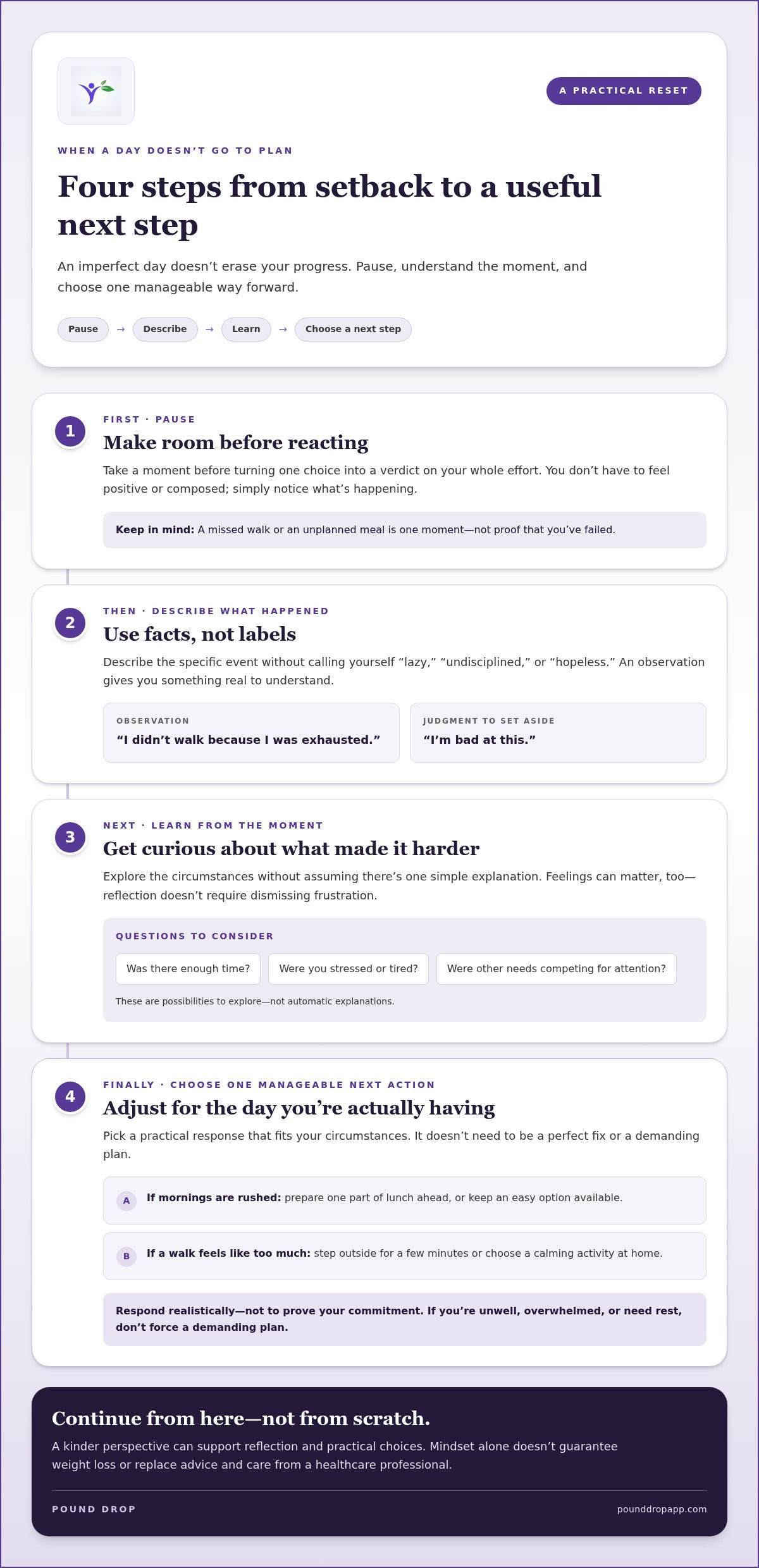
A difficult day doesn’t have to become a reason to scrap your routine and begin again. This four-step weight loss mindset shift gives you a simple process to return to: pause, describe, learn, and choose one manageable next action. Use it after a missed intention, a change in plans, or any moment when self-criticism makes it hard to decide what comes next.
Pause, describe, learn, choose
- Pause. Take a breath or a brief moment before reacting. You don’t need to solve everything at once.
- Describe. State what happened as plainly as you can. For example: “I planned to prepare lunch, but my morning schedule changed.”
- Learn. Consider what made the plan easier or harder. Was the timing realistic? Did your energy, responsibilities, or surroundings change?
- Choose. Pick one next action that fits your circumstances now. It could be setting a reminder, preparing one item for tomorrow, or returning to a familiar routine.
The steps can be brief. If you’re short on time, pause and choose a practical next move. If you have more space, reflect on what you noticed. The goal isn’t to follow a new rule perfectly. It’s to have a steady way to respond when life shifts.
Turn reflection into one realistic next action
Let your next action fit the day you’re actually having, rather than an ideal version of it. If a busy evening disrupted a routine, you might choose a time tomorrow to make that routine easier to begin. If the same obstacle keeps appearing, such as a meeting that runs through your usual break, consider a different time or a simpler version of the plan.
A missed action isn’t a debt you have to repay. You don’t need to double up, punish yourself, or make an overly demanding plan to compensate. For more structured ideas, explore this simple weight loss methodology.
Track patterns without turning them into a judgment
If it feels useful, jot down a few notes about what was happening before a routine felt difficult or manageable. You might record the time, your schedule, or what helped you follow through. Look for patterns as clues, not scores. Tracking is optional. If it starts to create shame or pressure, pause or use a lighter approach. A book about the psychology of weight loss can offer another way to explore reflection and mindset.
For a self-guided structure to support consistent lifestyle practice, explore the Pound Drop App and The Method.
How Pound Drop Can Support a More Steady Weight Loss Mindset
Practising a more flexible approach takes repetition. A consistent structure can help you reflect on your choices and return to everyday habits. Pound Drop’s self-guided weight-management system brings together the Pound Drop App and The Method, with The Book and The Journal as physical resources. These tools support reflection and practice; they don’t promise a particular result or provide personalized care.
Where structured self-guided tools can fit
A framework gives you a familiar place to start when plans change. You can reflect on what felt manageable, notice where a routine met an obstacle, and consider one small adjustment for the next day. The aim isn’t to follow a plan flawlessly. It’s to keep learning what works for your circumstances and adapt as your schedule, energy, and needs shift.
The Pound Drop App and The Method are at the center of the system. The Book and The Journal provide physical resources to complement it. Choose a format that feels useful to your practice. A structured resource can help you return to reflection, but you’ll still need to make choices that fit your life, and no tool can guarantee weight loss.
Choose a next step that feels sustainable
You don’t need to take on several changes at once. Choose one small practice from this article and try it in a realistic way. For example, after a disrupted routine, pause to describe what happened, then decide whether a simple adjustment would help next time. If writing things down feels supportive, make a brief note. If it feels like pressure, use another approach.
For a structured, self-guided approach to lifestyle changes, explore the Pound Drop self-guided system. Begin with one manageable step and adapt as you learn. Progress doesn’t depend on a perfect restart. Steady practice, with room for real life, is a worthwhile place to begin.
Keep Moving Forward, One Choice at a Time
A weight loss mindset shift isn’t about staying motivated or getting every choice right. It’s about meeting setbacks with curiosity, recognizing that progress can take different forms, and choosing a next step that fits your real life. When a plan changes, adjust it rather than treating the day as lost.
Try the four-step practice: pause, describe what happened, learn what may have influenced it, and choose one manageable action. Return to it whenever you need to. Each time you respond without turning a difficult moment into a judgment about yourself, you practise a steadier way forward.
Pound Drop brings together the Pound Drop App and The Method, with The Book and The Journal as physical resources to support structured, self-guided lifestyle practice. Explore the Pound Drop self-guided system and choose a practical starting point.
You don’t need to start over to keep going. Choose one small action, and let progress build at a pace that works for you.
Frequently Asked Questions
What is a weight loss mindset shift?
A weight loss mindset shift means changing how you interpret choices, setbacks, and progress while pursuing weight-related goals. Instead of treating a difficult moment as proof of personal failure, reflect on what happened and choose a manageable next step. It’s a way of approaching behavior, not a guarantee of weight loss. The change can be gradual, and it doesn’t require perfect thoughts or constant confidence.
How do I change my mindset about losing weight?
Start by noticing a judgmental thought, then describe the situation more neutrally. If a planned routine didn’t happen, ask what influenced it, such as a schedule change, stress, or low energy. Choose one realistic next action that fits your circumstances. Practise these steps gradually rather than expecting to master them all at once. Positive thinking alone doesn’t determine body weight. If weight concerns or eating behaviors cause distress, seek qualified support.
Can a mindset shift help with weight loss?
A mindset shift may help you respond to routines, challenges, and setbacks in ways that support the behaviors you want to practise. It can’t guarantee weight loss or a particular result, and it isn’t a standalone treatment. Weight and health are affected by broader circumstances, which differ from person to person. Consider your overall health needs, and speak with a qualified healthcare professional if you have concerns or need guidance suited to your situation.
How do I stop thinking I have failed after one bad day?
One difficult day doesn’t erase earlier effort or define your character. Describe what happened without a label: “My schedule changed, and I missed the routine I planned.” Then consider what made it easier or harder and choose one manageable next action. That might be returning to a familiar routine or adjusting it for tomorrow. You don’t need a full restart, and you don’t need to make up for what didn’t happen.
What is the difference between a growth mindset and an all-or-nothing mindset in weight loss?
An all-or-nothing mindset treats a missed intention as total failure. A learning-oriented mindset treats it as information that may help you adapt. For example, if a scheduling conflict interrupts a planned walk, consider whether another time or a shorter walk fits better. This approach doesn’t guarantee success or make every obstacle easy. It offers a practical way to respond without judging yourself or abandoning your broader intentions.
Does motivation have to come before I make a weight-loss change?
No. Motivation doesn’t have to be constant before you practise a small, realistic routine. On a tiring day, you might prepare one item for tomorrow rather than take on an ambitious plan. Choose an action that fits your energy and circumstances, and adjust when needed. Low motivation isn’t proof of laziness or failure. If low mood persists, or you’re distressed about your health or eating behaviors, consider seeking qualified support.
How can I stay positive about weight loss when progress feels slow?
Look beyond one weigh-in or a short period of change. Weight can fluctuate, and one measurement doesn’t establish a long-term pattern. You might also notice practical behaviors you can influence, such as adapting routines when your schedule changes. There’s no single pace or measure that defines progress for everyone. Be patient with yourself, and take health concerns or changes that worry you to a qualified healthcare professional.


