


Article by
Jesper Sorensen
Jesper Sorensen is a holistic health coach and founder of Pound Drop, a different approach to weight loss built around healthier habits. He has written ebooks and health articles for established publishers and has spent years studying nutrition, healthy eating and sustainable weight management.
What if weight loss didn’t have to feel like a daily test of willpower? If you’ve been through the yo-yo cycle, struggled to keep up with complex calorie counting, or blamed yourself when a restrictive plan fell apart, it makes sense to feel tired of starting over. A simple weight loss methodology offers a steadier alternative, built around habits that fit real life rather than rules that demand perfection.
The goal isn’t to make every meal or busy day another decision to get right. It’s to create a practical routine you can return to, even when life doesn’t go to plan. In this article, you’ll learn how a structured, habit-based approach can replace the cycle of restriction with a more sustainable way to manage your weight and ease food-related stress.
We’ll look at how to build small habits, why a reliable system can be more useful than relying on motivation alone, and how reflection can help you notice patterns without judgment. The result is a calmer path forward, designed to work with your life, not against it.
Key Takeaways
- Understand why relying on willpower and restrictive rules can make weight management harder to maintain.
- Learn how a simple weight loss methodology can center on repeatable habits instead of complicated calorie counting.
- Explore ways to track daily patterns with curiosity, without turning setbacks into self-criticism.
- Use a practical five-step framework to notice your routines and begin with one manageable habit.
- See how The Method, the Pound Drop App, The Book, and the Journal can support a self-guided approach to change.
Why Traditional Diets Fail and Why You Need a Methodology Instead
A plan that depends on constant willpower can feel manageable when life is calm. Then work runs late, a family commitment changes the evening, or you’re tired, and every food choice becomes another decision to get right. That mental effort adds up. A more sustainable approach makes everyday actions easier to repeat instead of expecting you to stay motivated every moment.
This is why a simple weight loss methodology focuses on the process, not just a deadline or a number on the scale. Weight management involves more than short-term food rules. Weight management techniques can include habits and ongoing choices that support maintaining progress. The aim is to build a routine that can adapt when real life gets busy.
A helpful way to think about mindset and everyday choices is to watch this video:
The Myth of the Quick Fix
An eight-week transformation may create a burst of focus, but what happens when the plan ends in week nine? If the routine relies on strict rules that don’t fit ordinary workdays, travel, or social meals, it can be difficult to continue. That isn’t proof you lack discipline. It may mean the plan was designed for a short challenge, not for life after it.
Restriction can also make eating feel like a test you either pass or fail. When one unexpected meal seems like a reason to abandon the whole plan, an all-or-nothing cycle can take hold. Instead, practice returning to your next usual routine. Changes in eating can affect appetite and energy, so a plan that leaves you feeling strained may be hard to sustain. Start with repeatable actions, not promises of rapid change.
The Power of Self-Guided Systems
Guidance can be useful, but long-term confidence also comes from learning to make choices for yourself. If every decision depends on someone else’s instructions, it may be harder to carry those habits into situations where that direction isn’t available. A self-guided system can help you notice what works in your routine and adjust as circumstances change.
For example, rather than follow a rigid schedule, choose one action that fits your day, such as planning a regular lunch break or noting what tends to disrupt your evening routine. Then observe what happens without judging yourself. A journal or simple tracking practice can help turn those observations into useful patterns. The shift is gradual: from being told what to do to understanding your own next step. That is the foundation of a methodology you can keep practicing beyond a short-term goal.
The Core Pillars of a Simple Weight Loss Methodology
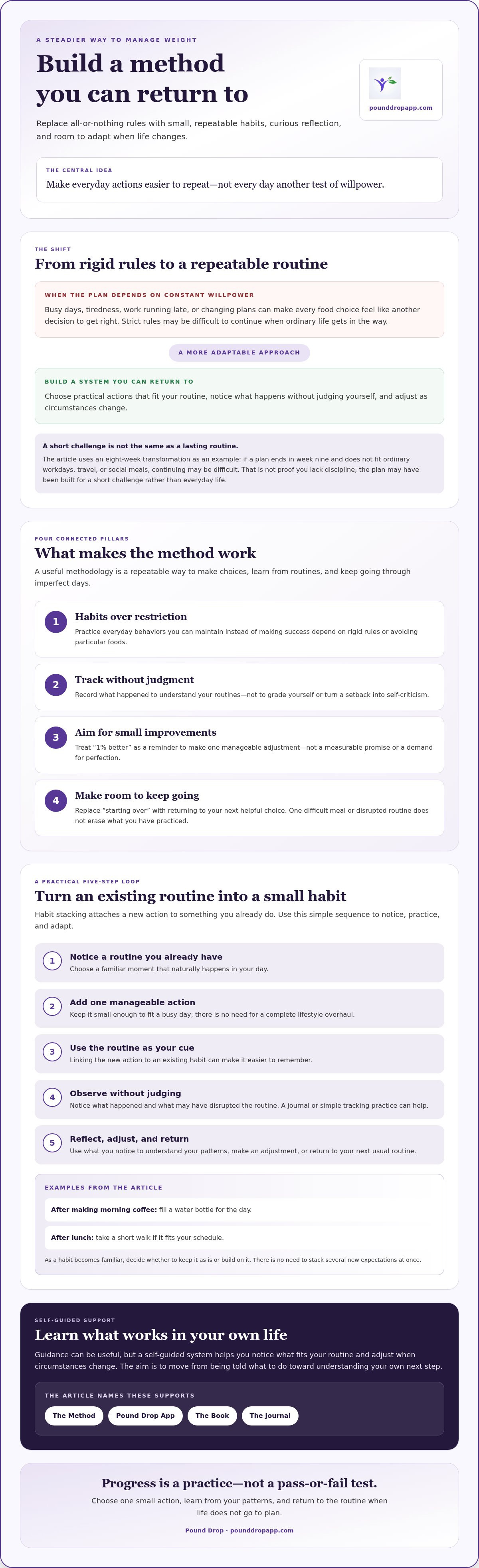
A useful methodology is more than a set of rules. It’s a repeatable way to make choices, notice what’s working, and adjust without treating an imperfect day as a reason to quit. This simple weight loss methodology rests on four connected pillars: build habits instead of centering calorie restriction, track patterns without judgment, aim for small improvements, and create enough psychological safety to keep going.
- Habits over restriction: Practice everyday behaviors you can maintain, rather than making success depend on avoiding particular foods or following rigid rules.
- Non-judgmental tracking: Record what happened to learn about your routines, not to grade yourself.
- Incremental progress: Think of “1% better” as a reminder to make one manageable adjustment, not as a measurable promise or a demand for perfection.
- Psychological safety: Replace “starting over” with returning to your next helpful choice. One difficult meal or disrupted routine doesn’t erase what you’ve practiced.
Habit Stacking for Weight Management
Habit stacking means attaching a new action to a routine that already happens. For example, after making your morning coffee, you might fill a water bottle for the day. After lunch, you might take a short walk if it fits your schedule. The existing routine acts as a cue to remember the new behavior, so you don’t have to create a fresh reminder each time. Start with one small action. It’s more likely to fit a busy day than a complete lifestyle overhaul.
As a habit becomes familiar, decide whether to keep it as is or build on it. There’s no need to stack several new expectations at once. A steady routine gives you room to practice and adapt.
The Role of Reflection and Journaling
Tracking is useful when it helps you understand your choices, not when it becomes another source of pressure. A short handwritten note can capture context an automated record may not: perhaps you ate later than usual after a demanding afternoon, or noticed that a planned break helped you feel more settled. Neither method is automatically better for everyone. Choose a format that helps you pause and reflect. Mayo Clinic’s strategies for success also emphasize practical preparation and realistic goals.
Over time, a physical record can make small efforts easier to see, especially when progress feels quiet. Use the Pound Drop App or a journal to support reflection if a tool would help you stay consistent. Keep the focus on patterns and next steps, not self-criticism.
System vs. Willpower: Why Structure Beats Motivation
Motivation naturally changes from day to day. Stress, poor sleep, a crowded schedule, or simply having a lot on your mind can make it harder to pause and choose what you intended. That doesn’t mean you lack discipline. It means a plan that depends on feeling motivated every day may not offer enough support when life gets demanding.
Rather than treat willpower as the whole solution, consider how your surroundings and routines shape decisions. When you’re tired or rushed, making the same choice from scratch can feel harder. A simple weight loss methodology reduces that decision friction by making helpful actions easier to remember and repeat. A diet often centers on temporary rules; a system focuses on practical routines you can adapt and continue.
Designing Your Environment for Success
Structure can begin with small changes to your surroundings. At home, put everyday foods where they’re easy to see and plan a few simple options before a busy week begins. At work, keep a water bottle nearby or decide in advance when you’ll take a lunch break. These aren’t strict rules. They’re prompts that reduce the number of choices you have to make in the moment.
The Method offers a framework for practicing habits, while the Pound Drop App provides a digital way to engage with that system. It isn’t about removing every challenge or making choices for you. It’s about having a familiar approach to return to when motivation is low, then learning which routines fit your circumstances.
Why The Method Doesn’t Require a Coach
External support can suit some people, but progress doesn’t have to depend on another person’s schedule. A self-guided approach gives you room to build your own understanding and make choices at a pace that works for you. The Pound Drop Journal can support personal reflection: note what felt manageable, what got in the way, and what you might try next. The purpose is awareness, not grading yourself.
Over time, the goal is to move from “What am I supposed to do?” toward “What’s a useful next step for me?” That confidence grows through practice, not perfection. If you’d like a structured place to begin exploring this approach, learn more about the Pound Drop App. Use the method as a steady guide, not another test you have to pass.
How to Implement a Simple Weight Loss System in 5 Steps
A simple weight loss methodology works best when it starts with your actual routine, not an idealized version of your day. Move through these steps at a pace that feels realistic. The aim is to learn and adjust, not create another plan you have to follow perfectly.
Step 1: Audit Your Habits Without Judgment
For a few days, notice your routines around meals, movement, sleep, and busy moments. Look for context rather than fault: Do meetings push lunch later? Do you tend to snack while working? A record can bring these often-invisible patterns into view. Use The Journal for habit reflection to note what happened and how you felt, without labeling choices as good or bad.
Step 2: Choose One Keystone Habit
Pick one small action that could make your day feel more supportive. You might set a regular lunch break, add a short walk after an existing routine, or prepare a simple option for a hectic morning. Keep it specific and manageable. You’re testing a habit, not committing to a complete lifestyle overhaul.
Step 3: Track Consistency, Not Just Numbers
Use a daily tracker to mark whether you practiced the habit, and add a brief note if useful. For example: “Walked after lunch, felt clearer” or “Meeting ran late, so I took a short break later.” This gives you information about what helps the habit fit your life. If you miss a day, record it neutrally and continue.
Step 4: Review and Reflect Weekly
Set aside a few minutes to consider what felt easy, what got in the way, and whether the habit still suits your schedule. If your lunch break kept shifting, choose a cue that’s more dependable. Reflection makes the system responsive instead of rigid. You’re not starting over; you’re using what you learned to make the next attempt more practical.
Step 5: Scale When the Habit Feels Familiar
Once the action fits naturally into your routine and takes less prompting, consider adding one small layer. There’s no fixed timetable. During a stressful period, maintaining your existing habit or simplifying it may be the right next move. A smaller version, such as a brief walk or a quick journal note, can help you stay connected to the routine without demanding more than the day allows.
The Method is a self-guided framework, and the Pound Drop App and Journal offer tools for practicing and reflecting on habits. Explore the Pound Drop App as one way to support your next step.
Discover "The Method": The Pound Drop Approach to Permanent Change
A sustainable approach needs more than good intentions. It needs a way to learn, practice, and reflect that doesn’t rely on restrictive rules or a perfect schedule. Pound Drop brings The Method together with the Pound Drop App, The Book, and the Journal, offering a self-guided framework for building habits over time.
The Method is designed as an alternative to the short-term diet cycle. Rather than centering progress on rigid meal plans, supplements, or ongoing one-to-one coaching, it focuses on learning everyday habits and applying them in your own life. You decide what to work on, notice what fits, and adjust as your routine changes.
The Tools of the Trade
Each tool offers a different way to engage with the methodology. The Pound Drop App provides a digital format for working with the system as part of daily life. The Book offers a way to explore the thinking behind the approach, while the Journal gives you space to record observations and reflect without turning each day into a pass-or-fail test.
These tools aren’t a promise of effortless change. They’re ways to support steady practice. You might use the Journal to notice what throws your routine off, then return to The Book or App to consider a manageable next step. The point is to build understanding, not follow rules blindly.
A Self-Guided Start, at Your Own Pace
Your first month doesn’t need to be a transformation challenge or a fixed program with guaranteed outcomes. It can simply be a period of learning: get familiar with the approach, try a small habit, and reflect on what makes it easier or harder to maintain. If a busy week interrupts your plans, adapt and continue rather than assuming you have to start from scratch.
That’s the long-term shift: moving away from a temporary diet mindset and toward habits you can revisit as life changes. If you’re exploring a weight loss for beginners app, Pound Drop’s structured, self-guided approach may be a useful place to learn more. Start with one tool, one practical idea, and the next step that feels realistic for you.
Build a Routine You Can Keep
Lasting change doesn’t require a perfect plan or a fresh start every Monday. A simple weight loss methodology gives you a steadier place to begin: choose manageable habits, notice your patterns without judgment, and adjust as life changes. Small steps can add up when they’re part of a routine you can return to.
The Method brings this habit-based approach together in a self-guided system, supported by the Pound Drop App, The Book, and the Journal. It focuses on practicing habits without requiring supplements or rigid meal plans. Progress is personal, and it’s okay to move at a pace that feels workable.
If you’re ready to move beyond the restrict-and-restart cycle, take one calm, practical next step. Explore The Method and the Pound Drop App. You don’t have to change everything at once. Begin with one habit, keep learning, and give yourself room to grow.
Frequently Asked Questions
What is a weight loss methodology?
A weight loss methodology is a structured approach for making and maintaining habits that support weight management. Rather than relying on a temporary set of rules, it gives you a process for noticing your routines, choosing practical actions, and reviewing what works. A simple weight loss methodology can include a way to track consistency and make adjustments, so your approach can respond to everyday changes instead of depending on perfect conditions.
How is a methodology different from a standard diet?
A standard diet often focuses on a specific set of eating rules or a short-term goal. A methodology focuses on the process you practice over time, such as building routines and reflecting on patterns. That doesn’t mean every diet is the same, but a habit-based system is designed to be adaptable rather than something you simply finish. The key question is whether the approach can fit your life beyond its initial start.
Can I really lose weight without a personal coach or trainer?
Some people choose a self-guided approach, and a personal coach or trainer isn’t required to use Pound Drop’s system. The Method is designed for users to work through independently with support from the Pound Drop App, The Book, and a journal. If you have health concerns or need medical guidance, speak with a qualified healthcare professional. Choose the kind of support that feels appropriate for your circumstances.
Do I need to follow a strict meal plan with this method?
No. Pound Drop’s approach doesn’t require a strict or personalized meal plan. The Method centers on self-guided lifestyle changes and habit formation, so you can focus on learning about your routines and making practical adjustments. For instance, you might reflect on how your work schedule affects mealtimes before deciding what small change could help. The aim is to build a repeatable process, not follow a prescribed menu.
How long does it take for a new habit to become automatic?
There isn’t one reliable timeline that applies to everyone. How quickly an action feels familiar can depend on the habit, your schedule, and how regularly you practice it. Instead of waiting for a habit to become automatic, make it specific and connect it to a routine you already have. Notice whether it’s becoming easier to remember and maintain, then adjust the cue or action if it still feels difficult.
What tools do I need to start a simple weight loss methodology?
You can begin with one habit to practice and a way to record brief observations. That could be a notebook or a simple daily note. Pound Drop’s self-guided system includes the Pound Drop App, The Book, and a journal, which provide digital and physical ways to engage with The Method. You don’t need to use every tool at once. Choose a format that feels comfortable enough to return to.
Is this approach suitable for people with very busy schedules?
A habit-based approach can be adapted around a busy schedule because you can choose actions that fit your existing routines. For example, you might use an established lunch break as a reminder to pause and check in with yourself, or keep a short note about what disrupted your plans. Start with one manageable action rather than adding several new tasks. If your schedule changes, revise the habit so it remains realistic.
What happens if I miss a day in my habit tracker?
Nothing needs to be reset. A missed entry is information, not proof that you’ve failed. You can leave the gap as it is, make a brief note about what got in the way, and continue tracking the next day. If the habit keeps slipping, consider making it smaller or linking it to a more dependable part of your routine. The tracker is there to support reflection, not to demand a perfect streak.


