


Article by
Jesper Sorensen
Jesper Sorensen is a holistic health coach and founder of Pound Drop, a different approach to weight loss built around healthier habits. He has written ebooks and health articles for established publishers and has spent years studying nutrition, healthy eating and sustainable weight management.
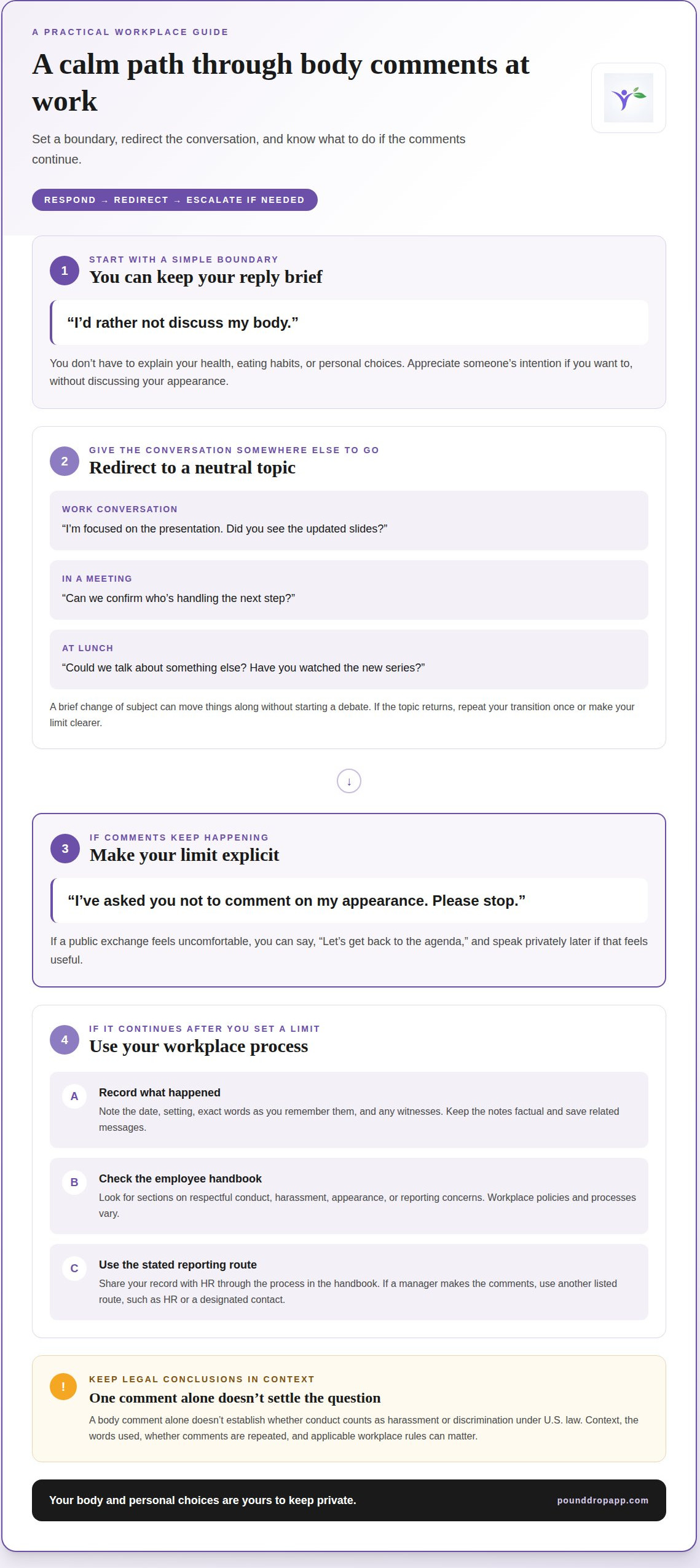
A compliment about weight loss can still feel uncomfortable. Knowing how to respond to unsolicited body comments from colleagues can start with a simple boundary: “I’d rather not discuss my body.” You can then change the subject or end the conversation without explaining your reasons.
It’s understandable to feel caught off guard, especially when a remark is meant kindly or seems to expect a thank-you. You can appreciate someone’s intention without discussing your appearance, eating habits, health, or private choices.
Here are calm phrases for setting a boundary, redirecting unwanted body talk, and responding to weight-loss compliments while keeping medical decisions private. You’ll also find ways to explain how comments affect you and steps to take if a colleague keeps bringing up your body.
Key Takeaways
- Choose a boundary phrase that feels natural, and use it without explaining or defending your personal choices.
- Redirect unwanted body or food talk with a brief change of subject, or step away if you need a pause.
- Respond to weight-loss compliments in a way that protects your privacy, even when the remark is meant kindly.
- Explain the impact of repeated comments calmly and clearly, while considering whether the person is ready to listen.
- At work, keep your response polite and direct, then return the conversation to a more comfortable topic.
1. Setting boundaries around weight and food conversations
A useful boundary names the topic you want to stop and, if helpful, suggests a new direction. Try, “I’d rather not discuss my weight or food choices. How did the project meeting go?” You don’t have to engage, explain your health, or justify what you eat. Choose words that feel natural and practice them once, so they’re easier to use when a comment catches you off guard.
If a colleague comments on your body in front of others, keep your reply brief: “I know you may mean well, but I don’t discuss my body at work.” Then redirect to something neutral, such as the task at hand. If you’d rather avoid a public exchange, say, “Let’s get back to the agenda,” and speak privately later if that feels useful.
A body comment alone doesn’t establish whether conduct counts as harassment or discrimination under U.S. law. Context, the words used, whether comments are repeated, and applicable workplace rules can matter, so don’t treat one phrase as a legal conclusion.
For repeated comments, state your limit clearly: “I’ve asked you not to comment on my appearance. Please stop.” If it continues, record what happened, including the date, setting, exact words as you remember them, and any witnesses. Review your employee handbook for relevant conduct or reporting procedures, then share your record with HR through the stated process. Keep your notes factual and save related messages.
Workplace policies vary. Check your handbook for sections on respectful conduct, harassment, appearance, or reporting concerns. They can explain which process applies. If a manager makes the comments, use another reporting route listed in the handbook, such as HR or a designated contact, rather than addressing the manager alone.
To set a broader boundary around food and bodies, try: “I’m not discussing anyone’s weight or what anyone is eating.” If a meal conversation turns into criticism of your plate, say, “I’m listening to my body, and I’ll eat more if I’m ready.” You don’t owe colleagues an account of how much you eat or why your food choices are personal.
Body changes don’t need a good-or-bad label. If someone points out a change, you can say, “Bodies change, and I’d rather focus on how I’m doing overall.” Don’t assume someone’s health from their appearance: weight loss or gain may have private circumstances, including illness, medication, recovery, or stress. You can appreciate a kind intention while asking colleagues to leave your body out of the conversation.
2. Changing the subject when body talk feels unwanted
Changing the subject lets you leave unwanted body talk without starting a debate. A practical part of learning how to respond to unsolicited body comments from colleagues is having a neutral topic ready. After a remark, try, “I’m focused on the presentation. Did you see the updated slides?” A work task, shared plan, or simple question gives the conversation somewhere else to go. You don’t need permission to redirect it.
Keep the transition simple and steady. If someone says, “You look so different,” you might answer, “I’ve had a lot on my plate. How’s your new project going?” If a teammate brings up dieting over lunch, try, “Could we talk about something else? Have you watched the new series?” These replies don’t invite more questions about your body or eating.
Choose a redirect that fits the setting. During a team meeting, point to the agenda and ask, “Can we confirm who’s handling the next step?” At lunch, ask about a shared event or weekend plans. A relevant question sounds natural and helps others follow your lead. Knowing how to respond to unsolicited body comments from colleagues can mean redirecting the group, not just answering the person who made the remark.
- For appearance talk: “Let’s leave bodies out of this. How did your presentation go?”
- For diet talk: “I’m not discussing food choices today. Did you finish the report?”
- For a group conversation: “Changing the subject, what time are we meeting tomorrow?”
If the colleague returns to the topic, repeat your transition once or make your limit clearer: “I’m not talking about my body. I’m going to get back to work.” Then return to your task or step away. Repeating yourself doesn’t mean the redirect failed; it shows the subject remains unwelcome. If body or food talk makes a difficult workday harder, you can leave the conversation.
If confronting a colleague feels risky, redirect without naming their behavior, move toward a group or public workspace, or leave for a work-related reason. You can create distance and seek support from someone you trust at work. You don’t have to respond directly if it doesn’t feel safe.
Notice if the conversation becomes fixated on food, weight, or an eating disorder. You might say, “We’ve been talking about diets for a while. Could we switch topics?” Or state your own limit: “This conversation feels harmful to me, so I’m going to step out.” You can’t do someone else’s learning for them, but you can choose what you engage with. A calm redirect helps bring your attention back to work.
3. Responding to weight-loss compliments
A colleague might say, “You’ve lost weight. You look amazing!” You may feel pleased, uncomfortable, or unsure how to answer. The compliment doesn’t require you to share what changed, explain your health, or confirm that weight loss was your goal. A short response can acknowledge the speaker while keeping the conversation within your boundaries.
Choose a reply based on what you want next. To move on quickly, say, “Thanks, I’d rather not focus on my body. How’s your project going?” To be more direct, try, “I know you mean that kindly, but I don’t discuss weight.” If you’re comfortable acknowledging effort, say, “I’ve been working on consistency, and I appreciate you noticing my dedication.” Each option lets you decide how much to engage.
Appearance-based praise can land differently than intended because weight change has many possible causes. It may follow illness, depression, eating-disorder recovery, medication, or injury. A colleague usually can’t know the private circumstances behind someone’s body change. That’s why praising someone’s listening, teamwork, or work can be more thoughtful than commenting on their size.
Diet culture can make weight loss seem like an automatic sign of success. But a compliment may feel painful if the change came during a difficult period or involved disordered eating. You don’t need to correct the speaker or disclose personal details. A simple “I’m not talking about my weight” is enough. You can also say, “There’s nothing I want to add about my body,” then shift to the meeting, a shared task, or another neutral topic.
If a colleague asks whether you’ve taken weight-loss medication, your medical decisions are yours to keep private. Try, “I keep health information personal,” or, “I’ve been focusing on my overall health.” You don’t have to confirm medication use, describe your routine, or answer follow-up questions. If they persist, repeat your boundary once and redirect the conversation.
You can encourage a more considerate culture without making yourself responsible for everyone’s learning. For example, say, “I try to compliment people on their work rather than their bodies.” If someone comments on your appearance, you might respond, “I’d rather hear what you appreciate about how we worked together.” That gives them a clear alternative. At work, a brief, steady answer can protect your privacy and show what kind of compliment feels welcome, without turning the moment into a debate about anyone’s intentions.
Weight-loss compliments can be harmful when a change results from disordered eating, illness, poor hormone health, or injury. Weight gain or loss may also stem from depression, eating-disorder recovery, or medication, and the reasons can remain private. When acknowledging fitness efforts, focus on strength, consistency, dedication, or determination rather than appearance.
4. Telling someone how body comments affect you
Sharing how a comment affects you can help a trusted colleague understand what needs to change. Before speaking, decide what you want from the conversation: acknowledgment, a change in behavior, or simply space to explain. You might say, “When my appearance comes up during lunch, I feel exposed. Please keep our conversations focused on work.” Naming the situation, its effect, and your request makes your message easier to follow.
Choose a person and setting that feel emotionally safe. A private conversation after a meeting may feel easier than speaking in front of the whole team. Consider whether the person has listened respectfully before and whether you’ll have support afterward. You don’t have to share personal history or disclose anything about eating, health, or your body to explain that a remark affects you.
A simple structure can help you stay grounded. Describe the specific comment without making assumptions about the speaker’s intentions. Explain your response, then make one clear request. For example: “When you ask whether I’ve lost weight, I feel anxious about being watched. Please don’t bring up changes in my body.” You can pause after making the request instead of rushing to soften it.
If the person says they meant it as a compliment, acknowledge their intention without withdrawing your message: “I understand that, and the comments still make me uncomfortable.” This keeps the focus on the effect rather than turning the discussion into an argument about whether you should feel hurt. If they listen, agree on a practical change, such as avoiding appearance-related remarks during check-ins or team meals.
Sometimes the listener may dismiss your concern or continue commenting. You can end the conversation, write down what happened, and speak with a trusted friend or workplace support person. You can’t do someone else’s learning for them. Let someone supportive know if body talk feels triggering, even when colleagues describe their words as well-intentioned.
If worry about weight, shape, or size takes up much of your attention, a counselor or another support person may help you work through it. In the United States, the National Eating Disorders Association provides information and referrals by phone at 1-800-931-2237. The National Alliance for Eating Disorders offers referrals, support groups, and treatment advocacy across the country. Reaching out can give you a place to talk about how comments affect you, without making colleagues responsible for your wellbeing.
Not every remark needs an answer: you don’t have to engage with comments someone else makes about bodies or food. You aren’t obligated to justify how much you eat or what you eat. If a person repeatedly comments on your body, a direct boundary can help. For example, ask them to stop making remarks about your body.
When someone comments on another person’s changing body, you can normalize that bodies change without describing those changes as good or bad. Avoid assuming someone’s health from their appearance. If someone seems fixated on diet or food, gently pointing out potentially problematic statements may help shift the conversation.
5. Polite ways to respond to body comments at work
A polite response can be clear without matching a colleague’s tone. If someone says, “You look great after losing weight,” try, “I appreciate the kind intention, but I prefer not to discuss my body.” This recognizes their intent and states your limit in one breath. Then return to a task, meeting topic, or shared workplace plan.
If a remark feels insulting, pause before answering. Keep your voice steady, make eye contact if that feels comfortable, and avoid laughing to smooth over the moment. You might say, “What a shame you felt the need to say that.” The sentence names the impact without pretending the comment was harmless. A brief pause afterward gives your colleague room to consider what they said.
If you’re unsure what someone meant, ask a calm question: “Do you usually discuss coworkers’ weight?” This draws attention to the behavior without assuming their motive. You can follow with, “I’d prefer we keep comments about appearance out of work conversations.” Use this approach when a direct question feels manageable; a short boundary or subject change may suit a public meeting better.
Humor can interrupt a tense exchange, as long as the aim isn’t to shame the other person. For example, if a coworker jokes about your appearance, you could say, “Let’s give my body a day off from the team meeting.” If the joke leads to more comments, drop the humor and state your boundary plainly. You don’t have to keep the exchange light.
- For an intended compliment: “Thanks for thinking of me. I don’t discuss my body at work.”
- For a question about your plate: “I’m not sure. I’m going to get some water.”
- For an insulting joke: “Could you repeat that?” Then pause instead of helping the speaker move past it.
- For a group setting: “Let’s keep this conversation focused on the agenda.”
Pick a phrase that fits your relationship and the setting. A trusted teammate may respond well to a private conversation, while a meeting may call for a brief redirect. If someone repeats the remark, use the same sentence again: “I’ve asked you not to comment on my appearance.” Consistency keeps your message clear without requiring a long explanation.
Politeness doesn’t mean protecting a colleague from every uncomfortable pause. It means choosing words that reflect your limits and the workplace setting. You can respond once, return to your work, or leave the conversation. If the comments continue, keep a factual record of what was said and when, then use the reporting process in your workplace handbook.
Pound Drop
Pound Drop offers the Pound Drop App, The Method, The Book, and The Journal. If conversations about weight or food have prompted you to reflect on your own habits or goals, these tools can support your personal journey.
They don’t replace the boundary-setting phrases in this article. You can decide what feels useful and take time to consider what you want from your relationship with food and weight. There’s no need to turn a colleague’s comment into pressure to make a change.
If you’d like to learn more about Pound Drop’s offerings, contact Pound Drop.
Choose the response that feels right for you
Practicing how to respond to unsolicited body comments from colleagues doesn’t mean you need a perfect script for every moment. Pick one sentence that feels manageable and keep it ready for the next conversation. You can adjust it as you learn what feels comfortable. A quiet boundary is still a boundary, and you can choose not to explain personal decisions.
You may also decide that comments have raised questions about your own habits or wellbeing. Give yourself room to consider what support would feel useful, without letting a colleague’s remark set your goals. Small, self-directed steps can help you move forward at your own pace.
If you’d like to explore a next step with Pound Drop, start a conversation with Pound Drop. Keep what serves you, leave what doesn’t, and trust yourself to choose a response that respects your needs.
Frequently Asked Questions
What are firm responses to inappropriate body comments from colleagues?
Say, “That comment isn’t appropriate for a work conversation. Don’t make remarks about my body.” Keep your words steady and stop there; you don’t need to soften the limit with a laugh or a long explanation. If the remark happens during a meeting, you can add, “Let’s return to the agenda.” If it continues, make a factual note afterward and use your workplace’s reporting process.
How can you set boundaries when a coworker comments on your weight or appearance?
State what you want to change and make your request specific: “Please leave my weight out of our conversations.” If you expect a difficult exchange, you can send the boundary in writing or speak with a trusted person nearby. In a team setting, suggest a shared norm of discussing work rather than colleagues’ appearances. Choose the approach that feels manageable for your relationship and workplace.
When does a body comment at work count as harassment or discrimination under U.S. law?
A body comment alone does not establish harassment or discrimination. Context, wording, whether comments are repeated, and applicable workplace rules can matter.


