


Article by
Jesper Sorensen
Jesper Sorensen is a holistic health coach and founder of Pound Drop, a different approach to weight loss built around healthier habits. He has written ebooks and health articles for established publishers and has spent years studying nutrition, healthy eating and sustainable weight management.
One oversized vacation meal doesn’t have to become a week of worry. Notice what changed, return to balanced meals and your usual movement the next day, and keep going without trying to make up for it. These vacation eating strategies to avoid regaining weight focus on steady choices, not perfection.
Travel can disrupt routines: drinks, restaurant portions, long days, and irregular mealtimes can all affect what you eat. You don’t have to avoid every treat to stay on track. A little planning can help you enjoy local food while keeping habits that support your goals.
Here, you’ll find practical ways to choose lighter drinks and restaurant meals, plan a protein-rich snack before a gathering, and track eating and activity without turning your trip into a strict routine. You’ll also learn how to respond to overeating with calm, manageable steps. The aim is to return to your usual rhythm, one choice at a time.
Key Takeaways
- Choose lighter drinks and alternate alcoholic beverages with water or other noncalorie options to make vacation choices feel more manageable.
- Plan a protein-rich snack before a holiday meal so you can arrive less hungry and make choices at a comfortable pace.
- After overeating, return to balanced meals and your usual movement rather than trying to compensate with restrictive choices.
- Track eating and activity in a simple, consistent way to notice patterns and stay connected to your routine while traveling.
- At restaurants, look for simply prepared meals, include fruits or vegetables, and pay attention to portions and fullness.
1. Choosing lower-calorie drinks
Drinks can add extra calories during a trip without making a meal feel more satisfying. Start with water or sparkling water, then choose other beverages based on what you genuinely want. A useful daily hydration guide is at least 6-8 glasses of water. Carry a refillable bottle while sightseeing, and refill it after airport security when flying.
Alcohol deserves some planning because many alcoholic drinks contain calories and can increase appetite. Sugary mixed drinks can add calories, especially when you drink more than usual over the holidays. Before an evening out, decide what you’d like to drink and how you’ll alternate. For example, have a glass of water or sparkling water between alcoholic drinks. This keeps a noncalorie option in the mix.
If you want an alcoholic drink, choose one that suits your taste without turning every round into a sweet cocktail. Light beer, wine, a wine spritzer, champagne, or spirits mixed with water or a diet mixer are examples of lighter choices. You can also dilute juice with water or choose a calorie-free drink instead of soda. These are practical swaps, not rules that require you to avoid a favorite drink entirely.
Restaurant menus and resort bars often make large, sweet beverages easy to order. Pause before ordering and consider whether you want the drink itself or simply something refreshing with your meal. If you’re thirsty, water or sparkling water may do the job. If a favorite drink is part of the experience, enjoy it deliberately and choose water for the next round. Small decisions can help limit calorie-rich drinks without making the occasion feel restrictive.
Exercise doesn’t need to erase calories from drinks or meals. Restrictive dieting or compensatory exercise while traveling can leave you overly hungry, tired, or focused on making up for food. Instead, keep meals and movement reasonably steady, and choose activity because it helps you enjoy the trip.
Try a simple plan for a travel day: carry water, choose a lower-calorie drink with meals, and alternate any alcoholic drink with water or another noncalorie option. If you’re flying, refill your bottle after security. If you’re attending a celebration, decide beforehand which drink you’ll enjoy, then let your other choices support that plan. The aim is to make drinks one manageable part of vacation eating strategies, not a reason to compensate later.
2. Having a protein snack before a holiday meal
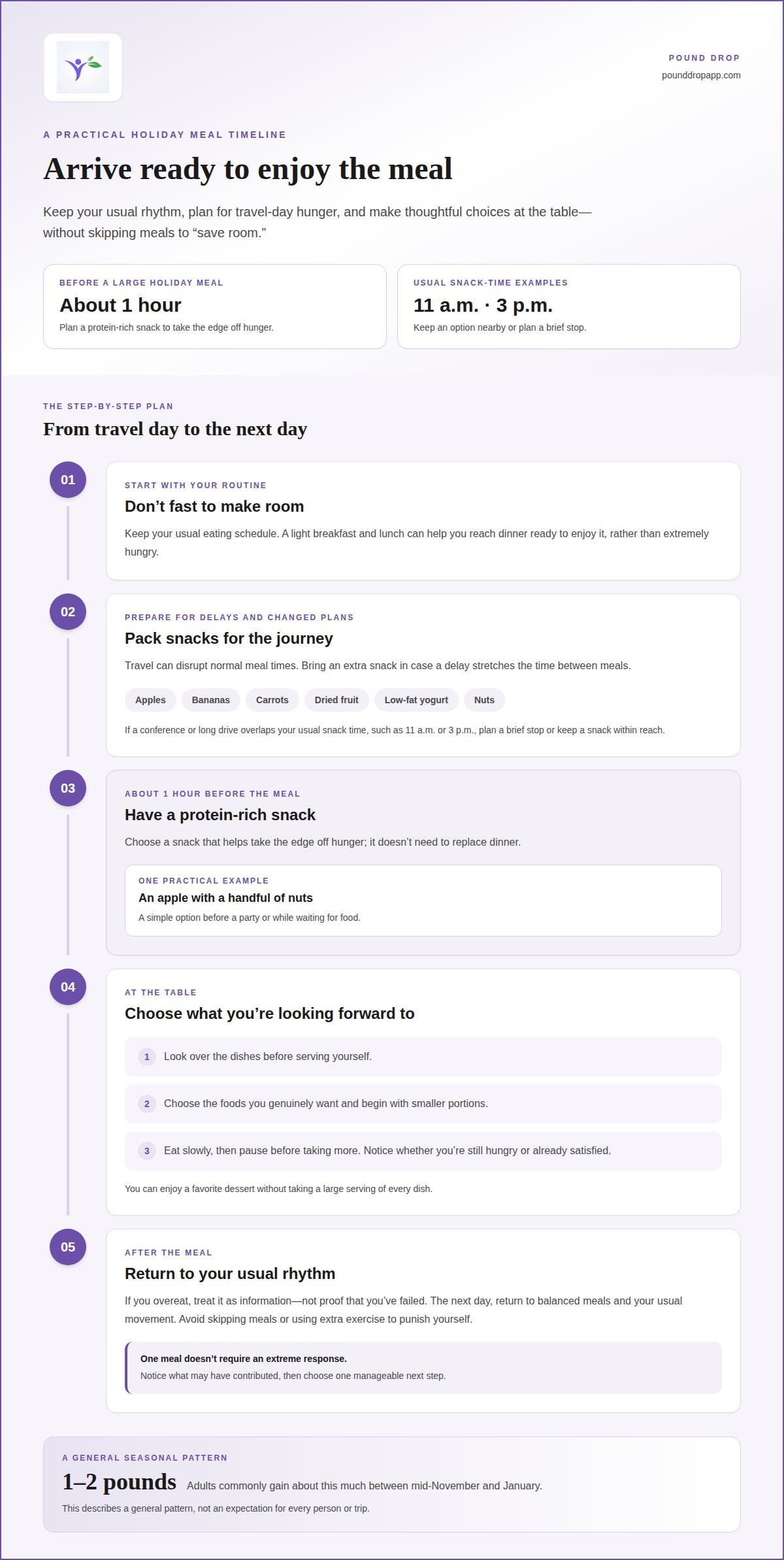
Arriving at a holiday meal extremely hungry can make mindful portions harder. Keep your usual eating schedule instead of fasting to “save room.” A light breakfast and lunch can help you reach dinner ready to enjoy the meal, rather than driven to eat quickly.
About an hour before a holiday meal, have a protein-rich snack. An apple with a handful of nuts is one practical option before a party. The snack doesn’t need to replace dinner. It can simply take the edge off hunger while you travel, greet guests, or wait for the food.
Travel days often disrupt normal meal times, so plan around the schedule you expect. Pack apples, bananas, carrots, dried fruit, low-fat yogurt, or nuts for the journey. Bring extra snacks in case a delay stretches the time between meals. If a conference or long drive overlaps your usual snack time, such as 11 a.m. or 3 p.m., plan a brief stop or keep an option within reach.
This routine also helps avoid the all-or-nothing pattern of skipping meals before a celebration, then eating whatever is available once hunger builds. For example, if a family dinner is later than usual, eat a light lunch and bring a snack for the afternoon. If restaurant plans change, use the snack to bridge the gap, then make a normal meal choice when food is available.
Mindful eating at the holiday table means noticing the food and your comfort, not judging yourself. Look over the dishes before serving, choose the foods you’re most looking forward to, and begin with smaller portions. Eat slowly enough to enjoy each bite. Pause before taking more and notice whether you’re still hungry or already satisfied. You can have a favorite dessert without sampling every dish in a large serving.
Weight gain during the holiday season is often a concern, but the typical increase is modest: adults commonly gain about 1-2 pounds between mid-November and January. That figure describes a general pattern, not an expectation for every person or trip. A steady meal routine can make it easier to enjoy celebrations without treating one meal as a reason to restrict food afterward.
For a travel day, pack a snack, keep meals reasonably close to your usual schedule, and plan a protein-rich option about an hour before a large holiday meal. These simple steps leave room for favorite foods while helping you arrive with a clearer sense of hunger.
3. How do you overcome the effects of overeating unhealthy foods?
After a large holiday meal, return to your usual routine the next day. Notice what changed in your food choices, activity, or weight, then make a practical adjustment. For example, choose a balanced breakfast and take a walk if it suits your plans. Skipping meals or punishing yourself with extra exercise can turn one meal into a cycle of restriction and overeating. One meal doesn’t require an extreme response.
Feeling uncomfortable or disappointed after overeating can happen, especially when a celebration includes favorite foods. Treat the experience as information, not proof that you’ve failed. Name one thing that may have contributed, such as arriving very hungry or eating while distracted. Then choose one next step, like sitting down for your next meal or taking a break from the table. Focus on what you can do now.
At a buffet or family table, take a moment to look over the options before serving yourself. Choose small portions of the foods you genuinely want, and use a smaller plate if one is available. Eat seated and pay attention to the taste and your fullness, rather than picking at food while standing. If conversation continues after the meal, move to another room or gathering area. Sharing leftovers with family or friends can also reduce the temptation to keep eating simply because food remains on the table.
For your next meals, include a variety of foods that support everyday nutrition. Whole grains, fruits, and vegetables can sit alongside legumes such as beans, peas, or lentils. Add protein from lean meat, poultry, fish, eggs, or soy-based foods. Low-fat dairy or low-fat yogurt without added sugar can also fit. For example, try brown rice with beans and vegetables, or yogurt with fruit. These are ordinary meal choices, not a special cleanse or a way to compensate.
Gentle movement can be part of returning to your normal day. A 15-30-minute walk after a holiday meal can support overall health and add enjoyable activity. It doesn’t need to be a workout designed to erase what you ate. If guests are lingering around the dining table, suggest a walk or move the gathering to a different space. That change gives everyone another way to connect without grazing on leftovers.
Most importantly, make your next decision manageable. If you indulge at dinner, eat your usual breakfast rather than skipping it. If you feel too full for more food that evening, wait until you’re hungry again, then return to a balanced meal. A calm response makes vacation eating strategies sustainable: notice the pattern, make one adjustment, and continue your routine.
4. Tracking food intake and physical activity
A simple record can help you notice how travel changes your routine. Each evening, note meals, drinks, activity, and whether hunger or appetite influenced your choices. Include useful details, such as a late breakfast, a long drive, or vegetables with lunch. An important part of vacation eating strategies to avoid regaining weight is spotting patterns you can respond to, not judging every choice.
Tracking can be brief. Record what you ate, how active you were, and one observation about the day. For example: “Walked around the museum, ate lunch late, felt very hungry at dinner.” That connects intake with circumstances without requiring a perfect food diary. Consistent tracking of diet and physical activity helped adults avoid holiday weight gain, and the most consistent trackers were least likely to gain weight. Tracking can also make vacation eating strategies to avoid regaining weight feel adaptable, rather than like strict rules.
Some people also find weight trends useful. Adults who weighed themselves daily and viewed a graph of their weight trends during the holidays did not gain weight in a study cited by the page. If weighing feels stressful, focus on recording meals and movement instead. A change of a few pounds can have several influences, so look for a pattern rather than reacting to one reading.
Different trips call for different practical plans. A cruise or resort may offer scheduled activities, while a road trip can involve long stretches in a car and fewer chances to move. On a cruise, consider an active excursion; at a resort, try swimming or another physically engaging activity. For a road trip, plan stops that include a walk, then note how the schedule affected meals and hunger.
Build movement around activities you enjoy, rather than making exercise a penalty for eating. Walking through a museum, visiting a park, biking, hiking, or swimming can make activity part of the vacation. A 10-minute high-intensity interval session is one short option when the day is full. You can also plan a fun fitness activity for at least an hour each day, if it fits your energy and itinerary.
For a broader weekly target, aim for at least 150 minutes of moderate aerobic activity each week. Break that time into manageable outings, such as walks on several days. Simply moving around still helps when a gym isn’t practical. On a long airport layover, take a brisk walk through the terminal; during a family gathering, suggest a stroll instead of staying near the food.
Choose a tracking approach you’ll keep using. A notes app, paper journal, or simple daily checklist can capture meals, activity, and hunger without taking over the trip. Review your entries every few days and adjust one thing, such as adding a walk or planning a meal before a long drive. That’s enough to keep your routine visible while leaving room to enjoy vacation.
5. Choosing healthier restaurant meals
Restaurant meals can still include the foods you’re excited to try. Start by scanning the menu for simply prepared dishes, such as baked, broiled, or grilled fish or meat. At a fast-food stop, grilled chicken, a salad, or a side that isn’t deep-fried can be satisfying alternatives. These choices leave room for local favorites without making every meal feel like a compromise.
Use a simple plate guide when portions are generous: fill half your plate with fruits and vegetables, then divide the other half between grains and lean protein. If a restaurant serves a large entrée, start with a smaller portion and pause before deciding whether you want more. Add at least one fruit or vegetable in place of a high-fat, high-calorie item. For example, choose a side salad instead of fries, or add vegetables to a grilled chicken meal.
At a buffet, look over the options before filling your plate. Pick the dishes you most want to taste, and serve smaller portions rather than taking a little of everything. If vegetables are available, try them before high-carbohydrate hors d’oeuvres; they can help you feel full for longer and leave less room for less nutritious choices. Sit down to eat, slow your pace, and stop before you feel uncomfortably full.
Menus and nutrition labels can help you make informed choices when available. Notice the fat, sugar, and calories listed for foods and drinks, then compare options that appeal to you. A sauce or dressing served on the side makes it easier to decide how much to use. Taste food before adding salt, since many dishes already contain plenty. These small steps let you focus on flavor while paying attention to portions.
Breakfast is another chance to set a comfortable rhythm for the day. At a hotel buffet, choose a filling combination, such as eggs, fruit, and whole-grain toast, rather than skipping the meal and arriving at lunch very hungry. For dessert, choose one scoop of ice cream instead of a sundae, or share a rich dessert with your dining companion. Enjoy a favorite without turning one treat into a reason to worry about extra pounds.
Trying one practical adjustment at each meal is more sustainable than aiming for a perfect menu. Choose grilled food at lunch, add vegetables at dinner, or share dessert after a local meal. If you’d like structure for continuing your weight-management habits beyond restaurant choices, explore the Pound Drop App.
Pound Drop
Pound Drop offers a self-guided approach to carrying everyday weight-management habits into travel and holiday routines. The Method provides a structured foundation, while The Book and The Journal support reflection and progress tracking. The Pound Drop App is another tool within the system. Together, these offerings can help you keep habits visible, notice patterns, and return to your routine after an indulgent meal without treating it as a setback. They’re most useful when you want continued structure beyond individual food choices, rather than a perfect plan for every vacation day. Progress comes from practicing sustainable choices consistently, including during travel. To learn more about how Pound Drop can support your next steps, explore the Pound Drop App, The Method, The Book, and The Journal.
Carry one steady habit into your next trip
Travel doesn’t have to follow a perfect routine to support your longer-term goals. Choose one habit to carry forward, such as pausing before seconds, noticing how you feel after a meal, or recording a brief note about your day. A small practice is easier to return to when schedules change, plans run late, or you enjoy an unexpected treat.
The most useful vacation eating strategies to avoid regaining weight are the ones you can adapt to real life, not rules that make every meal feel like a test. Treat each choice as a chance to practice, then move on. If you’d like a little more structure as you build habits that last beyond your trip, contact Pound Drop for support.
You can keep making progress without needing every day to go exactly as planned. Start with one manageable choice, and let consistency grow from there.
Frequently Asked Questions
How do you overcome the effects of overeating unhealthy foods?
Resume your usual eating pattern at the next meal rather than skipping food to compensate. If a late dinner leaves you feeling full the next morning, wait until you’re ready to eat, then choose a familiar meal. Notice what contributed, such as a long gap between meals or eating while distracted. That observation can help you plan differently next time without turning one meal into a cycle of restriction.
What evidence-based strategies help maintain weight loss while on vacation?
Keep a few repeatable habits in place: record meals and movement, plan snacks for travel delays, and include activity in your itinerary. For example, note meals in your phone each evening and choose a walk or swim for the next day. Regular tracking can reveal patterns, such as restaurant meals following long stretches without food, and help you make a manageable adjustment while still enjoying the trip.
How can you balance vacation meals, treats, and portion sizes without feeling deprived?
Decide which local dish or dessert matters most to you, then make room to enjoy it without treating every meal as a special occasion. At a shared meal, serve a comfortable portion, eat at a relaxed pace, and pause before ordering more. If a treat is large, sharing it lets you enjoy the flavor while choosing an amount that feels satisfying. The goal is choice, not rigid avoidance.
What are practical tips for navigating restaurant menus and buffets while trying to avoid weight regain?
At a restaurant, scan the menu first and select a dish that sounds appealing with a vegetable or fruit alongside it. At a buffet, look at the full selection before serving, so your plate reflects what you truly want rather than the first items you see. Eat seated when possible, and pause before returning for more. This makes it easier to notice both enjoyment and fullness.
How much physical activity is recommended on vacation to support weight maintenance?
A useful weekly target is at least 150 minutes of moderate aerobic activity. Vacation plans can make that feel less like a separate workout: walk through a museum, swim at a resort, or explore a town on foot. Spread activity across the week in ways that fit your schedule. If a travel day disrupts your plans, resume movement the next day rather than trying to make up for missed activity.
How can you manage alcohol and sugary drinks on vacation without adding excess calories?
Choose the drinks you most want, then make water or another noncalorie option your default between them. At a bar, a spirit mixed with water or a diet mixer, wine, or light beer can be a lighter choice than a sugary cocktail. Try diluting juice with water. Planning your choices before a celebration can help you enjoy a favorite drink without having every beverage add extra calories.
What is a realistic amount of vacation weight fluctuation, and how much is usually water weight?
Adults commonly gain about 1-2 pounds between mid-November and January, but that figure describes a holiday-season average, not a prediction for each vacation. A scale reading can also shift with fluid balance, recent meals, and when you weigh yourself. Those factors don’t show how much of a change is water weight. Look at your routine and weight trend over time rather than judging one reading.
How should you respond if you overeat or gain weight during a vacation?
Return to ordinary meals and activity instead of starting a strict reset. If you notice a higher scale reading after travel, resume your usual routine and observe the trend over time. Write down what may have affected your choices, such as a disrupted schedule or frequent restaurant meals, then choose one practical change for the next day. One meal or reading doesn’t define your progress.


