


Article by
Jesper Sorensen
Jesper Sorensen is a holistic health coach and founder of Pound Drop, a different approach to weight loss built around healthier habits. He has written ebooks and health articles for established publishers and has spent years studying nutrition, healthy eating and sustainable weight management.
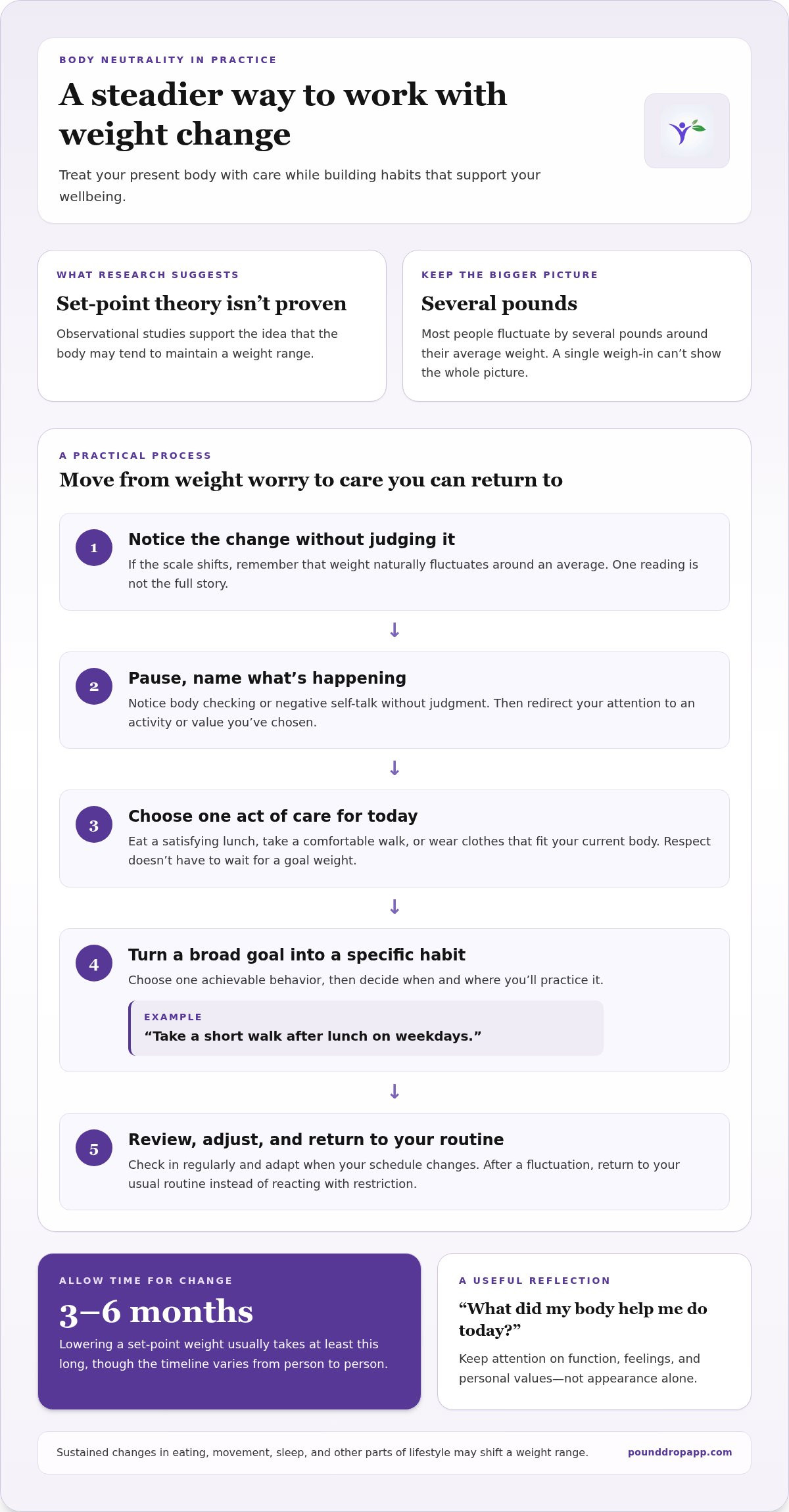
Your weight can change without your body becoming a problem to solve. Set-point theory isn’t proven, though observational studies support it, and most people fluctuate by several pounds around their average weight. Sustained lifestyle changes may shift that range; lowering it usually takes at least three to six months, though the pace varies from person to person.
If you’re working on weight loss, it can be hard to make room for body acceptance while your body is changing. Building body neutrality while actively losing weight doesn’t mean loving every part of yourself or feeling positive every day. It means treating your present body with basic respect as you work toward habits that support your wellbeing.
This article explains how set points, weight-neutral approaches, appetite, and body composition relate to weight loss. You’ll also find practical ways to build sustainable habits, so progress can mean more than a number on the scale. Small, achievable steps can support both your goals and a steadier relationship with your body.
Key Takeaways
- Set-point theory isn’t proven, but observational studies support it. Focus on small, achievable health habits rather than expecting your weight to follow a perfectly straight line.
- Weight neutrality and weight inclusion offer different ways to approach wellbeing. Learn how weight-inclusive professionals can support your body-image goals.
- Notice how appetite, cravings, and meal satisfaction influence your choices. Small adjustments to your eating environment may help you respond more thoughtfully.
- Support body composition with nourishing food and movement that fits your life. Guidelines recommend at least two resistance-training sessions per week for most people.
- Build habits you can return to when life gets busy, and track progress in ways beyond the scale. Pound Drop App and The Method offer a structured way to support self-guided change.
1. Does your body have a set point weight, and can you change it?
Your body may have a weight range it tends to maintain, but set-point theory isn’t proven. Observational studies support it, and weight can respond to sustained changes in eating, movement, sleep, and other parts of your lifestyle. Most people fluctuate by several pounds around their average weight, so a single weigh-in can’t show the whole picture.
Biology also plays a role. More than 400 genes have been linked to obesity and weight gain, influencing factors such as appetite and how the body uses energy. As many as 90 percent of people who lose a considerable amount of weight regain it. That figure isn’t a prediction about your journey; it’s a reason to favor habits you can maintain over a short, punishing push.
To see how body neutrality can shift attention from appearance toward care and capability, watch this TEDx Talks presentation:
How can you practice body neutrality while actively losing weight? Treat your body as worthy of care today, not only after reaching a goal. Choose a small action, such as eating a satisfying lunch, taking a comfortable walk, or wearing clothes that fit your current body. These steps support your wellbeing without making respect conditional on weight loss.
Set goals around changes you can notice in daily life. You might aim for steadier energy, build strength for carrying groceries, or make time for movement you enjoy. Choose one specific, achievable behavior, then decide when and where you’ll practice it. “Take a short walk after lunch on weekdays” is easier to act on than “get healthier.” Review your goal regularly and adjust when your schedule changes.
What body-neutral affirmations or journaling prompts can help? Try, “My body deserves care at every size,” or write, “What did my body help me do today?” Keep the focus on function, feelings, and personal values rather than appearance. The Journal can support this reflection by giving you a place to record thoughts and notice which habits feel meaningful.
How can you respond to body checking, negative self-talk, or weight fluctuations? Pause, name what’s happening without judgment, and redirect your attention to an activity or value you’ve chosen. If the scale shifts, remember that most people fluctuate by several pounds around their average weight. Return to your usual routine instead of reacting with restriction. Lowering a set-point weight usually takes at least three to six months, though the timeline varies. Body neutrality can make the process less about forcing positivity and more about practicing care consistently.
2. What’s the difference between weight neutral and weight inclusive?
A weight-neutral approach doesn’t judge health by body size or weight change. Rather than treating weight loss as the main measure of success, it focuses on behaviors and wellbeing. You might work on regular meals, enjoyable movement, or managing stress without making progress depend on calories burned or pounds lost. Weight neutrality doesn’t require abandoning a weight-management goal. It asks you to consider whether your methods support your health and quality of life.
A weight-inclusive approach respects people across body sizes and considers how weight stigma can affect care. A weight-inclusive professional aims to discuss your health without reducing every concern to weight. For example, they can explore sleep, energy, movement, and eating patterns alongside your goals. The approaches overlap but aren’t identical: weight neutral describes the focus of care, while weight inclusive emphasizes respect and access across body sizes.
Support can help you make decisions without turning each meal or training session into a test. A weight-inclusive therapist or dietitian can support body neutrality while you work toward health or weight-management goals. A therapist may help you notice how shame, anxiety, or social pressure shapes your choices. A dietitian can help you build a flexible eating pattern that considers satisfaction, nutrition, and your daily routine rather than relying on extreme rules.
What are the risks of weight-loss efforts becoming obsessive or disordered? Rigid calorie rules, avoiding social meals, or feeling compelled to compensate for eating can make daily life harder and increase distress. If these patterns appear, share them with a qualified therapist or dietitian. Support can focus on safety, flexibility, and your relationship with food.
What can friends, family, and social media do to support body neutrality? Ask loved ones to avoid weight comments and appearance comparisons, and tell them what feels supportive, such as sharing a walk or discussing a goal unrelated to body image. On social media, mute accounts that trigger self-criticism and follow voices that discuss health, skills, and daily life beyond appearance.
To choose professional support, consider whether you feel heard when discussing your goals, food, and body image. Notice whether conversations leave room for your preferences and practical circumstances, rather than pushing a single route to lose weight. You can also prepare a short list of questions about how sessions address body image, eating habits, and sustainable behavior change. Keeping these intentions visible between appointments can help; a self-guided habit-tracking approach may suit someone who prefers working independently.
Appetite, cravings and food satisfaction
Appetite can shift with sleep, stress, activity, meal timing, and emotions. Rather than treating hunger as a problem, pause and ask what you’re noticing. Is your stomach empty, or are you seeking comfort after a difficult day? Either answer offers useful information. Distinguishing physical hunger from an emotional need can guide your next step without labeling food choices as good or bad.
Satisfaction matters too. A meal that includes foods you enjoy may feel more complete than one built around rules alone. Notice the flavor, texture, and point when you feel comfortably satisfied. One study found that doubling plate size increased the amount people served themselves or ate by 41 percent. Choosing a plate that feels manageable can help you pay attention to your own hunger instead of the serving dish.
Cravings don’t require punishment or an immediate response. Try naming the craving, then decide what would feel helpful: eating the food, having it alongside a meal, or pausing to check whether you’re tired or stressed. For example, if you want chocolate after work, you could enjoy some while sitting down instead of treating it as a rule-breaking event. This approach makes room for satisfaction while keeping your choices intentional.
Fiber-rich foods can support satisfying meals. Adults are estimated to fall short of the minimum daily fiber requirement at a rate of 95 percent. Add a familiar option, such as beans in soup, fruit with breakfast, or vegetables alongside a sandwich. Increase variety gradually and notice how different foods affect your comfort. A practical step is adding one fiber-rich food to a meal you already enjoy.
Protein can also contribute to a balanced eating pattern. Guidelines recommend that adults consume 0.8 grams of protein per kilogram of body weight per day. Include a protein source that suits your preferences, such as beans, eggs, yogurt, fish, or tofu. Pairing it with another food group can make a meal more satisfying. Your appetite and food access matter, so build from meals that work in your daily routine.
Water may help you notice whether thirst is part of what you’re feeling, but it isn’t a substitute for food. One suggested strategy is drinking about 16 ounces before a meal and waiting 30 minutes before eating. Treat that as an option, not a test you must pass. If you’re hungry, eating remains a reasonable response; body neutrality means responding to your body without criticism.
Try a simple check-in at your next meal: note your hunger before eating, choose satisfying food, and pause partway through. Afterward, consider whether the meal met your needs. These observations can help you understand appetite and cravings without making every bite a measure of weight loss or personal worth.
4. Diet and exercise for body composition
Body composition describes the mix of fat and lean tissue in your body. During weight loss, about 25 percent of weight lost is muscle. Focusing on gradual changes, balanced meals, and resistance exercise can help support muscle while your body changes. The scale alone can’t show whether weight changes came from fat, muscle, or other shifts.
Movement can support strength, fitness, and everyday function, even if weight changes slowly. Guidelines recommend at least two resistance-training sessions per week for most people. They also recommend 150 minutes of moderate-intensity aerobic activity per week each week, or at least 75 minutes of vigorous exercise each week. Start with movement that feels manageable, such as walking, then add resistance exercises you can practice consistently.
Food choices matter, too. Guidelines recommend adults consume 0.8 grams of protein per kilogram of body weight per day. Adults aged 65 and older who do resistance training may need 1.2 to 1.5 grams per kilogram of body weight. Include protein in meals and snacks, alongside foods such as vegetables, fruits, whole grains, nuts, and seeds. Filling at least two-thirds of a plate with those foods is one practical approach to nutrient quality.
A study of post-menopausal women reported average weight loss of 2.4% with exercise alone and 8.5% with diet alone. Diet and exercise together produced a 10.8% weight loss over 12 months. These results describe that study group, not a required outcome for every person. They show why exercise can matter for body composition and physical health, beyond changes on the scale.
Gradual weight loss, at a pace of 1 to 2 pounds weekly, can help maintain or build muscle when combined with consistent resistance training and adequate protein. A structured routine might pair two weekly strength sessions with regular walks and meals that include protein. Your metabolism and body’s response are influenced by several factors, so consistency is more useful than repeatedly changing plans to chase quick results.
How can you cope with loose skin or changes in body shape during weight loss? Choose clothes that fit your current body and notice what your body can do, such as carrying groceries or climbing stairs. Body-composition changes take time: initial changes may appear over 4–6 weeks, while noticeable changes may take 3–6 months. Track progress in more than one way, such as strength, energy, how clothes fit, or changes in exercise, and allow your routine time to work.
5. Building sustainable habits
Sustainable habits are actions you can return to when your schedule, energy, or motivation changes. Start with one behavior linked to a clear cue: set out walking shoes after breakfast, add a vegetable to a meal you already make, or prepare tomorrow’s lunch before bed. Keep the first version manageable. A routine that fits an ordinary weekday is more useful than a perfect plan that works only under ideal conditions. Building body neutrality while actively losing weight can start with choosing care that feels practical today.
Maintaining weight loss can be challenging. Less than 20% of participants in intentional weight-reduction programs maintain their weight loss after one year. Participants in U.S. weight-loss programs regained 77% of the weight they had lost over a five-year period. Only about 10% of dieters manage to keep weight off long term. These figures describe a broader challenge, not your individual outcome. They highlight why habits need to support everyday life, rather than serve only a short-term target.
Build a flexible routine around eating and nutrition instead of creating a long list of rules. Choose a few meals you enjoy, keep convenient ingredients available, and make room for foods that matter to you. Notice whether your intake supports energy and satisfaction. If a busy day disrupts your usual meal, return to your next regular eating opportunity rather than treating the day as ruined. Repetition matters more than flawless tracking.
Make movement adaptable. If a planned workout doesn’t fit, choose a shorter walk or stretch during a break. People who sit for long periods are advised to stretch or move every 30 to 60 minutes. Sleep belongs in the routine, too: aim for 7 to 9 hours of restful sleep per night. A simple evening cue, such as dimming screens before bed, can help you prioritize recovery.
Review your habits without turning the process into a judgment. Once a week, write down what felt doable, what got in the way, and one adjustment for the coming week. If a packed morning makes breakfast difficult, prepare an option the night before. You can also note mood, hunger, and hormone-related changes you notice, giving yourself context for patterns without expecting every day to feel the same.
Building body neutrality while actively losing weight also means respecting your body during the process. Wear clothes that fit now, choose movement you can enjoy, and allow foods you previously avoided without labeling yourself for eating them. Aim for repeatable actions, not self-criticism. If life interrupts your plan, restart with the next small step. For a structured way to put daily habits into practice, start building a sustainable routine.
Pound Drop: Pound Drop App
The Pound Drop App can support a self-guided approach to building habits while you work on weight loss and body neutrality. It’s part of a structured system centered on The Method, with The Book and The Journal offering additional ways to engage with the process. Use these tools when you want a framework for managing progress and returning to everyday lifestyle changes, without expecting every day to go perfectly.
A useful next step is choosing one behavior you want to practice, then using a consistent routine to stay aware of your progress. Keep your goals focused on actions you can repeat, not only a number on the scale. If that kind of structure feels right for you, visit pounddropapp.com to explore Pound Drop App.
Choose a Next Step That Respects Your Pace
Building body neutrality while actively losing weight isn’t a finish line. It’s a practice you can return to as your body, routines, and priorities shift. Choose one small action for this week, then notice whether it supports the life you want to live. You can adjust without treating a change of plan as failure.
If a self-guided structure would help you keep those actions visible, Pound Drop offers the Pound Drop App, The Method, and The Book. Use them as tools for steady progress while keeping your goals personal and realistic. The next step doesn’t need to be dramatic. It only needs to feel workable for you now.
Contact Pound Drop to discuss your goals and explore a thoughtful next step. Keep moving at a pace that leaves room for care, flexibility, and the rest of your life.
Frequently Asked Questions
Does your body have a set point weight, and can you change it?
Set-point theory suggests your body may tend to maintain a familiar weight range, but the theory isn’t proven. Observational studies support the idea, and sustained lifestyle changes may shift that range over time. Most people fluctuate by several pounds around their average weight. Rather than treating each change as evidence of failure, look for longer-term patterns and consider whether your routines remain workable.
How does set point work?
The theory describes biological processes that may influence appetite, energy use, and weight regulation. Genes are among the factors linked to obesity and weight gain, while daily habits and environment also shape eating and activity. Think of a set point as a proposed range, not a fixed number your body must reach. The useful question is whether your habits support health and feel possible to continue.
Weight Neutral Health: What Is It & Why Is It Important?
Weight-neutral health focuses on wellbeing and health-related behaviors without making weight loss the required proof of success. For example, you could work toward preparing meals that keep you energized or finding movement that fits your abilities. This approach can make health goals more practical and less tied to appearance. It also leaves room to discuss concerns directly, rather than assuming every health issue has the same cause.
What is body neutrality?
Body neutrality means relating to your body without requiring constant admiration or affection. You might say, “I don’t need to judge my stomach before choosing what to wear,” then get dressed for comfort and the day ahead. The aim isn’t to silence every difficult thought. It’s to notice the thought and choose an action based on your needs, values, or plans instead.
What is body neutrality, and how does it differ from body positivity?
Body positivity often encourages appreciation or celebration of bodies, while body neutrality makes room for a less appearance-focused relationship. You don’t have to feel positive about your reflection to treat yourself with respect. For instance, you can wear comfortable clothes, attend a gathering, or care for your body without first deciding how you feel about its shape. Both approaches can support a kinder body image.
How can you separate self-worth from weight and body size during weight loss?
Make a short list of qualities that matter to you beyond appearance, such as patience, humor, creativity, or reliability. When a weight-related thought appears, name one recent action that reflects a value you’ve chosen, like calling a friend or keeping a commitment. You can also ask someone close to avoid body and weight comments. These practices help anchor self-worth in how you live, not in a measurement.
How can you set health goals without making appearance or scale weight the main measure of progress?
Choose a behavior you control and define how you’ll know you’ve done it. For example, plan a regular lunchtime walk, try a new vegetable in a familiar recipe, or practice a strength exercise you enjoy. Record whether you completed it, your energy, or how manageable the routine felt. If a goal depends on a particular appearance or scale result, rewrite it as an action you can practice regardless of daily fluctuations.
When should someone seek help from a therapist or eating-disorder specialist during weight loss?
Seek support if food or weight concerns begin taking over daily decisions, relationships, or activities. Warning signs can include intense fear around eating, repeated compensatory exercise, secretive eating, or distress that makes social meals feel impossible. A therapist can help address body image and emotional patterns; an eating-disorder specialist can support concerns around eating behaviors. Reaching out early is a practical step, not a personal failure.


