


Article by
Jesper Sorensen
Jesper Sorensen is a holistic health coach and founder of Pound Drop, a different approach to weight loss built around healthier habits. He has written ebooks and health articles for established publishers and has spent years studying nutrition, healthy eating and sustainable weight management.
What if eating well at home didn’t require your spouse to change a single thing? Eating healthy when your spouse prefers junk food can feel challenging when snacks are within reach, grocery lists differ, and dinner has to work for both of you. It’s understandable to worry that making different choices will turn meals into negotiations or sound like criticism. But you can make your own food choices without trying to change your partner.
This guide offers practical ways to build a routine that fits your needs and respects your spouse’s preferences. You’ll find ideas for flexible shared meals, convenient foods to keep on hand, and simpler grocery planning. The goal is to make everyday choices easier without preparing two entirely separate dinners or policing what your spouse eats. Small adjustments can help reduce friction, even when they’re not perfect.
We’ll start with a realistic mindset, then cover meal ideas, shopping and kitchen routines, and calm ways to talk about what works for you. You don’t need agreement at every meal. You need an approach you can maintain in the household you share.
Key Takeaways
- Eating healthy when your spouse prefers junk food starts with separating your choices from theirs. Different preferences don’t have to dictate your routine.
- Build flexible dinners around a shared base, then let each person customize their plate.
- Use first-person language to explain what would help you, without criticizing or pressuring your spouse.
- Notice when food at home makes your choices harder, then make your own convenient options easier to see and reach.
- Choose one small habit to practice consistently. Progress can come from repeatable actions, not perfect meals or your spouse’s approval.
Eating healthy when your spouse prefers junk food: why it can feel difficult
Sharing a kitchen means sharing space, routines, and decisions, even when you don’t share food preferences. You might shop together, plan dinner around both schedules, or reach for whatever is easiest after a long day. When the foods your spouse enjoys are ready to eat and your preferred meal needs preparation, sticking with your plan can take more effort. That tension is real, but it doesn’t mean either of you is doing something wrong.
Eating healthy when your spouse prefers junk food doesn’t require your partner to agree with your goals. You can have different preferences and still decide what you want your own everyday routine to include. The aim is to find a workable approach that respects both people, not to create new household rules or criticize what belongs on someone else’s plate.
Why different food preferences can create everyday friction
Food choices come up in ordinary moments. A grocery trip might mean deciding which snacks to keep at home. Dinner may involve choosing between a shared meal and separate options. Takeout, movie nights, and other routines can add more decisions. None of these moments has to become an argument, but the repeated choices can feel tiring when you’re trying to build a different pattern.
Convenience matters, too. If a familiar snack is ready to eat while the ingredients for your preferred meal need preparation, the quickest option can be appealing, especially when you’re hungry or busy. Food preferences are shaped by more than willpower; the Food preference article describes how different factors can influence what people like to eat. Recognizing that preferences develop in different ways can help you approach the difference with curiosity rather than blame.
What eating well can mean when two people eat differently
Eating well doesn’t have to mean following a perfect menu or eating the same foods as your spouse. It can mean choosing a few realistic priorities for yourself, such as adding an option you enjoy to meals, planning for busy evenings, or keeping preferred foods available. Your priorities can be modest and personal. They don’t need to become a test your spouse has to pass.
Ask yourself what would make your routine feel more supportive this week. Perhaps you want a reliable breakfast, an easy lunch option, or a dinner where each person chooses their own additions. Choose what fits your household, rather than what you think a “healthy” person is supposed to do.
- Your choices: Decide what you want to practice for your own wellbeing.
- Your spouse’s choices: Allow your partner to have different preferences without treating them as a verdict on your efforts.
- Your shared routine: Look for workable arrangements, while remembering that support doesn’t mean taking responsibility for changing someone else.
That distinction can ease pressure on both of you. You can invite your spouse into a conversation or share what’s helping you, but your progress doesn’t depend on their agreement. Start with choices you can make and repeat. The following sections cover ways to make shared meals, conversations, and home routines more manageable without asking either person to become someone they’re not.
How to plan shared meals when your spouse prefers junk food
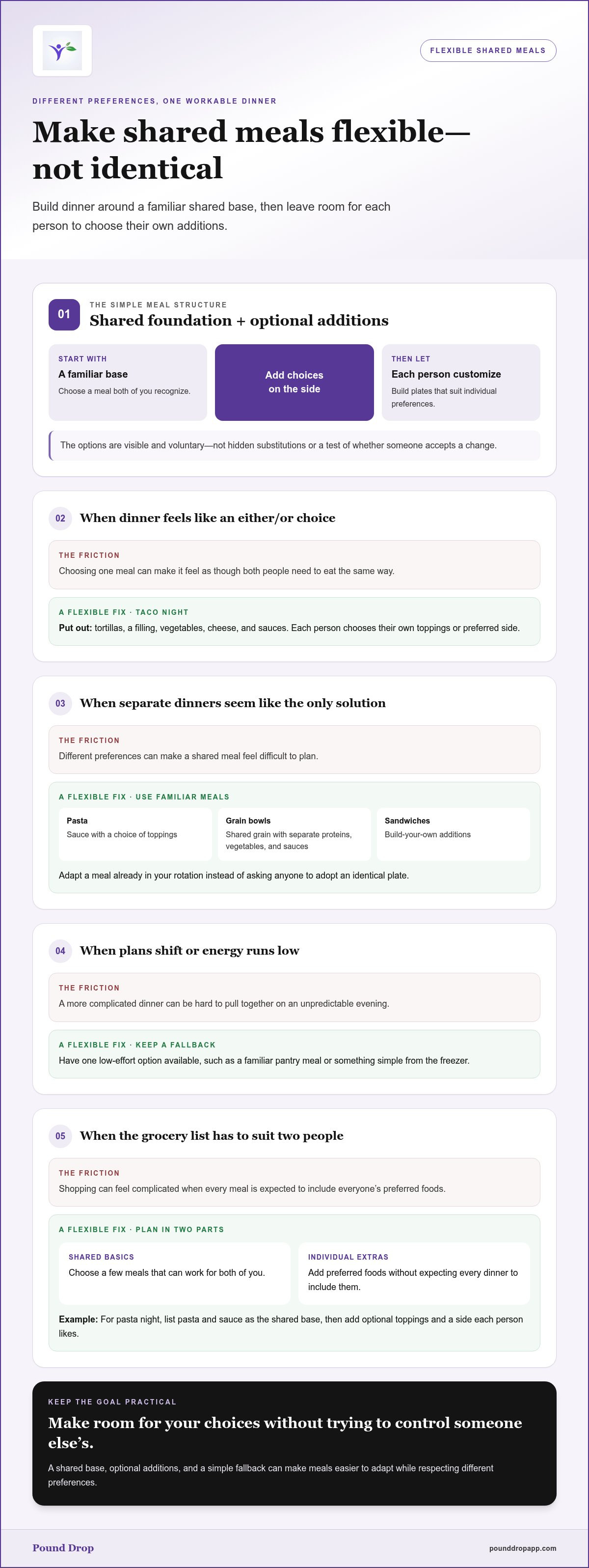
Shared meals don’t have to mean identical plates. A practical middle ground is to prepare one familiar foundation, then offer optional additions. That keeps dinner manageable while giving each person room to eat in a way that suits them. It also avoids turning every meal into a debate about which foods are “better.”
Try a simple sequence: choose a base you both recognize, set out a few additions, and let each person build a plate they enjoy. For example, taco night might include tortillas, a filling, vegetables, cheese, and sauces. One person can add more vegetables, while the other chooses different toppings or a preferred side. The options are visible and voluntary, not hidden substitutions or tests of whether your spouse will accept a change.
Build flexible dinners around familiar foods
Start with meals already in your rotation. Serve pasta with sauce and a choice of toppings, or offer a shared grain with separate proteins, vegetables, and sauces for bowls. Build-your-own sandwiches work the same way. You’re not asking your spouse to adopt your exact plate. You’re making a shared meal easier to adapt.
Keep one low-effort fallback meal available for evenings when plans shift or energy runs low. It might be a familiar pantry meal or something simple from the freezer. An easy option can reduce the pressure to make a complicated dinner work for everyone.
Make grocery planning easier for two different preferences
Before shopping, identify a few meals that can work for both of you. List the shared basics, then add any individual extras. Leave room for each person’s preferred foods without expecting every dinner to include them. A flexible grocery routine can also make everyday habits easier to repeat.
For pasta night, for instance, your list might include pasta and sauce for the shared base, plus optional toppings and a side each person likes. You don’t need to buy an entirely separate set of groceries or persuade your spouse to choose the same additions. Agreeing on a few shared meals can simplify planning while leaving room for separate preferences.
If you’re eating healthy when your spouse prefers junk food, think of meal planning as creating room for your choices, not controlling theirs. Try one flexible meal and notice what makes it easy or awkward. If a structured way to reflect on small routine changes would help, the Pound Drop App and The Method offer self-guided habit support through self-guided habit support.
How to talk about food without pressuring your spouse
You can change your own eating habits without asking your spouse to make the same changes. That distinction can take pressure out of the conversation: you’re explaining what would help you, not passing judgment on your partner’s choices. When eating healthy and your spouse prefers junk food, respectful communication means being clear about your needs while leaving room for your spouse to decide what works for them.
Make one practical request rather than asking for a broad change to the household. You might ask to plan a few dinners together or to keep your go-to foods within easy reach. The conversation doesn’t need to resolve every difference in one sitting.
Start the conversation with your own needs
Choose a calm moment, describe a specific situation, and say what would make it easier for you. Keep the focus on your experience, not on what your spouse should eat. For example: “I’m trying to make weekday dinners feel more planned. Could we choose a couple of meals together?” Then pause and listen. Your spouse’s response is information, not a challenge you need to win.
- “I’d like to have a few snacks I enjoy on the shelf by the kettle. Can we make space for them?”
- “I feel less rushed when we decide on dinner before the evening. Would you be open to planning together?”
- “I’m changing some of my own routines, and I’m not asking you to eat the same way.”
These statements invite cooperation without demanding agreement about every food choice. If your spouse isn’t interested in making the same changes, you can still decide what you want to practice for yourself.
Set shared-kitchen expectations without controlling food
It’s reasonable to discuss how you use shared space. Asking where groceries should go or how to plan a shared dinner is different from setting rules about what your spouse is allowed to eat. Keep any request specific, mutual where possible, and open to adjustment. A non-judgmental mindset can also help you focus on your own next steps, as explored in this non-judgmental approach to weight loss.
- Agree on separate shelves or containers for each person’s everyday foods.
- Choose shared-meal nights together, while leaving other meals more flexible.
- Ask before moving or replacing food that belongs to your spouse.
Avoid policing portions, commenting on every snack, using guilt, or secretly changing a shared recipe. These tactics can undermine trust, even when your intentions are caring. Calling your spouse’s food “bad” can also make a conversation feel like a judgment of them. Instead, explain what you want more often, such as meals that feel satisfying to you or routines that make planning easier.
If reflecting on your own actions helps, the Pound Drop App and The Method provide structured, self-guided habit support. Explore the Pound Drop App as a way to reflect on personal routines without making your spouse responsible for your choices.
How to stay on track when junk food is around at home
Seeing your spouse’s favorite snacks in the kitchen can make your own choices feel harder, especially when you’re tired, hungry, or short on time. You don’t have to remove their food or rely on willpower alone. Notice the moments that are difficult, make your own convenient options easier to choose, and respond without turning one food decision into a judgment about yourself.
Create a supportive setup for your own choices
Arrange the kitchen so your preferred foods are visible and easy to reach, while leaving your spouse’s food where they expect to find it. A bowl of fruit on the counter, ready-to-eat ingredients at eye level, or dependable pantry staples can reduce the effort involved in choosing what you want. The aim isn’t to hide tempting foods. It’s to make your own options convenient, too.
Think through the moments that tend to catch you off guard. If late evenings are difficult, decide what snack or quick meal you’d like to have available. If takeout is a regular routine, look at the menu and decide what you might order before you’re hungry and choosing in a rush. A few simple options that fit your household can help without requiring elaborate preparation.
Keep the plan flexible. Travel, a busy week, or an unexpected change at home can disrupt a familiar routine. When that happens, adjust what’s available or choose one simple next step. A week that goes differently than expected doesn’t erase the effort you’ve already made.
Respond to cravings and setbacks with curiosity
Instead of criticizing yourself for wanting a snack, pause to notice what’s going on. Are you hungry, tired, looking for comfort, or following a familiar evening routine? You don’t need a perfect answer. A moment of awareness can help you choose what feels satisfying and manageable, whether that means eating the food you want or trying another option.
Use this simple sequence to respond without turning the moment into a test:
- Notice: What’s happening around you, and what are you feeling?
- Pause: Take a moment to consider what you want and what might satisfy you.
- Choose: Pick a response that feels workable, without labeling it a success or failure.
- Reset: Return to your usual routine at the next opportunity, rather than waiting for a perfect new start.
If it’s useful to reflect on patterns, a weight loss tracking journal guide can help you consider what to record in a way that fits your life. Keep notes curious and practical, such as what made an evening easier, rather than using them to criticize yourself.
For structured, self-guided support as you reflect on personal habits, explore the Pound Drop App and The Method.
Make your approach sustainable with small, repeatable habits
A routine is easier to maintain when it doesn’t depend on your spouse changing their preferences or every day going to plan. Choose one action that feels manageable in your existing routine, then practice it before adding anything else. You might prepare a breakfast option the night before, plan tomorrow’s lunch, or keep a food you enjoy within easy reach. Small actions matter when they’re yours to repeat.
Progress isn’t a perfect menu, an uninterrupted streak, or your spouse’s approval. It can mean returning to a helpful routine after a busy day and learning what makes it easier to follow. A steady, flexible approach is central to building habits through a weight loss methodology.
Build a personal routine that can flex with real life
Connect your starting habit to something already in your day. If mornings feel rushed, set out a breakfast option when you make coffee. If evenings are unpredictable, choose a convenient food to keep available. At the end of the week, ask what worked, what got in the way, and what small adjustment might help. Changing the plan is useful feedback, not failure.
Keep your review focused on your actions, not on whether your spouse ate differently. Perhaps you managed the habit on workdays but not while traveling. You could simplify it for the next busy week rather than deciding the whole routine doesn’t work. Once the first action feels familiar, consider whether you’re ready to add another. There’s no need to rush.
Use structured self-guided support if it fits
Some people find it helpful to reflect on habits with a little structure. The Pound Drop App and The Method are part of a self-guided system, while The Book and The Journal offer physical resources to complement it. Use these resources to support reflection and habit practice at your own pace, without making your food choices a judgment of your spouse’s or relying on their agreement.
- Choose one focus: Write down the personal habit you want to practice.
- Notice what helps: Record the situations that make it easier or harder to follow through.
- Adjust gently: Use what you learn to make the next attempt more practical.
Eating healthy when your spouse prefers junk food can be a gradual process shaped around the household you share. Choose one small action that feels realistic and try it at your next natural opportunity. If structured, self-guided support feels like a good fit, explore Pound Drop.
Choose one steady step that feels like yours
Your next step doesn’t need to be dramatic. Choose one small action you can try in the routine you already have, then give yourself room to learn from it. A plan that can bend around real life is more useful than one that depends on perfect conditions or someone else making the same choices.
Eating healthy when your spouse prefers junk food can be a personal practice, not a shared project. You can keep building habits at your own pace, even if your partner’s preferences stay the same. Let consistency mean returning to what matters to you, without waiting for approval or expecting every day to go smoothly.
If structure would help you reflect and practice, Pound Drop offers a self-guided approach centered on The Method, supported by the Pound Drop App, The Book, and The Journal. Explore Pound Drop’s self-guided tools for building steady habits and choose a small next step that fits your routine.
Frequently Asked Questions
Can I eat healthy when my spouse prefers junk food?
Yes. You can make food choices that suit you even when your spouse’s preferences are different. Eating healthy when your spouse prefers junk food doesn’t require matching plates or changing what your partner buys. You might choose a different side with a shared meal or bring a snack you enjoy when you’re out together. Focus on choices you can repeat, rather than expecting every meal to look a certain way.
How can we plan meals when my spouse and I like different foods?
Start with one part of dinner you both enjoy, such as a familiar sauce, bread, or cooking style, then decide on additions separately. If one of you likes spicy food and the other doesn’t, serve the seasoning at the table rather than mixing it into the whole dish. A shared note on the fridge can help you remember agreed-upon meals and avoid last-minute guesswork.
Should I ask my spouse to stop buying junk food?
You can ask for a specific arrangement if having certain foods around makes your routine harder, but demanding that your spouse stop buying them may create conflict. Explain how the situation affects you and suggest a practical compromise, such as storing certain snacks in a designated cupboard. Leave room for your spouse to respond. If they don’t want to change what they buy, consider what adjustment would support your own choices.
What can I do if my spouse makes fun of my food choices?
Tell your spouse calmly that the comments don’t feel supportive and ask them to stop. You might say, “I’m not asking you to eat what I eat, but I’d like you not to joke about my plate.” If the teasing continues, set a boundary by changing the subject or stepping away from the conversation. Food choices deserve respectful discussion, not repeated criticism.
Is it okay for spouses to eat different dinners?
Yes. Different dinners can be practical when schedules, tastes, or appetites don’t match. You might share one part of the meal and prepare separate main dishes, or eat at different times on busy evenings. Talk through how cooking and cleanup will work so the arrangement feels fair. Eating differently doesn’t have to mean you’re disconnected. You can still sit together or spend time together after dinner.
How do I handle takeout when my spouse wants fast food?
You can order from the same place and choose something that suits you, or eat something else at home if that feels easier. Look at the menu before you’re very hungry and decide what would feel satisfying, rather than ordering under pressure. If you’d like to share the meal, choose a side or drink together while letting each person pick their own main.
Can I make progress without my spouse changing their eating habits?
Yes. Your routine can develop through actions within your control, even if your spouse keeps eating as they always have. Choose a manageable behavior, such as packing a lunch before bed, and notice whether it works on different kinds of days. Pound Drop’s self-guided tools, including the app, The Book, and The Journal, can help you reflect on personal habits without requiring your spouse to participate.


