


Article by
Jesper Sorensen
Jesper Sorensen is a holistic health coach and founder of Pound Drop, a different approach to weight loss built around healthier habits. He has written ebooks and health articles for established publishers and has spent years studying nutrition, healthy eating and sustainable weight management.
What if enjoying a dinner party could support your goals rather than compete with them? If an unfamiliar menu or a larger-than-usual meal makes you worry that you’ll undo your progress, you’re not alone. Navigating dinner parties without derailing your diet doesn’t mean controlling every bite or choosing between the people around the table and the habits you’re building.
It’s understandable to want a plan when you don’t know what will be served. But one meal doesn’t have to become a test of willpower, and eating differently than expected isn’t a reason to feel guilty or start over. You can enjoy the gathering and make choices that feel comfortable and intentional.
This article will help you approach dinner parties with flexibility, from thinking ahead to tuning in to what you’re enjoying at the table. You’ll also learn how to return to your ordinary routine afterward without skipping meals, compensating, or judging yourself. The aim isn’t perfect eating. It’s making room for real life while staying connected to what matters to you.
Key Takeaways
- One dinner party is a single occasion, not a verdict on your overall routine.
- Make a flexible plan by checking the event details, choosing an intention, and eating normally beforehand.
- At the table, focus on what feels satisfying and comfortable instead of judging every bite.
- Afterward, return to familiar routines without compensating or treating the meal as a setback.
- Navigating dinner parties without derailing your diet can become part of a steady routine supported by Pound Drop’s self-guided tools.
Can One Dinner Party Derail Your Diet? Put the Event in Perspective
It makes sense to feel uncertain when a dinner party interrupts familiar routines. The menu may be unfamiliar, portions may be served differently than at home, and conversation can bring expectations about what or how much to eat. If you’ve been working toward personal goals, it can seem as though one evening carries more weight than it really does.
A dinner party is one occasion, not a verdict on your overall habits. Your routine is shaped by what you practice over time, not by whether every meal follows a plan. Flexible consistency means making workable choices, enjoying the event, and returning to ordinary routines afterward. It doesn’t require a perfect meal or a special reset.
Why social meals can feel like an all-or-nothing test
Uncertainty can make a meal feel unusually high-stakes. You might not know what’s in a dish, whether there’ll be options you usually choose, or how others will respond if you eat differently. When you’re focused on avoiding any deviation, a small change can start to feel like the whole plan has fallen apart.
All-or-nothing thinking is the belief that if a meal doesn’t go exactly as planned, your effort no longer counts. A flexible intention leaves room to adapt, such as “I’ll choose what sounds satisfying and enjoy the evening.” A strict rule, such as “I must avoid anything unexpected,” can turn the gathering into a test instead of a shared meal.
What it means to stay aligned without avoiding the occasion
Staying connected to your goals doesn’t mean every meal has to look the same. You can attend, share food, and make choices based on what feels comfortable without needing to manage every bite. Some dishes may be new to you; others may be familiar. Neither makes the evening a measure of your commitment.
Instead of asking whether you’ve followed a perfect plan, consider what would help you feel present and at ease. You might choose a dish you’re curious about, pause before taking more, or focus on catching up with the people there. These are options, not rules. The aim is to participate while making decisions that feel intentional to you.
This is the heart of navigating dinner parties without derailing your diet: letting a social meal be part of real life, rather than treating it as a detour that needs to be undone. If the evening unfolds differently than expected, you haven’t lost the ability to continue. There’s no need to skip a meal the next day or add a punishing workout.
Simply return to familiar routines when the event is over. That might mean having your usual breakfast, following your normal schedule, and noticing what helped you feel comfortable at the gathering. Flexible consistency isn’t about getting every choice right. It’s about continuing with care, even when plans change.
Before the Dinner Party: Make a Flexible Plan That Leaves Room for Real Life
A little preparation can make a social meal feel more familiar, but preparation doesn’t mean controlling the menu or predicting every choice. The goal is to reduce avoidable uncertainty while leaving room for the evening to unfold. A simple plan can also include what you’ll do afterward: continue with your usual routine rather than treating the meal as something to make up for.
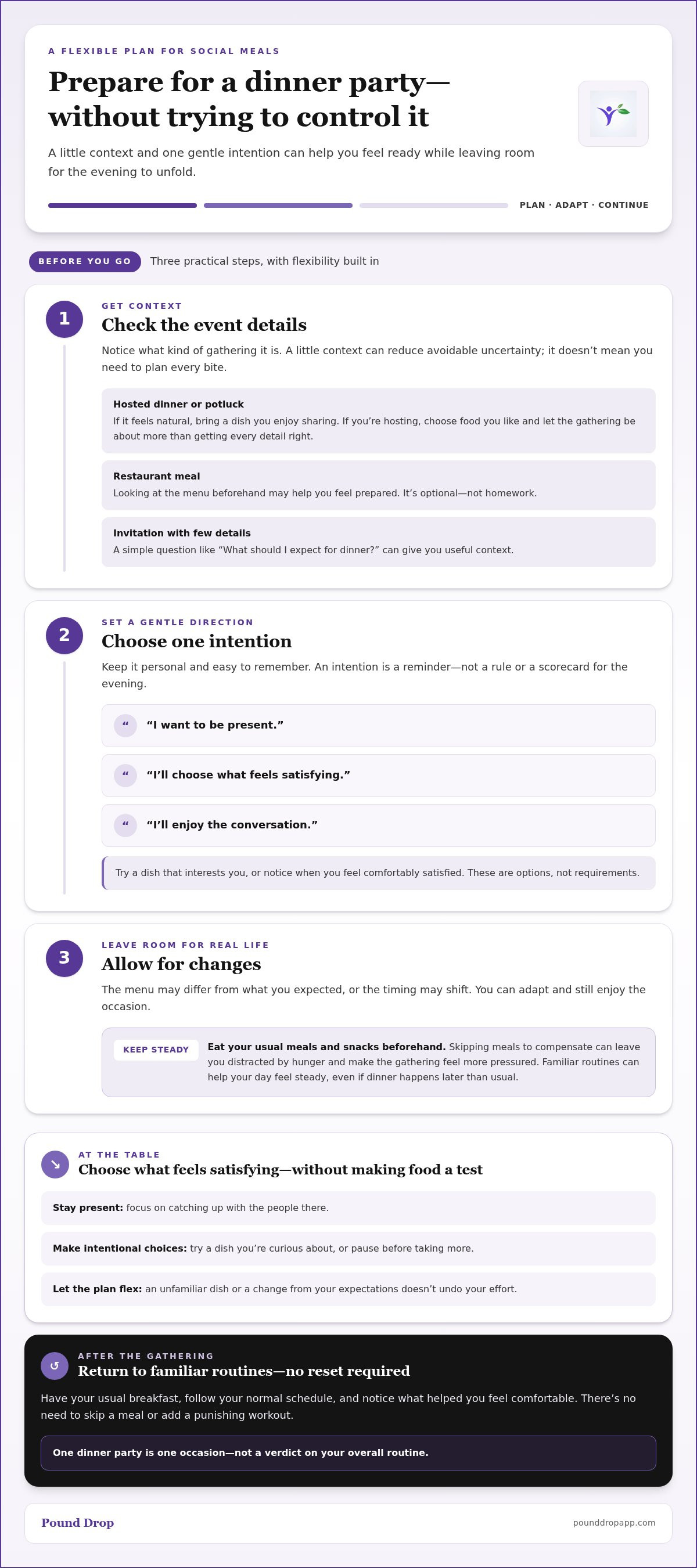
- Check the event details. Notice whether it’s a hosted dinner, potluck, restaurant meal, or spontaneous invitation. If you’re hosting, choose food you enjoy sharing and make the gathering about more than getting every detail right.
- Choose one intention. Keep it personal and easy to remember, such as “I want to be present” or “I’ll choose what feels satisfying.” An intention can offer direction without dictating what you can eat.
- Allow for changes. The menu may differ from what you expected, or the timing may shift. Decide in advance that you can adapt and still enjoy the occasion. There’s no need to skip your usual meals beforehand to compensate.
Choose one intention before you arrive
An intention works best as a gentle reminder, not a rule to measure yourself against. You might aim to enjoy conversation, try a dish that interests you, or notice when you feel comfortably satisfied. If the evening goes another way, your intention can still help you refocus without judging your choices.
A useful intention guides your choices without taking over the evening.
Plan for the event without trying to control the menu
For a potluck, you could bring a dish you like sharing, if that feels natural. At a restaurant, looking at the menu beforehand may help you feel prepared; it’s optional, not homework. If an invitation is short on details, a simple question such as “What should I expect for dinner?” can give you context without asking the host to plan around you.
Keep eating regularly before the event. Skipping a meal can leave you distracted by hunger and make the gathering feel more pressured. Familiar meals and snacks can help your day feel steady, even if dinner happens later than usual. This isn’t about arriving with a set appetite or following a special schedule. It’s about not turning the hours before a party into preparation through restriction.
Planning also means making space for a kind response the next day. You don’t have to decide in advance that you’ll compensate if you eat more or differently than expected. Instead, expect to return to familiar routines and carry on. That practical, flexible approach reflects simple weight loss methodology, where everyday habits matter more than perfect control of a single occasion.
That’s a useful foundation for navigating dinner parties without derailing your diet: prepare enough to feel grounded, then let the gathering be a gathering. If you’d like a self-guided structure for building steady habits around real life, explore the Pound Drop App.
At the Dinner Party: Choose What Feels Satisfying Without Making Food a Test
Once the meal begins, you don’t need to follow a fixed formula. Take a moment to see what’s available, then choose based on what appeals and how you feel. You can enjoy the food and the company at the same time. If your choices shift as the evening goes on, that’s part of responding to the moment, not a sign that you’ve lost your way.
Navigate buffets, shared dishes, and unfamiliar menus
At a buffet, looking over the options before filling your plate can help you feel settled. With shared dishes, take what you’d like to try and remember you can serve yourself again if you want more. At a hosted dinner, you can enjoy what’s served without needing to assess every ingredient. There’s no prescribed plate to complete.
Unfamiliar food can bring curiosity, hesitation, or both. You might try a small serving to see whether you like it, or pass because it doesn’t appeal. Both are ordinary choices. The same goes for a familiar dish you’re excited to eat. As you go, pause now and then to notice whether you’re still hungry, comfortable, or satisfied. That’s a check-in, not a scorecard.
Keep the pause simple. Notice the taste and texture, how comfortable you feel, and whether you want another serving. You don’t have to track portions, explain your choices, or decide what each bite means for your goals. These small moments of attention can help you choose at a pace that feels right, even when the meal is lively or served differently than you’re used to.
Respond to food pressure with simple, kind language
If someone offers more food or asks why you haven’t tried a dish, you can respond warmly and briefly. You don’t owe anyone an explanation of your personal goals, and you don’t need to criticize the food to decline it.
- “No thanks, I’m comfortable.”
- “That looks lovely, maybe later.”
- “I’d like to try a small serving, please.”
A short response can protect your privacy while keeping the conversation friendly. If someone offers again, you can repeat your answer or gently change the subject. You’re allowed to accept a serving, decline one, or decide later. There’s no need to argue, make a promise about what you’ll eat, or turn the interaction into a discussion about dieting.
The meal is only one part of the gathering. Ask someone about their week, join a story, or help with a shared task if that feels natural. Food can be enjoyable without becoming the evening’s only focus. For navigating dinner parties without derailing your diet, aim for choices that feel comfortable and intentional, then give yourself permission to be present with the people around you.
After the Dinner Party: Return to Your Routine Without Punishment
The morning after a dinner party, you might feel physically different, emotionally unsettled, or completely fine. There’s no single reaction you’re supposed to have. Whatever you notice, you don’t need to turn it into a judgment about your progress. A social meal is an experience, not an instruction to restrict food or exercise to make up for it.
Try a simple sequence instead:
- Notice how you feel. Check in with your body and mood without assigning blame.
- Resume familiar routines. Have your next usual meal and return to the patterns that work for your everyday life.
- Continue normally. Let the evening be over without making a corrective plan.
Skipping meals or adding extra exercise as punishment can keep guilt at the center of your choices. Movement can be part of your normal life, and meals can follow your usual rhythm. Neither needs to serve as payment for enjoying a gathering. A steady return is enough.
What to do if you feel uncomfortable or guilty afterward
Uncomfortable feelings can arise after eating differently than expected, but they aren’t proof that you’ve failed. If you feel guilty, try naming the feeling without treating it as a command to compensate. You can still choose your next familiar meal or activity. If food-related distress persists, or you’re navigating recovery, consider seeking support from a qualified professional.
Turn the experience into useful, non-judgmental learning
Reflection is optional. If it feels helpful, note what made the evening easier or harder: perhaps knowing the plan helped, or a particular conversation made you feel pressured. Keep the focus on context and preferences, not a score for what you ate. A weight loss tracking journal can offer a place to capture observations as reminders for next time, rather than as a record of “right” or “wrong” choices.
You might write a brief note such as, “I felt more at ease when I took a moment to look at the options,” or, “I enjoyed the conversation when I stopped worrying about what everyone thought.” You don’t have to analyze every detail or create a new rule from one evening. A useful reflection helps you understand what supports comfort and connection, then lets you move on.
This is one practical part of navigating dinner parties without derailing your diet: making room for an event, then returning to everyday habits without punishment. For a self-guided structure to support steady routines, explore the Pound Drop App.
Make Social Meals Part of a Steady Routine With Pound Drop
A routine needs to work on ordinary days and social ones. That means making space for dinner parties, restaurant meals, and changing plans without treating them as interruptions that need to be corrected. The habits you practice around an event can be simple: set a flexible intention, stay present, and continue with familiar routines afterward.
This is also the broader idea behind navigating dinner parties without derailing your diet. A single meal doesn’t need to carry the weight of your whole effort. With a self-guided approach, you can reflect on what feels useful, practice habits in everyday situations, and adapt them as life unfolds. The aim is not perfect control. It’s building a routine with room for real life.
Use a self-guided system to practice habits in everyday life
The Pound Drop App supports Pound Drop’s self-guided weight-loss system, and The Method provides a structured approach to building weight-loss habits. These resources can complement the practical choices you make at a social meal. You might think ahead about how you want to feel at the gathering, then reflect afterward on what helped you stay comfortable and present.
Reflection doesn’t have to become a review of every food choice. You could simply notice that arriving without skipping meals made it easier to focus on conversation, or that having a flexible intention helped you feel less caught up in the menu. The point is to learn about your own routines without turning one evening into a pass-or-fail assessment.
Because the approach is self-guided, you can practice at a pace that fits your life. A dinner party isn’t separate from habit-building; it’s one of the everyday situations where flexible habits can take shape. You can make a plan, adjust in the moment, and keep going afterward.
Choose a supportive next step that fits your routine
The Book and The Journal are physical resources that complement the digital experience. A printed resource may suit how you like to read or reflect, or you may prefer to use the app as part of your routine. There’s no single right way to use supportive tools. Choose what feels practical for you, and let habits develop through regular, manageable practice rather than pressure to do everything at once.
Whether you use digital resources, physical ones, or both, the purpose is to support your own routine. There’s no promise that one resource will produce a particular result, and no need to wait until social occasions feel perfectly predictable before you begin. Start with the next small habit that feels realistic, then adjust as you learn what works in your day-to-day life.
If a self-guided structure feels like a helpful next step, explore the Pound Drop App and use its tools to support the routine you’re building.
Carry a Flexible Approach Into Your Next Gathering
Your next dinner invitation doesn’t have to be a challenge to solve before you can enjoy it. Think of it as a chance to practice a routine that can bend with real life. You can keep your personal goals in view without asking every social meal to look the same. That’s the steady perspective behind navigating dinner parties without derailing your diet: progress can include connection, flexibility, and ordinary days that don’t go perfectly.
If you’d like structure for building habits at your own pace, Pound Drop brings together the Pound Drop App, The Method, and physical resources, including The Book and The Journal. Its self-guided system supports lifestyle changes through practice and reflection, while leaving you in charge of how those habits fit your life. Choose a next step that feels manageable, then build from there.
Explore the Pound Drop App and its self-guided tools when you’re ready. You don’t need to have everything figured out before you begin. A flexible next step is enough, and you can keep moving forward one ordinary choice at a time.
Frequently Asked Questions
Should I skip a meal before a dinner party?
No, skipping meals to “save room” can leave you very hungry by the time dinner starts. Keep your usual eating pattern where possible. If the party is much later than your normal mealtime, a familiar snack could help bridge the gap, such as yogurt, fruit, or toast. Choose something that suits you, and let the dinner party be a meal rather than a reason to restrict beforehand.
What can I bring to a dinner party if I have a specific food preference?
You could offer to bring a dish you enjoy and can comfortably eat, while still making room for the host’s menu. For example, if you prefer vegetarian food, ask whether a vegetable or bean dish would be welcome. If your preference relates to an allergy or medical need, explain it clearly to the host ahead of time so you can discuss what will work for the gathering.
How can I respond when someone comments on what I am eating?
Keep your reply brief and choose how much you want to share. You might say, “I’m enjoying what I chose,” or “I’d rather talk about something else, thanks.” If the comment comes from someone who means well, a simple “I’m good, thank you” may be enough. You don’t need to defend your plate or explain your goals to keep the conversation warm.
Is it okay to enjoy dessert while working toward weight goals?
Yes. Dessert can be part of a social meal if you want it, and enjoying it doesn’t mean you’ve abandoned your goals. You might choose the dessert that sounds most appealing, share it if that’s genuinely what you’d prefer, or pass if you’re not interested. For navigating dinner parties without derailing your diet, let your choice reflect what you want in that moment, not a need to earn or undo food.
What if the dinner party starts later than my usual mealtime?
You don’t have to spend the evening hungry while waiting for dinner. Keep your regular meals, and if there’s a long gap, have a familiar snack before you leave. For example, if you normally eat earlier but dinner is delayed, something simple you already enjoy can help you feel more comfortable. The aim is to arrive ready to enjoy the gathering, not overly hungry from trying to hold out.
What if I am following a prescribed meal plan or recovering from an eating disorder?
Follow the guidance you’ve received from your qualified health professional, since general dinner-party suggestions may not fit your needs. If an event raises questions about your meal plan or recovery routine, discuss it with your clinician or dietitian beforehand and ask what approach is appropriate for you. You can also consider telling a trusted person what support would feel helpful. Your care plan deserves priority over general advice.


