


Article by
Jesper Sorensen
Jesper Sorensen is a holistic health coach and founder of Pound Drop, a different approach to weight loss built around healthier habits. He has written ebooks and health articles for established publishers and has spent years studying nutrition, healthy eating and sustainable weight management.
Reward eating is a habit you can reshape, not a failure of willpower. Breaking the habit of reward eating after a hard day starts with noticing what you’re craving, then choosing a response that offers comfort without making food your only reward. A short walk, a calming bath, or a few quiet minutes can become a new way to mark the end of a demanding day.
It makes sense that food can feel soothing when you’re tired or stressed. Familiar routines offer quick comfort, especially when the day has taken a lot out of you. You don’t have to judge yourself or change everything at once. A little curiosity about the cue, the craving, and the feeling you hope to shift can help you find a more supportive routine.
This article explores how cravings and everyday cues shape reward eating, and how self-compassion and mindfulness can help you respond with more awareness. You’ll also find practical ways to try other activities, prepare for setbacks, and build a realistic routine. The aim isn’t perfection. It’s discovering what helps you feel cared for after a hard day.
Key Takeaways
- Notice what tends to happen before you reach for food, and treat the pattern as useful information rather than a reason for self-criticism.
- When a setback happens, respond with self-compassion and choose one manageable change to practice next.
- Recognize how cues, cravings, routines, and rewards can reinforce eating habits, then adjust the cue or routine that feels easiest to change.
- Pause during meals to check in with your hunger, feelings, and sense of fullness before deciding what you need.
- Try a comforting activity, such as a walk or a relaxing bath, to build another way to unwind after a difficult day.
1. Self-compassion and setbacks during habit change
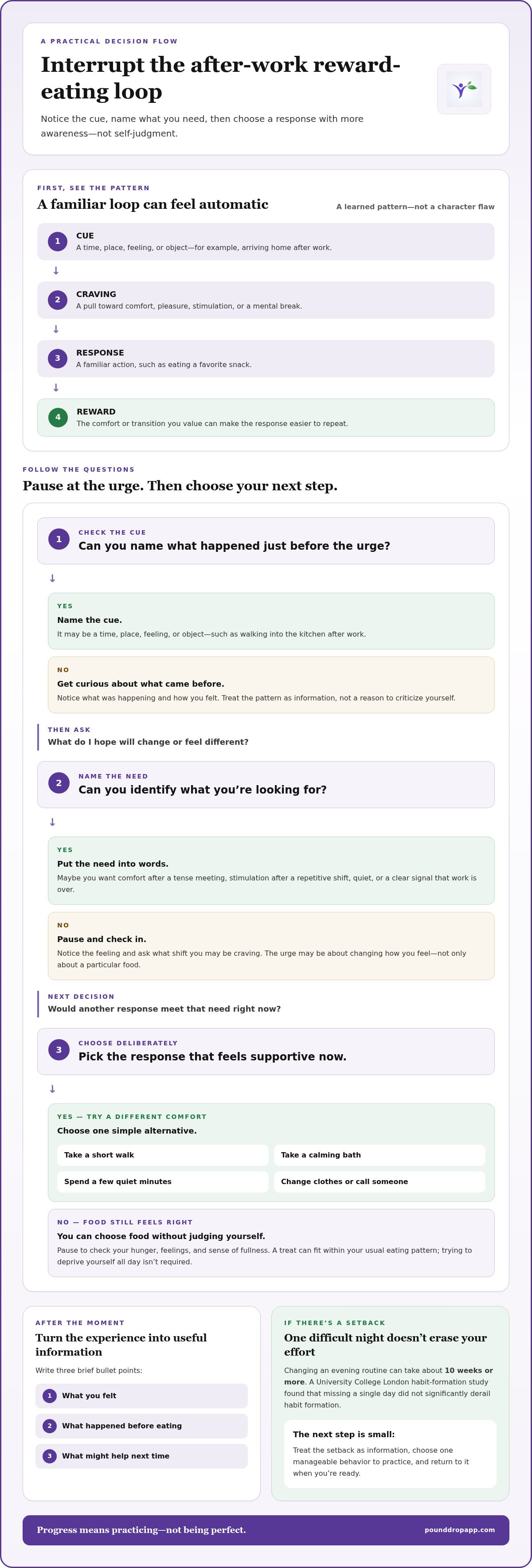
Changing an evening eating routine can take about 10 weeks or more, so one difficult night doesn’t erase your effort. University College London’s habit-formation study found that missing a single day did not significantly derail habit formation. Breaking the habit of reward eating after a hard day begins with treating a setback as information, not proof you can’t change. Ask what your routine was responding to.
After a hard day, take a moment to write three bullet points: what you felt, what happened before eating, and what might help next time. This turns self-criticism into useful information. For example, you may notice that a draining shift leaves you wanting comfort, quiet, or a sense of reward. Naming the need can make it easier to choose another response.
For a closer look at reward eating and evening routines, watch this episode from Life After Diets Podcast:
Make the next goal small and observable. Choose one or two goals at a time, such as taking an additional 1,000 steps each day or pausing to name your feeling before deciding what to eat. A clear behavior gives you something specific to practice. Motivation may come from wanting more energy, a calmer evening, or greater trust in your choices. Write down your reason, then connect the goal to it.
Imagine someone who usually orders a favorite snack after a demanding workday. Rather than promising to stop immediately, they could begin by walking around the block before settling in. Some days, they may still choose the snack. The new step is creating a pause and noticing how they feel. A friend, coworker, or family member can offer support by listening or joining the walk, without policing food choices.
Self-care can make practice more manageable. Prepare a comfortable place to unwind, protect time for rest, or ask someone you trust to check in after a challenging shift. These actions support change without demanding perfect control. Breaking the habit of reward eating after a hard day takes time, and you can try again after a missed day. Progress means returning to a small step, not judging yourself for needing practice.
If emotional eating feels difficult to control, causes ongoing distress, or interferes with daily life, seek support from a qualified health professional. You can describe the situations that prompt eating, how you feel beforehand, and what you have tried. Those details can help guide a useful conversation.
2. Brain mechanisms involved in cravings and self-control
After a stressful day, food can offer comfort, pleasure, or a welcome mental break. That emotional reward may feel especially appealing after work that demands sustained attention or difficult decisions. People may turn to food because eating can briefly shift how they feel. The craving may be about that change in state, not only the food itself.
A habit often follows a feedback loop: a cue prompts a craving, the craving motivates a response, and the response brings a reward. For example, arriving home after work may cue thoughts of a favorite snack. Eating it may provide comfort or mark the transition into personal time. When the reward satisfies the craving, the brain learns to remember that response, making it easier to repeat.
Repeated behavior can become automatic, freeing the brain to focus elsewhere. Dopamine can strengthen a habit when it is present during repeated behavior. Its absence can also contribute to craving the behavior again. This helps explain why an evening routine can feel driven before you’ve consciously decided what you want. It isn’t a character flaw; it’s a learned pattern linking a cue with a response.
When a craving appears, try separating the parts of the loop. Notice the cue, name the feeling, and ask what change you hope to experience. Do you need comfort after a tense meeting, stimulation after a repetitive shift, or a clear signal that work is over? Naming the need gives you more than one possible response. You might still choose food, but the decision becomes more deliberate.
Late-night eating may intensify hunger, too. A 2022 study in Cell Metabolism found that eating late increased hunger compared with eating the same food earlier in the day. If evening cravings feel stronger after long gaps between meals, plan satisfying meals and snacks at regular intervals. Spacing them three to four hours apart can support a steadier routine. Include a small treat within your usual eating pattern rather than trying to deprive yourself all day.
Self-control doesn’t have to mean fighting every impulse. Practicing different forms of self-control can strengthen your resolve, while a prepared response reduces the need to make a fresh decision. For instance, decide before work whether you’ll change clothes, take a walk, or call someone after arriving home. Mentally rehearsing the plan can make it easier to notice the cue and follow your chosen routine.
The old response doesn’t disappear when you practice a new one; both habits can remain in the brain. That’s why a craving may return even after a different evening routine starts to feel familiar. A simple record of cues, feelings, and responses can help you spot changes over time. If tracking your routine would help, consider a daily habit-tracking tool as one way to make those patterns easier to notice.
3. How reminders, routines, and rewards form habits
A reminder can be a time, place, feeling, or object that starts a familiar routine. For example, walking into the kitchen after work may cue a snack, especially if eating there has become associated with relaxation. The routine is the action that follows, and the reward is the result you value, such as comfort or a clear end to the workday. Together, these parts form a cue-routine-reward loop.
Map one evening pattern to see its parts. Write down the reminder, what you do next, and what you get from it. “Finish a stressful shift, open the pantry, feel a brief break” is more useful than “I have no willpower.” The reward may be a pause, pleasure, or a transition away from work. Identifying that payoff can help you choose a different routine to meet the same need.
Next, adjust the reminder or the steps between it and the routine. If seeing snack food on the counter prompts automatic eating, put it out of sight and make another option easier to reach. If arriving home is the cue, place walking shoes near the door. The goal isn’t to resist every reminder. It’s to adjust your surroundings so the familiar response takes more effort and a preferred response feels simpler.
Make an unwanted cue less visible, less appealing, or harder to act on. For instance, turn off your phone by 9 p.m. on weeknights if work notifications keep you at your desk and lead to late, distracted snacking. A habit can only happen when you’re capable of carrying out its response, so changing access matters. If the usual food isn’t immediately within reach, you have a moment to notice the cue and decide what you want.
Replacing a routine works best when the new action is clear and available at the same moment. After putting down your work bag, you might change clothes, make tea, and sit somewhere away from the kitchen. That sequence creates a physical transition and a deliberate pause. Choose a reward that feels meaningful, such as music, a brief call with a friend, or time with a favorite show.
Look for patterns across several evenings instead of judging one choice. Note the place, time, people, and feelings linked with eating, then identify the cue that appears most often. You may find that a particular commute, an empty kitchen, or a tense message starts the routine. Change one part first, such as taking a different route home or planning an activity after work. Small adjustments make the loop easier to understand.
The original response may remain familiar as you develop another routine. If you’re still trying to resist the old cue, treat that moment as a prompt to practice your replacement plan, not as evidence of failure. Keep the reminder, routine, and reward visible in your notes. Over time, your record can show which changes fit your daily life and which rewards genuinely help you unwind.
4. Mindfulness and awareness of impulses
Track emotional eating for a few days to see what happens before an impulse. Note the time, place, feeling, and action, such as reaching for a snack after closing your laptop. Include what you were doing and whether you were drinking water or another beverage. These notes can reveal whether a particular task, feeling, or routine tends to come before eating. The goal is observation, not judgment.
When an urge appears, pause and name it: “I feel tense, and I want comfort.” Take a slow breath, then choose your next action deliberately. You could eat, take a brief break, or try another response that fits what you need. Mentally rehearse that choice in a familiar situation, such as walking into the kitchen after work. Practicing the pause helps you notice an impulse without treating it as an instruction.
Mindful eating also means giving your meal your attention. Sit at a table instead of eating in front of a computer or television. Put down your fork between bites, notice the food’s taste and texture, and chew each bite fully. If you often eat while answering messages, try putting your phone aside for one meal. These small changes make it easier to notice when the meal feels satisfying and when you begin to feel full.
Give your body time to register the meal. The gut needs roughly 20 minutes to send satiety signals to the brain, so eating quickly can make those signals harder to notice. A 2018 BMJ Open study tracked nearly 60,000 adults over six years. Fast eaters were significantly more likely to develop obesity and metabolic syndrome than people eating at a normal or slow pace. Slowing down is a way to pay attention, not a test you have to pass.
Try one practical step to slow down: pause halfway through your meal and check in. Ask whether you’re still hungry, enjoying the food, or eating automatically. At breakfast, set aside a few minutes to eat without a screen; at dinner, place the serving dish on the table rather than holding it beside your plate. Drinking water can be part of the meal, but notice whether you’re thirsty, hungry, or seeking a break. Those needs can feel similar in a busy moment.
Support can help if emotional eating feels persistent or distressing. A qualified mental health professional can help you explore triggers and practice ways to respond to difficult feelings. A registered dietitian can help you examine eating patterns and plan satisfying meals. You can begin by sharing one example, such as an evening when stress led to eating past comfort. The right support makes room for your experience without framing food or feelings as a personal failure.
5. Replacing reward eating with healthier activities
Stress eating often serves a purpose: it offers comfort, pleasure, or a pause after pressure. Changing the pattern works better when you replace that payoff instead of simply removing food. Start by identifying the triggers. Is it finishing work, arriving home, or sitting alone after a demanding shift? Then choose an activity that meets the need behind eating, such as unwinding, connection, or movement.
Match the replacement to the feeling you want to shift. If your body feels tense after a difficult day, try a walk around the block or a hot bath. If you feel isolated, call someone you trust while making tea. If you need a clear end to work, change clothes and play music in another room. A planned action gives your evening a comforting routine without requiring you to resist every impulse.
Keep your first experiment simple. Before tomorrow’s workday ends, choose one activity and decide when it will happen. For example, leave walking shoes beside the door and take a short walk after arriving home. Notice whether the walk brings the transition or relief you wanted. If not, adjust the activity rather than judging yourself. Stretching or reading in a comfortable chair may fit better.
How can you change stress eating without restrictive dieting? Keep regular meals and snacks, spacing them three to four hours apart, and include a small treat within your usual eating pattern. Deprivation can make food feel like the only available reward, while a satisfying routine leaves room for enjoyment. If you’re genuinely hungry after work, have a planned snack and pair it with a calming activity, rather than treating eating as something you must earn.
Try a short “if-then” plan for a familiar trigger: “If I start browsing the pantry after a tense meeting, then I’ll pause, name what I need, and choose my next step.” Your next step might still include food. The pause helps you notice whether you’re hungry, seeking comfort, or moving automatically through an old routine. With practice, food can remain enjoyable without carrying the entire job of soothing stress.
Walks, hot baths, and time at a spa are examples of alternatives for coping with stress or grief. Some people with a history of serious addictions use ritualistic behaviors, including marathon running, to help avoid drugs. That example isn’t a prescription for everyone; choose an activity that feels safe and sustainable for you. For a practical way to record your chosen routine and reflect on patterns, start tracking your daily habits.
Evaluate your experiment after trying it on a few hard evenings. Ask whether the activity was accessible, whether it addressed the actual feeling, and what would make it easier next time. Keep what helps and swap what doesn’t. The aim is not to make food off-limits. It’s to build more than one reliable way to care for yourself when the day has been difficult.
Pound Drop: Pound Drop App
The Pound Drop App offers a self-guided way to track and manage lifestyle-change progress. If you’re putting these ideas into practice, tracking can help you notice patterns and keep your next steps visible. The Method provides a guiding approach, while The Journal gives you another way to record progress. Use these tools to support steady practice, such as noting what you tried after a hard day and what felt helpful. They’re a natural next step if you want structure for your own efforts, while the changes remain yours to shape. Progress can begin with one small observation and a choice you’re ready to repeat. Explore Pound Drop’s self-guided approach with the App, The Method, The Book, and The Journal.
Choose a Next Step That Fits Your Life
Breaking the habit of reward eating after a hard day doesn’t require changing every evening at once. Choose one response you’re willing to practice, then notice what makes it easier to repeat. Your routine can grow with your needs. A difficult day may still bring familiar cravings, but it can also become a chance to try a different way to care for yourself.
For a self-guided structure for your next steps, Pound Drop offers the Pound Drop App, The Method, and The Book. Use the approach that feels most useful as you work toward habits that fit your everyday life. Begin with a small change and build from there, at your own pace.
Contact Pound Drop to explore your next step. Keep going with patience. Each thoughtful choice is practice, not a test.
Frequently Asked Questions
How can I identify triggers for reward eating?
Notice what changes just before you start wanting a food reward. For a few evenings, jot down the moment, what happened immediately beforehand, and what you hoped eating would do for you. For example, compare evenings after working late with evenings after a smooth commute. A recurring situation can point to a trigger, while the reason you reach for food may reveal which need to address.
What are practical alternatives to food rewards after a hard day?
Choose an activity that gives you the payoff you’re looking for. If you need a sense of completion, change out of work clothes and close your laptop before starting a favorite podcast. If you want connection, send a voice message to someone you enjoy talking with. Keep the activity easy to start at home, so it’s realistic when you’re tired, not another demanding task.
How can I avoid shame and setbacks while changing eating habits?
Treat an unwanted eating episode as information, not a verdict on your character. Resume your usual routine at the next meal rather than skipping food or adding rules to compensate. Then ask what made that moment harder and what might make the next attempt more comfortable. If a plan keeps feeling too demanding, adjust it to fit your real schedule instead of labeling yourself unsuccessful.
Are there free U.S. resources for help with emotional eating?
Yes. A no-cost first step is to seek support from a trusted friend, relative, or coworker. You might ask them to listen after a difficult shift or join you in an activity that helps you unwind. For more structured help, look for community or workplace support options available in your area. If eating feels distressing or disrupts daily life, a qualified health professional can help you consider next steps.


