


Article by
Jesper Sorensen
Jesper Sorensen is a holistic health coach and founder of Pound Drop, a different approach to weight loss built around healthier habits. He has written ebooks and health articles for established publishers and has spent years studying nutrition, healthy eating and sustainable weight management.
Carbohydrates aren’t a mistake, and eating them doesn’t mean you’ve done anything wrong. Learning how to stop feeling guilty after eating carbohydrates can begin with treating food as neutral and remembering that one meal is only part of your overall eating pattern. Guilt may reflect strict food rules, pressure to eat perfectly, or worry about what a meal means, not a personal failure.
If you feel uneasy after eating bread, pasta, or dessert, that discomfort can feel convincing. But it doesn’t have to dictate what you eat next. Restricting a food to make up for eating it can keep guilt and cravings going. Curiosity and self-compassion offer a steadier way to respond.
This article explains food guilt and why certain foods can trigger it. You’ll also learn how mindfulness, awareness of cravings and triggers, and kinder self-talk may help you feel more at ease around carbohydrates, one manageable step at a time.
Key Takeaways
- Food guilt can grow from strict rules and pressure to eat perfectly; noticing those influences can help loosen their hold.
- Pause before and during meals to notice hunger, preferences, and satisfaction without judging your choices.
- Try meeting guilt with curiosity and self-compassion instead of responding with punishment or compensation.
- Restricting carbohydrates may make cravings and thoughts about avoided foods stronger, so notice how food rules affect your experience.
- Look for patterns in what happens before guilt appears, including emotions, situations, and messages about food.
1. Is it normal to feel guilty after eating?
Yes, food guilt is a familiar experience, especially when strict rules govern eating. After a slice of bread or a bowl of pasta, someone might think, “I shouldn’t have eaten that.” The thought can bring shame, regret, or a sense of losing control. Feeling guilty doesn’t prove that the food or the person is bad.
Rules often divide foods into “good” and “bad,” turning meals into tests of willpower. Diet culture can reinforce the idea that thinness signals health and eating certain foods means failing. Those messages can make a normal choice, such as having rice with dinner, feel like a mistake. Yet foods don’t have moral values, and one slice of pie won’t make or break someone’s health.
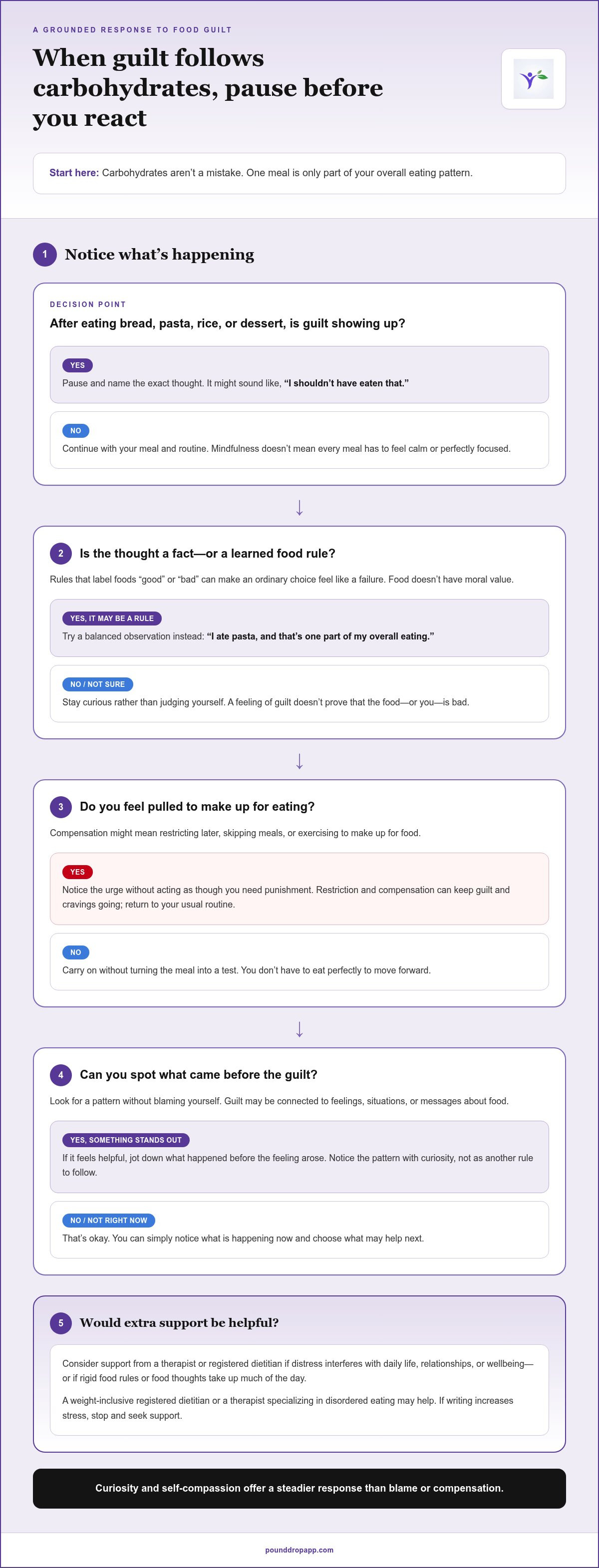
To challenge food guilt and negative thoughts after eating, name the thought and ask whether it’s a fact or a learned food rule. Replace “I ruined everything” with a more balanced observation: “I ate pasta, and that’s one part of my overall eating.” Treating food as neutral can loosen the rule without demanding perfect eating.
Restriction can keep guilt going, too. Someone who decides, “I’ll never eat cookies again,” may become more preoccupied with cookies and experience stronger cravings. If they later eat them, guilt may prompt them to skip meals or exercise to compensate. That cycle of restriction and overeating can make food feel more chaotic instead of resolving the original concern.
Beliefs can begin early. A child who hears that dessert must be earned, or sees family members criticize their bodies at meals, may carry those messages into adulthood. Consider a specific memory: What did caregivers say about bread, sweets, or portion sizes? Noticing where a belief began can help you distinguish a family or cultural message from what feels supportive now.
To address negative self-talk, write down the exact sentence that appears after eating, such as “I have no self-control.” Then write a kinder, more accurate response: “I ate a food I enjoy; I can continue with my usual routine.” If writing increases stress, stop and seek support from a registered dietitian. Rigid food rules or thoughts about food that take up much of the day are also reasons to seek help from a therapist or dietitian specializing in disordered eating.
Food guilt can harm mental and emotional well-being, and may contribute to restrictive eating, binge eating, or other disordered eating behaviors. If distress interferes with daily life, relationships, or wellbeing, support from a weight-inclusive registered dietitian or therapist can help. The Substance Abuse and Mental Health Services Administration says its National Helpline is available at 1-800-662-HELP (4357); 24 and 365 are also mentioned. The U.S. Department of Veterans Affairs says callers can reach the Veterans Crisis Line by calling 988 and pressing 1. The National Association of Anorexia Nervosa and Associated Disorders lists its helpline at 1 (888)-375-7767.
2. Mindfulness before and during meals
Mindfulness creates a moment to notice what’s happening before self-judgment takes over. Before eating oatmeal, for example, consider whether you feel physically hungry, want its warmth, or need a convenient breakfast. Emotional eating is a normal human experience, and people eat for reasons beyond hunger. Naming what’s influencing your choice can help you respond thoughtfully rather than criticize yourself.
If you’re exploring how to stop feeling guilty after eating carbohydrates, begin with a simple check-in before a meal. Notice your hunger, what sounds appealing, and how you expect the food to feel. These are observations, not rules to follow. If a bagel sounds satisfying, you can choose it without first proving your hunger is strong enough.
During a meal, reduce distractions where practical. Set your phone aside, take a seat, and notice the food’s taste, texture, and smell. With a slice of toast, you might notice its crispness or how it tastes with soup. Paying attention to the experience can help you stay present rather than evaluating each bite against a strict standard.
Hunger and fullness cues provide information, not a pass-or-fail test. You might notice an empty feeling, growing interest in food, or comfortable satisfaction. Stress and distraction can make those signals less noticeable. If you’re eating rice at dinner, pause and ask whether you want another serving. You can keep eating, take a break, or stop without judging your answer.
What is intuitive eating, and can it help reduce guilt around carbs? Intuitive eating involves noticing hunger, satisfaction, preferences, and how food feels, rather than relying only on rigid rules. It may help you approach carbohydrates more flexibly. An important part of learning how to stop feeling guilty after eating carbohydrates is practicing these observations without turning them into another set of demands.
Make the practice fit real life. At a birthday gathering, you could savor dessert and notice when you feel satisfied while staying engaged in the conversation. If guilt appears afterward, acknowledge the thought, then return your attention to the people around you. You could also jot down a brief note about what happened before the feeling arose, if writing feels helpful rather than stressful.
Mindfulness doesn’t mean every meal must feel calm or perfectly focused. It means noticing what happened and choosing what may help next. If you realize you ate lunch while rushing through work, that’s useful information. You might make time to sit down next time. Small, realistic adjustments can support a more settled relationship with food without requiring you to get every meal “right.”
3. Self-compassion
Self-compassion means responding to a difficult moment with care instead of blame. After eating a bagel and thinking, “I shouldn’t have had that,” pause and notice the thought without treating it as a fact. A compassionate reply might be, “I’m feeling uneasy, but eating a bagel doesn’t define my choices or my worth.” This approach makes room for reflection without turning food into a test of character.
Guilt can affect self-esteem and eating habits. Someone who labels themselves “weak” after dessert may try to correct the supposed mistake by skipping a meal or exercising to compensate. Those responses can increase preoccupation with food and contribute to restrictive eating or binge eating. Instead, describe what happened plainly: “I ate dessert at the party, and now I’m criticizing myself.” Naming the event separates it from the judgment.
Try a three-step response after a meal that brings up shame. First, name the emotion, such as guilt, anxiety, or regret. Next, ask what you’d say to a friend who ate the same lunch. Then offer yourself that same balanced response. For example: “You enjoyed the meal. You don’t need to earn your next one.” Practicing this language makes self-kindness more concrete than simply trying to “think positive.”
Weight stigma can make food choices feel tied to personal value. Comments about body size, praise for weight loss, or social messages equating thinness with health may shape how someone interprets a meal. If a family member says, “You’re being good today,” after you choose a salad, notice how that label implies other foods are bad. Your body size doesn’t measure your character, and a meal isn’t evidence of your worth.
Self-compassion also leaves room to learn. If an individual glucose spike concerns you, treat it as feedback for future decisions rather than a reason for guilt. Consider what was happening around that meal, such as its timing or what else you ate, then focus on one practical observation. Avoid turning one reading into a verdict about your discipline or your overall approach to nutrition.
When negative self-talk returns, write down the exact sentence and add a more compassionate alternative. “I’ve ruined my progress” could become, “One meal is one experience; I can continue with my usual routine.” If writing about meals increases stress, set the journal aside. If food-related thoughts keep disrupting your day, relationships, or eating habits, consider support from a therapist or dietitian who understands disordered eating.
4. Carbohydrate restriction and increased cravings
Carbohydrates are essential nutrients, alongside proteins and fats. The body breaks carbohydrates down into glucose, so eating bread, potatoes, fruit, or pasta is not inherently a mistake. How much carbohydrate should adults eat each day? There isn’t one amount that fits everyone, because nutritional needs vary. Personal needs and eating patterns matter more than applying a strict rule to every plate.
Restriction can make avoided foods more noticeable. If someone decides they must never eat rice, they may find themselves thinking about it more often. Cravings can feel stronger when a food is forbidden, and eating it can then bring food guilt. That reaction isn’t proof of weak willpower. It can reflect the attention and pressure created by a rule.
Consider what happens across a typical day. You might skip toast because carbohydrates feel “unsafe,” then spend the afternoon preoccupied with crackers. Rather than judging the craving, note what you’ve been avoiding and how the rule affects your thoughts. Remember, an urge is information, not an instruction or a failure. This observation can help you understand your eating habits without escalating restriction.
A gentler step is to include a carbohydrate food in a familiar meal and notice your response. For example, have bread with soup or potatoes alongside dinner. Pay attention to taste, satisfaction, and any anxious thoughts, without trying to compensate afterward. The purpose isn’t to force a particular food or portion. It’s to practice making food choices without automatically treating carbohydrates as a threat.
Some people find regular, consistent eating less chaotic than alternating restriction with attempts to make up for eating. A predictable meal routine can also make it easier to notice hunger and fullness, rather than waiting until thoughts about food feel overwhelming. If strict rules cause distress, write down when they appear and what follows. Stop journaling if tracking increases stress.
Food rules can affect mental health when they take up much of the day or interfere with relationships and ordinary activities. If avoiding carbohydrates leads to intense anxiety, frequent overeating, or repeated compensation, consider speaking with a registered dietitian who understands disordered eating. A qualified therapist can also help explore the fear behind a rule. Support should focus on your relationship with food, not shame or punishment.
You don’t need to settle every nutrition question before your next meal. Start by noticing one strict rule, the food it targets, and how it shapes your thinking. Then choose a small, manageable way to respond with less judgment. Over time, observing cravings without treating them as evidence of failure can make room for more flexible eating habits.
5. Common triggers for guilt after eating
Why do people feel guilty after eating carbohydrates? Often, the feeling follows learned food rules, unrealistic expectations, or weight stigma, rather than anything inherently wrong with the food. A person who sees bread as “bad” may interpret eating toast as a personal lapse. The food becomes a trigger because of the meaning attached to it, not simply because it contains carbohydrates.
One common trigger is the belief that every meal should match an ideal plan. Imagine choosing pasta at lunch, then thinking, “I was supposed to eat perfectly today.” That all-or-nothing standard can turn an ordinary choice into a perceived failure. Notice the word “supposed” in that thought. Ask who set the rule, what it expects, and whether it leaves room for real life, including busy days and shared meals.
Food labels can also trigger guilt. Calling a cake “bad” before a celebration can make eating it feel like breaking a rule. A study described in this article’s research found that participants who associated chocolate cake with guilt were more likely to overeat than those who associated it with joy. The practical takeaway is to notice whether a label changes how you approach a food, then try describing it neutrally: “I’m having cake at a birthday.”
Messages about bodies are another possible trigger. Diet culture can present thinness as proof of health, while weight stigma can make people feel judged for their bodies or food choices. For example, a comment about someone’s plate may prompt them to monitor every bite, even when they were enjoying dinner. Separate the comment from your own needs. Ask what you want from the meal, rather than treating another person’s opinion as a rule.
Emotional context matters, too. After a stressful workday, someone might eat a snack and then criticize themselves for not following their usual routine. The emotion, the food, and the self-judgment can become linked. Try noting what happened just before guilt appeared: a comment, a strict expectation, or a difficult mood. This small observation helps identify patterns without turning eating into a pass-or-fail record.
To challenge a trigger, name it clearly: “I feel guilty because I believe I broke a rule.” Then consider a more balanced explanation, such as, “I chose a food I enjoy, and this meal doesn’t define my habits.” If you want to explore the pattern, record the situation and your thoughts in a few words. Stop if tracking increases distress. The aim is to understand what triggers guilt so you can respond with more choice and less automatic self-judgment.
Pound Drop: Pound Drop App
Pound Drop App may suit you if you want a structured, self-guided way to work on lifestyle habits. It sits within Pound Drop’s system alongside The Method and The Journa, offering tools to help you track and manage progress. If you’re noticing food guilt, use reflection to recognize patterns around meals rather than turning the app into another strict food rule. Small observations, such as noting when guilt appears or what was happening beforehand, can help you approach your habits with more awareness. This approach may be useful when you want structure while practicing gradual change independently. For a closer look, visit pounddropapp.com.
Make room for a kinder next step
Changing your relationship with food doesn’t require resolving every feeling before your next meal. Choose one small practice to carry forward, such as pausing before self-criticism or noticing which food rules shape your choices. When you wonder how to stop feeling guilty after eating carbohydrates, let the next step be curiosity rather than punishment. Progress can begin with a more balanced response to one difficult thought.
If a self-guided structure would help you keep practicing, Pound Drop offers the Pound Drop App, The Method, and The Book. These resources support reflection and steady lifestyle changes as you work toward more sustainable habits. They aren’t a substitute for specialized care when distress around food calls for professional support, but they can provide structure for your ongoing practice.
Explore Pound Drop and take your next step. You can build a more peaceful relationship with food gradually, with patience for yourself along the way.
Frequently Asked Questions
What is food guilt?
Food guilt is distress or self-blame connected to what, when, or how much someone eats. For example, a person might enjoy a birthday cupcake, then feel they need to justify it or hide the wrapper. The feeling often reflects personal rules and expectations about eating. Notice whether the concern is about physical discomfort, a practical choice, or a judgment about your character. These are different experiences and call for different responses.
Do Affirmations Around Food Actually Work?
Food affirmations can offer an alternative to harsh self-talk, especially when the same thoughts arise around familiar meals. Choose words you can believe, such as, “I’m allowed to enjoy lunch,” rather than a statement that feels unrealistic. Pair the phrase with a small action, like sitting down to eat without checking a calorie app. If affirmations feel forced, use a neutral observation instead: “I’m having a sandwich, and I can notice how I feel.”
Is Feeling Guilty After Eating Helpful?
Guilt can point to a conflict between your actions and personal values, but food-related blame rarely offers a useful plan. After eating a snack during a work break, ask what you need now rather than punishing yourself. Perhaps you need a proper meal later or simply want to return to your task. A practical response addresses that need. Repeated self-criticism, skipped meals, or compensatory exercise can deepen distress instead of resolving it.
Is it normal to feel guilty after eating?
Yes, people can feel guilt after eating, particularly when food rules or past dieting experiences shape their choices. For example, someone might feel uneasy after eating a sandwich because they planned a different lunch. The emotion itself doesn’t prove that anything is wrong. Pay attention to its intensity and effect: fleeting discomfort differs from thoughts that repeatedly disrupt meals, work, sleep, or time with other people.
How can someone avoid compensating for eating carbs through restriction or excessive exercise?
After eating carbohydrates, return to your usual next meal rather than skipping it or creating a workout as repayment. If the urge to compensate appears, pause and choose a neutral activity, such as calling a friend or continuing a planned errand. Avoid making new food rules while distressed. If compensation feels difficult to resist or becomes a repeated pattern, tell a trusted person and seek support from a professional familiar with disordered eating.
Can diet culture or a history of disordered eating cause guilt around food?
Yes, diet culture and past disordered eating experiences can shape beliefs that foods need to be earned or avoided. For instance, someone praised for eating very little might later feel anxious ordering a full meal with friends. Cultural messages, family comments, and personal experiences can all influence these beliefs. Identifying where a particular rule came from can help you question whether it supports your wellbeing now.
When should food guilt or restrictive eating be discussed with a mental health professional?
Consider seeking help when thoughts about food take up much of your day, rigid rules interfere with relationships, or eating causes significant distress. Frequent fasting, excessive exercise, laxative use, or repeated attempts to compensate are also reasons to reach out. A therapist or registered dietitian specializing in disordered eating can help you explore what’s happening. You don’t need to wait until eating feels completely unmanageable to ask for support.
What therapies help with food guilt and disordered eating?
Support can include cognitive behavioral therapy, dialectical behavior therapy, nutrition therapy, and interpersonal therapy. Cognitive behavioral therapy can help someone examine recurring thoughts and behavior patterns, while dialectical behavior therapy focuses on skills for handling intense emotions. Nutrition therapy can address eating concerns, and interpersonal therapy explores relationship issues that affect wellbeing. The right approach depends on a person’s needs, symptoms, and goals, so discuss these factors with a qualified professional.


