


Article by
Jesper Sorensen
Jesper Sorensen is a holistic health coach and founder of Pound Drop, a different approach to weight loss built around healthier habits. He has written ebooks and health articles for established publishers and has spent years studying nutrition, healthy eating and sustainable weight management.
A useful daily habit tracker for weight loss doesn’t ask you to be perfect. It helps you notice which actions support your wellbeing and what makes them harder when life gets busy. If elaborate apps, long checklists, or a missed day have left you feeling behind, the problem may be the system, not your effort. A tracker should take little time to use and make it easier to learn from your routine.
In this guide, you’ll learn how to choose a few realistic habits, record them simply, and review patterns without judgment. You’ll also see how to adjust when your schedule or circumstances change. The aim isn’t to build a perfect streak or overhaul everything at once. It’s to create a flexible way to notice what helps, return after an interruption, and keep practicing habits that fit your life.
Key Takeaways
- Use a daily habit tracker for weight loss to notice patterns in repeatable actions, not to judge your worth or promise a particular result.
- Set up your tracker in five manageable steps, starting with a few habits that already fit your routine.
- Keep chosen habits separate from optional context notes and outcome measures, then choose a review rhythm you can maintain.
- When life interrupts your routine, identify the barrier, simplify the habit, choose a fresh cue, and resume when practical.
- Self-guided tools such as the Pound Drop App, The Method, The Book, and The Journal can offer another place to support your tracking practice.
What a Daily Habit Tracker for Weight Loss Can, and Cannot, Tell You
A daily habit tracker for weight loss is a simple record of actions you want to practice, such as taking a planned walk or following a bedtime routine. It isn’t a grade, diagnosis, or measure of your worth. Use it to see what you’re doing and what might make a routine easier to repeat. Learning more about how habits are formed can help explain why connecting a clear cue with a repeatable action may be useful.
A tracker can reveal patterns over time. You might find that movement fits more easily when you plan it before work, or that changes to your sleep routine affect how manageable other habits feel. Those observations can help you make a practical adjustment. A tracker can’t guarantee weight loss, and a record of habits can’t explain every change in weight.
Daily behaviors and outcomes are different kinds of information. A scale reading can shift from day to day, while a habit entry records whether you practiced a chosen action. If you track both, review them separately rather than treating one weigh-in as a verdict on your effort.
Missed an entry? It’s simply a gap in the record, not proof that you’ve lost progress. Return to tracking at the next practical opportunity.
For a personal perspective on routines, you can also watch this video:
Which daily habits might be useful to track?
Choose actions that suit your circumstances and wellbeing. Examples include planned movement, regular meals, a bedtime routine, or a mindful pause during a busy day. These are possibilities, not a required checklist. Start with an action you can describe clearly, then ask whether recording it helps you make a useful decision.
How is habit tracking different from calorie tracking?
Habit tracking records actions. Calorie tracking estimates the energy in food and drink. You can choose either approach, or neither. Tracking habits doesn’t require calorie counting. If you’re weighing the options, the related article on habit tracking versus calorie counting can help you compare them.
How to Set Up a Daily Habit Tracker in Five Manageable Steps
A useful tracker is quick to update and easy to understand. Start with a few actions that matter to you, then use the record to learn what fits. Reviews of studies on self-monitoring have examined tracking as part of weight-management programs. Your own tracker is still a tool for awareness, not a promise of a particular result.
- Choose a focus. Decide what you’d like to support right now, such as adding movement to your week or creating a steadier sleep routine. One clear focus helps keep your tracker manageable.
- Select a small number of habits. Choose actions that are specific, observable, and within your control. “Take a planned walk” is easier to record than “get healthier.” Make each action realistic for a busy or low-energy day. Choose habits that fit your life rather than copying someone else’s checklist.
- Set a cue. When practical, connect each action to an existing routine, place, or time. You might plan a walk after lunch or get ready for bed after brushing your teeth. A cue provides a natural reminder without requiring a complicated schedule.
- Decide how to record it. Use paper, a calendar, or a digital tool, whichever is easiest to access. Decide in advance what counts as completing the habit. For a planned walk, for example, you could count a shorter walk on a packed day rather than dropping the plan altogether.
- Review and adjust. At the end of the week, look for practical patterns. Which cue helped? Was a habit too ambitious or awkwardly timed? Keep what works and change one thing at a time.
Keep daily recording brief. A check mark beside each habit and an optional note such as “late meeting” or “low energy” may be enough. The goal is a routine you can sustain, not detailed paperwork.
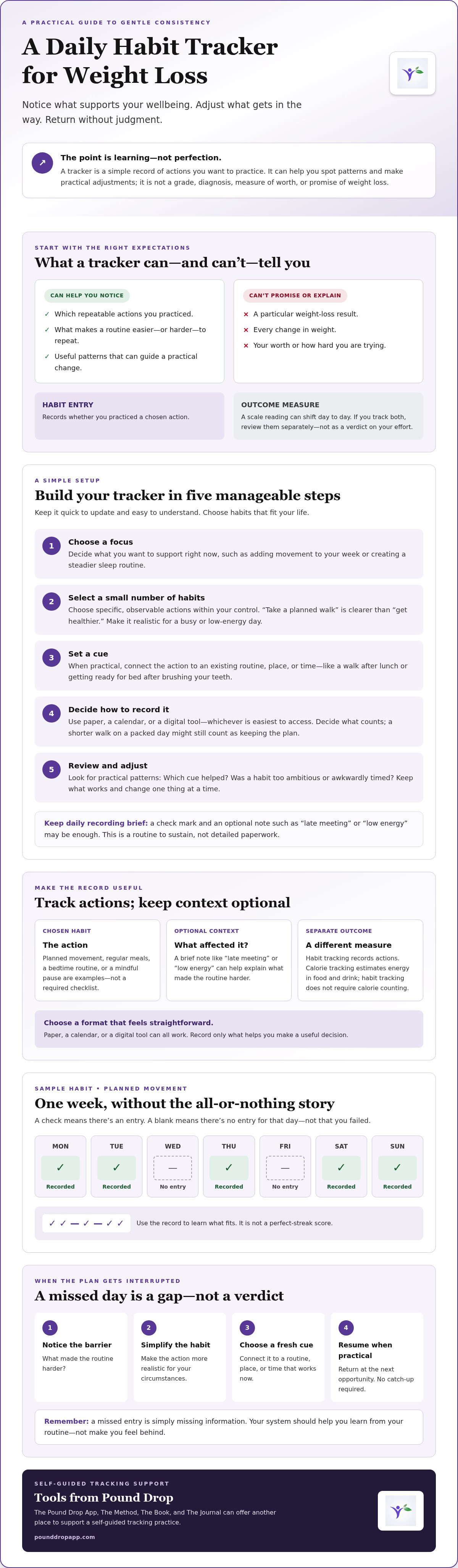
Here’s a sample week for one chosen habit. A blank space means there’s no entry for that day, not that you failed.
Planned movement: Mon ✓ Tue ✓ Wed blank Thu ✓ Fri blank Sat ✓ Sun ✓
If you’d like digital support, a beginner-friendly weight-loss app may help you keep your practice in one place. Choose a format that feels straightforward and keep the habit itself at the center.
What Should You Track Each Day, and How Often Should You Review It?
A daily habit tracker for weight loss is most useful when it reflects a few actions you’ve chosen, not every detail of your day. Keep the record simple, and leave out anything that adds pressure without helping you. Your health needs and circumstances are personal, so these examples are starting points, not individualized medical advice.
Build a tracker around actions, not an overwhelming list
Choose a few habits that feel meaningful and manageable. A check mark can show whether you practiced an action; an optional note can add context without turning the tracker into a detailed diary. Adjust or remove any habit that stops being useful.
| Category | Example | Simple record |
|---|---|---|
| Chosen habit | Pause for a moment before eating | Done / not recorded |
| Chosen habit | Follow a calming bedtime routine | Done / not recorded |
| Optional context note | Schedule changed; slept poorly | Brief note, if useful |
| Optional outcome measure | Scale reading | Record separately, if you choose |
A useful tracker shows patterns, not perfection. If a habit doesn’t suit your routine or wellbeing, you don’t have to keep it just because it appears on a sample list. Outcome measures are optional, too. If you include one, keep it separate from daily action checks so a single reading doesn’t overshadow the behaviors you’re practicing.
Use weekly reviews to notice patterns without judging yourself
Choose a review rhythm you can sustain. You might check in briefly each day and look back once a week, or review less often if that feels easier to maintain. Ask yourself: What felt easy? What felt difficult? Did a change in schedule, energy, or routine affect the habit? Look for clues, not a score.
If the tracker feels like too much, change one element at a time. Remove a habit, simplify what counts as completion, or shorten your notes. Try the revised version and see whether it feels more workable. Several entries may reveal patterns, while one blank or difficult day may tell you little on its own.
The best review frequency is one you can maintain without making the tracker another source of stress. Adapt these examples to your needs, and speak with a qualified health professional if you have questions about which habits are appropriate for your health.
How to Keep Tracking When You Miss a Day or Your Routine Changes
Schedules shift. Travel, illness, family needs, and busy workdays can interrupt a routine that had been feeling steady. A gap in your daily habit tracker for weight loss doesn’t mean you’ve lost the progress you made. Leave the day blank and return when it’s practical.
What to do after a missed entry
There’s no need to fill in the past from memory or mark a habit complete if you’re unsure. Record honestly, leave the space blank, or start again today. Then ask what made the habit harder. Was the cue easy to miss? Did your schedule change? Was the action too ambitious that day? Treat the answer as useful information, not a reason to blame yourself.
One missed check-in doesn’t erase the practice you’ve already built. If a gap makes you feel as though you must start from the beginning, the article about stopping the cycle of starting over may offer another perspective.
Adapt the tracker when life gets unpredictable
Keep the general intention, but let the action change to fit the day. If a planned walk isn’t practical while traveling, a shorter walk or another accessible form of movement might work. If a habit no longer suits your schedule or circumstances, replace it rather than abandoning the whole tracker. Small adjustments can help you keep using the system as life changes.
A simple reset can help you choose a workable next step:
- Notice the barrier: What changed or got in the way?
- Simplify the habit: What smaller version feels realistic now?
- Choose a new cue: Could you connect it to a different routine, place, or time?
- Continue: Resume when practical, without trying to make up for missed days.
Tracking should support reflection, not take over your attention. If recording habits starts to feel stressful, overly consuming, or connected to worsening distress or health concerns, consider pausing or changing what you track. A qualified health professional can help you think through concerns about your wellbeing and what approach may be appropriate.
If a digital place to keep your self-guided practice would help, explore the Pound Drop App. Choose a tool and routine that feel supportive, and give yourself room to adapt them.
How Pound Drop’s Tools Can Support a Self-Guided Tracking Practice
You can track habits with a simple note or calendar; you don’t need a particular product. If you’d like more structure, Pound Drop offers self-guided digital and physical resources: the Pound Drop App, The Method, The Book, and The Journal. These are optional tools to explore after deciding which habits you want to observe. A tool can give you a place to return to, but it can’t promise a particular weight-loss result.
Choose a format that fits the way you reflect
Digital tracking may suit you if you like keeping notes on a device you already use. Writing by hand may feel more comfortable if you prefer a physical place to reflect. The Journal is a physical resource, but don’t assume it has specific prompts or a particular layout. Choose a format you can return to without adding stress. A basic paper calendar or note can work, too.
If you’re comparing options, the guide to weight-loss tracking journals can help you consider what you want from a journaling format. The goal isn’t to find a perfect system. Choose a convenient place to record selected actions and review what you notice.
Explore structured support without pressure to be perfect
The Method is Pound Drop’s habit-focused methodology, and The Book is another self-guided resource. The Pound Drop App is a digital tool. Check its current features before relying on it for a specific tracking or reminder function. The Journal is a physical option, but don’t assume it includes particular tracking prompts. These resources offer different formats for self-guided weight management, so choose what suits your preferences and needs.
Already have a simple tracking practice? Keep using it. If you’d like to explore a more structured approach, the article on a simple weight-loss methodology may be a helpful next read. You can also learn about Pound Drop’s self-guided tools and decide whether one fits the way you prefer to record and reflect. No format needs to be followed perfectly. It should support your practice, not become another standard to meet.
Start Small and Keep Your Tracker Flexible
A daily habit tracker for weight loss can help you notice which repeatable actions fit your life, but it isn’t a scorecard or a guarantee. Choose a few relevant habits, keep daily entries simple, and review patterns over time instead of judging one difficult day.
When your routine changes, adjust the habit, choose a new cue, or return to tracking when it feels practical. The aim is a supportive practice you can revisit, not a perfect record.
If you’d like more structure, Pound Drop offers a self-guided system with digital and physical resources, including the Pound Drop App, The Method, The Book, and The Journal. Explore the options and see whether one suits the way you prefer to reflect: explore Pound Drop’s self-guided tools.
Start with one manageable habit, and give yourself room to learn as you go. Explore Pound Drop’s self-guided tools to find a format that may support your practice.
Frequently Asked Questions
What is a daily habit tracker for weight loss?
A daily habit tracker for weight loss is a simple record of actions you choose to practice in support of your wellbeing or weight-management goals. You might note whether you followed a planned movement routine or paused mindfully before a meal. Reviewing entries can help you see patterns and consider practical changes. It isn’t a measure of your worth, a guarantee of weight loss, or a requirement to track every part of your day.
Which habits should I track for weight loss?
Choose a few specific actions that feel relevant and realistic in your circumstances. Examples include planned movement, following a regular bedtime routine, or taking a mindful pause before a meal. The right habits vary from person to person, so you don’t need to follow someone else’s checklist. Pick actions you can observe, and leave out anything that feels distressing, punitive, or unrelated to your needs.
How many habits should I track at once?
Start with a small, manageable set rather than trying to change everything at once. A short list is easier to remember and review, especially while you’re getting used to tracking. If recording feels like a burden, simplify the format or focus on fewer actions. Add another habit later if your current routine feels comfortable and sustainable. There’s no ideal number for everyone.
Can a habit tracker help with weight loss?
A tracker can help you notice whether chosen routines happen consistently and what makes them easier or harder. It can’t guarantee a particular change in weight, and tracking is only one possible tool. Use what you notice to consider thoughtful, manageable adjustments rather than treating entries as a score. For guidance that takes your individual health needs into account, speak with a qualified health professional.
What should I do if I miss a day of tracking?
Resume the next day or at the next practical opportunity. You don’t need to backfill an entry from memory or punish yourself for an interruption. If useful, briefly note what got in the way and whether a smaller version of the habit or a different cue might work better. One missed check-in doesn’t erase the practice you’ve already built. Keep the next step simple.
Is it better to track weight or habits every day?
They measure different things: habit entries record actions, while body weight is an outcome that can fluctuate. You might focus on behaviors, record outcomes less often, or choose not to track weight. There’s no schedule that suits everyone. Pick an approach that feels useful and emotionally manageable. If tracking starts to feel distressing or overly consuming, it’s okay to pause, change what you record, or seek qualified guidance.
Can I use a paper journal instead of an app?
Yes. A paper journal, a basic digital note, or an app can all give you a place to record chosen habits. The most useful format is one you can access and use comfortably. Pound Drop offers The Journal as a physical resource and the Pound Drop App as a digital tool. If you’re considering an app, check its current features before relying on a specific tracking or reminder function.


