


Article by
Jesper Sorensen
Jesper Sorensen is a holistic health coach and founder of Pound Drop, a different approach to weight loss built around healthier habits. He has written ebooks and health articles for established publishers and has spent years studying nutrition, healthy eating and sustainable weight management.
What if lasting weight loss began not with stricter rules, but with a pause between a cue and your next choice? If you eat on autopilot, react to cravings, or feel discouraged when routines change, you’re not alone. Mindful weight loss strategies aren’t about making every meal perfect. They’re about noticing what shapes your choices, from hunger and fullness to stress, habits, and a busy day.
This practical checklist can help you spot patterns and respond with curiosity rather than self-criticism. You’ll find simple ways to check in with your body, understand cravings, and choose actions that can flex when life gets unpredictable. Progress doesn’t have to look the same every day.
Start with one step that fits your real life. For example, pause before one meal or briefly reflect on what influenced a choice. Then build from there, without expecting perfection.
Key Takeaways
- Use mindful weight loss strategies to notice what influences your eating choices, without turning awareness into another strict set of rules.
- Check in with hunger, fullness, and satisfaction before, during, or after meals as useful observations, not grades.
- Try a brief pause when cravings or stress arise, then choose a response that feels realistic for the moment.
- Build a flexible weekly check-in around one small practice and notice how sleep, movement, stress, meals, and your surroundings may affect your habits.
- Reflect on what you’re learning without blame, and remember that weight is influenced by more than individual habits.
Mindful weight loss strategies: what they mean in everyday life
Mindful weight loss means noticing the patterns behind eating and making considered choices, rather than following another strict diet. Pay attention to hunger, emotions, routines, and surroundings, then decide what might support you in that moment. These mindful weight loss strategies build awareness; they don’t guarantee weight loss or replace medical care.
If rigid plans have left you discouraged, it makes sense to be cautious about trying another approach. You don’t need to get every choice right. Instead of asking, “Why can’t I stick to this?” try asking, “What was happening before I ate?” The answer is information, not a reason to criticize yourself.
How mindfulness changes the moment before a choice
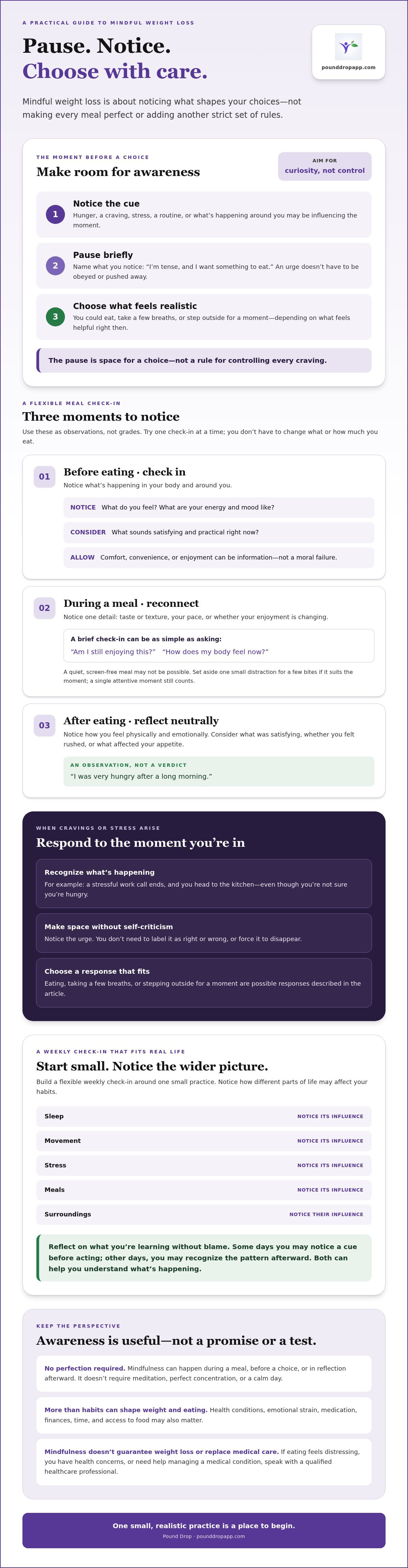
A cue can prompt an automatic response. You might finish a stressful work call and head to the kitchen, even if you’re not sure you’re hungry. A brief pause can help you notice the sequence: “I’m tense, and I want something to eat.”
Noticing an urge doesn’t mean you have to obey it or push it away. You could choose to eat, take a few breaths, or step outside for a moment, depending on what feels helpful. The point is to make room for a choice, not to control every craving.
What mindful weight loss is, and what it is not
Mindfulness is a practice of attention, reflection, and flexible behavior. It doesn’t require meditation, perfect concentration, or a calm day. You can practice while deciding whether you’re physically hungry, noticing how a meal feels as you eat, or reflecting afterward on what influenced your choice. Related intuitive eating principles also emphasize attending to hunger and fullness rather than relying on a restrictive diet mindset.
Awareness can offer useful clues, but it can’t resolve every barrier by itself. Health conditions, emotional strain, medication, finances, time, and access to food can all shape eating habits and weight. If you have concerns about your health, eating feels distressing, or you need support managing a medical condition, speak with a qualified healthcare professional. Mindfulness can sit alongside appropriate care, not take its place.
Think of this as practice, not a test. Some days you’ll notice a cue before acting; other days you may recognize the pattern only afterward. Both can help you understand what’s happening and decide what small, realistic adjustment to try next.
A mindful eating checklist for noticing hunger, fullness, and satisfaction
This checklist isn’t a test, and there’s no single correct level of hunger or fullness to reach. Use it to gather clues about what you need and how a meal feels. Try one check-in at a time. You don’t have to change what or how much you eat.
Before eating: check in without judging yourself
If you can, take a moment to notice what’s happening. Are there physical signs of hunger, a dip in energy, or a particular mood? What’s going on around you? Are you between tasks, eating with others, or choosing what’s convenient? These details can help you understand your choices without labeling them right or wrong.
- Notice: What do you feel in your body, and what are your energy and mood like?
- Consider: What sounds satisfying and practical right now?
- Allow: If you’re eating for comfort, convenience, or enjoyment, name that gently. It’s useful information, not a moral failure.
Sometimes the answer will be clear; sometimes it won’t. Either way, you can make a choice with the information you have. Start with the check-in that feels easiest, and let your observations guide what you try next.
During a meal: notice taste, pace, and satisfaction
As you eat, notice one detail: the taste or texture, how quickly you’re eating, or whether your enjoyment is changing. A brief check-in partway through can help you reconnect with the meal. You don’t need to put your food down or stop eating. Just ask, “Am I still enjoying this?” or “How does my body feel now?”
Distractions are part of real life. A quiet, screen-free meal may not be possible during a work break or family dinner. If it suits the moment, set aside one small distraction for a few bites. If not, a single attentive moment still counts. Mindful weight loss strategies should fit your circumstances, not depend on perfect conditions.
After eating: reflect with neutral observations
When the meal is over, notice how you feel physically and emotionally. You might reflect on what was satisfying, whether you felt rushed, or what affected your appetite. Avoid turning the check-in into a verdict about the meal. A note such as “I was very hungry after a long morning” can help you recognize a pattern without setting a rule.
Keep the practice simple. If a written reminder helps you reflect on habits, you could use a journal or a structured self-guided tool such as the Pound Drop App. The goal is to notice what you learn, not to record every meal.
Managing Cravings and Stress in Mindful Weight Loss
Mindfulness doesn’t mean controlling every craving, avoiding emotional eating, or making the “right” choice every time. An urge can be strong, and you may still choose to eat. The practice is noticing what’s going on and responding with a little more awareness, rather than treating the moment as proof that you’ve failed.
A simple pause-and-choose response to a craving
Try this short sequence when it feels useful. It isn’t designed to make a craving disappear. It gives you a chance to understand it and decide what you want to do.
- Name the urge: “I’m craving something to eat.” Keep the description neutral.
- Notice what came before: Were you tired, upset, bored, hungry, or responding to a familiar routine?
- Pause briefly: Take a breath or give yourself a moment to check in. You don’t need to wait until the urge passes.
- Choose a response: Ask what feels supportive and realistic. You might eat, take a break, or address another need. Eating can still be a considered choice.
For example, if you reach for a snack while winding down, notice whether you’re hungry, looking for comfort, or following your usual routine. There’s no need to rank the answer. The aim is to understand the cue and make a choice that fits the moment.
How to restart gently after an off-plan day
A difficult meal or day is one moment, not a verdict on your effort. Rather than compensating by skipping food or setting stricter rules, return to the next workable part of your usual routine. That might mean having your next meal as you normally would or picking up a familiar habit tomorrow.
Then ask what made the previous plan hard to follow. Was there little time, extra stress, an unexpected change, or a routine that didn’t suit the day? Use the answer to make a practical adjustment, such as keeping a convenient option available or choosing a simpler habit. That’s learning, not weak motivation. Sustainable progress usually calls for routines that can bend with real life, as broader sustainable weight loss strategies also recognize.
These mindful weight loss strategies can be practiced one moment at a time. If distress around eating, cravings, or weight feels persistent or overwhelming, consider speaking with a qualified healthcare professional. You deserve support that fits your needs; awareness alone may not be enough.
A weekly mindful weight loss checklist that fits real life
A weekly check-in can help you learn what shapes your routines without turning the week into a pass-or-fail review. Choose one small practice, then notice how meals, movement, sleep, stress, and your surroundings affect what feels manageable. You don’t need to change every area or set targets. Gather useful information and make one practical adjustment.
Choose one small practice to try this week
Pick a familiar moment to practice, such as pausing before lunch or noticing how you feel after a walk. Try that one check-in before adding anything else. Consistency doesn’t mean doing it perfectly every day. It means returning when you can, including after a busy or unpredictable day.
- Meals: Notice a cue, such as hunger, satisfaction, or the effect of eating in a rush.
- Movement: Pay attention to which kinds of movement fit your energy and schedule.
- Sleep and stress: Observe whether a short night or a demanding day seems to affect your appetite, mood, or routines.
- Surroundings: Notice how your setting, available time, or company influences a choice.
These are prompts, not assignments. On a packed day, simplify the practice to one question: “What’s influencing me right now?” A brief thought counts. If circumstances change, choose a different moment or pause the practice and return when it suits you. Flexible mindful weight loss strategies are more useful when they can adapt to ordinary life.
Review what helped without turning reflection into judgment
At the end of the week, take a few minutes to consider what felt manageable and what created friction. Perhaps checking in at breakfast was easy, while a planned pause during a rushed afternoon wasn’t realistic. Neither observation is a verdict. Each helps you understand how to make the practice fit better.
Choose one adjustment for the coming week. You might link a check-in to a routine that already happens, make the reflection shorter, or try it at a calmer point in the day. If writing things down helps you see patterns, a simple daily habit tracker can give you a place to record brief observations without tracking every detail.
For a structured way to work on habits at your own pace, explore the Pound Drop App. Use any tools you choose to support reflection and consistency, not as a measure of whether you’ve succeeded.
Keep mindful weight loss sustainable with reflection and the right support
Over time, the practice is simple: notice a cue, pause when it helps, choose a realistic response, and reflect without blame. These mindful weight loss strategies can help you learn which routines feel sustainable, but they can’t guarantee a particular result. Progress may be uneven, and body weight is influenced by more than individual habits, including health, biology, medication, and life circumstances.
Use reflection to learn from patterns over time
If it feels useful, jot down a few brief observations about what was happening, which routine you tried, and whether it felt manageable. For example: “A short walk helped me unwind after work,” or “I skipped my check-in during a rushed morning.” This isn’t a requirement, and what you record isn’t a measure of your worth. A weight loss tracking journal guide may offer ideas for reflecting, but a few words in any format can be enough.
Review your notes occasionally and look for one small adjustment to test. You might choose a practice that fits your existing routine or make it easier to return to after a busy day. Keep what supports you; let go of what feels burdensome.
Choose support that matches your needs
Some people prefer to work through habits independently; others benefit from professional care. If you have health concerns or eating-related distress that feels substantial, persistent, or overwhelming, speak with a qualified healthcare professional. A self-guided tool can offer structure, but it isn’t a substitute for medical or mental health support.
Pound Drop is an optional, self-guided weight-management system built around structured habit formation, with the Pound Drop App and physical resources such as The Book and The Journal. These tools can provide a framework for working on habits; they aren’t a mindfulness treatment and don’t promise specific weight-loss results.
For a manageable next step, choose one observation to make this week, then notice whether it helps you understand a routine. If a self-guided structure sounds useful, explore the Pound Drop App and decide whether it fits your needs. Start small and adjust as you learn.
Take one small step toward lasting change
Mindful weight loss strategies aren’t about getting every choice right. They’re a way to notice what’s influencing you, pause when it’s helpful, and choose a realistic next step. Checking in with hunger and satisfaction, responding to cravings without judgment, and reflecting on what fits your week can help you learn from everyday patterns.
Progress may be uneven, and your habits are only one part of the picture. If health concerns or distress around eating feel difficult to manage, reach out to a qualified healthcare professional. You don’t have to work through everything alone.
If a little more structure would help, Pound Drop offers a self-guided system that combines the app with physical resources. The Method focuses on structured habit formation, giving you an optional framework for practicing consistency. Explore the Pound Drop App and its self-guided tools to see whether that approach feels right for you.
Start with one observation or habit that feels manageable today. Small, repeatable steps can give you room to keep learning and adjusting. You can begin where you are.
Frequently Asked Questions
What are mindful weight loss strategies?
Mindful weight loss strategies are ways to notice what influences eating and activity, then make considered, realistic choices instead of relying only on strict rules. They might include checking in with hunger and satisfaction, noticing how stress affects routines, or reflecting on what felt manageable. The goal is greater awareness and flexibility, not perfect attention. These practices don’t guarantee weight loss or replace medical care when you need it.
Can mindfulness help with weight loss?
Mindfulness may help you recognize habits and cues that shape eating, which can support more intentional choices. For example, noticing that stress often prompts a snack can help you consider what response would feel useful. Awareness alone doesn’t guarantee weight loss, and it can’t address every health, emotional, or practical factor. If you have health concerns or need help with weight management, discuss your options with a qualified healthcare professional.
How do I practice mindful eating as a beginner?
Start with one brief check-in at a meal. Before eating, notice your hunger, mood, energy, and circumstances without judging them. During the meal, pay attention to one detail, such as taste or pace, and check whether your satisfaction changes. Afterward, reflect neutrally on what you noticed. You don’t need a quiet setting or to change what you eat. A single moment of attention is a reasonable place to begin.
Does mindful eating mean I should never eat when I am not hungry?
No. Mindful eating doesn’t require you to eat only in response to physical hunger. People may eat for comfort, enjoyment, convenience, social connection, or other reasons. Noticing why you’re eating can offer useful context, but it doesn’t mean you must stop or criticize yourself. You can acknowledge the reason and choose what feels right for the moment. The practice is awareness, not a new rule about when eating is allowed.
What should I do when stress triggers a craving?
Name the craving and, if you can, notice what happened just before it. Take a brief pause, then ask what might feel supportive and realistic. You could address the stress in another way, or choose to eat; either can be a considered response. The pause may not remove the craving, and it doesn’t need to. If distress or eating concerns feel persistent or overwhelming, seek support from a qualified healthcare professional.
How can I stay mindful when my routine changes?
Make the practice smaller and attach it to a moment that still fits. On a rushed day, you might take one breath before eating or notice your mood after a meal. If your usual routine disappears, choose another cue, such as arriving home or sitting down for a break. You don’t have to keep every habit going. Returning when circumstances allow is part of building a flexible practice.
Do I need a journal or app to use mindful weight loss strategies?
No. You can practice by noticing a cue and reflecting on it without writing anything down. A journal or app is optional if it helps you remember patterns or build structure. Pound Drop offers a self-guided system with the Pound Drop App and physical resources, including The Book and The Journal. These tools support structured habit formation; they aren’t required for mindfulness and don’t promise specific results.


