

What if enjoying dinner with close friends didn't require an apology to your scale the next morning? For most people, dining out socially while trying to lose weight feels like an exhausting test of willpower. Between oversized restaurant portions, unlisted cooking oils, and menus that offer zero nutritional clarity, it's easy to feel awkward ordering differently or panicked after the bill arrives. You simply want to connect with the people you care about without worrying that a single dinner has unraveled your consistency.
Here is the reassuring reality: social meals succeed through steady, pre-decided habits, not post-dinner restriction or guilt. You don't have to decline invitations, isolate yourself, or pretend to enjoy a dry garden salad while everyone else eats. In this practical guide, you'll learn how to read restaurant menus with quiet confidence, navigate group orders effortlessly, and leave every social gathering feeling satisfied, energized, and completely aligned with your long-term goals.
Key Takeaways
- Learn how pre-selecting menu items removes decision fatigue, making dining out socially while trying to lose weight feel effortless and calm.
- Understand why fasting before a reservation triggers evening cravings, and how regular daytime nourishment protects your self-control.
- Order with quiet confidence by speaking first and using concise cooking modifications that keep social gatherings enjoyable.
- Adopt simple, mindful habits at the table to naturally match your group's rhythm while honoring your genuine fullness cues.
- Reframe morning scale fluctuations as temporary water retention, keeping you clear of post-dinner guilt and punitive restriction.
Why Dining Out Socially Challenges Weight Loss Goals
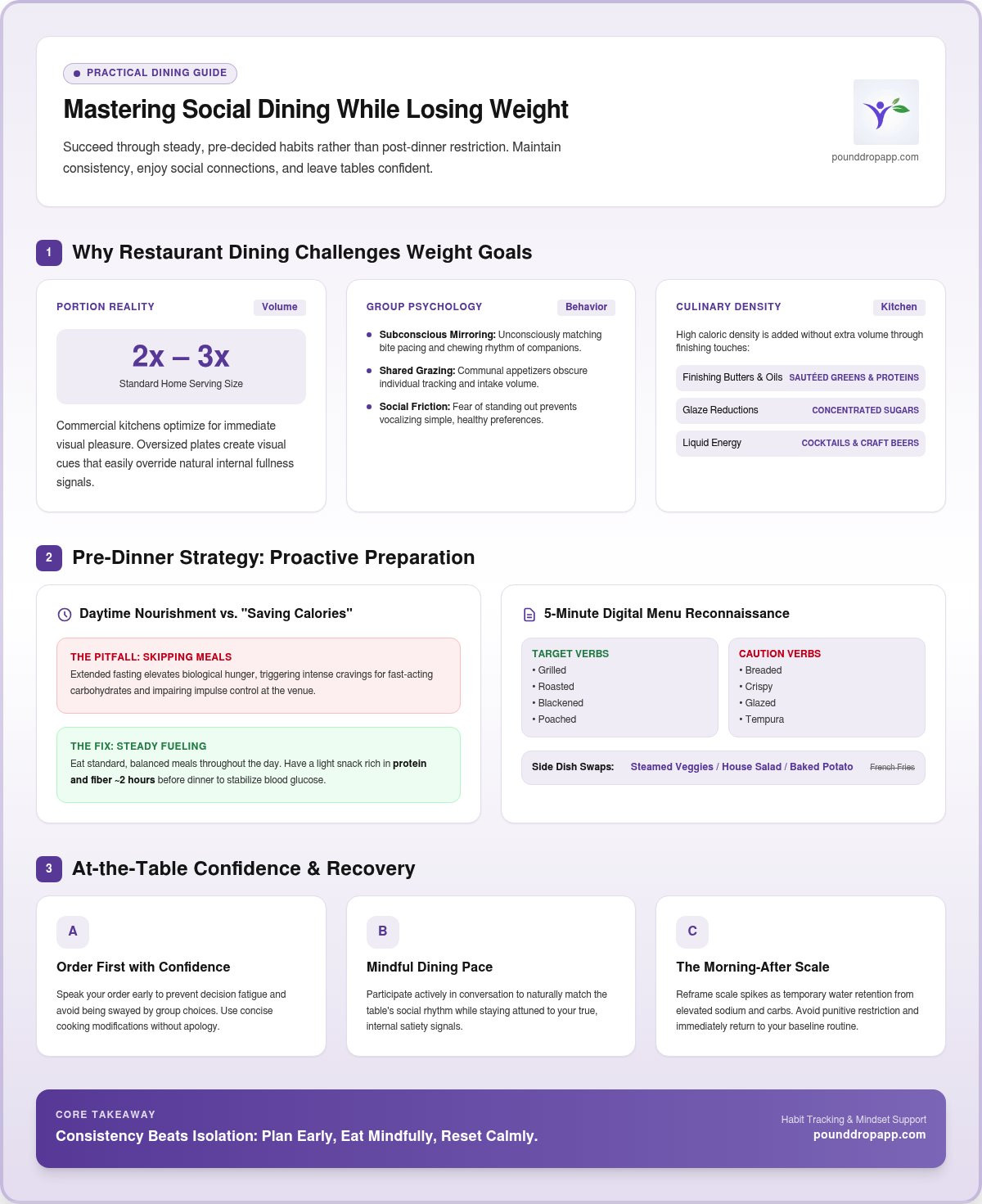
Sitting down at a restaurant table blends celebratory energy with sensory temptation. Food prepared outside the home tastes exceptionally rich because commercial kitchens optimize for immediate pleasure, not daily health. Navigating menus becomes especially tricky because restaurant portions frequently exceed standard home serving sizes by two to three times. When large plates arrive, visual cues easily override natural fullness signals.
Human social behavior shapes consumption just as strongly as culinary technique. Understanding the psychology of social dining shows why group settings unconsciously prompt us to eat more food and stay at the table longer. However, retreating into isolation or relying entirely on rigid pre-packaged meals is not sustainable for real life. Learning how to manage dining out socially while trying to lose weight preserves both your social connections and your long-term progress.
To see how these everyday restaurant situations unfold in practice, watch this practical guide:
The Psychology of Group Eating Dynamics
Social eating creates invisible behavioral nudges. Without realizing it, people synchronize their habits with the people sitting across from them:
- Subconscious mirroring: Diners naturally match the pacing, chewing rhythm, and bite counts of companions.
- Shared grazing: Communal appetizers obscure individual intake, making it difficult to gauge actual volume.
- Social friction: The desire to fit in often prevents diners from expressing simple, healthy preferences aloud.
Hidden Calorie Density in Professional Kitchens
Culinary professionals build memorable flavors through techniques that add heavy caloric density without adding bulk. Sautéed greens, pan-seared proteins, and vegetable sides regularly receive generous finishing butters, cooking oils, and concentrated glaze reductions. Descriptive adjectives like "glazed," "crispy," or "pan-finished" frequently mask concentrated fats and sugars. When you pair these savory preparations with sugary cocktails or craft beers, liquid energy adds up swiftly before the main entree even arrives.
Recognizing these patterns helps normalize the challenge. Successfully managing dining out socially while trying to lose weight simply requires understanding how professional kitchens cook and how social tables behave, giving you the clarity to plan ahead with confidence.
Pre-Dinner Preparation: Planning Before You Arrive
Success at a social dinner rarely begins when you sit at the table. It starts hours beforehand, during quiet moments at home or work. Deciding what to eat while surrounded by lively conversation and appetizing aromas strains anyone's willpower. By adopting proactive behavioral strategies for dining out, you create a calm buffer between social excitement and impulsive decisions, keeping your routine intact without feeling left out.
The Dangers of Starving to Save Calories
Many people believe skipping lunch justifies an indulgent dinner. This strategy backfires almost every time. Extended fasting elevates biological hunger, creating intense cravings for energy-dense carbohydrates. When you walk into a restaurant starving, your nervous system seeks rapid energy, making mindful menu choices feel impossible. Instead, eat standard balanced meals throughout your day. Having a simple snack with protein and fiber roughly two hours before leaving keeps your blood sugar steady, helping you order with total calm.
Digital Menu Reconnaissance
Examine the venue's offerings online when your stomach is completely satisfied. Taking five quiet minutes in the afternoon removes the frantic pressure of table-side decisions. Look for clear preparation styles and reliable swaps:
- Seek lean culinary verbs: Look for proteins described as grilled, roasted, blackened, or poached rather than breaded or tempura.
- Identify flexible side dishes: Scan for steamed vegetables, house salads, or baked potatoes that easily replace standard french fries.
- Commit in advance: Decide on your main dish before stepping out the door so conversation can take center stage.
Recording your meal intentions early helps ground your commitment. Logging your evening plans into a weight loss for beginners app creates an objective blueprint for the night. When dining out socially while trying to lose weight, clarity beats discipline every single time.
Building consistent habits around evening outings takes gentle practice. If you want a structured tool to log your reflections and keep your daily baseline steady, exploring the Pound Drop App offers a supportive, self-guided way to stay on course.
How to Order at Restaurants Without Social Friction
Ordering in front of friends often feels like performing under a spotlight. Many people worry that modifying an entree makes them look fussy, or that choosing lighter fare calls unwanted attention to their personal routines. In truth, smooth communication eliminates this tension entirely. Dining out socially while trying to lose weight becomes much easier when you speak neutrally, keep requests concise, and remove any need to explain yourself to the table.
The Power of Ordering First
Positioning yourself to speak first with the server is one of the most effective tools of behavior modification for weight management. When you listen to tablemates order rich pastas or loaded burgers, sensory temptation builds, and your original intentions can waver. Ordering right away protects your mindset. It lets you vocalize your planned meal before external cues cloud your focus. Interestingly, taking the lead often puts others at ease, giving friends permission to pick lighter options they might have hesitated to choose on their own.
Keep your instructions to the waitstaff polite, direct, and focused on cooking methods rather than personal goals:
- Request simple prep changes: "Could I please have the salmon grilled dry with olive oil on the side?"
- Make practical swaps: "I'd love the roasted asparagus instead of the fries, please."
- Normalize side dressings: "May I have the vinaigrette on the side?"
Diplomatic Ways to Handle Food Pushers
Well-meaning friends sometimes urge you to split appetizers or order another round of drinks. This pressure rarely stems from malice; people simply want to share comfort and connection. You don't have to defend your health choices or announce that you're watching your weight. Brief, warm declarations close the conversation without creating awkwardness:
- "That looks amazing, but I'm completely satisfied right now."
- "I'm saving room for the main dish, but definitely enjoy it!"
- "My body feels best with something lighter tonight."
After delivering your answer, smoothly steer the discussion toward something personal, such as asking about a friend's recent weekend trip or family update. By redirecting the spotlight away from the plate and back toward the relationship, you keep social dinners fun, connected, and supportive.
In-the-Moment Habits for Mindful Social Dining
Once plates arrive and laughter fills the table, attention easily drifts into autopilot. Immersed in great conversation, you might swallow entire bites without tasting them or clear a plate simply because it sits in front of you. Successfully managing dining out socially while trying to lose weight doesn't require constant willpower. It relies on subtle, physical anchors that keep you connected to your body without pulling you out of the social moment.
Managing the Communal Table Traps
Warm bread baskets and endless tortilla chips present the easiest route to unintended overconsumption. Because they arrive before the meal, grazing happens almost unconsciously. A few environmental adjustments restore your awareness effortlessly:
- Create physical distance: Gently nudge communal bowls outside your immediate reach, making every reach an intentional choice.
- Use your own plate: Dish shared appetizers onto your small bread plate before eating so you can clearly see your portion.
- Hold a sparkling beverage: Sip club soda with a splash of lime between courses to keep your hands comfortably occupied.
Savoring Foods Mindfully
Pacing is your greatest ally at a busy table. Restaurant entrees are calorie-dense, which means eating slowly allows your digestive system time to signal genuine fullness. Make a conscious habit of setting your fork down flat between bites. Chew thoroughly, savor the seasoning, and join the conversation before picking your utensils back up. This simple rhythm keeps you from unconsciously finishing your meal ahead of your friends.
Take an intentional pause when your entree is about halfway finished. Check in with your stomach: do you feel pleasantly nourished, or are you continuing merely out of habit? Walking away with food left on the plate isn't wasteful; it is an act of honoring your comfort. Box up whatever remains so you can enjoy it tomorrow.
Shifting from reactive eating to intentional enjoyment takes structured practice. Through The Method, you can replace food anxiety with self-guided habits that keep you grounded during every outing. If you're ready to master social dinners without guilt, explore The Method to build lasting food freedom on your own terms.
The Morning After: Resetting Without Punishment
Stepping onto the bathroom scale the morning after dinner with friends often brings an unwelcome surprise. Seeing the number jump two or three pounds overnight can trigger panic, regret, and the immediate urge to compensate. Many dieters react by skipping breakfast or planning exhausting cardio workouts. This punitive mindset is both physically unnecessary and emotionally damaging. One dinner does not erase weeks of consistency.
Understanding Post-Restaurant Fluid Fluctuations
Rapid scale spikes almost never indicate actual body fat gain. Storing a pound of fat requires a massive energetic surplus far beyond a single meal. What you are observing is simple fluid biology:
- Sodium concentration: Restaurant recipes naturally contain elevated sodium, prompting your vascular system and tissues to hold water for 24 to 48 hours.
- Glycogen binding: Enjoying extra carbohydrates restocks cellular fuel reserves. Each gram of stored glycogen naturally binds about three grams of water.
- Physical digestive weight: Food still moving through your gastrointestinal tract shows up on the scale simply as mass, not stored tissue.
Maintaining Habit Momentum
Breaking the post-meal guilt cycle means treating social events as normal lifestyle moments, never as diet failures. Avoid reducing your fuel intake the following morning. Skipping meals only spikes biological hunger by mid-afternoon, restarting the painful pendulum swing toward evening overeating. Instead, prepare a nourishing, balanced breakfast with adequate protein and dietary fiber to steady your digestion.
Approach the previous evening with calm curiosity rather than judgment. Note how comfortable your stomach felt, which menu swaps worked well, and what you might adjust during your next outing. Writing down objective observations in The Journal helps you identify behavioral patterns without emotional distress. When you view restaurant meals as opportunities to practice rather than tests you pass or fail, the guilt evaporates.
Sustainable progress comes from steady, non-punitive habits. By logging your routines within the Pound Drop App, you build an objective, supportive record that keeps your long-term focus clear. Master dining out socially while trying to lose weight by trusting that consistency across months matters far more than the temporary fluctuation of a single morning.
Reclaiming the Joy of Dining Out with Confidence
Shared meals with friends and family are among life's greatest pleasures. Successfully dining out socially while trying to lose weight is never about achieving rigid perfection or declining invitations out of anxiety. Instead, it relies on small, intentional practices: deciding on your dish before arriving, pacing yourself gently at the table, and meeting the following morning with calm perspective rather than self-blame.
Lasting transformation happens when your habits integrate effortlessly into everyday life, without restrictive meal plans or punishing rules. You can celebrate milestones, try vibrant restaurants, and protect your goals all at once. If you're looking for a structured, self-guided framework designed for real-world balance, build sustainable dining habits with the Pound Drop App. With steady consistency and self-compassion, you can navigate any restaurant table with ease.
Frequently Asked Questions
Can I drink alcohol when dining out socially while trying to lose weight?
Yes, you can enjoy alcohol while working toward your goals, provided you plan mindfully. Alcohol provides liquid energy and temporarily lowers inhibitions around food. Opt for dry wine, light beer, or spirits paired with zero-calorie mixers like soda water and citrus. Pacing yourself by drinking a full glass of water between alcoholic beverages keeps you hydrated and in control of your choices throughout the night.
What should I do if a restaurant does not have healthy options on the menu?
Look for the simplest whole-food protein and vegetable items available, even at casual pubs or diners. Ask the kitchen to prepare meats dry without added butter glazes, or substitute heavily battered sides with a baked potato or side salad. If the menu truly offers only calorie-dense dishes, focus on portion pacing. Eat half of the serving slowly, savor each bite, and bring the rest home.
How do I handle peer pressure from friends who insist on ordering dessert?
Decline with a warm, decisive statement that deflects attention away from restriction. You can simply say, "Everything was delicious, but I'm completely satisfied right now." If the group insists on sharing a plate, let them pass the dessert around without feeling obligated to take bites yourself. Shifting the conversation immediately to an engaging question keeps the social connection strong without centering on the food.
Should I skip lunch if I know I am eating a large restaurant dinner?
No, skipping lunch before an evening dinner almost always triggers unintended overeating later. Prolonged daytime restriction drives down blood sugar and sharply elevates biological hunger cues. By the time your reservation arrives, making calm menu decisions feels nearly impossible. Instead, eat regular, balanced meals containing lean protein and dietary fiber throughout the day. This steady nourishment keeps your decision-making sharp and calm.
What are the best types of cuisine for weight loss when eating out?
Greek, Japanese, and Mexican cuisines often offer the most straightforward, customizable options. Greek restaurants feature grilled seafood, chicken skewers, and fresh salads. Japanese dining provides sashimi, edamame, and clear broth soups with minimal heavy sauces. Mexican menus let you order grilled fajita platters with black beans and fresh salsa. Choosing cuisines built around whole ingredients makes dining out socially while trying to lose weight simple and satisfying.
Why does my weight jump several pounds the morning after dining out?
Overnight weight spikes are caused by temporary fluid retention, not sudden body fat gain. Commercial kitchens use higher sodium levels than home cooking, which prompts your tissues to retain water for up to two days. Enjoying carbohydrates also stores extra glycogen, binding additional cellular moisture. Gaining true body fat requires a massive, sustained caloric surplus. Trust that this temporary fluctuation normalizes once your regular hydration and home routine resume.
How often can I eat at restaurants while still making steady weight loss progress?
You can eat at restaurants multiple times a week without halting your progress, as long as daily habits remain grounded. Weight loss reflects your cumulative habits across weeks, not isolated restaurant meals. Successfully dining out socially while trying to lose weight depends on pre-planning orders and honoring fullness signals rather than frequency alone. Tracking your outings objectively with self-guided tools helps you maintain momentum while living a vibrant social life.


