

What if the biggest barrier to getting lean isn't your willpower, but the exhausting friction built into conventional fitness advice? When you log off after ten hours of back-to-back meetings, the last thing your depleted brain wants is to weigh ingredients or face an intense gym session. It's completely natural that convenience wins out when decision fatigue sets in. True weight loss for busy professionals shouldn't feel like a second job, and it certainly shouldn't require extreme sacrifice to produce meaningful results.
You can achieve lasting fat loss through low-friction routines and thoughtful habit architecture, all without restrictive diets or hours spent on a treadmill. Instead of draining the cognitive bandwidth you need for leadership, a sustainable routine operates reliably on autopilot, preserving your daytime energy and sharpening mental clarity. Below, you'll explore a grounded, practical framework to handle unpredictable travel, conquer evening stress eating, and create permanent physical change that fits comfortably into your working life.
Key Takeaways
- Understand why decision fatigue after demanding workdays derails traditional calorie counting, and how habit architecture solves this mental drain.
- Discover the low-friction principles that make sustainable weight loss for busy professionals realistic without long gym sessions or rigid food rules.
- Implement a streamlined, five-phase daily roadmap that keeps nutrition and movement consistent through back-to-back calendar meetings.
- Master practical ordering and hydration tactics to effortlessly navigate airport travel, business lunches, and corporate dinners.
- Learn why self-guided behavioral systems outperform external coaching to give you lasting autonomy over your health.
Why Traditional Diets Fail Busy Professionals (The Time Paradox)
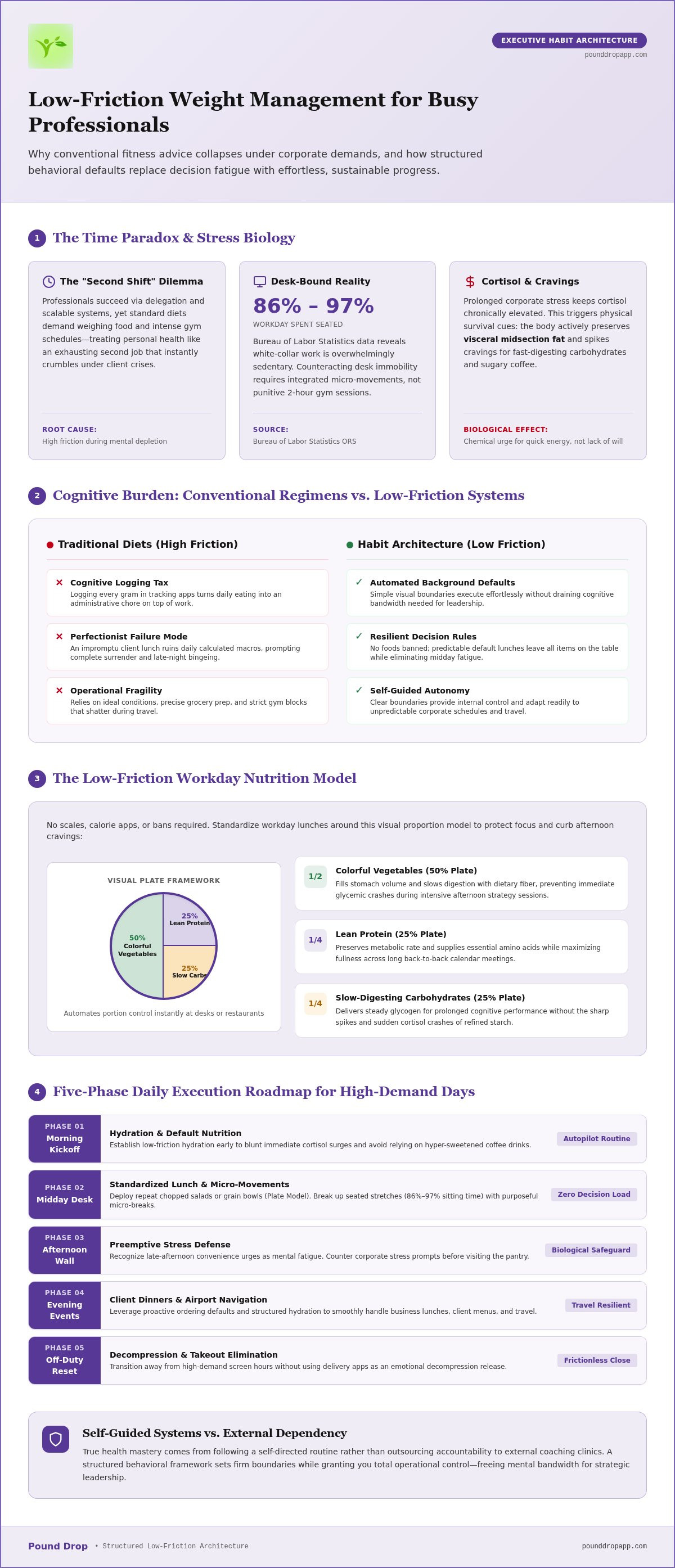
High performers routinely solve complex business problems, manage large teams, and hit tight targets. Yet when it comes to personal health, standard industry advice demands that you treat dieting like a grueling second shift. This creates a painful contradiction. You succeed at work through strategic delegation and systems, but conventional diets expect you to weigh broccoli in plastic containers or commit to rigid gym schedules. When an unexpected crisis hits or client travel disrupts your week, these fragile plans instantly collapse. Sustainable weight loss for busy professionals cannot rely on ideal conditions; it has to withstand real-world corporate chaos.
By late afternoon, mental exhaustion leaves little bandwidth for deliberate self-control. Convenience naturally wins when your brain is tired. To better understand how simplified routines can cut through this overwhelm, watch this helpful video:
The Cognitive Load of Complicated Regimens
Meticulous calorie tracking requires significant mental effort throughout an already demanding workday. When you look at the underlying caloric deficit and weight loss mechanisms, the biology itself is straightforward, but the operational execution often fails. Complicated logging apps turn every meal into an administrative chore. This constant calculation triggers perfectionist thinking. If an impromptu team lunch blows your numbers early in the day, it's easy to surrender entirely and order late-night takeout. Automating daily habits removes this cognitive tax, turning healthy behaviors into quiet background routines rather than daily battles of will.
Cortisol, Workplace Stress, and Fat Storage
Chronic corporate pressure keeps cortisol elevated for days on end. When your stress hormones remain consistently high, your body protects itself by holding onto visceral fat, particularly around the midsection. Prolonged desk work combined with acute mental strain creates a genuine biological urge for quick energy, driving cravings toward fast-digesting carbohydrates and sugary coffee drinks. You aren't failing from a lack of willpower; your body is simply reacting to chemical survival cues. Sustainable progress begins when you stop punishing yourself and start creating supportive, steady routines that lower daily friction and restore internal balance.
Core Principles of Low-Friction Weight Management
Sustainable progress rarely comes from sweeping overhauls. Instead, it relies on habit architecture that reshapes your daily environment so that positive actions require almost no willpower. Traditional advice often pushes clinic visits or strenuous gym regimens, yet these create heavy operational barriers for busy schedules. Sustainable weight loss for busy professionals centers on quiet, incremental shifts that align with evidence-based principles of steady behavior change. When you build simple behavioral defaults into your day, healthy actions happen naturally rather than competing with your workload.
True autonomy comes from following a self-directed routine rather than outsourcing your accountability. Engaging with a structured weight loss program provides clear boundaries while leaving you fully in control of your daily execution.
Automating Food Decisions Without Rigid Meal Plans
You don't need digital scales or strict food bans to eat well during the workday. Instead, use a reliable visual plate model: fill half your plate with colorful vegetables, a quarter with lean protein, and a quarter with slow-digesting carbohydrates. Standardizing your workday lunches, such as keeping a few go-to chopped salads or warm grain bowls on repeat, frees up valuable cognitive energy. This gentle structure removes decision fatigue while keeping all foods on the table, protecting your mental focus for complex projects.
Micro-Movements and Desk-Bound Metabolic Health
Counteracting a desk-bound workday doesn't require an extra two hours at the gym. According to the Bureau of Labor Statistics Occupational Requirements Survey, white-collar professionals spend between 86% and 97% of their workday seated. Breaking up those long blocks of stillness preserves your metabolic rate and sustains afternoon energy through simple, targeted habits:
- Walking meetings: Take routine audio calls while pacing your office or walking outside to accumulate 8,000 to 10,000 steps without calendar conflict.
- Post-meal strolls: Take a light two-minute walking break immediately after lunch to blunt blood glucose spikes and prevent mid-afternoon fatigue.
- Sit-stand rotations: Shift your posture by alternating between sitting and standing every 45 to 60 minutes to relieve physical tension and encourage natural movement.
If you're ready to integrate these behavioral habits into an effortless routine, exploring the Pound Drop App offers a practical way to track daily consistency quietly on your own terms.
A Step-by-Step Daily Execution Routine for High-Demand Days
A demanding corporate calendar shouldn't derail your physical goals. When back-to-back presentations run long and inboxes overflow, having an automatic, predictable rhythm keeps you grounded. Practical weight loss for busy professionals relies on anchor habits that run smoothly in the background, freeing your focus for executive choices. Aligning your daily routine with principles from consistent weight loss: a sustainable guide for 2026 allows you to build momentum through practical milestones rather than heroic bursts of effort.
Phase 1 & 2: Low-Stress Morning Grounding and Workplace Focus
Win the opening hours before digital demands take over. Use these three low-friction steps to protect early energy:
- Step 1: Hydrate before notifications. Drink 20 ounces of fresh water immediately upon waking, before checking company Slack channels or email. This gently rehydrates your brain and combats early fatigue.
- Step 2: Prioritize early morning protein. Build your breakfast around quality protein, aiming for 25 to 35 grams via eggs, Greek yogurt, or a clean shake. Grounding your first meal in protein stabilizes glucose and blunts mid-morning hunger pangs.
- Step 3: Anchor your desk hydration. Keep a large, dedicated water bottle at your workstation. Sipping steadily during video conferences prevents mistaking mild dehydration for an energy crash.
Phase 3 to 5: Afternoon Slump Management and Evening Decompression
The transition from mid-day work to evening rest is where most diets unravel. When late-afternoon fatigue hits, relying on willpower against office snacks is a losing battle. Structure provides a kinder, more effective defense:
- Step 4: Preempt the 3:00 PM slump. Plan a deliberate afternoon bridge snack, such as a small handful of raw almonds or a portion of cottage cheese. This satisfies appetite before executive fatigue sets in, keeping breakroom sweets from becoming an impulsive default.
- Step 5: Execute an intentional workday shutdown. Close your laptop and step away from your workspace at a set time. Mark this transition with a five-minute physical break, like stretching or stepping outdoors, signaling your nervous system that the professional shift has ended.
For your evening meal, embrace Harvard's Healthy Eating Plate framework to build a nourishing, balanced dinner without calculating macros. Late-night grazing rarely stems from true hunger; it's almost always a search for mental decompression. Rather than using forced restraint, replace pantry raids with restorative rituals like herbal tea, light reading, or warm showers. Giving your mind genuine rest eliminates the urge to soothe corporate exhaustion with food.
Navigating Corporate Dining, Travel, and Client Events
Business travel and social dining often disrupt physical progress faster than a standard workweek. Between client entertainment, delayed flights, and banquet buffets, healthy routines can feel impossible to sustain. Real weight loss for busy professionals doesn't mean skipping client dinners or sitting alone in hotel rooms with bland takeout. It means carrying a low-friction operating system that functions anywhere in the world. When you plan your decisions before stepping into the restaurant or airport terminal, hospitality becomes an enjoyable part of your career rather than a source of guilt.
The Business Dinner Playbook
Steakhouses and client dinners don't have to sabotage your goals. Take three minutes to review the restaurant menu before heading out. Deciding in advance shields you from high-pressure ordering when menus hit the table. Anchor your order around a quality lean protein, like grilled salmon or tenderloin, paired with double roasted vegetables instead of heavy starch sides.
Alcohol often presents social pressure during executive events. A simple rule solves this: match every cocktail or glass of wine with a large glass of sparkling water with lime. If you prefer to skip alcohol entirely without drawing questions from clients, order club soda with bitters and citrus. It looks identical to a standard cocktail, satisfies social expectations, and leaves your sleep quality intact.
Frequent Flyer and Hotel Habit Architecture
Terminal fast food thrives on urgency and exhaustion. Packing shelf-stable protein sources, like raw almonds, roasted edamame, or clean beef biltong, keeps you nourished when boarding gates change unexpectedly. Once at your destination, keep daily movement simple. You don't need a massive fitness center. A fifteen-minute circuit of bodyweight squats, incline push-ups off the desk, and glute bridges inside your hotel room maintains muscle tone and promotes restful sleep across varying time zones.
| Travel Scenario | Reactive Habit | Strategic Alternative |
|---|---|---|
| Airport Layover | Grabbing pastries or fried meals at the nearest gate | Packing portable protein; walking terminal concourses |
| Client Steakhouse | Ordering heavy cream sauces and multiple cocktails | Selecting grilled protein, double vegetables, club soda |
| Late Hotel Arrival | Ordering late-night room service in bed | Drinking herbal tea; doing a 15-minute bodyweight routine |
If you travel frequently and want a reliable framework that adapts to shifting schedules, get the Pound Drop App to keep your behavioral targets consistent on the road.
Building a Self-Guided System for Lasting Autonomy
External accountability often sounds appealing on paper, yet relying on an outside coach to monitor your daily choices frequently adds another scheduling obligation to an already overloaded calendar. As an executive, you don't need someone policing your lunch; you need a sustainable operating model you can run independently. Long-term weight loss for busy professionals happens when you take ownership of your behavioral architecture. The psychological mechanisms behind losing weight without a coach demonstrate that internal agency builds far greater resilience than outsourcing discipline to an external observer.
The Power of Daily Self-Reflection
Stress-induced eating rarely happens by accident. It is usually an unexamined reaction to a tough meeting, an aggressive deadline, or simple mental depletion. Setting aside three minutes at night with The Journal gives you a quiet mirror to review the day without judgment. Writing by hand slows your thinking, helping you identify emotional eating patterns before they solidify into habits. Paired with the foundational philosophies in The Book, this reflective practice frees you from the exhausting cycle of short-term restriction followed by inevitable burnout.
Leveraging The Method and the Pound Drop App
A self-guided approach succeeds when it rests on a clear, structured framework. The Pound Drop ecosystem bridges philosophy and execution through simple, cohesive tools:
- The Method: A structured habit-formation blueprint that breaks lifestyle transformation into achievable, progressive checkpoints suited for unpredictable workdays.
- The Pound Drop App: A streamlined digital companion that tracks core behavioral consistency quietly on your phone, eliminating complicated logging or macro counting.
- Physical reflection: Using The Journal alongside digital tracking to process work stress and reinforce daily progress without feeling monitored.
Mastering independent consistency transforms how you approach personal wellness. By relying on a self-guided framework rather than external hand-holding, you build health habits that integrate effortlessly into your executive life for good.
Taking Ownership of Your Daily Health System
Lasting change doesn't require clearing your calendar or sacrificing career momentum. True weight loss for busy professionals comes down to removing daily friction and letting quiet routines carry the load. When you replace restrictive rules with visual plate frameworks, automate daytime movement, and protect your evening decompression, your body naturally finds its healthy balance.
You don't need exhausting calorie tracking, rigid meal plans, or intrusive coaching appointments to create lasting physical change. By anchoring your habits in The Method, you build a sustainable structure that respects your professional autonomy. Combining the grounded self-reflection of The Book and The Journal with simple digital tracking gives you the power to succeed on your own schedule. Your health doesn't have to compete with your ambition. Take the next step toward steady, lifelong progress and build sustainable executive habits with the Pound Drop App today.
Frequently Asked Questions
Can I realistically lose weight without spending hours cooking or meal prepping every Sunday?
Yes, you can achieve lasting results without spending your weekends batch cooking. Effective weight loss for busy professionals relies on visual plate balance and smart assembly rather than elaborate culinary prep. You can easily assemble balanced meals in minutes using rotisserie chicken, pre-washed greens, canned beans, and frozen vegetables. Relying on simple, go-to choices during the workweek saves hours while keeping your nutrition consistent.
How do I handle mandatory business dinners with open bars without derailing my health progress?
You can protect your progress by deciding what you will drink before you arrive. Order a club soda with fresh lime or bitters right away; it looks like a cocktail and prevents unwanted questions from colleagues. If you decide to drink alcohol, set a boundary of one drink followed immediately by water. Focus your attention on networking and client conversation rather than the open bar.
What should I do when unexpected late work meetings force me to miss evening exercise?
Never treat a missed workout as a total failure. Simply shift your mindset from formal gym sessions to cumulative daytime movement. If an urgent call cancels your evening plans, take a brief ten-minute walk after dinner or perform five minutes of light mobility stretches before bed. Consistency is about preserving the habit of daily physical activity, even in tiny increments.
Why do high-stress work weeks often cause sudden weight plateaus or temporary scale spikes?
Sudden scale increases during intense work weeks are almost always caused by water retention, not body fat. Elevated cortisol levels from professional stress prompt your body to hold extra sodium and fluid. Short sleep cycles and dining out further increase water weight. Stay patient, drink plenty of water, and trust your routine; the scale drops once your stress levels normalize.
Is an app-based, self-guided weight loss program effective without a personal trainer or coach?
A self-guided system is often far more effective for corporate schedules than relying on an external coach. Working professionals frequently struggle with fixed appointment times and outside scrutiny. The Method provides structured habit frameworks and independent tracking through the Pound Drop App, giving you clear boundaries and personal autonomy without the pressure, friction, or scheduling conflicts of human coaching sessions.
How can I stop late-night stress eating once I finally log off my computer?
End the workday with a clear physical cutoff instead of heading straight from your desk to the refrigerator. Late-night grazing usually signals mental exhaustion rather than true physical hunger. Establish an intentional transition ritual, such as taking a warm shower, brewing peppermint tea, or writing brief reflections in The Journal. Giving your brain an alternative way to unwind removes the urge to decompress with snacks.
Do I need to follow a strict ketogenic or low-carb diet to see meaningful results?
No, you do not need to cut carbohydrates or follow extreme dietary restrictions to see sustainable fat loss. Eliminating whole food groups often increases cognitive fatigue, making professional work days harder than necessary. Focus instead on adequate daily protein, fiber-rich vegetables, and minimally processed starches. Eating balanced, normal meals supports your executive presence, preserves daytime energy, and creates habits you can sustain for life.


