


Article by
Jesper Sorensen
Jesper Sorensen is a holistic health coach and founder of Pound Drop, a different approach to weight loss built around healthier habits. He has written ebooks and health articles for established publishers and has spent years studying nutrition, healthy eating and sustainable weight management.
The app that tracks the most may not be the one you can stick with. If you’re weighing habit based apps vs calorie counters, the practical question is which task you can return to on busy, ordinary days: recording food and calorie estimates, or practicing repeatable behaviors.
A calorie counter generally asks you to log what you eat and review estimated calorie totals. A habit-based app puts more attention on routines and actions you can practice over time. One creates a detailed food record; the other makes everyday behaviors the focus. Neither approach requires treating an imperfect day as a reason to quit.
This guide compares how each approach works, what to consider before choosing, and how to make tracking fit a changing routine. Pound Drop offers a self-guided, habit-focused system through its app and The Method, complemented by The Book and The Journal. The goal is a practical fit, not a perfect streak.
Key Takeaways
- With habit based apps vs calorie counters, the main difference is what you practice tracking: everyday behaviors or food and calorie estimates.
- Calorie records provide numerical detail, but they are estimates, not exact measures of an individual’s energy needs.
- Neither approach is automatically right for everyone. Consider the effort each requires and what helps you stay engaged.
- Choose a system by matching your goal and tracking preferences to routines you can realistically maintain.
- Pound Drop provides a self-guided, habit-focused approach through its app and The Method, with The Book and The Journal as complementary resources.
Habit-Based Apps vs. Calorie Counters: What Does Each Track?
Choosing a tracking style can feel confusing, especially if you’ve already tried an approach that didn’t fit your day. The difference in habit based apps vs calorie counters is less about which is “better” and more about what you want to notice: food intake and estimated calories, or behaviors you can practice repeatedly.
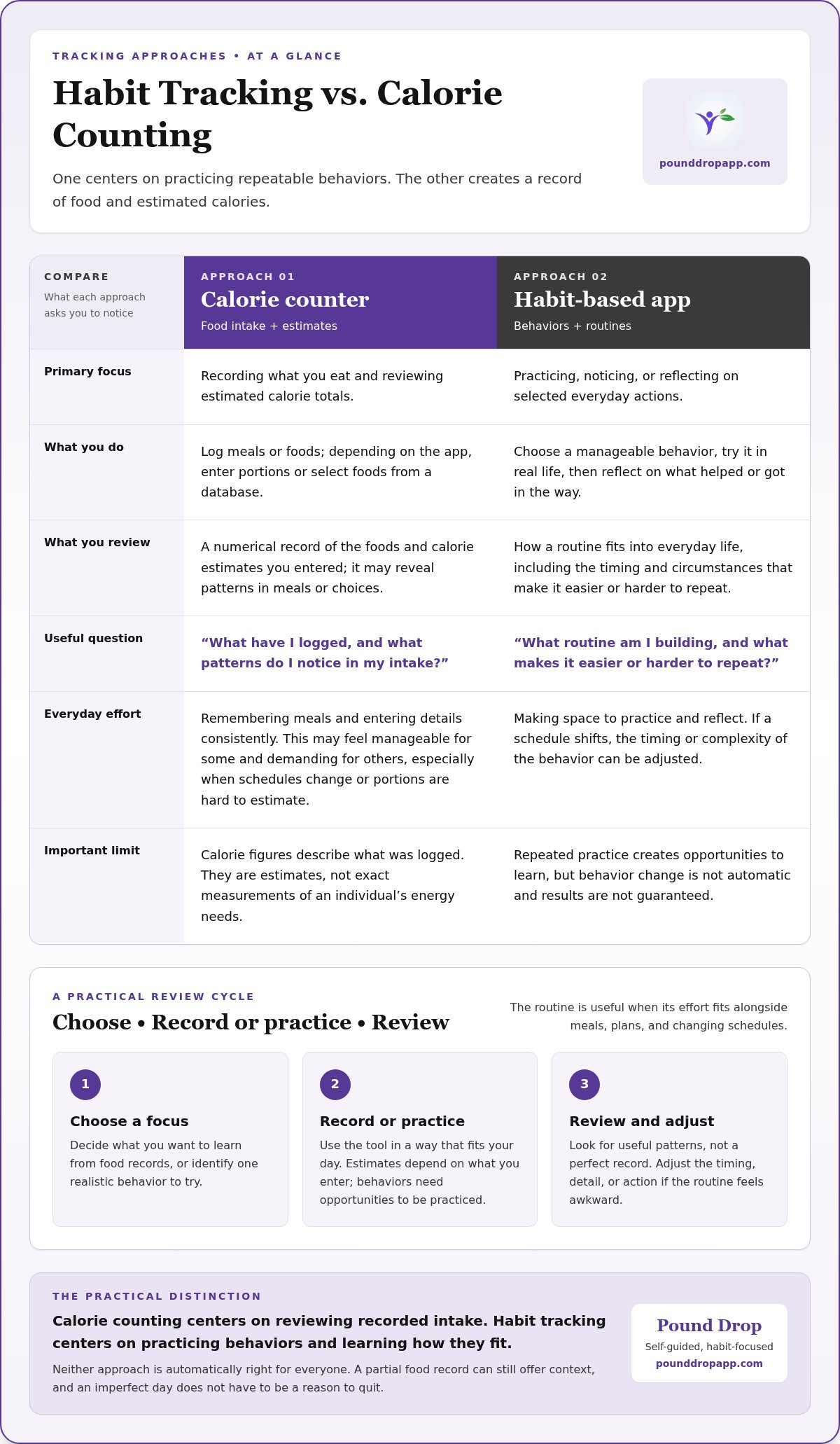
Calorie counting usually means recording what you eat and using calorie estimates to create a numerical record. Calorie counting can make food intake easier to review, while habit-based tools direct attention toward routines and actions. The specific steps depend on the app.
| Approach | Primary focus | Typical user effort | Questions it can help answer |
|---|---|---|---|
| Calorie counter | Food intake and calorie estimates | Record meals and portions regularly | What have I logged? What patterns do I notice in my intake? |
| Habit-based app | Repeated behaviors and routines | Practice, notice, or reflect on selected actions | What routine am I building? What makes it easier or harder to repeat? |
What does a calorie counter ask you to do?
A calorie counter typically asks you to log meals or foods, then uses what you enter to estimate calorie intake. Depending on the app, you may record portions or select foods from a database. Reviewing the record can help you notice patterns, such as when meals tend to happen or which choices show up regularly. These numbers describe what you logged; they are not exact measurements of every person’s energy needs.
The trade-off is the attention food logging takes. Remembering meals and entering details consistently may feel manageable for some people and demanding for others, especially when schedules change or portions are hard to estimate. A partial record can still offer context. It doesn’t have to become a judgment about your day.
What does a habit-based app ask you to practice?
A habit-based app organizes attention around repeatable behaviors rather than making calorie totals the central record. It may encourage you to plan ahead, notice routines, or reflect on choices. The focus is on observing and practicing behaviors that can fit into everyday life, not creating a numerical account of everything you eat.
Habit tracking focuses on practicing and reflecting on repeated behaviors; calorie logging focuses on recording food and estimated energy intake. That distinction helps clarify which kind of effort feels useful. A routine-focused approach may suit someone who wants to work on everyday patterns, while a food log may appeal to someone who values numerical detail. To judge a specific app, look at what it asks you to record and revisit.
How Habit Tracking and Calorie Counting Work in Everyday Use
The difference becomes clearer when you picture an ordinary day, not just the first time you open an app. Each approach creates a simple loop: choose what to pay attention to, make a record or practice an action, then review what you’ve learned. The routine is useful only if its effort fits alongside meals, plans, and changing schedules.
Tracking records information; habit practice gives you a behavior to repeat and reflect on. A record can help you see what happened, while repeated practice gives you a chance to learn what fits. Neither guarantees a particular result, and you can adjust either approach as you learn.
A typical calorie-counting routine
A calorie-counting routine might involve logging meals as you eat or recalling them later. The app then provides a daily or weekly view of the foods and calorie estimates you entered. Looking back may help you notice patterns, such as meals that often go unrecorded or parts of the day when you tend to eat more.
Use that picture for reflection, not as a prescription for a specific target. Estimates are records, not exact measurements of each person’s energy needs. The amount of detail depends on the tool and how carefully you log. Before choosing this approach, consider whether recording meals feels practical on both ordinary and busier days.
A typical habit-focused routine
A habit-focused routine starts with choosing one manageable behavior to practice, such as planning a meal before a busy day or pausing to notice what influences a choice. Try it in real life, then reflect on whether the timing and circumstances made it workable. Repetition creates opportunities to learn, but change isn’t automatic.
If your schedule shifts, adapt the behavior. Move planning to a different time or make the action simpler on a demanding day. Reviewing what got in the way can help you adjust the routine instead of treating a missed practice as proof you can’t continue.
To make either method practical, follow a small review cycle:
- Choose a focus. For food logging, decide what you want to learn from your records. For habit practice, identify one behavior that feels realistic to try.
- Record or practice. Use the tool in a way that fits your day. Remember that estimates depend on what you enter, while a behavior needs repeated opportunities to practice.
- Review and adjust. Look for useful patterns, not a perfect record. If the routine felt awkward, change the timing, level of detail, or action and try again.
This cycle shows the practical difference between habit based apps vs calorie counters: one centers on reviewing recorded intake, and the other on practicing behaviors and learning how they fit. For a structured, self-guided habit approach, explore the Pound Drop App and The Method, which focus on habit formation.
Do You Have to Choose? Benefits and Limits of Each Approach
No single tracking model is right for everyone. A calorie log may feel clarifying if you like numerical detail, while someone else may find repeated recording difficult to maintain. Habit tracking puts practical actions in focus, but it still takes attention and reflection. Compare what each approach helps you notice with the effort it takes to use.
When calorie tracking may feel useful, and when it may not
Numerical records may suit people who want to review estimates of their food intake and look for patterns in what they log. That information offers a concrete record to reflect on, though it remains an estimate rather than a precise account of personal needs. Entering meals may feel like a useful routine for some; for others, the detail and repetition can become burdensome, especially on busy days or when meals are difficult to record.
When habit tracking may feel useful, and its limits
A behavior focus may appeal if you’d rather practice a manageable routine than build a detailed numerical picture of your intake. It keeps attention on actions you can revisit and adjust. But habit tracking offers less numerical detail about food, and it still takes time to choose a behavior, practice it, and reflect on how it fits. A missed practice is a cue to reassess, not a verdict.
Use this practical comparison to weigh the trade-offs. It describes typical considerations, not a claim that one approach produces better outcomes for everyone:
- Calorie tracking may offer: a numerical record that helps you review the foods and estimated intake you logged. The trade-off is the effort of recording consistently. The level of detail varies by app and how you use it.
- Habit tracking may offer: a clear focus on repeatable actions that you can connect with daily routines. The trade-off is less numerical information about food and the need to keep practicing and reflecting.
- Either approach may feel less useful if: its main task is hard to fit into your life, or the information it gathers doesn’t answer a question you care about.
These are practical differences, not a universal ranking. If numbers help you make sense of patterns, a calorie log may be worth trying. If you prefer to work on routines directly, habit tracking may feel more relevant. You can reconsider as your goals or schedule change.
You don’t necessarily have to use just one. A light combination could mean logging food occasionally to learn from the record while practicing one behavior. You don’t need to track every detail and change several routines at once. Keep what feels useful. If the combined effort crowds out reflection or becomes hard to sustain, simplify it. The best fit in habit based apps vs calorie counters is the approach, or modest combination, that supports repeatable decisions without making imperfect days feel like failure.
How to Choose a Tracking App That Fits Your Routine
Choosing between habit based apps vs calorie counters is easier when you start with your needs, not a long feature list. A tool can offer plenty of information and still be a poor fit if its main task is hard to return to. Use these steps to narrow your options and assess what feels useful in everyday life.
- Name your goal. Decide what you want to understand or work on. Do you want a clearer numerical picture of food intake, or do you want to practice a repeatable behavior?
- Check your tracking preference. Do numbers help you reflect? Do behavior prompts feel more actionable, or would a modest mix suit you? Be honest about the kind of record you’d willingly keep.
- Consider your routine. Think about when you could realistically log, practice, or review. If a method fits a typical day but feels difficult on busy days, consider a simpler version.
- Test the fit. Try the approach in your regular routine and notice whether it feels manageable, relevant, and comfortable. Look beyond the feature count: consistency and a useful experience matter more than having every possible tool.
Match the tracking style to what helps you reflect
Notice which kind of information helps you decide what to do next. If a numerical record gives you a helpful overview, that detail may be worth the effort of logging. If observing routines or practicing a behavior feels more meaningful, a habit-focused approach may fit better. Choose what you can realistically return to, not simply what looks most comprehensive.
As you compare options, focus on how each tool’s central task matches your preferences. You can also explore a broader guide to long-term weight management tools for more context on choosing tools that suit your goals.
Make room for changing schedules and imperfect days
Daily life shifts. A useful tracking approach should still feel approachable when meal times change, plans run late, or you miss an entry. Treat a gap in the record as information: perhaps the task needs a different time, less detail, or a smaller behavior to practice. You don’t have to make up missed entries to continue.
Review the fit without turning it into a test you can pass or fail. After using an approach through a mix of ordinary and busy days, ask yourself: Did it help me reflect? Was the effort manageable? Did I feel comfortable returning to it? If the answer is partly no, adjust what you track or how you use it before deciding the whole approach doesn’t suit you.
For a self-guided approach centered on habit formation, explore the Pound Drop App and The Method as tools for working with structured habits and lifestyle changes.
Where Pound Drop Fits in a Habit-Focused Weight-Loss Approach
After comparing the two tracking styles, you may find that behavior-focused structure feels more useful than detailed calorie records. Pound Drop is a self-guided weight-loss system centered on the Pound Drop App and The Method. It focuses on structured habit formation and lifestyle changes, offering a way to work on routines without making detailed calorie records the central task.
A structured method for practicing habits
The Method focuses on habit formation, and the Pound Drop App is part of the wider structured system. Together, they provide a self-guided approach for people interested in working with habits and lifestyle changes. The emphasis is on practicing and maintaining routines over time, rather than promising instant or guaranteed change.
Physical resources complement the digital experience. The Book and The Journal are resources to use alongside the app, including away from a screen. The overall system may suit you if you prefer a clear habit-focused framework to a detailed numerical record of food.
If you’re learning what a habit-based approach can look like, Pound Drop’s beginner weight-loss app guide discusses why habits can be a useful focus. For a broader look at making gradual changes, the simple weight loss methodology guide offers additional context. These resources can help you decide whether structured habit practice suits the way you want to approach change.
Decide whether a habit-focused system suits your next step
A structured habit approach may appeal if you’d rather focus on repeatable behaviors than regularly record detailed calorie estimates. It may also fit if you want a self-guided framework for lifestyle changes. The right choice depends on what helps you reflect, what you’re comfortable tracking, and what you can return to as your routine shifts.
As you weigh habit based apps vs calorie counters, consider which task feels more sustainable: keeping a numerical food record, practicing habits, or drawing selectively on both. You don’t need to choose based on the number of features an app has. A modest approach that feels useful may fit better than a detailed one that’s hard to maintain.
- Consider a habit focus if you want to work with routines and repeated behaviors.
- Consider calorie records if numerical estimates help you reflect on logged food intake.
- Reassess the fit if your goals, preferences, or schedule change.
If Pound Drop’s self-guided, habit-focused approach sounds aligned with what you’re looking for, explore Pound Drop and its tools for structured habit formation.
Choose a Next Step You Can Keep Practicing
Your next step doesn’t need to settle every question about progress. Try a tracking style and notice how it feels in the rhythm of your actual life. The best fit in habit based apps vs calorie counters isn’t necessarily the one with the most detail. It’s the one that helps you make thoughtful choices and return to your approach without expecting perfection.
If you’d like to explore a behavior-focused path, the Pound Drop App and The Method form a structured, self-guided weight-loss system. The Book and The Journal complement the digital experience. Consider whether that structure matches what you want to practice, then explore it at your own pace.
Explore Pound Drop to see whether its habit-focused approach feels like a useful next step. Start where you are, adjust as life changes, and keep choosing progress that feels sustainable.
Frequently Asked Questions
Is calorie counting necessary for weight loss?
No, calorie counting isn’t the only way to work toward weight loss. It’s one method of self-monitoring, but some people prefer to focus on routines, such as planning ahead or building consistent daily habits. Consider what kind of information helps you make useful choices and what you can sustain. If you have specific health needs, a qualified healthcare professional can help you decide what approach is appropriate for you.
Can habit-based apps and calorie counters be used together?
Yes, you can combine them if the added effort feels manageable. For example, you might use a food log occasionally to understand a pattern while practicing one routine, such as planning meals before a busy day. You don’t need to record everything or work on several habits at once. If the combination feels distracting, drop the part that isn’t helping and keep what feels useful.
Do habit-based apps track weight as well as habits?
Some may include weight tracking, but it isn’t a defining feature of every habit-based app. Apps differ in what they let you record, so a habit focus doesn’t automatically mean weight measurements are included. If you want to monitor weight, consider whether that information is useful to your goal and how often you’d like to record it. You can also keep a separate record instead of making it part of your habit practice.
How often should I review my progress in a tracking app?
Choose a review rhythm that gives you perspective without making the app feel like a daily test. A brief weekly check-in can help you notice what was easy to repeat, what got interrupted, and what you might adjust next. Review more or less often depending on what feels helpful. Focus on patterns and practical next steps, not on judging individual days.
What should I do if I miss several days of tracking?
Start again at the next useful moment; you don’t need to recreate every missed entry. Ask what made tracking difficult. Was the routine too detailed, poorly timed, or disrupted by a change in plans? Then make one small adjustment, such as recording only the information you need or choosing a more convenient time. A gap is feedback about the setup, not proof that you can’t continue.
Are calorie counts in food-tracking apps exact?
No, calorie counts in food-tracking apps are estimates, not exact measurements. Figures can depend on the food entry selected, portion details, and how closely a meal matches the item described in the app. A home-cooked dish, for instance, may differ from a database listing with a similar name. Treat the numbers as a guide to what you recorded, not a precise measure of your individual energy needs.
Can I use a habit-based app without logging every meal?
Yes. A habit-focused approach can center on practicing behaviors without requiring a detailed record of every meal. You might work on one routine, such as planning ahead for a particular part of the week, and reflect on how it went. App designs differ, but habit practice and meal-by-meal logging are not the same task. Choose the kind of tracking that suits your preferences.


