


Article by
Jesper Sorensen
Jesper Sorensen is a holistic health coach and founder of Pound Drop, a different approach to weight loss built around healthier habits. He has written ebooks and health articles for established publishers and has spent years studying nutrition, healthy eating and sustainable weight management.
What if the plan that works best isn’t the strictest one, but the one you can return to when life gets busy? If past attempts felt too demanding or hard to maintain, it makes sense to be cautious. A self guided weight loss plan can leave room for your own choices while giving you a practical structure to follow.
You don’t need to track every detail or follow a perfect routine to make steady progress. Choose an approach that fits your preferences, schedule, and comfort with tracking. It should also make it easy to notice what’s working and adjust when your routine changes.
This guide explains what to look for, how to compare different approaches, and how to choose manageable habits and review your progress. You’ll also learn how Pound Drop brings the App, The Method, The Book, and The Journal together in a self-guided system for independent lifestyle changes.
Key Takeaways
- A self guided weight loss plan can help you work independently while drawing on reliable information and healthcare support when needed.
- Compare paper-based, app-based, and combined approaches by how well they fit your preferences for prompts, reflection, and progress records.
- Look for realistic habits, clear guidance, and regular opportunities to review and adjust, not a plan that depends on motivation alone.
- Start with one manageable habit and a tracking method you’ll use. Review how it fits your routine before making changes.
- Pound Drop’s App, The Method, The Book, and The Journal bring digital and physical tools together to support self-guided lifestyle changes.
Is a self-guided weight loss plan right for you?
A self-guided approach can suit you if you want to make changes at your own pace and find it helpful to have some structure. It may not be enough as your only source of guidance if you need care tailored to a health condition, medication, or major change in your health. The goal isn’t to do everything alone. It’s to choose a level of support that makes your next steps safe and workable.
What does self-guided weight loss mean?
A self-guided plan is an approach you follow independently, using structure and tools to help organize your choices. That might mean written guidance, a paper record, a digital tool, or time set aside to reflect on your routines. These supports can help you notice patterns and decide what to try next. They can’t guarantee an individual result or replace advice based on your personal health needs.
In short: self-guided structure helps you organize habits; individualized clinical care responds to your health. The two aren’t opposites. You can practice everyday habits independently while also using reliable information and seeking healthcare advice when it would help. The Weight loss strategies overview describes a range of approaches, but general information can’t determine which choices are right for your circumstances.
Consider whether this format fits you. A self guided weight loss plan may be a reasonable starting point if you can:
- Choose a modest routine that fits ordinary days, not just your most motivated ones.
- Use a structure you’re comfortable returning to, whether that means a notebook, digital tools, or both.
- Review your habits with curiosity and adjust them when they don’t fit your schedule or needs.
- Find reliable information and seek professional input when a question goes beyond general guidance.
If you’re unsure about tracking or prefer more direction, that doesn’t mean you can’t make progress. You could start with a simpler structure or get advice to clarify what’s appropriate for you.
When should you seek professional guidance?
Check in with a healthcare professional before making significant changes if you have a relevant health condition, take medication that could be affected by changes to eating or activity, or are experiencing a major change in your health. Professional input can also be valuable if weight-related concerns feel difficult to manage or if a plan is affecting your wellbeing. A clinician can consider factors that a general resource or self-guided tool can’t assess.
The NHS provides general weight-management information, but public guidance isn’t a diagnosis or individualized medical care. Use it to inform your questions, not to replace a conversation about your own circumstances. If you have a concern about a symptom or treatment, bring it to a qualified health professional rather than trying to solve it through a tracking tool.
Independent practice can still include support. You might use reliable written guidance, keep a record of questions, and discuss relevant changes with your clinician. That balance lets you build everyday routines while respecting the parts of weight management that call for personal medical advice.
How do self-guided weight loss plans compare?
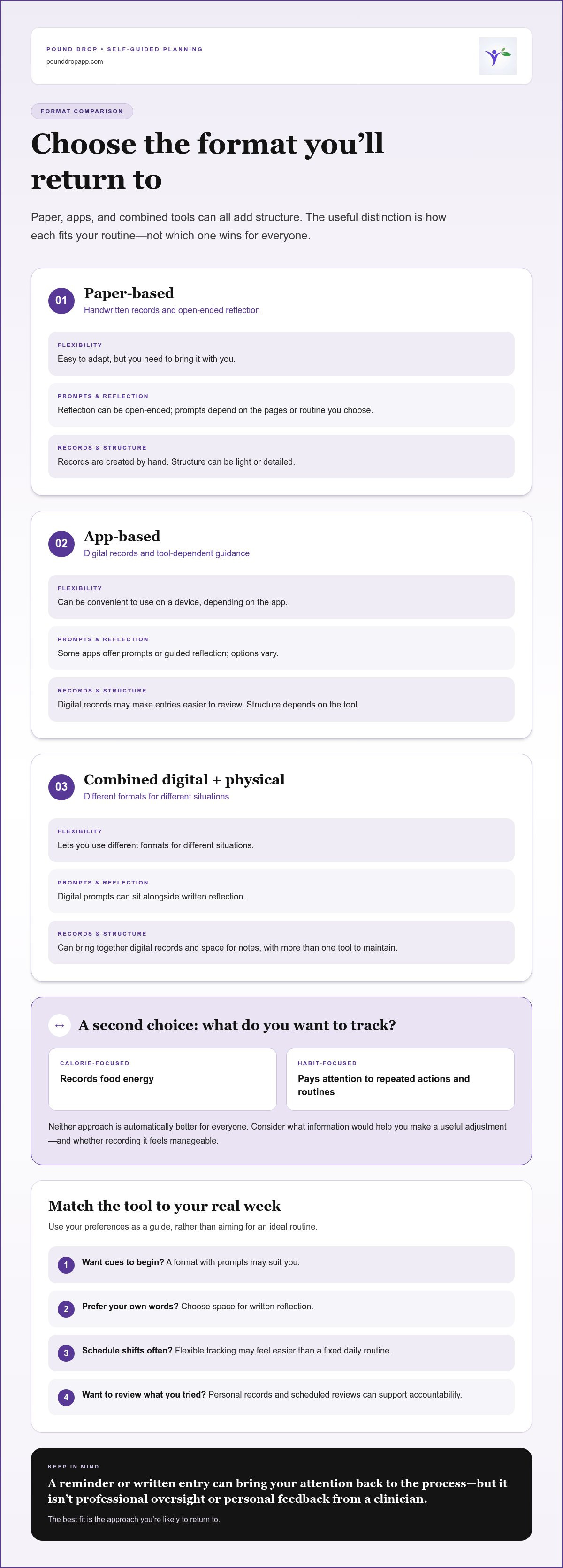
The format you choose affects how easily you can use a plan in everyday life. Paper tools, apps, and combinations of digital and physical resources can all provide structure, but differ in how they prompt you, capture information, and make room for reflection. Use the comparison as a starting point, not a ranking. The best fit is the one you’re likely to return to.
| Approach | Flexibility | Prompts and reflection | Progress records and structure |
|---|---|---|---|
| Paper-based | Easy to adapt, but you need to bring it with you. | Reflection can be open-ended; prompts depend on the pages or routine you choose. | Records are created by hand. Structure can be light or detailed. |
| App-based | Can be convenient to use on a device, depending on the app. | Some apps offer prompts or guided reflection; options vary. | Digital records may make entries easier to review. Structure depends on the tool. |
| Combined digital and physical | Lets you use different formats for different situations. | Digital prompts can sit alongside written reflection. | Can bring together digital records and space for notes, with more than one tool to maintain. |
Tracking also varies in focus. Calorie-focused tools record food energy, while habit-focused approaches pay attention to repeated actions and routines. One isn’t automatically better for everyone. Think about what kind of information would help you make a useful adjustment, and whether recording it feels manageable. This comparison of habit-based apps versus calorie counters can help clarify the difference.
Which tools provide enough structure without feeling rigid?
A useful tool gives you a clear next step without requiring every day to look the same. If cues help you get started, a format with prompts may suit you. If you prefer to think things through in your own words, choose space for written reflection. If your schedule shifts often, flexible tracking may feel easier than a fixed daily routine. Match the tool to your real week, not an ideal one.
How much accountability can a self-guided plan provide?
A self guided weight loss plan can create personal accountability through records and scheduled reviews. For example, set aside a regular time to look at what you tried and decide what to continue. A reminder or written entry can bring your attention back to the process, but it isn’t professional oversight or personal feedback from a clinician.
Independent plans rely on you returning to them. If you tend to forget a routine, build in a simple cue, such as pairing a brief review with an activity already in your week. If you miss a check-in, resume at the next one rather than treating the gap as a reason to abandon the plan.
If you prefer a mix of digital and physical tools, Pound Drop’s self-guided resources bring those formats together to support independent lifestyle changes.
What should a useful self-guided weight loss plan include?
A plan is more useful when it helps you decide what to practice, notice how it fits your life, and make a thoughtful adjustment. Motivation can rise and fall. A clear process gives you something to return to on ordinary days and when your routine changes.
Use this checklist to assess whether a plan offers enough support to guide your own choices:
- Realistic habits: It focuses on actions that can fit your schedule, preferences, and current circumstances.
- Clear guidance: It explains what to try without making every day feel like a pass-or-fail test.
- Manageable self-monitoring: It offers a practical way to notice routines or record information you find useful.
- Regular reflection: It gives you a reason to pause and consider what’s working, what feels difficult, and why.
- Room to adjust: It treats changes to your routine as part of the process, not evidence that you’ve failed.
For more context on choosing tools for ongoing use, this long-term weight management buying guide can help you look beyond first impressions and consider what may support your routine over time.
Does the plan support realistic goals and review?
Useful goals describe behaviors you can practice, rather than relying only on a number or an ideal outcome. For example, you might choose a regular time for a walk when you’re usually available, or set aside time to reflect on a routine you’d like to change. A goal should be specific enough to guide your next action, but flexible enough to adapt when life shifts.
A realistic goal names an action you can practice and a way to review how it fits your life. At a regular check-in, look for patterns across your experiences instead of judging the plan by one hard day. If your intended routine didn’t happen, ask what got in the way: timing, energy, preparation, or something else? That answer can help you adjust the goal so it’s more workable.
Weight change can be affected by individual health factors. Avoid treating a general rate or target as a personal prescription. If you want guidance about what’s appropriate for you, discuss it with a qualified healthcare professional.
Does it make tracking useful rather than overwhelming?
Tracking works best when it answers a practical question. If you want to understand how often you take a walk, a simple habit record may be enough. If you’re exploring how a daily routine feels, a brief note can capture useful context without asking you to document everything. Choose the smallest record that helps you decide what to continue or change.
The Pound Drop system combines the Pound Drop App with The Method, The Book, and The Journal. Together, these digital and physical resources support self-guided lifestyle changes. Using more than one format gives you options for engaging with structure and reflection, without making any tool a guarantee of individual results.
How can you start a self-guided plan and adjust it over time?
Keep the first version small. A self guided weight loss plan is easier to learn from when it focuses on a few choices rather than asking you to change every part of your routine at once. Use this five-step cycle to get started, then adapt it as you learn what fits.
- Choose a focus. Pick an area of daily life you’d like to work on, based on your priorities and what feels practical right now.
- Select one habit. Describe a small action you can try. You might attach it to something already in your day, such as taking a short pause to plan before a regular activity.
- Choose a tracking method. Use a brief note, a simple habit record, or another low-effort way to remember what you tried.
- Review. At a consistent time, look back at what felt manageable, what got in the way, and what you noticed.
- Adjust. Keep the habit, make it smaller, or choose a different approach based on what you learned.
This steady cycle is also the idea behind a simple weight loss methodology: practical actions become easier to refine when you make time to reflect instead of expecting motivation to do all the work.
How do you make the first week manageable?
Choose one or two actions that connect with your existing routines and personal priorities. Avoid turning the first week into a test of willpower. Pick a consistent time to record a brief observation or reflect on how the habit felt. That might be a note at the end of the day or a regular moment during the week. Keep the record simple enough to maintain, even when your schedule is full.
For instance, note whether the action felt easy to start, whether the timing worked, and what made it harder on busier days. The aim is to gather useful information, not to produce a perfect record. There’s no need to make several changes at once or impose targets that aren’t tailored to your needs.
What should you do when progress stalls or plans change?
Start by reviewing what has been practical before changing multiple habits at once. Has your schedule shifted? Have sleep, stress, or other parts of life changed? These factors may affect how a routine feels, but they don’t point to one automatic explanation. Look for what you can reasonably adapt, such as choosing a smaller version of the habit or a different time to practice it.
Missed a day? Treat it as information, not a verdict. Ask what made the habit difficult and choose a smaller next step. If health concerns or medication questions affect your plan, get guidance from a qualified healthcare professional rather than trying to resolve them through self-tracking.
The Pound Drop App and resources provide a structured set of self-guided tools to support this cycle.
How can Pound Drop support a self-guided weight loss plan?
A self guided weight loss plan needs more than good intentions. It needs a structure you can understand and return to as you practice lifestyle changes. Pound Drop brings together the Pound Drop App, The Method, The Book, and The Journal in a self-guided weight-management system. Its digital and physical resources provide an organized framework for people who want to work independently.
Having resources gathered around a shared approach can make it easier to build a structure without starting from scratch. Consider whether you’re most likely to return to a digital component, physical resources, or a combination of both. The aim is to find a format that supports your own practice, not to follow a perfect routine or expect a particular result.
How do Pound Drop’s digital and physical tools fit together?
The Pound Drop App is the digital component of the system. The Method, The Book, and The Journal are resources within the same wider approach. Together, they provide a combination of digital and physical tools for self-guided lifestyle changes. Having both formats gives you options for engaging with structure and reflection in a way that suits your preferences.
Some people like keeping their approach centered on a digital resource; others appreciate having physical materials as part of the mix. A combined system is useful to consider if you want both types of resources available as you work independently. Think about what you’re most likely to use consistently, and choose a level of structure that feels supportive rather than demanding.
Who may appreciate Pound Drop’s self-guided approach?
Pound Drop’s approach is designed for people who prefer to make their own day-to-day choices while using structured resources to support lifestyle changes. It suits those looking for an organized approach to follow independently, with digital and physical resources together. As with any self-guided plan, you decide how to use the structure and return to it as your routines evolve.
Before choosing, consider the habits and review process discussed earlier in this guide. Will the format fit your schedule? Does it feel manageable to revisit? Can you use its resources without turning them into a source of pressure? The best fit isn’t necessarily the one with the most components. It’s the one you can realistically use and adapt as life changes. If you need advice about a health condition or medication, consult a qualified healthcare professional; a self-guided system isn’t individualized medical care.
Explore the Pound Drop App and self-guided resources to see how the system’s digital and physical tools can support your independent routine.
Choose a next step you can return to
You don’t need to have every detail settled before you begin. Choose one small action that feels relevant to your life, then give yourself space to learn from the experience. A useful self guided weight loss plan isn’t a test of whether you can follow rules perfectly. It’s a structure you can revisit, reshape, and make more workable over time.
If you’re looking for tools to support independent lifestyle changes, Pound Drop brings together a dedicated app with The Method, The Book, and The Journal. This self-guided system gives you digital and physical resources to explore as you decide what kind of structure fits your routine.
Explore the Pound Drop App and self-guided resources. Start with a pace that feels realistic, and remember: steady practice matters more than getting everything right at once.
Frequently Asked Questions
Is a self-guided weight loss plan effective?
A self guided weight loss plan can help organize habits, but no format guarantees an individual result. Its usefulness depends partly on whether its guidance and tracking approach fit your circumstances and whether you can return to it over time. For example, a plan that asks for detailed records may be difficult to maintain if you prefer brief notes. Focus on whether it helps you make and review practical choices, not on promises of fast results.
Can I follow a self-guided weight loss plan without counting calories?
Yes. You can choose to observe habits without recording calorie totals. For example, you might note when you tend to eat while distracted, or whether planning ahead changes how your day feels. Use a record that answers a question you genuinely have. If writing down food details feels stressful or brings up health concerns, pause and talk with a qualified professional about an approach that feels appropriate for you.
How do I know whether a self-guided plan is right for me?
Try a small test: choose one tool and use it during a typical week, including a busy day. Notice whether you understand what to do, can fit it into your routine, and find the review process useful. If you keep setting it aside or feel confused about what’s suitable for your health, that’s helpful information, not a personal failing. You may need a simpler format or guidance from a healthcare professional.
What should I do if my weight loss progress stalls?
A pause in progress doesn’t automatically mean you need to overhaul your routine. First, check whether your usual habits have changed and whether the way you’re measuring progress gives you useful information. Consider one modest adjustment, then give yourself time to notice how it fits rather than changing several things together. If the pause concerns you or comes with a health change, seek individualized advice from a healthcare professional.
Can an app and a journal be used together for weight management?
Yes. You might use an app to keep a brief record of an action and a journal to add context, such as what made it easier or harder that day. Keep the two tools focused on different purposes so you’re not duplicating every entry. For instance, a quick app note could point you to a weekly journal reflection. If either tool becomes burdensome, simplify how you use it.
When should I talk with a healthcare professional before starting a weight loss plan?
Ask for professional guidance before making changes if you have a health condition that could affect your choices, take medication that may be affected, or are experiencing a significant change in your health. A clinician can help you consider your personal circumstances in a way general plans can’t. Bring specific questions, such as whether a change to your usual eating or activity routine is appropriate alongside your current care.
How is a self-guided plan different from a plan with one-on-one coaching?
With a self-guided plan, you use the structure and tools independently, decide how to apply them, and review your own progress. One-on-one coaching involves direct interaction with a coach, who may provide individual feedback as you work through a plan. Those are different kinds of support. If you need advice about a diagnosis, medication, or health concern, a qualified healthcare professional is the appropriate source for clinical guidance.


