


Article by
Jesper Sorensen
Jesper Sorensen is a holistic health coach and founder of Pound Drop, a different approach to weight loss built around healthier habits. He has written ebooks and health articles for established publishers and has spent years studying nutrition, healthy eating and sustainable weight management.
What if the best way to lose weight isn’t a strict diet, but a set of habits you can return to when life gets busy? If you’ve searched “what is the best way to lose weight” and found advice that contradicts itself, you’re not alone. Restrictive plans can be difficult to fit into everyday life, and past attempts don’t mean you’ve failed. They may simply show that the approach wasn’t right for you.
Sustainable weight change usually comes from repeatable choices, not one perfect rule. This guide explains the broad principles behind weight loss and how food, movement, sleep, and daily routines can play a part. It also offers practical ways to choose and adjust habits without turning them into an all-or-nothing test.
You’ll learn how to make changes small enough to practice, connect them to your existing routine, and notice what helps without expecting every day to go perfectly. We’ll also cover when a healthcare professional’s guidance may be important, especially if health conditions or medications could affect your approach. The goal is a flexible starting point you can build on at a realistic pace.
Key Takeaways
- The answer to “what is the best way to lose weight” is usually a set of repeatable changes, not one shortcut or strict rule.
- Food, movement, sleep, and daily routines all shape the bigger picture. Calorie estimates are rough guides, not precise predictions for an individual.
- Compare approaches by how well they fit your everyday life, not by how quickly they promise results.
- Start with one manageable behavior, practice it, then review and adjust it to suit your priorities.
- For added structure, Pound Drop offers a self-guided system centered on the Pound Drop App and The Method.
What Is the Best Way to Lose Weight Without Chasing Quick Fixes?
Sustainable weight loss comes from repeatable changes, not one shortcut. That may sound less exciting than a rapid-fix promise, but it shifts the focus to a more useful question: what is the best way to lose weight in a way that can fit your life over time? The answer isn’t one rigid plan. It’s an approach you can practice, adapt, and return to when routines change.
If you’ve tried a strict plan and found it difficult to maintain, that experience doesn’t mean you lacked discipline. A plan may be hard to follow because it doesn’t fit your preferences, responsibilities, health needs, or everyday circumstances. Weight change can also look different from person to person. A short-term change on the scale doesn’t guarantee what will happen over the longer term, and no particular weekly result is universal.
Sustainable weight loss is the practice of building flexible, repeatable habits that support your health and fit your life over time. It’s a direction, not a promise of a specific outcome by a specific date.
Why rapid-fix promises can miss the point
Speed alone doesn’t show whether a routine is manageable. A dramatic early scale change might reflect short-term shifts in the body, while longer-term patterns depend on what someone can continue doing. Broad overviews of weight loss cover varied approaches and health considerations, but your own experience won’t follow a precise timetable. A scale reading is one piece of information, not a verdict on your effort.
What a sustainable approach has in common
A workable routine makes room for ordinary meals, movement you can fit into your day, and the responsibilities that already matter to you. It doesn’t require every choice to be perfect. Repetition helps a habit become familiar; flexibility makes it easier to adjust when plans change. The useful question isn’t whether a routine looks ideal on paper, but whether you can practice it in your actual week.
Start by noticing what feels manageable, then adjust as you learn. For example, you might choose a regular time for a walk or make a simple meal plan for the days you’re busiest. If a change feels too difficult, treat that as useful feedback: make it smaller, choose a different behavior, or reconsider the timing. Progress can involve experimenting, not just sticking to a fixed set of rules.
Health circumstances matter, too. Medical conditions, medications, or other individual needs can affect which changes are appropriate. If you’re unsure how weight management fits with your health, a healthcare professional can help you consider a suitable approach. Seeking individualized guidance isn’t a failure to manage things yourself. It’s one way to make choices with your circumstances in view.
Keep the goal practical: choose changes you can return to, rather than judging yourself against a perfect week. That gives you a steadier foundation for understanding how different habits work together and deciding what to try next.
How Eating, Movement, Sleep, and Routine Work Together
Body weight is influenced by the balance between energy taken in through food and drink and energy the body uses. This helps explain the broad direction of weight change, but it isn’t a precise personal calculator. Appetite, activity, sleep, health, and everyday circumstances can shift, and the body may respond as habits change. So if you’re wondering what is the best way to lose weight, look at how your routines work together rather than treating one meal or workout as the whole story.
Think of these habits as connected parts of daily life. A routine that supports satisfying meals may make movement easier to fit in. Better rest may help you feel more prepared to follow your usual plans. None of these choices guarantees a particular change on the scale. Together, though, they can create a steadier foundation for health and weight management.
Build eating patterns that are workable over time
Instead of sorting foods into “good” and “bad” categories, consider what makes meals satisfying and practical for you. That might mean including foods you enjoy alongside nourishing choices, or planning a few simple options for days when time is short. A regular meal rhythm can also help some people avoid reaching the end of a busy day without an easy option. These are possibilities to adapt, not rules everyone needs to follow.
Notice what fits your schedule, budget, culture, preferences, and health needs. You might keep a few convenient ingredients on hand or decide in advance what an ordinary weekday meal could look like. No single calorie target or meal pattern suits everybody. If a plan takes too much time or feels too complicated to use, simplify it.
Make movement and recovery fit real life
Movement can support wellbeing in ways that go beyond energy use. Depending on your ability and circumstances, it might be a walk, dancing at home, gardening, chair-based movement, or another activity you enjoy. The U.S. Department of Health and Human Services’ Physical Activity Guidelines for Americans recommend adults aim for at least 150 minutes of moderate-intensity aerobic activity each week and muscle-strengthening activity on two or more days. These are broad guidelines, not a test you have to pass before getting started; your starting point can be smaller or adapted to your needs.
Exercise isn’t a way to “earn” food or make up for eating. Treating it as punishment can make movement harder to sustain. Choose activity for reasons that matter to you, such as building strength, supporting mobility, or making time to reset. If you have a health condition or are unsure what activity is suitable, seek guidance from a healthcare professional.
Sleep and recovery belong in the picture, too. A packed schedule, stress, or disrupted rest can make everyday routines harder to maintain. Rather than trying to overhaul everything at once, notice one point of friction, such as a rushed morning or a late bedtime, and consider a small adjustment that feels realistic.
Repeatable eating, enjoyable movement, adequate recovery, and flexible routines work together to support a sustainable approach. If you’d find it useful to reflect on everyday habits, the Pound Drop App is part of a self-guided system designed to provide structure as you work on lifestyle changes.
Weight-Loss Advice Compared: What Helps and What Can Mislead?
Weight-loss advice often sounds certain: follow this rule, avoid that food, track every number. But a rule can be clear and still be a poor fit for your life. Assess advice by asking whether it helps you notice patterns and make choices you can keep practicing, or whether it leaves you feeling that one imperfect day has spoiled everything.
Does a stricter plan always work better?
Structure can be helpful. A regular shopping routine or a simple plan for weekday meals may reduce decision-making and make daily habits easier to repeat. The trouble starts when structure becomes a list of rules that clashes with work, family meals, cultural preferences, health needs, or changing plans. What feels supportive to one person can feel restrictive to another. Fit matters more than strictness.
Evaluate a plan by what happens on an ordinary busy day, not only when everything goes smoothly. Can you adapt it for a meal out, a change in schedule, or a day when you have less energy? If one missed workout or a meal that differs from the plan makes you feel you must start over, the rules may be too brittle. One choice doesn’t erase the habits you’ve practiced before it. You can return to your usual routine with your next choice.
Is calorie counting the only way to make progress?
No. Tracking food or activity is one possible way to gather information, but it isn’t a universal requirement. Calorie arithmetic offers a simplified picture of energy balance, not a precise forecast of how a particular person’s weight will change. Estimates can’t capture every influence on the body or everyday behavior, and the same calculation shouldn’t be treated as a guaranteed result.
Some people find tracking useful; others prefer to observe habits without recording every number. You could notice when meals tend to feel satisfying, what makes movement easier to fit in, or which parts of your routine get disrupted during a busy week. The aim is to learn, not to grade yourself. If tracking increases stress or encourages all-or-nothing thinking, another approach may be a better fit.
To compare tools and decide what kind of observation feels useful, explore habit-based apps versus calorie counters. A tool should support reflection, not make perfect data entry the price of progress.
Ask “what is the best way to lose weight?” and the honest answer is that the best-fit approach depends on your circumstances and preferences. A helpful next step is to consider how much structure you want, what you’re comfortable tracking, and what you can adapt when life changes. This overview of choosing a self-guided weight-loss plan can help you think through those choices without assuming there’s one right format for everyone.
Keep the measure of usefulness grounded: does the approach help you understand your routines and make adjustments without turning food, movement, or your body into a moral scorecard? If so, it may offer a steadier guide than rigid rules or a promise of exact results.
How to Start a Weight-Loss Approach You Can Adjust
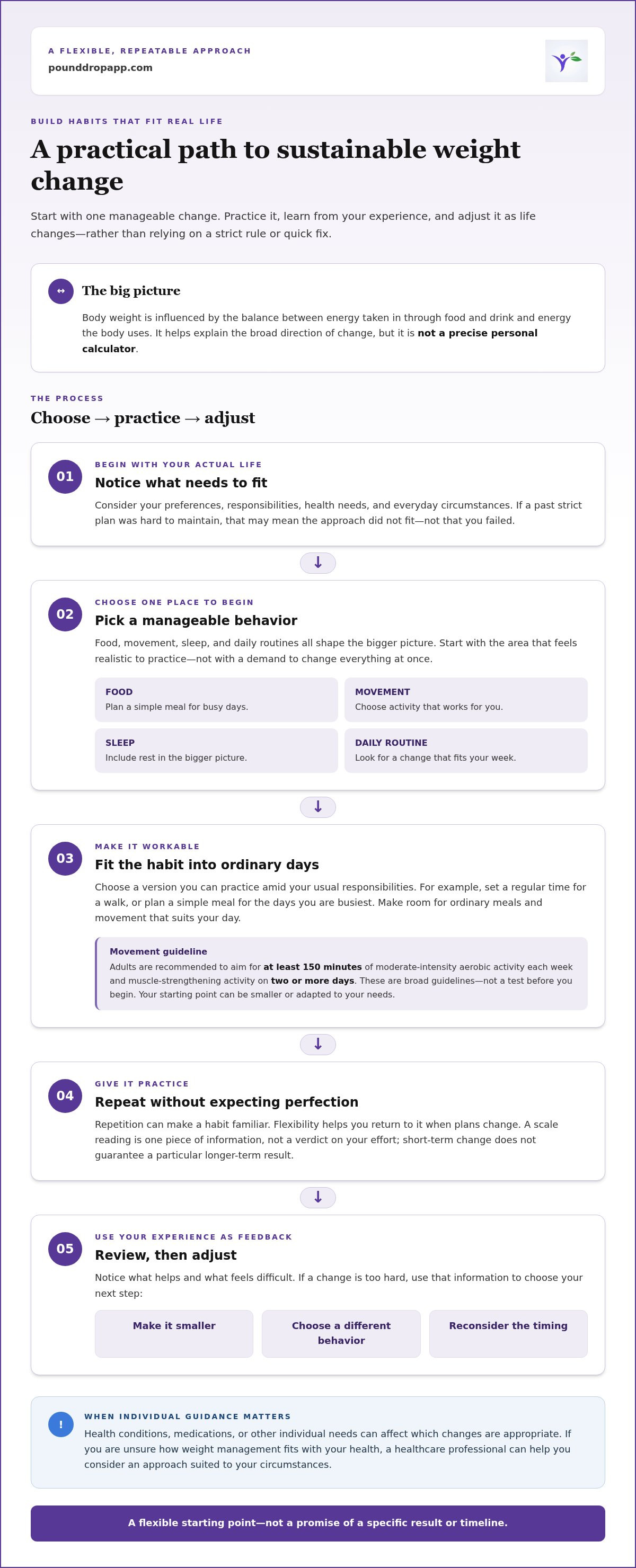
Starting doesn’t require a complete overhaul. Pick one behavior that connects to a routine you already have, make it small enough to practice, and learn from how it fits your week. If you’re asking what is the best way to lose weight, this step-by-step process can turn broad advice into a personal starting point without demanding a perfect plan.
- Choose one behavior. Consider a food, movement, or daily routine that matters to you and feels within reach.
- Make it manageable. Define a version you can try on an ordinary day, not just when you have extra time or energy.
- Connect it to a cue. Link the behavior to something already in your day, such as a regular break or the end of a workday.
- Practice and observe. Notice what helps, what gets in the way, and how the behavior feels in your routine.
- Review and adjust. Keep what works, make the step smaller if it’s difficult, or try another approach if your circumstances have changed.
Choose one small starting point
A useful starting step might be adding a brief walk after a regular daily activity, preparing an easy meal option ahead of a busy day, or setting aside a moment to pause before choosing what to eat. These are examples, not requirements. Choose something connected to your own priorities. A clear cue makes it easier to remember: “After I finish lunch, I’ll take a short walk,” for instance. If your schedule or energy shifts, adapt the step rather than treating the change as a broken commitment.
Review progress without turning it into a verdict
Reflection can help you see patterns without keeping score. At the end of a week, ask: What felt easy to repeat? What made it harder? What adjustment could make it fit better? You might jot down a few notes or use another tracking method that feels comfortable. Focus on the experience of the habit, not perfect records or a single day’s result. Day-to-day changes are not proof that you’ve failed; they’re part of real life.
If a behavior repeatedly doesn’t fit, treat that as information. Maybe the cue is unreliable, the step is too ambitious for a busy day, or another priority needs attention first. Adjust one part and try again. This process lets you build around your circumstances instead of forcing yourself into a generic routine.
If medical concerns, medications, or complex health needs affect your choices, seek guidance from a qualified healthcare professional before making changes. For self-guided structure as you reflect on habits and practice manageable steps, explore the Pound Drop App.
How Pound Drop Can Support a More Structured, Self-Guided Approach
Understanding everyday habits is one part of building a weight-management approach. Some people prefer to work things out independently; others find it useful to have a structure for practicing changes and reflecting on them. Tools aren’t a requirement for progress, and they can’t guarantee a particular result. They’re one way to make your next steps feel more organized.
If you’ve been considering what is the best way to lose weight, separate the principles from the tools. Your habits and circumstances remain central. A self-guided system can offer a framework for working with those habits at your own pace, while leaving room to adapt as daily life changes.
What structured self-guidance can offer
A structure can help turn a broad intention into something you can practice and reflect on. For instance, you might choose a daily habit, pay attention to how it fits your routine, and consider what to adjust. Independent tools may suit people who like to learn and make changes without scheduled one-on-one coaching. The right amount of structure is personal: enough to orient you, without making ordinary setbacks feel like a reason to give up.
Self-guided resources are not a replacement for medical care or individualized clinical advice. If health conditions, medications, or other concerns affect your choices, a qualified healthcare professional can help you understand what’s appropriate for your situation. Tools can support reflection, but they can’t assess your personal medical needs.
Explore the Pound Drop tools at your own pace
Pound Drop is a self-guided weight-loss system centered on the Pound Drop App and The Method. The Book and The Journal are physical resources that complement the digital experience. Together, these tools support structured lifestyle changes and habit formation without supplements or personalized meal plans. They offer a framework for self-directed practice, not a condition for making progress.
You can approach the tools at a pace that feels comfortable. Consider whether a digital resource, a physical resource, or a combination fits the way you prefer to learn and reflect. Keep your own priorities in view, and use any structure as a guide you can adapt rather than another set of rules to meet perfectly.
For another perspective on choosing ongoing support, explore this long-term weight-management tools guide. If a self-guided structure sounds useful for your next steps, explore Pound Drop.
Choose a Next Step That Leaves Room to Grow
Your next step doesn’t need to settle every question about weight management. Let it help you learn what feels supportive, what fits your circumstances, and what you may want to change over time. A flexible approach makes room for busy weeks, shifting priorities, and new information. You’re allowed to adjust as you go.
So, what is the best way to lose weight? An approach that respects your health and feels possible to keep practicing is a more useful place to begin than a promise of perfection. Tools can offer structure, but they don’t define your progress or replace individualized medical guidance when you need it.
If you prefer a self-guided framework, Pound Drop brings together the Pound Drop App and The Method, with The Book and The Journal complementing the digital experience. Explore these resources as a way to bring structure to habit-building while keeping your own priorities in view.
Explore Pound Drop and take the next step at a pace that feels right for you. Small, considered choices count, and you can keep learning along the way.
Frequently Asked Questions
What is the best way to lose weight and keep it off?
There isn’t one method that works for everyone. The best way to lose weight is to find changes you can repeat within your own life, such as choosing a regular time to prepare lunch or building a short walk into a familiar part of your day. Progress varies, so avoid treating a fast result as proof that a method will last. If a health condition or medication affects your choices, ask a healthcare professional for individual guidance.
How fast is it healthy to lose weight?
An appropriate pace varies, so a commonly cited weekly range shouldn’t be treated as a personal target for everyone. Starting weight, health, medications, and other circumstances can affect what’s suitable. Short-term scale readings can also move for reasons unrelated to longer-term progress. Focus on a pace and approach that feel safe and sustainable for you, with a healthcare professional’s input if you’re uncertain. Seek medical advice about unexpected weight changes or concerning symptoms during weight loss.
Can you lose weight without following a strict diet?
Yes, strict food rules aren’t the only option. You might begin with a practical change, such as packing a filling snack for a long commute or making a familiar meal easier to prepare at home. Preferences, culture, budget, and health needs all shape what’s workable, so there’s no single eating pattern everyone must follow. If food changes affect a medical condition or feel difficult because of your relationship with food, seek qualified professional support.
Do you have to count calories to lose weight?
No. Calorie tracking is one option, not a requirement. Some people find a short period of recording helpful for noticing patterns, while others prefer to note how their routines affect hunger, energy, or meal timing. Estimates aren’t exact, and tracking should feel informative rather than stressful. If logging food starts to feel rigid or upsetting, pause and consider a different way to reflect. Anyone with a history of disordered eating should seek qualified support.
Does exercise alone lead to weight loss?
Exercise can support health and contribute to weight management, but its effects on weight differ from person to person. Activity isn’t simply a way to offset food. A comfortable walk, gentle stretching, or movement adapted to your abilities may be a useful place to start. Eating patterns, sleep, and other parts of life also influence the overall picture. If you have health concerns about beginning or changing activity, ask a healthcare professional for advice that fits your situation.
When should I talk to a healthcare professional about losing weight?
Seek individualized guidance if you have a health condition, take medication that may affect weight, are pregnant, have a history of disordered eating, or notice unexpected weight changes. A qualified professional can help you weigh personal health needs and safety before you make changes. It’s also sensible to ask for guidance if an approach causes symptoms that concern you. Educational resources and self-guided tools can support reflection, but they don’t replace medical care.


