


Article by
Jesper Sorensen
Jesper Sorensen is a holistic health coach and founder of Pound Drop, a different approach to weight loss built around healthier habits. He has written ebooks and health articles for established publishers and has spent years studying nutrition, healthy eating and sustainable weight management.
A balanced fast-casual bowl starts with a nourishing base, a protein choice, plenty of produce, and a side that adds satisfaction. A useful guide for how to order healthy meals at fast casual restaurants is to look for at least 25 grams of protein in a meal with 400 calories or fewer, then consider how the other ingredients fit together.
Choosing from a fast-casual menu can feel difficult when there are so many combinations, toppings, and sides. You don’t need to find a perfect order. A few practical choices can help you put together a balanced meal you’ll enjoy.
This guide explains how to order healthy meals at fast casual restaurants, from choosing a protein and building a bowl to comparing sides and drinks. You’ll find simple ways to customize familiar meals to suit your preferences and help you feel satisfied.
Key Takeaways
- Build meals around protein and produce, then add a whole-grain base or dairy if it suits your preferences.
- Compare menu options by ingredients and preparation, choosing grilled or vegetable-forward dishes when they fit your needs.
- Try swapping fries or other rich sides for vegetables or salad to add produce to your meal.
- Look for meals centered on recognizable, whole-food ingredients, including leafy-green wraps when available.
- For a balanced bowl, combine a base, protein, vegetables, and toppings thoughtfully, keeping rich extras in proportion.
1. Building balanced meals with protein, produce, whole grains, and dairy
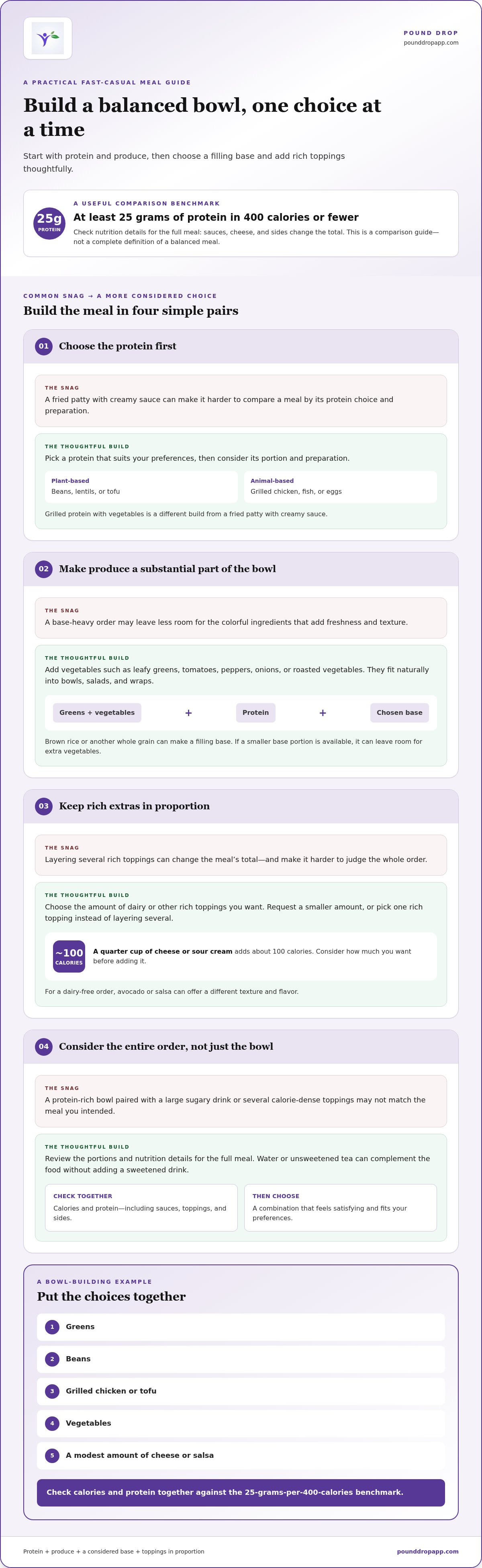
Start with protein, then add produce, a filling base, and optional toppings. A useful benchmark is at least 25 grams of protein per 400 calories or fewer. Check the menu’s nutrition details for the full meal, since sauces, cheese, and sides change the total. This ratio helps compare orders, but it doesn’t describe every part of a balanced meal.
Choose a protein that suits your preferences. Beans, lentils, or tofu can anchor a plant-based bowl, while grilled chicken, fish, or eggs are animal-based options. Swapping a red-meat burger for beans, tofu, or lean chicken changes the meal’s protein source. Consider the portion and preparation, too: grilled protein with vegetables makes a different meal from a fried patty with creamy sauce.
Vegetarian diners can combine beans, lentils, tofu, eggs, or dairy with vegetables and grains. Vegan diners can choose plant proteins and skip animal-derived toppings. For gluten-free eating, choose a base such as greens or rice and avoid wheat-based items. For a lower-carbohydrate option, build around non-starchy vegetables and protein rather than bread or rice.
Add color and texture with vegetables such as leafy greens, tomatoes, peppers, onions, or roasted vegetables. They work well in salads, bowls, and wraps. Then choose a base to suit your appetite, such as brown rice or another whole grain. If a smaller base portion is available, it can leave room for extra vegetables.
Dairy can add flavor and make a meal feel more complete. A quarter cup of cheese or sour cream adds about 100 calories, so consider how much you want before adding it. You can request a smaller amount or choose one rich topping instead of layering several. For a dairy-free order, avocado or salsa can provide a different texture and flavor.
Consider the whole order, not just the entrée. A protein-rich bowl paired with a large sugary drink or several calorie-dense toppings may not match the meal you intended to build. Water or unsweetened tea can complement the food without adding a sweetened drink. Review the portions listed and choose a combination that feels satisfying.
For example, build a bowl with greens, beans, grilled chicken or tofu, vegetables, and a modest amount of cheese or salsa. Check its calories and protein together against the 25-grams-per-400-calories benchmark. That simple sequence makes eating at fast-casual restaurants more deliberate, whether you’re choosing a bowl, salad, or burger.
2. Choosing a fast-casual restaurant by speed, quality, nutrition, portability, and price
Choose a restaurant with useful menu details you can review. Before joining the line, look for cooking methods, side options, portion choices, and nutrition information. A vegetable-based entrée or grilled fish may be easier to compare than a dish described only by its sauce. If the menu is online, review it before you leave to make ordering less rushed.
Preparation matters. Look for vegetable-based dishes or fish and skinless chicken that are baked, broiled, or grilled. A grilled chicken sandwich is another option to compare with a burger. Check whether sauces are served on the side, and review the listed ingredients rather than relying on a dish name. For takeout, consider whether a bowl or wrapped sandwich will be easy to manage on the way.
At a Mexican-style fast-casual restaurant, a build-your-own bowl or plate lets you choose what goes into your meal. Pick one main starch, such as rice, beans, or a tortilla, instead of automatically adding all three. Then consider vegetables, salsa, cheese, and creamy toppings individually. For a lower-carbohydrate order, choose greens in place of a grain or tortilla base.
A fast-casual order’s total depends on the entrée, portions, add-ons, and drinks. Compare the full order, not just the entrée: a side, extra cheese, and a sweetened drink can change the total. To keep spending consistent, decide what you want to spend before ordering and choose a combination that fits.
For food-safety or allergen concerns, tell staff what you need to avoid, including gluten, and ask how the customized order is prepared. Shared utensils, prep areas, sauces, or toppings may affect whether a substitution meets your needs.
Fast-food menus can offer practical options, too. Choose the smallest portion that will satisfy you, and consider baked or grilled items instead of fried foods such as fries, onion rings, or chicken strips. A burger with potatoes and a sugary drink includes several components to weigh. You could choose one starch and water or unsweetened tea instead. Small changes keep a familiar meal while adjusting its overall balance.
Speed, ingredients, portability, and cost all matter on a busy day. Before ordering, compare two or three menu choices and decide which trade-offs work for you. If you’re building consistency around everyday meals, recording your meal choices can help you notice which combinations fit your routine.
3. Substituting vegetables or salad for higher-fat sides
For bowls, salads, sandwiches, and tacos, consider vegetables or a salad instead of fries, coleslaw, or butter-heavy mashed potatoes. Then customize the main dish with a protein, vegetables, and toppings that suit your preferences.
When ordering, ask whether the restaurant can replace the default side with steamed vegetables, a side salad, or grilled vegetables. If the standard side comes mixed with dressing or butter, ask for it plain or with sauce on the side. This gives you more control over how much topping goes on your meal. For takeout, keep wet toppings separate when possible to help greens stay crisp.
A customizable salad can be satisfying when it includes more than lettuce. Consider beans, grilled chicken, tomatoes, cucumbers, peppers, or a modest scoop of grains. For a bowl, pair greens with a grain base and vegetables, then choose toppings individually. Avocado adds a creamy texture, while salsa or citrus dressing brings brightness without relying on a heavy sauce.
Dressings can change a salad’s flavor and richness. Ask for dressing on the side, dip each forkful, and add more if you want it. For a creamy dressing, use a light coating rather than pouring it over the whole salad. With sandwiches, ask for mayonnaise or dressing separately, then add vegetables such as lettuce, tomato, and onions for freshness and crunch.
Consider sodium when choosing sauces, pickled toppings, cheese, and prepared sides. A salad with several salty ingredients will taste different from one built around fresh vegetables, grains, and a simple dressing. Choose one or two strong-flavored toppings, such as olives or cheese, rather than piling on several. If nutrition details are listed, compare the whole customized order, not just the greens.
A practical choice might be a grilled chicken salad with tomatoes, cucumbers, and a small amount of avocado, with dressing on the side. At a sandwich counter, ask for extra vegetables and a side salad instead of fries. For tacos, add lettuce, tomato, or grilled vegetables and choose a side that complements the filling. These swaps preserve familiar meals while changing the mix of ingredients.
Start with one adjustment. If you usually choose fries, try a side salad with your favorite sandwich. If you already order greens, try beans or grains for a more substantial meal. Notice how the combination tastes and travels, then keep the changes that make ordering easier next time.
4. Whole-food ingredients and leafy-green wraps
Start with ingredients you can recognize, such as chicken, beans, greens, peppers, or tomatoes. A leafy-green wrap can hold a filling such as grilled chicken, tofu, or beans alongside crunchy vegetables. Ask for sauces separately so their flavor doesn’t overwhelm the vegetables. If you prefer a grain base, choose rice or another grain as the wrap’s alternative, rather than adding both automatically.
For Chinese and other Asian dishes, look for vegetable-forward stir-fries and choose sauces thoughtfully. Chinese vegetable stir-fries ordered without rice contain 500 to 900 calories per order. That range makes portion size and preparation worth considering alongside the dish name. If rice is included, you can request a smaller serving and focus the rest of the meal on vegetables and protein.
Fast-food portions can be adjusted without changing the familiar flavor. Junior and children’s-sized hamburgers usually contain 250 to 300 calories. Choosing a small serving of fries instead of a large one can save 400 calories. These options can help you choose a portion that suits your appetite, rather than defaulting to the largest size on the menu.
Plan your order before reaching the counter. Pick a main dish, decide which side fits, and choose a drink to go with the meal. For example, pair a small burger with a side salad and water, or choose a vegetable stir-fry with a serving of rice. A quick look at the menu beforehand can make ordering easier on a busy day.
Use the same ingredient-first approach when ordering breakfast. Depending on the menu and your preferences, consider eggs with vegetables, plain oatmeal with fruit, or yogurt with fruit. If you choose a breakfast sandwich, review its fillings and consider whether cheese, sauce, or a side adds what you want. Water, unsweetened tea, or coffee without sweetened additions can accompany the meal.
For takeout, consider how the ingredients will hold up on the way home or to work. Keep crisp greens separate from warm fillings when possible, and request sauces on the side. A bowl with greens, beans, vegetables, and grilled protein may travel differently from a leafy wrap, so choose the format that will be easiest to eat.
Choosing whole foods doesn’t require a complicated order. At an Asian restaurant, choose a vegetable-heavy dish and decide how much rice you want. At a burger counter, select a smaller burger and a side you enjoy. At breakfast, choose a meal with recognizable ingredients. Each decision makes your order more intentional while keeping taste and convenience in view.
5. Building a balanced fast-casual bowl
A bowl is easiest to customize when you choose each part deliberately. Start with a base, add a protein, then select vegetables, toppings, and sauce. This sequence helps you see what each ingredient contributes before the bowl is finished. For example, begin with greens or rice, then choose chicken, tofu, or beans before adding extras.
Think about the base as one component, not the whole meal. Rice in a Chipotle bowl contributes 200 calories, so consider how much you want alongside the other ingredients. You might choose a smaller scoop of rice with additional vegetables, or keep the rice portion and choose lighter toppings. Either way, consider the complete bowl instead of judging one ingredient alone.
Choose a protein and vegetables that work well together. A Chipotle-style bowl could pair chicken with lettuce, tomatoes, fajita vegetables, and salsa. A plant-based version could use beans or tofu with the same vegetables. For varied textures, combine crisp lettuce with warm vegetables, keeping the ingredients distinct enough to enjoy their individual flavors.
Treat rich toppings as choices, not automatic additions. A quarter cup of cheese or sour cream adds at least a quarter of a day’s saturated fat. If both are available, choose the one you most want, or ask for a smaller amount. Salsa, herbs, or a squeeze of citrus can bring flavor without layering several creamy toppings.
Finish with a combination that satisfies you. A bowl with protein, vegetables, and a base may need only one flavorful sauce. Ask for it on the side if you want to control how much gets mixed in. If the bowl already includes a sauced protein, taste it before adding another dressing. For dining on the go, keep crunchy ingredients separate when possible.
Use the menu to compare complete combinations, including portion size and toppings. A chicken bowl with rice, vegetables, cheese, sour cream, and sauce differs from one with a smaller rice portion and fewer rich extras. Choose based on what you enjoy and want from the meal. You can also adjust one ingredient at a time and notice which version feels satisfying.
To make this practical, choose your base and protein before reaching the counter, then add vegetables and one or two preferred toppings. Save a note about combinations you enjoyed with a simple meal-tracking routine, so your next fast-casual bowl is easier to order.
Pound Drop: Pound Drop App
The Pound Drop App offers a structured way to track and manage your progress as you practice everyday food choices. Use it to support consistent, self-guided lifestyle changes, rather than expecting every restaurant order to be perfect.
The Method provides a framework for this approach, while The Journal can help you reflect on choices and notice patterns over time. For example, record which bowl combinations felt satisfying or which adjustments were easiest to repeat. These observations can help turn occasional menu decisions into habits that fit your routine.
To keep building these habits with a structured tool, visit pounddropapp.com to explore the Pound Drop App.
Make Your Next Choice a Practice
Healthy routines grow through choices you can repeat, not rules that make every meal feel like a test. At your next fast-casual stop, pause and decide what matters most for that meal: convenience, a favorite flavor, or a choice that supports your broader goals. Make one intentional decision and move on. Learning how to order healthy meals at fast casual restaurants gets easier when you treat each visit as practice, rather than expecting every order to be perfect.
Notice what you enjoyed and what you might change next time. A satisfying choice is one you can live with, even on a busy day. Progress comes from returning to useful habits, not judging a single meal.
If you’d like support as you build a steady approach to food choices, contact Pound Drop for support. Take the next step at your own pace. Small, repeatable choices can help you keep moving forward.
Frequently Asked Questions
How to build a healthy fast-casual meal with lean protein, vegetables, and whole grains?
Choose a protein, a vegetable, and a whole-grain side, then decide which extras improve the meal. For example, pair grilled chicken with a vegetable-rich salad and brown rice, or combine beans, roasted vegetables, and a whole-grain base. If nutrition details are listed, compare the assembled meal rather than judging each ingredient alone. Keep a combination you enjoy in mind for busy visits, and adjust one part when you want a different flavor or texture.
Which fast-casual restaurant menu items are lowest in calories and highest in protein?
Compare the calories and protein listed for the complete order. When learning how to order healthy meals at fast casual restaurants, check protein alongside total calories, and include toppings, sides, and drinks in the comparison. Grilled chicken, fish, beans, and tofu can be useful protein choices. A customized salad or bowl may compare differently with a sandwich once dressings and sides are included.
How to find nutrition and allergen information on fast-casual restaurant menus?
Start with the restaurant’s menu or ordering screen, where nutrition details may appear beside items or customization choices. Review ingredients, portions, sauces, and sides as part of the full order. For an allergen concern, identify the ingredient you need to avoid and ask staff how the customized meal is prepared. For example, check whether a dressing or topping contains an ingredient relevant to your needs before adding it.
How do portion sizes and calorie counts compare across popular U.S. fast-casual chains?
Portions and calories vary by item and customization, so compare orders with similar bases, proteins, toppings, and drinks. At Chipotle, a burrito tortilla has roughly 300 calories, while rice in a bowl contributes 200 calories. These examples show how format and components affect a meal. A bowl isn’t automatically lower in calories; compare its full ingredients and serving sizes with the alternative you’re considering.
How to customize fast-casual meals to reduce sodium, saturated fat, and added sugar?
Adjust one ingredient at a time. To reduce saturated fat, consider cutting back on rich toppings such as cheese or sour cream. To limit sodium, compare sauces, seasoned ingredients, and prepared toppings, then use less of the strongest flavors. To reduce added sugar, choose water or unsweetened tea instead of a sweetened drink. Menu nutrition details can help you compare combinations, especially when an order includes several sauces or extras.
Which dressings, sauces, toppings, and sides are healthiest at fast-casual restaurants?
Choose additions that bring flavor or texture without crowding out the meal’s main ingredients. Salsa, citrus, herbs, and fresh vegetables can season a bowl or salad; dressing on the side lets you add the amount you prefer. When learning how to order healthy meals at fast casual restaurants, compare the entire combination rather than assuming one topping is always healthy. Vegetables, fruit, or a side salad may complement your entrée.
How much do healthy fast-casual meals typically cost in the United States?
A fast-casual meal’s total depends on the entrée, portions, add-ons, and drinks.


