


Article by
Jesper Sorensen
Jesper Sorensen is a holistic health coach and founder of Pound Drop, a different approach to weight loss built around healthier habits. He has written ebooks and health articles for established publishers and has spent years studying nutrition, healthy eating and sustainable weight management.
Eating healthy on business trips without kitchen access is possible with a little planning and flexible choices. Look for lodging with a microwave and mini fridge, choose balanced meals from restaurants or nearby shops, and keep water and simple snacks within reach. You don’t need a full kitchen to make choices that support your routine.
It can be harder to eat as usual when meetings run long, travel disrupts meal times, or options are limited. Not every meal needs to be perfectly planned. A few practical habits can make the next good choice easier.
This guide covers what to eat on a business trip, how to plan snacks and water, and how lodging and steady routines can help on longer stays. Find realistic ideas for restaurant meals, hotel-room options, and busy days, so you can adapt without adding unnecessary pressure.
Key Takeaways
- Choose lodging with a microwave and mini fridge to make simple meals and food storage easier.
- Build balanced meals from practical options, whether you’re eating out or preparing food in your room.
- Pack water and portable snacks so a busy schedule doesn’t leave you relying only on convenience foods.
- Use grocery delivery and a steady meal routine to make healthier choices feel more manageable on longer trips.
- Small, repeatable habits can help you stay consistent without expecting every travel day to go perfectly.
1. Choosing lodging with a microwave and mini fridge
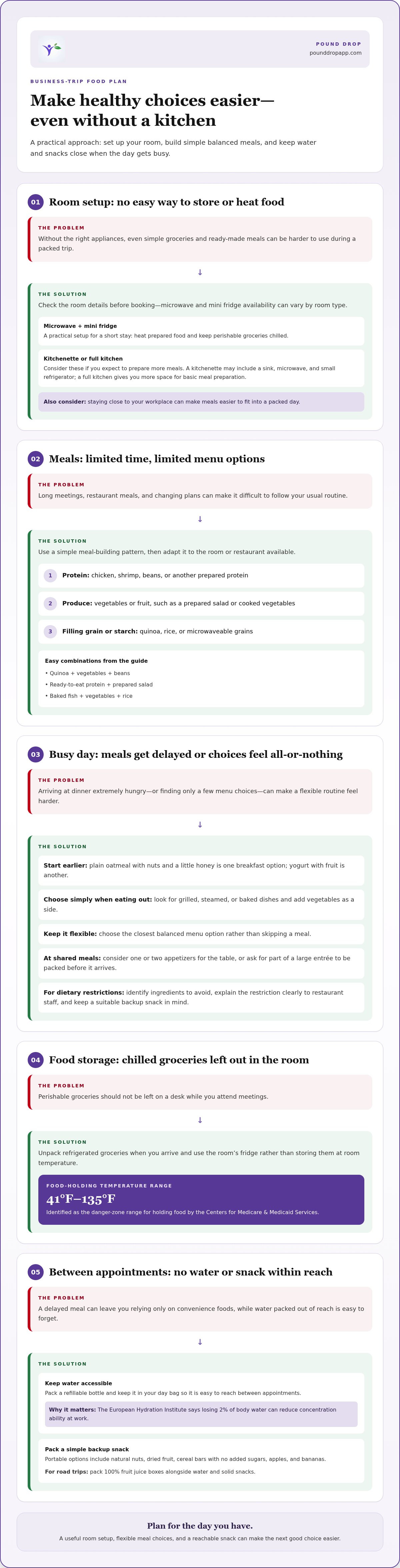
Start your lodging search with the equipment that makes simple meals possible. A microwave lets you heat prepared food, while a mini fridge keeps perishable groceries chilled. Together, they make options like yogurt and fruit for breakfast or a ready-made salad with cooked chicken for dinner easier. Check the room details before booking, since some properties offer these appliances only in selected room types.
For more flexibility, compare a standard hotel room with a kitchenette or accommodation that has a full kitchen. A kitchenette may include a sink, microwave, and small refrigerator, while a full kitchen offers more space for basic meal preparation. Match the room to your trip: a microwave and mini fridge may suit a short stay, while a kitchen can help if you expect to prepare more meals. Location matters, too. Staying close to your workplace can make it easier to fit meals into a packed day.
Plan food storage around the fridge you’ll actually have. Keep chilled items inside it, and avoid leaving perishable food on a desk while you attend meetings. The Centers for Medicare & Medicaid Services identifies 41°F to 135°F as the danger-zone temperature range for holding food. For a practical routine, unpack refrigerated groceries when you arrive and use the room’s fridge rather than storing them at room temperature.
What are the healthiest hotel breakfast options? When available, choose a combination such as plain oatmeal with nuts and a little honey, or yogurt with fruit. If the buffet has few protein choices, oatmeal with nuts is a simple alternative to relying only on pastries.
When your room lacks cooking facilities, choose a restaurant meal that needs no extra preparation. Look for grilled, steamed, or baked dishes, then add vegetables as a side. Baked fish with vegetables and rice, for example, can be a straightforward choice. If the menu is limited, choose the closest balanced option rather than skipping a meal.
Before confirming your lodging, use a short checklist: find out whether the room has a microwave, a fridge, or both; note whether a kitchenette is available; and consider the distance to your workplace and nearby restaurants. These details help you decide whether to bring simple groceries, rely on restaurant meals, or combine both approaches. Choose a setup that fits your schedule and makes nutritious choices easier to repeat.
2. What to eat on a business trip?
Build meals around a protein source, vegetables or fruit, and a filling grain or starch. In accommodation with a microwave, heat chicken or shrimp with vegetables, or pair a ready-to-eat protein with a prepared salad. For a simple lunch, combine quinoa with vegetables and beans. A balanced meal doesn’t need an elaborate recipe, just components that suit your schedule and are easy to find.
If you’re preparing meals in a hotel room, plan around the equipment you have. A microwave can heat ready-to-eat ingredients, while a small countertop gives you space to assemble a bowl or sandwich. For dinner, try cooked vegetables with a prepared protein and microwaveable grains. A mini fridge can hold perishable ingredients between meals. Keep preparation simple, and choose foods that can be combined in different ways if plans change.
Eat something balanced earlier in the day rather than arriving at dinner extremely hungry. At a continental breakfast, plain oatmeal with nuts and a little honey is one option, especially if protein choices are limited. At lunch, a grain bowl with vegetables and a protein can bridge the gap between morning meetings and dinner. If the day starts early, pack a snack so a delayed lunch doesn’t leave you relying only on pastries.
At business meals, look for grilled, steamed, or baked dishes instead of fried ones, and add vegetables as a side. If colleagues order shared plates, consider choosing one or two appetizers for the table and ordering a meal that suits your appetite. You can also ask for part of a large entrée to be packed before it arrives. These choices let you take part in the meal without making it an all-or-nothing decision.
How much protein, fiber, and water should adults aim for while traveling? There isn’t one useful target for everyone: needs vary with body size, activity, health, climate, and available food. At each meal, include a protein source and fiber-rich foods such as beans, vegetables, fruit, or whole grains, and drink water regularly throughout the day.
How can you manage food allergies or dietary restrictions while traveling for work? Identify ingredients you need to avoid before ordering, explain the restriction clearly to restaurant staff, and choose a meal with ingredients you understand. If your schedule is tight, plan a backup snack that suits your needs rather than relying on a single meal option.
Before a business trip, sketch out breakfast, lunch, and dinner, then note where a flexible snack could help. Choose a grocery or restaurant option near the hotel and workplace, and keep one easy meal in mind for a late return. If tracking routines helps you stay consistent, the Pound Drop App offers a self-guided way to keep progress visible while your schedule changes.
3. Preparing water and snacks for travel
Pack water and snacks before leaving for the airport, train station, or client meeting. A refillable bottle makes it easier to keep water nearby, while a small snack can cover a delayed meal. The European Hydration Institute says losing 2% of body water can reduce concentration ability at work. Keep water in your day bag, not buried in checked luggage, so it’s easy to reach between appointments.
Choose portable snacks that don’t need cooking or complicated preparation. Natural nuts, dried fruit, and cereal bars with no added sugars can travel in a briefcase or backpack. Apples and bananas are useful whole-fruit options, and muesli bars can be a convenient alternative to sweetened soft drinks and less nutritious convenience foods. For road trips, pack 100% fruit juice boxes alongside water and solid snacks.
For a longer travel day, divide snacks into small containers or reusable bags before you leave. Pair dried fruit with nuts, or pack an apple with a muesli bar, so you have options when meetings run late. If you’re bringing prepared dishes, sliced fruit and vegetables, sandwiches, cooked rice and beans, baked potatoes, sweet potatoes, and steamed vegetables can stay fresh for at least a day in airtight containers. Keep these foods chilled during travel when possible.
What food safety rules apply to perishable foods during travel? Keep perishable items chilled in an insulated cooler with cold packs, and limit the time they sit unrefrigerated. The Centers for Medicare & Medicaid Services identifies 41°F to 135°F as the danger zone for holding food.
What healthy foods can you pack for a business trip without refrigeration or kitchen access? Choose whole fruit, natural nuts, dried fruit, and cereal bars with no added sugars. These snacks are ready to eat and don’t require a fridge, microwave, or utensils.
Use a simple packing sequence before departure: fill your water bottle, place shelf-stable snacks in an easy-to-reach pocket, then pack any chilled food separately. For example, keep an apple and a packet of nuts near your travel documents, with a sandwich in an insulated bag. That way, a delayed connection or meeting doesn’t leave you choosing between skipping food and grabbing the first available snack.
Match your choices to the day ahead. A short client visit may call for water and one portable snack; a full day of travel may need several snack options and a prepared meal. If you’re crossing borders, consider destination rules for fresh produce before packing fruit. A little preparation helps keep nutritious choices available, even when your schedule changes.
4. Using grocery delivery and hotel-room refrigeration
Use grocery delivery to stock a few flexible ingredients soon after arriving, rather than ordering a different meal for every night. Start with a short list: fruit, salad greens, yogurt, whole-grain bread, beans, and a ready-to-eat protein. Choose foods that work in more than one meal, such as salad greens for lunch and as a dinner side. If delivery timing is uncertain, order after check-in so groceries don’t sit unattended.
Make a simple menu before you shop. For example, pair yogurt and fruit at breakfast, beans and greens at lunch, then add a prepared protein to leftover salad for dinner. Keep the list small enough for the room’s fridge and your trip’s schedule. If plans change, ingredients that work in several combinations are easier to use than specialty items bought for one recipe.
Grocery stores offer convenient basics, while farmers markets may have seasonal fruit and vegetables for ready-to-eat snacks. Choose produce that needs little preparation, such as apples, bananas, or washed salad greens. Add a filling option, like whole-grain bread or beans, and a protein source that suits your preferences. For a late arrival, shelf-stable foods can tide you over until you have time to shop.
Hotel-room refrigeration works best when you organize groceries as soon as they arrive. Put perishable items in the fridge, keep ready-to-eat ingredients together, and place the next meal’s components where they’re easy to find. For instance, group yogurt and fruit for breakfast, then keep salad greens and beans together for lunch. This small setup makes it easier to assemble a meal between work commitments.
On a longer trip, a Sunday batch-cooking session can reduce weekday decisions. Prepare a few simple components, such as cooked grains, beans, and vegetables, then divide them into meal-sized containers. Combine the components in different ways instead of repeating the same dish every day. If the room has no kitchen, prioritize groceries that are already cooked or can be eaten as purchased.
How can you eat healthy on a business trip while staying within a food budget? Plan meals around a grocery list, choose ingredients you can reuse, and make some meals from simple staples instead of dining out each time. Compare what you need for several meals before adding snacks or ingredients for just one use.
Before placing an order, plan the first meals you’ll eat and consider the available storage space. A practical order might include breakfast items, fruit for snacks, salad ingredients, and a couple of versatile meal components. That plan helps limit unused groceries and gives you a dependable option when meetings run late or dinner plans shift.
5. Maintaining routines on long trips
On a long assignment, a repeatable routine matters more than a perfect menu. Keep meal times close to your usual schedule, even when meetings shift. For trips lasting several months, plan regular meals and avoid skipping them. Consistency gives your workday a dependable structure, while flexible food choices help you adapt when a client dinner or delayed meeting changes the plan.
Protect a meal break on your calendar. Set aside time for lunch before the day fills with calls, and treat that appointment as part of the work schedule. Expect to need a 30-minute break for eating at some point during the workday. If a meeting runs over, move the break to the next open space rather than letting lunch disappear entirely.
Build a simple routine around cues you already have. For example, eat breakfast after getting ready, take lunch between recurring meetings, and decide on dinner before the workday ends. Keep a backup snack in your bag for a delayed meal, then return to your usual pattern at the next opportunity. One disrupted day doesn’t require an all-or-nothing response.
Keep meals satisfying by including protein and produce when available. At a restaurant, choose a main dish with a protein source, then add vegetables or fruit where they fit. At a conference, look over the options before serving yourself and choose a plate that can carry you through the afternoon. The goal is a workable pattern, not identical meals every day.
Movement can also serve as a useful routine cue. A short walk after lunch or a stretch between calls can create a natural pause in a desk-heavy day. In a Carlson Wagonlit Travel survey, 41% of business travelers from the Americas said they exercise while on business trips. A survey cited by Forbes found that 54% of business travelers are less likely to work out away from home. These findings point to a common challenge: travel can disrupt habits, so make your planned activity easy to fit around work.
Review your routine at the end of each week. Note which meal times worked, when meetings interfered, and whether protein or produce was available. Then adjust one practical detail, such as adding a calendar reminder or choosing a more convenient lunch location. Small changes are easier to maintain than rebuilding your entire schedule during a demanding trip.
Use a simple tracking habit to notice what supports your routine and keep your progress visible as travel plans change.
Pound Drop: Pound Drop App
Pound Drop App can help you keep your weight-loss routine in view while business travel changes your usual meal patterns. It’s part of a self-guided system built around The Method, with The Book and The Journa as additional tools for tracking and managing progress. Use these resources to reflect on the choices that fit your schedule, then carry practical habits from one trip into the next. They’re most useful when you want structure you can work through independently, rather than a perfect plan for every meal. A restaurant dinner, an airport delay, or a changed meeting schedule can all become a chance to practice a steady routine. If you’d like to explore a self-guided approach, visit pounddropapp.com.
Make your next trip a chance to practice
Eating healthy on business trips without kitchen access doesn’t require a flawless schedule. Start with one decision you can repeat, such as choosing a meal that leaves you feeling ready for the next part of your day. Notice what makes that choice easier: a familiar routine, a little preparation, or a plan for unexpected changes. Then carry what you learn into your next trip.
Progress comes through practice, not getting every travel day right. If a meal doesn’t go as planned, return to the habits that help you feel steady at the next opportunity. Small, workable choices can support a routine that travels with you.
If you’d like support as you build habits that fit your life and travel schedule, contact Pound Drop for support. Take the next step at your own pace, and let each trip offer another opportunity to practice.
Frequently Asked Questions
What to eat on a business trip?
For eating healthy on business trips without kitchen access, choose meals that combine satisfying ingredients and fit your day. At lunch, try a whole-grain wrap with a protein filling; at dinner, look for a dish with recognizable ingredients and a portion you can comfortably enjoy. If your schedule is unpredictable, choose food you can save or carry rather than relying on an exact mealtime.
What healthy meals can you buy at airports, hotels, and convenience stores?
Look for ready-to-eat combinations such as a salad with a protein topping, plain yogurt with fruit, or a sandwich with a filling you recognize. At a convenience store, pair fruit with a packaged protein option or whole-grain crackers. At an airport, check the available counters before choosing, since menus differ. Read ingredient labels if you have dietary needs, and pick something easy to eat during a travel delay.
How can you find nutritious meals when eating at restaurants on a business trip?
Scan the menu for a dish with clear ingredients and a protein source, then consider how it fits your appetite and workday. Ask for sauces or dressings on the side if you prefer to control how much you use. At a group meal, decide what would feel satisfying before ordering, rather than automatically matching colleagues’ choices. If the menu is unfamiliar, ask staff to explain the ingredients.
How can you build balanced meals using only a mini-fridge, microwave, or kettle?
Combine ready-to-eat ingredients instead of relying on full cooking equipment. A mini fridge can hold yogurt, washed greens, and prepared proteins; a microwave can heat cooked grains or soup. With a kettle, prepare plain oats and add fruit or nuts. Check package directions, use microwave-safe containers, and choose ingredients that can serve more than one meal, such as greens for both a sandwich and a side.
What shelf-stable snacks are healthy and travel-friendly?
Try unsweetened applesauce cups, whole-grain crackers, roasted chickpeas, or nut-butter packets paired with fruit. Choose snacks that suit your preferences and dietary restrictions, and read labels for ingredients that matter to you. Pack a mix of textures, such as something crunchy and something soft, to give yourself options during a long travel day. Keep snacks accessible in your carry-on or work bag.


