


Article by
Jesper Sorensen
Jesper Sorensen is a holistic health coach and founder of Pound Drop, a different approach to weight loss built around healthier habits. He has written ebooks and health articles for established publishers and has spent years studying nutrition, healthy eating and sustainable weight management.
A potluck can support healthy choices without turning lunch into a set of rules. The most useful workplace potluck survival tactics for healthy eaters start with bringing a dish that’s easy to share, such as a colorful salad, a protein-rich option, vegetables with dip, or fruit for dessert. Choose something that suits the setup, whether it can be served cold, kept warm, or prepared without cooking.
It’s understandable to wonder what will work for everyone or how to make a thoughtful choice without judging what others bring. A good potluck welcomes different preferences and helps coworkers enjoy a meal together. This guide offers practical ideas for cold, hot, no-cook, and dessert dishes, plus simple ways to organize the spread and set a healthy theme. You’ll also see how a balanced potluck can support workplace well-being through connection, variety, and manageable everyday food choices.
Key Takeaways
- Choose a shareable dish that fits the potluck setup, whether it needs chilling, warming, or no cooking at all.
- Make the spread easier to enjoy by grouping dishes, labeling ingredients, and offering options for different dietary needs.
- Use a welcoming theme to encourage variety and make healthy choices feel inclusive rather than restrictive.
- Plan your plate with care, enjoy foods that appeal to you, and decline extra servings politely if you’re satisfied.
- Small, thoughtful choices can make a workplace potluck more enjoyable while supporting connection and well-being among coworkers.
1. Office potluck recipe ideas
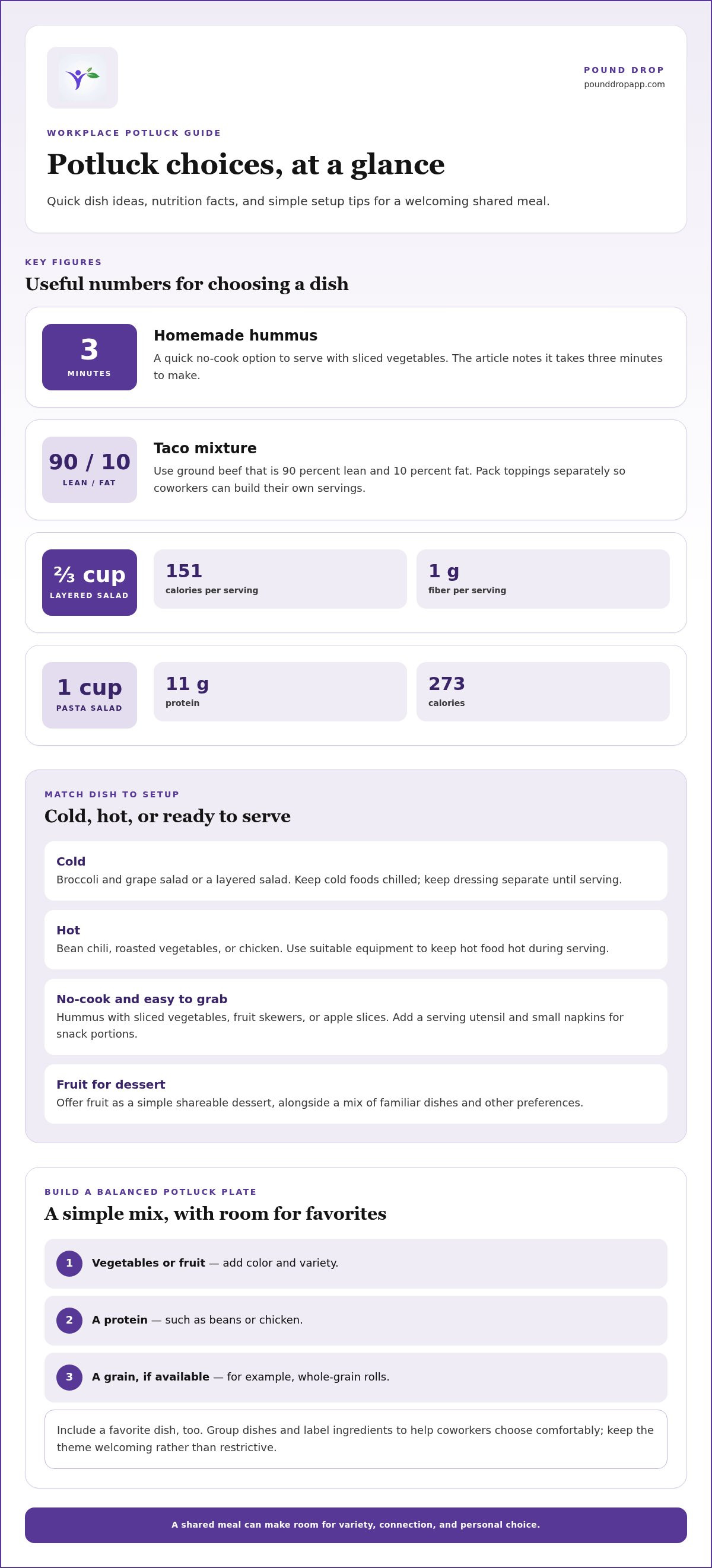
Choose a recipe that travels well, serves easily, and fits the office kitchen. Practical workplace potluck survival tactics for healthy eaters start with bringing a dish coworkers can enjoy alongside familiar favorites. Try broccoli and grape salad, vegetable pinwheels, or homemade hummus with sliced vegetables. Hummus takes three minutes to make, so it’s a convenient option when preparation time is short.
For a heartier choice, bring a taco mixture made with ground beef that is 90 percent lean and 10 percent fat. Pack toppings separately, such as lettuce, beans, and salsa, so coworkers can build their own servings. These workplace potluck survival tactics for healthy eaters also include choosing a dish that suits the event’s setup. A layered salad can be prepared ahead, with dressing kept separate until serving.
For a mid-morning snack, pack fruit skewers, apple slices, or vegetables with hummus. Fruit is easy to grab between meetings, while a small cheese platter pairs well with grapes or pears. For an afternoon snack, consider tortilla pinwheels or salsa with cut vegetables. Set out a serving utensil and small napkins so coworkers can grab a snack without needing a full plate.
A potluck meal can include vegetables, fruit, protein, and grains. For example, serve chicken or beans with a green salad and whole-grain rolls. If you bring pasta salad, add chopped vegetables and beans or tuna. A homemade dish doesn’t need complicated preparation to be useful. Choose ingredients that hold their texture in transit, and keep toppings or sauces separate until mealtime.
What are safe food temperatures and time limits for potluck dishes? Keep cold foods chilled and hot foods hot, and don’t leave perishable dishes out for an extended serving period. Use suitable equipment to maintain the food’s temperature, and return chilled dishes to refrigeration between servings.
How can you estimate calories and portions at a potluck? For packaged food, use the serving size and nutrition information on the label. For a homemade recipe, divide the ingredients by the number of servings it makes, keeping in mind that a larger scoop may contain more than one serving.
How can you avoid overeating at a buffet-style work potluck? Take a moment to scan the table, then choose the dishes you most want to try. Start with a modest serving, eat at a comfortable pace, and pause before going back for seconds.
How do you plan a balanced plate at a potluck? Add vegetables or fruit, a protein such as beans or chicken, and a grain if one is available. Include a favorite dish, too. A balanced plate can include foods you enjoy without requiring every choice to be planned perfectly.
2. Benefits of healthy workplace potlucks
A healthy workplace potluck brings eating choices into a shared, low-pressure setting. Coworkers can try foods they might not prepare themselves, such as lentil salad, roasted vegetables, or chicken with herbs. Eating well at work is one way to maintain or improve health. A shared meal makes that idea practical: colleagues can enjoy a variety of dishes while staying connected around the table.
Variety is one benefit of a potluck. A spread with vegetable soup, bean salad, fruit, and a cheese platter gives coworkers different ways to build lunch. Someone who prefers familiar foods can choose chicken and vegetables, while another person can try a new grain or dip. This mix makes healthy eating feel less like a separate menu and more like a natural part of the office meal.
Potlucks can also make it easier to share food preferences. Simple labels such as “contains cheese,” “vegetarian,” or “made with peanuts” help colleagues choose comfortably. Organizers can invite people to contribute dishes for different needs, including dessert. That small planning step can help everyone feel considered when choosing what to eat.
Preparing food together gives coworkers an easy way to share ideas. A colleague might explain how they season roasted chickpeas or share a family recipe for chicken and vegetables. These conversations can offer new meal ideas without turning lunch into a lecture. Keep the invitation open: ask what people enjoy bringing instead of setting strict food rules.
How can you politely decline food at a workplace potluck? Thank the person who brought it, then say, “That looks excellent, but I’m full right now,” or “Thanks, I’m choosing something else today.” If you’re declining because of an ingredient, say so simply and kindly, without criticizing the recipe.
For organizers, a healthy theme works best when it leaves room for personal choice. Invite a mix of salads, mains, snacks, and sweets, then let coworkers decide what suits them. A potluck isn’t a test of anyone’s habits. It’s a shared meal where a thoughtfully prepared dish, a welcoming label, or a friendly conversation can help colleagues feel included.
3. Cold, hot, no-cook, and dessert choices
Match your dish to the office setup before choosing a recipe. A cold broccoli and grape salad travels well, while hot bean chili needs a way to stay warm. Keep cold food chilled until it reaches the table, and use suitable equipment to keep hot food hot during serving. Clear labels can also help everyone identify how a dish should be stored or served.
Cold dishes can offer color and variety without requiring last-minute cooking. Broccoli grape salad combines fruit and vegetables, while layered salad can be assembled ahead. A two-thirds-cup serving of layered salad contains 151 calories and 1 gram of fiber. Deli-style pasta salad offers another familiar option; a cup contains 11 grams of protein and 273 calories. Keep dressing separate until serving to help ingredients stay appealing.
Hot dishes work well when the office has suitable warming equipment. Bring bean chili, roasted vegetables, or chicken in a covered dish, and set serving utensils beside it. Coordinate access to the oven, stovetop, or microwave with the organizer instead of assuming equipment will be free. If the dish needs finishing at work, pack ingredients separately and complete the final step on site.
No-cook dishes reduce preparation at the office. Set out vegetables with dip, a sandwich platter, cheese, crackers, or bowls of fruit. Taste of Home’s Greek Pita Spread contains 96 calories per quarter-cup serving, making the serving size useful when planning how much dip to bring. Keep crackers in a separate bowl so they remain crisp, and provide a spoon for the spread.
Dessert can include fruit instead of relying only on baked sweets. Apple slices warmed in a microwave for 30 seconds make a simple option. For a baked recipe, reducing sugar by one-third to one-half can preserve texture and quality. Fruit skewers also bring color to the dessert table; Taste of Home’s recipe takes 20 minutes and makes 12 kabobs. Keep them chilled until the group is ready to eat.
Organizers can make the table easier to navigate by grouping cold salads, hot mains, no-cook snacks, and desserts. Place serving utensils with each dish, and label ingredients such as dairy, nuts, or wheat. Set desserts apart from main dishes, so workers can find them without beginning the meal with sweets. These small choices help everyone select food comfortably and keep the office potluck running smoothly.
Alongside these menu choices, a serving of Taste of Home's Broccoli Grape Salad contains 344 calories. Organizers can also include no-cook choices such as chips or vegetables with dip, sandwich or cheese platters, and bowls of fruit, giving the table options that do not need cooking at the office.
Plan for dietary requirements across every course, including dessert, rather than concentrating only on main dishes. Hosts should keep hot foods hot and cold foods cold, and can group dishes by category while keeping desserts aside, helping attendees find foods and avoid starting with sweets. For dessert recipes, the suggested sugar reduction is 1/3 to ½ while keeping the same texture and quality.
4. Communicating a healthy potluck theme
A clear invitation can make a healthy theme feel welcoming rather than restrictive. Workplace potluck survival tactics for healthy eaters begin with describing the event as a shared meal, not a test of anyone’s habits. Rutgers Cooperative Extension suggests weekly or monthly themed workplace potlucks where coworkers bring a favorite dish. Themes such as colorful produce, family recipes, or easy-to-share lunches give employees a starting point while leaving room for personal choice.
Include practical details in the invitation so employees can plan what to bring. Share the date, location, and meal time, along with a sign-up method, then suggest broad categories such as salads, mains, snacks, and desserts. For example, one coworker could bring a bean salad while another contributes fruit or a homemade chicken dish. Categories help the host spot gaps without prescribing specific recipes.
Choose language that invites participation without labeling foods or people. A note might say, “Bring a favorite dish you enjoy sharing; fresh options and familiar comfort foods are welcome.” This encourages variety without implying that anyone’s usual choices are wrong. Workplace potluck survival tactics for healthy eaters work best when coworkers are free to bring fruit, crackers, a homemade dish, or another convenient option.
For allergies and dietary needs, ask contributors to share ingredient details and label each dish clearly. Include useful descriptions such as “lentil salad, contains mustard” or “cheese dip, contains dairy.” Offer options for different dietary needs across courses, including dessert. Keep each serving utensil beside its dish, and arrange similar dishes apart when practical to reduce accidental mixing.
A simple sign-up sheet can make planning easier. Include spaces for the dish name, category, and ingredient notes. Employees who don’t want to cook can bring a ready-to-serve item, arrange plates, or help with cleanup. The list also helps the organizer see whether the table needs another main dish, snack, or dessert before the event.
After the meal, invite coworkers to suggest a future theme. A “favorite family recipe” day, a produce-focused gathering, or a no-cook lunch can make the next event feel personal and manageable. Workplace potluck survival tactics for healthy eaters should support shared enjoyment, not turn food into a workplace rule. Ask what employees would like to bring, then use their ideas to create a welcoming table with clear labels and varied choices.
5. How to eat healthy at a workplace potluck without offending coworkers
Start with a plan, not a judgment about the menu. Before the potluck, decide which dishes you’d like to try and what would make a satisfying plate. For example, choose the vegetable salad, a chicken dish, and a favorite dessert. This gives you direction while leaving room to enjoy what coworkers prepared.
At the buffet, take a small plate and look over the options before serving yourself. Aim to fill no more than half your plate with vegetables or fruit, then add a protein and another dish you enjoy. If several casseroles, rolls, and pasta salads appeal, choose one carbohydrate-heavy option to start. You can decide later whether you want another taste.
Keep portions comfortable without turning lunch into a strict calculation. Try a modest serving of a rich dish, then add fruit or vegetables if you’re still hungry. Use the serving spoon rather than taking food directly from a shared container. A smaller first portion also lets more coworkers sample a homemade recipe.
Keep the conversation warm and focused on appreciation. If a coworker offers another scoop, say, “Thank you, it looks delicious, but I’m full.” If you’re choosing something else, try, “Thanks for making it. I’m going to start with the salad today.” A kind response recognizes the effort without requiring you to eat more.
Leftovers can be a practical alternative to eating every dish at one sitting. If the host is comfortable sharing them, ask whether you can take a portion home. That lets you enjoy a coworker’s casserole or baked dish later instead of piling several starchy foods onto one meal. Follow the organizer’s plan for packing and storing leftovers.
A healthy choice doesn’t need an explanation. You can pass on a dish, accept a small taste, or choose familiar foods without commenting on anyone else’s plate. If a colleague asks about your choices, keep it personal: “I’m listening to what feels satisfying today.” This avoids labeling someone else’s food as unhealthy or making the potluck feel like a debate.
Focus on the shared meal, too. Ask who made the salsa, compliment the chicken’s seasoning, or join coworkers for cleanup afterward. These small gestures show appreciation beyond how much you eat. A relaxed plan, a polite decline, and a balanced plate can help you enjoy the gathering while honoring your own preferences.
If the gathering is at a venue, look at its menu in advance when possible, then decide what you’d like to eat before you arrive. Knowing the options ahead of time can help you make a comfortable plan without commenting on coworkers’ choices or deciding while everyone is serving themselves.
Organizers can make the meal easier to navigate by labeling dishes. Simple labels can help attendees identify options they can enjoy, including vegan or gluten-free alternatives. If you’re organizing, ask contributors to identify their dishes; if you’re attending, quietly read the labels before choosing. This keeps food preferences practical and considerate while leaving the conversation centered on sharing the meal.
Pound Drop: Pound Drop App
Pound Drop App can support readers who want structure for everyday weight-management choices, including meals shared at work. Its self-guided approach centers on The Method, with The Journa available to help track and manage progress. Use those tools to reflect on routines, notice patterns, and practice steady changes beyond a single potluck. They’re a natural next step if you want continued structure after choosing what feels right at a shared meal. Progress doesn’t require perfection; a workplace gathering can simply be one moment in a broader routine. To explore the app and its approach, visit Pound Drop App.
Build habits that travel beyond the lunchroom
A workplace gathering is one part of a larger routine. The choices you make there can help you notice what feels satisfying, make room for foods you enjoy, and return to your usual habits afterward. These workplace potluck survival tactics for healthy eaters aren’t about getting every meal exactly right. They’re practical ways to make thoughtful choices while staying connected with coworkers.
If you’d like support with steady, self-guided lifestyle changes beyond shared meals, explore the Pound Drop App and The Method. The Book offers another way to engage with the approach at your own pace. These tools can help you build routines that work in everyday life, including busy workdays and social occasions.
Take the next step when it feels right: Contact Pound Drop. Progress can grow through small, repeatable choices, and you can begin with the next one.
Frequently Asked Questions
What to bring?
Bring a dish that travels neatly and is easy to serve, such as tuna apple salad for sandwiches. The recipe makes 4 servings, takes 15 minutes to prepare, and uses a 12-ounce can of chunk light tuna. Pack the filling in a sealed container and bring bread separately, so it stays fresh in texture. If coworkers have varied preferences, label the dish and include a serving utensil.
What healthy dishes are easy to bring to a work potluck?
Try chickpea and cucumber salad with lemon, parsley, and a little olive oil. It needs no reheating and can be mixed in a container before you leave home. Another easy option is a platter of whole-grain wraps with roasted vegetables and beans; cut the wraps into manageable pieces for sharing. For a simple side, bring washed berries or sliced melon in a covered container.
What are safe food temperatures and time limits for potluck dishes
Keep cold foods chilled and hot foods hot, and don’t leave perishable dishes out for an extended serving period. Use suitable equipment to maintain temperatures, and return chilled dishes to refrigeration between servings.
Healthy potluck food swaps for lower sugar, sodium, and saturated fat
For dessert, sugar can often be reduced by one-third to one-half while preserving texture and quality. For a heartier dish, consider beans or chicken, or use ground beef that is 90 percent lean and 10 percent fat.


