


Article by
Jesper Sorensen
Jesper Sorensen is a holistic health coach and founder of Pound Drop, a different approach to weight loss built around healthier habits. He has written ebooks and health articles for established publishers and has spent years studying nutrition, healthy eating and sustainable weight management.
The hardest part of eating out may begin before the first bite. Managing social anxiety around restaurant buffets and menus starts with understanding what may be driving the worry: food anxiety describes distress about food’s effects on the body, while deipnophobia means fear of dining with others. Previewing the menu or making a simple plan can make the experience feel more manageable.
If choosing a dish, ordering in front of others, or moving through a buffet feels stressful, that reaction can affect more than one meal. You may avoid social plans or spend the gathering focused on what others might think. You’re not alone in finding these situations difficult, and you don’t have to handle them perfectly.
This article explains what food anxiety and deipnophobia can look like and how they may affect social life. You’ll also learn how reviewing a restaurant’s menu and atmosphere in advance, preparing an order, and making a gentle plan for a buffet can ease some pressure. Small steps can help you feel more prepared while leaving room to discover what works for you.
Key Takeaways
- Notice how worry about food or being observed can shape your choices and make social plans harder.
- Separate food anxiety from deipnophobia to better understand what feels difficult during a meal.
- Use clear menu descriptions and a manageable set of choices to make ordering feel less pressured.
- Preview the menu and dining setup, then decide on a simple backup plan before you arrive.
- Take small, supportive steps at gatherings and reflect afterward on what helped you feel more at ease.
1. Effects of eating anxiety on relationships and social life
Social anxiety around eating can make an ordinary meal feel like a test. You may worry that friends will notice what you choose, how quickly you eat, or whether you leave food. Fear of judgment can lead you to skip shared meals, eat in private, rush through dinner, or avoid food. Over time, turning down invitations can strain relationships and increase isolation.
Social anxiety and eating disorders can overlap, but one does not automatically mean the other. Worry about being judged may influence eating habits, while distress about food may make social settings harder. Some people also fear textures, choking, or an allergic reaction; these concerns are often connected to avoidant/restrictive food intake disorder (ARFID). Notice how fear affects your daily choices rather than trying to label yourself based on one difficult meal.
Anorexia nervosa can involve eating rituals, such as rearranging food on a plate or following a particular sequence. Someone may prefer to perform these rituals in private, where others cannot see or interrupt them. For example, they might decline dinner with family because the meal feels unpredictable. Keeping these behaviors secret can narrow social routines and leave loved ones unsure how to offer support.
Bulimia nervosa may also involve secrecy around eating. Someone may binge eat alone because shame or guilt makes eating with others feel difficult, then use purging behaviors such as vomiting, laxatives, or excessive exercise. Hiding meals or avoiding friends can strain trust. Binge eating disorder differs because it does not involve attempts to purge after binge eating.
When should someone seek therapy for social anxiety around eating out? Consider seeking support if fear repeatedly leads you to avoid meals, withdraw from social plans, or feel unable to eat comfortably with others. A mental health professional can help identify what is driving the anxiety and develop practical strategies.
What treatments, such as CBT or exposure therapy, help social anxiety? Cognitive behavioral therapy (CBT) can help challenge thoughts about being judged, while exposure therapy can support gradual practice in feared situations. Relaxation techniques may also help calm the mind and body. A manageable first step could be sharing a meal with someone you trust, then reflecting on what felt easier or harder.
2. What is Food Anxiety?
Food anxiety describes distress about how food may affect your body. It isn’t an official medical condition, but it can influence everyday choices. Before dinner, someone might repeatedly check ingredients, worry about feeling unwell, or replay what friends could think of their order. Nausea, stomach pain, and intrusive thoughts can make eating harder. These symptoms can also appear alongside concerns about appearance, perfectionism, or social judgment. Experiences vary, so noticing when worry changes your routine can be a useful first step.
Food choices can carry social and cultural meaning beyond taste or hunger. A study of 2,000 British individuals examined Gen Z’s menu anxiety and food-related pressures. In its findings, 60% reported pressure to eat a certain way to show they’re healthy, while 51% felt pressure to signal environmental concern. Another 48% reported pressure linked to political issues. Ketchum reported that 25% felt pressure from social media users they’d never met, and over 66% felt their eating patterns were wrong. These expectations can turn a simple menu choice into a judgment about identity.
Food costs add a separate, practical strain. If meal prices feel difficult to manage, you may compare the cost of each dish, worry about splitting a bill, or decline an invitation. Those concerns aren’t the same as food anxiety, but they can intensify stress around eating with others. Before a group outing, agree on a comfortable budget or suggest a place where everyone can review the options in advance. A clear plan can reduce uncertainty without requiring anyone to explain private finances.
Comments about food or bodies can fuel negative thoughts, even when someone means a remark as friendly conversation. Prepare a short response before meeting friends. For example: “I’d rather talk about something else,” or “Let’s focus on the meal.” You can also redirect the conversation with a specific question, such as asking what someone thinks of the seasoning. Having a phrase ready helps you set a boundary without defending your plate or body.
To shift your attention to the food itself, choose one neutral detail to notice. You might describe the soup’s warmth, the crunch of a vegetable, or the balance of herbs and citrus. This isn’t a test of whether a dish is “good” or “bad.” It’s a simple way to return your attention to the meal’s sensory details and the conversation around you. If thoughts about judgment return, gently name the detail again.
Food anxiety can affect mental health when worry repeatedly shapes meals, choices, or social plans. Keep track of the situation, the thought that came up, and what helped you respond. For example, note whether a written budget eased cost concerns or a prepared boundary reduced stress after a comment about your body. These observations can help you recognize patterns and choose practical support, rather than treating every uncomfortable meal as proof that you’ve failed.
3. Clear dish descriptions and menu organization
Ordering can trigger social anxiety when you fear choosing incorrectly, holding up the group, or being judged. An unclear dish description adds uncertainty: “market vegetables” may leave you wondering what ingredients to expect. Decision pressure can feel sharper when friends are waiting or conversation pauses. A clear menu makes it easier to compare options before ordering, instead of forcing you to decide quickly under social pressure.
Decision fatigue can also make a long menu feel harder to process. About 48% of Gen Z reportedly feel anxious most of the time because of decision fatigue. A smaller menu can reduce the number of options competing for attention. Chris Schneider recommends that restaurants use smaller menus of one or two pages, so diners can see the available choices at once. For someone already feeling anxious, an organized page may make dining feel more manageable.
Visual design shapes how quickly diners can find information. Clear category names, readable type, consistent spacing, and straightforward descriptions help the eye move through a menu. For example, someone looking for pasta can scan a clearly labeled section instead of searching scattered items. Dish names paired with specific ingredients also reduce guesswork. A menu that distinguishes starters, main dishes, sides, and drinks gives each choice a clear place.
What causes social anxiety when ordering food at restaurants? Fear of judgment, pressure to decide quickly, and uncertainty about ingredients can combine when others are waiting. A crowded page or unfamiliar dish name may add to the stress by making the choice feel more public.
To manage anxiety while reading a menu, scan the headings first, then compare a few dishes that sound acceptable. Choose a possible order before the server reaches the table, and pick a backup in case your preferred item is unavailable. During recovery from food-related anxiety, a predictable process can make restaurant practice feel less overwhelming. The aim is to make a workable choice, not a perfect one.
Asking staff about a dish is a normal part of ordering. Keep your question brief and specific: “Could you tell me what comes with this?” or “Can you explain how this is prepared?” If you have a dietary need, state it plainly and ask which menu item may suit it. Practicing the sentence beforehand can make the exchange feel easier.
A buffet may reduce menu decisions for someone whose anxiety centers on choosing and ordering from a printed list. Seeing the dishes before choosing can make the options more concrete. Still, a busy serving area may bring different pressures, such as movement and waiting. Clear labels and a simple layout can help diners understand what’s available, while pausing briefly to look over the choices gives you time to decide without rushing.
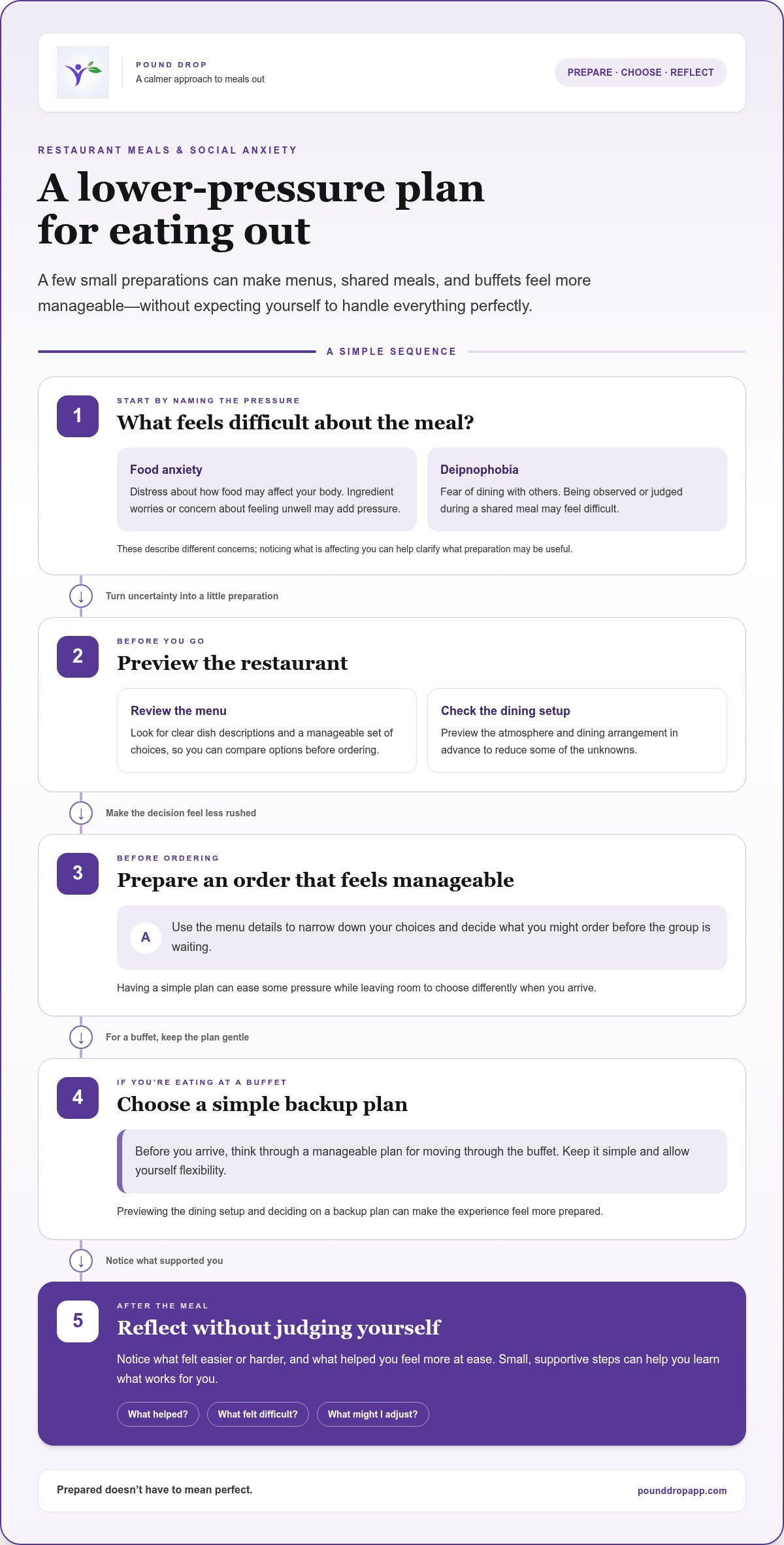
4. Deipnophobia and dining-related anxiety
Deipnophobia describes fear of dining with other people. It can bring nervousness before a meal, panic during one, or an urge to avoid social events. Someone might worry for hours before a family dinner, then feel unable to enter the restaurant. During the meal, a rapid heartbeat, dry mouth, stomach discomfort, shaking, sweating, or dizziness can make it difficult to focus. These reactions can make a familiar social activity feel threatening.
The fear may involve more than eating itself. You might worry about being watched, keeping a conversation going, or drawing attention while asking for water. At a buffet, nearby diners and movement through a crowded serving area can add pressure. If the line feels congested, waiting for more space can make it easier to move through. That small pause is a practical choice, not a failure to take part.
A supportive dining companion can help with specific moments. Before meeting, tell someone you trust what feels hardest, such as ordering or entering a busy buffet line. Agree on a discreet signal that means you need a pause or would like help with a practical interaction. This preparation is one useful part of managing social anxiety around restaurant buffets and menus. A companion can also help redirect a tense conversation or make a quiet moment feel less like a test.
Keep your plan simple. Choose a seat with enough room, and identify somewhere you could step away briefly if needed. If anxiety rises, take a short break, notice your surroundings, and use a steady phrase such as, “I can take this one moment at a time.” Managing social anxiety around restaurant buffets and menus doesn’t mean forcing yourself through every difficult moment. It can mean choosing one manageable action, then deciding what feels right next.
Starting with a meal among close friends or family may feel more approachable than attending a large gathering. Choose a familiar setting and agree on the kind of support you want before you arrive. Afterward, reflect on what helped and what you might adjust. For instance, sitting beside someone you trust may make conversation easier, while a quieter table may help you stay present. These observations can guide future plans. If anxiety repeatedly keeps you from social meals, a mental health professional can help identify triggers and practice approaches such as cognitive behavioral therapy or gradual exposure.
5. Researching restaurant menus and atmosphere in advance
Advance planning can move some decisions out of the most stressful moment: arriving hungry while others are waiting. To manage social anxiety around restaurant buffets and menus, open the restaurant’s online menu before dinner and note a few dishes that feel manageable. Reviews may offer clues about noise, crowding, or seating. Consider which details affect your comfort, then make a simple plan. Preparation won’t control every part of the evening, but it can make your next step clearer.
Choose a likely order and a backup before leaving home. If your first choice is unavailable, you’ll have another option ready instead of scanning the menu under pressure. Practice saying your order aloud, including a simple question about ingredients if needed. For example: “I’d like the vegetable pasta. Could you tell me what comes with it?” A familiar sentence can make the exchange feel less demanding.
Find out what kind of gathering to expect. Ask the host or event planner whether it will be a sit-down dinner, a buffet, or a grazing-style event. Each format brings different demands: a sit-down meal involves ordering and table conversation, while a buffet involves moving through a shared serving area. Knowing the setup helps you decide what preparation will be useful. This is one practical part of managing social anxiety around restaurant buffets and menus, because it lets you prepare for the actual setting.
If a social event includes unfamiliar food, trying takeout from the restaurant at home can offer a low-pressure introduction. Notice the dish’s ingredients, texture, and taste in a familiar setting. You can also ask the host whether bringing a dish you’re comfortable eating would suit the occasion. These steps give you more choice without making the gathering revolve around food.
Make a short plan for moments that tend to trigger stress. Before you arrive, choose where you might pause, who you could speak with, and one calming phrase to use if anxious thoughts appear. For example, try: “I can take my time and choose what works for me.” During the meal, bring your attention back to a conversation, the room, or the taste of your food. Mindfulness can help settle your attention without requiring anxiety to disappear.
Afterward, take a few minutes to note what your preparation changed. Write down what helped, such as previewing the menu, practicing an order, or knowing the event format. Also record one moment that felt difficult and what you might change next time. This reflection helps you build on experience, rather than treating one uncomfortable dinner as a verdict on future meals. Managing social anxiety around restaurant buffets and menus can become a gradual practice of learning what supports you.
If you’re also working on everyday habits beyond restaurant anxiety, explore a structured approach to daily routines.
Pound Drop: Pound Drop App
The Pound Drop App offers a structured weight-loss system for people who want to build self-guided routines around food and progress. It isn’t a treatment for deipnophobia or social anxiety, but it may suit readers looking for practical structure alongside the everyday habits they’re working to maintain.
The Method provides the program’s underlying approach, while The Book and The Journal offer additional tools for tracking and managing progress. These resources can support your broader lifestyle goals, but they do not replace mental health care when anxiety is affecting social meals. Explore them if this kind of structure fits your needs.
Visit pounddropapp.com to learn more about Pound Drop.
Make Your Next Step Gentle and Practical
Progress doesn’t require you to feel completely calm before making plans. As you continue managing social anxiety around restaurant buffets and menus, choose a next step that feels realistic for your life. That might mean accepting an invitation, practicing a prepared phrase, or noticing what helps you feel more grounded. Each experience can offer information for the next one, without turning a meal into a test you must pass.
If you’re also looking for structure around everyday lifestyle habits, Pound Drop offers the Pound Drop App, The Method, and The Book as self-guided tools. They support a different part of your broader routine and don’t replace mental health support for anxiety. Explore Pound Drop’s tools when that kind of structure feels useful.
Contact Pound Drop to learn more. Keep the next step small, give yourself room to practice, and let progress build at a pace that feels sustainable.
Frequently Asked Questions
What is Food Anxiety?
Food anxiety is distress about food or its possible effects on the body, rather than a formal diagnosis by itself. It can show up as repeated worry about ingredients, nausea before a meal, or difficulty concentrating while choosing what to eat. For instance, someone might reread a dish description several times even after finding an option that feels acceptable. Notice the specific concern, such as ingredients or others’ reactions, to understand what support could help.
What is deipnophobia?
Deipnophobia is fear of dining with other people. Someone experiencing it might feel nervous before a shared lunch, struggle to focus on conversation, or avoid invitations because the meal setting feels intimidating. The fear may center on being observed, having to speak while eating, or not knowing how long the gathering will last. Identifying which part feels most difficult can help make the next social meal more predictable.
What is the fear of eating in front of others?
Fear of eating in front of others means feeling anxious about being watched, judged, or noticed during a meal. You might worry about how you hold utensils, chew, or respond to a question with food in your mouth. It can be part of broader social anxiety, though experiences vary. A small first practice could be having a snack with someone you trust and focusing on the conversation rather than monitoring every movement.
How can I prepare for a restaurant visit when I have social anxiety?
Make your plan concrete before leaving: save the restaurant’s address, decide how you’ll get there, and set a simple goal for the visit, such as staying for the first course. If uncertainty about timing is stressful, ask the organizer when people plan to arrive and whether the group has other plans afterward. Keep a short note on your phone with a calming reminder or a phrase you can use if you need a pause.
How can I order food confidently when there is pressure to decide quickly?
Use a brief decision routine instead of trying to compare every dish. First, find a category you usually enjoy, then choose the item with the clearest description. If the server arrives before you’re ready, say, “Could I have another moment, please?” You can also ask a companion to order first while you finish reading. A direct, polite request gives you space without requiring a detailed explanation.
How can I handle social anxiety at an all-you-can-eat buffet?
Give yourself permission to pause before joining the serving line. Look at how the buffet is arranged, notice where people enter and exit, and wait until there’s enough room to move comfortably. If seeing every option feels overwhelming, choose from a nearby section first, then decide whether to return. You don’t need to match anyone else’s pace. Focus on your own experience rather than comparing yourself with other diners.
What breathing or grounding techniques help during anxiety at a restaurant?
Try a quiet grounding exercise while seated: feel your feet on the floor, notice the chair supporting you, and identify a few details in the room. Let your breathing settle without forcing a deep breath. You might silently name the color of a nearby object or the sound of a conversation. These small sensory cues can bring your attention back to the present while you wait for your meal or listen to a companion.
How can friends or family support someone with restaurant-related social anxiety?
Before the meal, ask what kind of help would feel useful rather than guessing or drawing attention to the person at the table. A friend could handle a practical question, suggest a quieter place to sit, or agree on a discreet signal for taking a break. Avoid commenting on what someone eats or urging them to “just relax.” Steady company and respectful choices can make shared time feel more manageable.


