


Article by
Jesper Sorensen
Jesper Sorensen is a holistic health coach and founder of Pound Drop, a different approach to weight loss built around healthier habits. He has written ebooks and health articles for established publishers and has spent years studying nutrition, healthy eating and sustainable weight management.
Eating alone by choice isn’t the same as hiding food or eating in secret. Secret eating means eating privately to conceal what or how much you’re eating; if you’re wondering how to stop secret eating when you are alone, start by noticing what’s happening before and after, without judging yourself. An occasional private snack doesn’t by itself mean you have an eating disorder.
Talking about a habit that feels private or shameful can be hard. But secrecy doesn’t prove you’ve done anything wrong, and it doesn’t tell the whole story. Eating alone can feel peaceful and independent, or tense if you’re worried about being seen or judged.
This article explains what secret eating can look like, how it may relate to eating disorders, and when professional support can help. You’ll also find gentle ways to notice patterns, return to regular meals and snacks, and practice self-compassion as you work toward a more comfortable relationship with food.
Key Takeaways
- Notice when private eating happens and what you’re feeling beforehand to uncover patterns without judging yourself.
- Restricting food can intensify hunger and cravings; returning to regular meals and snacks may help interrupt the binge-restrict cycle.
- Secret eating can have different causes and may occur alongside eating disorders, but eating privately alone doesn’t establish a diagnosis.
- A doctor or eating disorder-informed dietitian can help you understand your eating patterns and find appropriate support.
- Eating alone by choice can feel different from hiding food. Practice self-compassion as you explore what feels right for you.
1. What is Secret Eating?
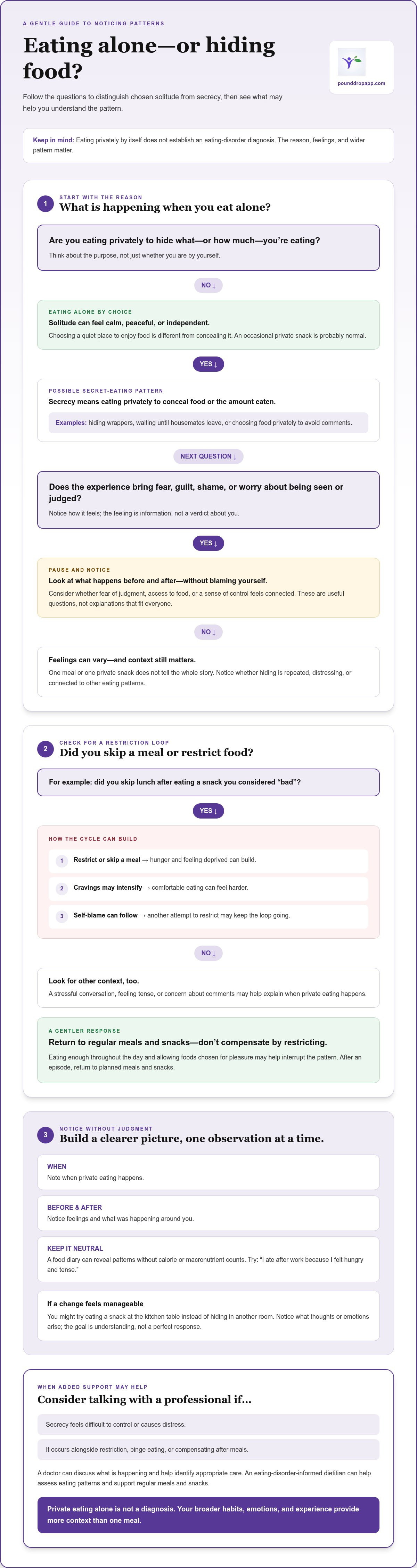
Secret eating means eating alone to hide what you’re eating from other people. It might involve hiding wrappers, waiting until housemates leave, or choosing food privately to avoid comments. An occasional private snack is probably normal. The key difference is often how you feel: enjoying solitude can feel calm, while secrecy may bring fear, guilt, or shame.
Food restriction can keep the pattern going. For example, someone might skip lunch after eating a snack they consider “bad.” By evening, hunger and feeling deprived can intensify cravings, making comfortable eating harder. Eating more than planned may then trigger self-blame and another attempt to restrict. This binge-restrict cycle can make food feel increasingly governed by rules. Eating enough throughout the day and allowing foods chosen for pleasure can help interrupt the pattern.
Guilt can make eating feel like a test of character. Someone may label a cookie a failure, then try to make up for it by skipping breakfast. That self-punishment doesn’t address why they eat secretly; it can deepen shame and keep food rules in place. Try describing the event neutrally instead: “I ate after work because I felt hungry and tense.” This names a situation and feeling without turning food into a moral verdict.
An evolutionary perspective offers one possible way to understand food-seeking behavior. When food feels scarce, uncertain, or controlled by others, eating privately may feel protective. In modern life, someone might hide a snack after being criticized about portions or food choices. This possibility doesn’t explain every experience or mean secrecy is always a conscious decision. It can prompt a useful question: does hiding food feel connected to fear of judgment, access, or control?
Making peace with food starts with noticing patterns, not imposing stricter rules. If you’re learning how to stop secret eating when you are alone, note when it happens, what you felt beforehand, and what was going on around you. A food diary can help reveal triggers without calorie or macronutrient counts. For example, you might notice that secret eating follows a skipped meal or stressful conversation. After an episode, return to planned meals and snacks rather than compensating through restriction.
Private eating can feel uncomfortable even when there’s no immediate risk of judgment. Try a small, manageable change, such as eating a snack at the kitchen table instead of hiding in another room. Notice the thoughts and emotions that arise without demanding they disappear. If the feeling becomes overwhelming, pause and choose a calmer next step. The aim is to understand your experience and build trust with yourself, not force a perfect response.
2. Eating disorders associated with secret eating
Secret eating can happen alongside several eating disorders, but the behavior alone doesn’t establish a diagnosis. It has been associated with binge-eating disorder, bulimia, anorexia, and other specified feeding or eating disorders, often shortened to OSFED. It can occur at any age and may be an early warning sign. A person’s broader eating habits, emotions, and mental health help explain why the pattern matters.
Binge-eating disorder involves episodes of eating an unusually large amount within a limited period while feeling unable to control the eating. Secret eating is part of its diagnostic criteria, but it can also happen separately from objective binge episodes. Around 50% of adults with binge-eating disorder reported eating in secret. In one study, 54% reported secretive eating distinct from binge episodes. Those figures show an association, not a diagnosis for any individual.
Eating privately, enjoying certain foods alone, or having a large meal doesn’t by itself mean someone has binge-eating disorder. A qualified clinician considers the overall pattern, including whether episodes involve loss of control and how eating affects daily life. For example, repeatedly hiding food because of intense distress differs from choosing a quiet place to enjoy a snack. Frequency and context give a clearer picture than one meal.
Secretive eating is also linked with broader difficulties. Among adults, it is associated with more severe eating-disorder symptoms, poorer overall mental health, and greater emphasis on shape or weight. Among young people, secret eating is associated with a higher risk of developing an eating disorder and depression. These links don’t mean every young person who eats privately has a disorder. They do make persistent hiding and distress worth discussing with a trusted adult or health professional.
Consider seeking professional support if secrecy feels difficult to control, causes distress, or sits alongside restriction, binge eating, or compensating after meals. A doctor can discuss symptoms and help identify appropriate care. An eating-disorder-informed dietitian can help assess eating patterns and support regular meals and snacks. Treatment guidance for binge-eating disorder includes both establishing regular eating and identifying the circumstances around episodes. NICE updated its eating disorders recognition and treatment guideline NG69 on December 16, 2020.
To prepare for a conversation, note what tends to happen before and after secret eating. You might record the time, setting, feelings, and whether you’d missed a meal, without counting calories or judging your choices. Share those observations with a doctor or dietitian, along with any concerns about mood, shame, or control. Support can help even if you’re unsure what name fits your experience. A professional can help make sense of the pattern and discuss next steps.
3. Seeking help from a doctor or eating disorder-informed dietitian
In the United States, start with a primary care doctor and describe what’s been happening. Ask for a referral to an eating-disorder-informed therapist or dietitian, and ask local clinics or hospitals about support groups. Explain that you want help with secrecy, distress, or eating patterns. You don’t need to know which diagnosis, if any, applies.
Seek urgent medical or mental health help if eating problems pose an immediate threat to your safety, or if you may harm yourself. Contact emergency services or go to an emergency department for immediate support.
A doctor can listen to your concerns, assess your health, and discuss next steps. Before the appointment, write down examples, such as hiding food, skipping meals, or feeling unable to control eating. Note how these experiences affect daily life, mood, and relationships. If speaking feels difficult, bring your notes or ask someone you trust to attend with you.
An eating-disorder-informed dietitian can help you work toward a steadier eating routine. Treatment often begins by normalizing eating habits with balanced meals and snacks throughout the day. NICE guidance advises against dieting during binge-eating treatment because dieting can trigger further episodes. A dietitian can help you spot gaps in your routine and discuss practical changes without treating foods as rewards or punishments.
A therapist can help you explore emotional patterns connected with secrecy, shame, or fear of judgment. For example, you might talk about what you expect to happen if someone sees you eating. Therapy can also help you practice sharing honestly and responding to difficult thoughts with care. A dietitian and therapist may address different parts of the experience, including eating routines and underlying concerns.
To find a suitable therapist or support group, ask your doctor for eating-disorder-specific referrals and contact local clinics or hospitals about group options. When arranging care, describe the behaviors and concerns you want help with, such as restriction, binge eating, or hiding food. The National Institute of Mental Health’s resource “Eating disorders: what you need to know,” revised in 2024, offers background you can read before a conversation.
For an appointment, bring a short record of when secret eating happens, what was going on beforehand, and how you felt afterward. Leave out calorie counts if they increase distress. You can also write down questions, such as how to make meals more regular or what support is available between appointments. These details give the conversation a practical starting point, even if you feel unsure or embarrassed.
4. Self-compassion
Self-compassion means responding to a difficult eating moment with curiosity instead of punishment. After eating privately, try replacing “I’ve ruined everything” with “I was tired and wanted comfort.” That doesn’t erase what happened. It gives you room to understand the feeling and choose your next step without adding shame.
Food and bodies don’t need moral labels. Calling certain foods “bad” can make eating them feel like breaking a rule, while self-criticism may deepen discomfort with your body. Try describing food neutrally, such as “I enjoyed that dessert” or “I’m still hungry.” Body acceptance doesn’t require loving every part of your appearance. It can start with treating your body as deserving of care and nutrition today.
What practical steps help interrupt binge or secret eating urges? Pause and name what you’re feeling, then try a calming distraction for a set period, such as listening to music or stepping outside. Eating afterward is okay; the pause is for noticing your needs, not denying food. If you’re hungry, choose a snack or meal rather than treating the urge as something to defeat.
Mindful eating can create a moment of self-connection, even when you’re eating alone. Sit down, notice the food’s smell and texture, and check in with your hunger and satisfaction as you eat. You don’t need to eat slowly or perfectly. The aim is to notice your experience, including whether you’re enjoying the food or feeling distracted, without turning the meal into a performance.
A short journal entry can help uncover patterns behind private eating. Write what happened beforehand, what you were thinking, and whether self-punishment followed. For example: “I felt lonely after work, ate while hiding, then called myself weak.” Leave out calorie counts if they make the process feel restrictive. This record can help you notice emotional needs and discuss eating patterns with a professional.
Build self-care into daily and weekly routines rather than waiting until an urge feels intense. A daily walk, a quiet cup of tea, or a weekly call with someone you trust can offer ways to respond to stress. These activities don’t replace meals or professional support. They add options for care, so food doesn’t have to meet every emotional need. If a difficult day disrupts your plan, return to your next caring choice without demanding perfection.
5. Eating alone by choice versus in secrecy
Eating alone can be peaceful, practical, or uncomfortable. Someone might enjoy lunch at home, eat during a work break, or have dinner alone because others aren’t available. Those situations don’t automatically involve secrecy. The distinction often lies in whether you feel free to eat or feel you must hide food to avoid judgment. Solo eating can feel empowering for one person and exposing for another, depending on their relationship with food.
Notice what happens before, during, and after a private meal. If you choose a quiet table because you want a calm lunch, that may feel comfortable. If you wait until everyone leaves, hide wrappers, and feel guilty afterward, secrecy may be causing distress. These signs don’t diagnose a disorder. They can help you understand the causes and habits involved, including worries about weight, comments from others, or strict food rules.
Eating alone isn’t always a choice. Someone may have an unpredictable schedule, limited access to shared meals, or a need for privacy. In those cases, being alone doesn’t necessarily mean they’re hiding food. Ask yourself: “Would I eat this the same way if someone I trusted were here?” Your answer may reveal whether the main issue is solitude, fear of judgment, or a learned habit.
How can you stop eating secretly when no one is around? Start by noticing when hiding feels necessary, then choose one small change, such as sitting at the kitchen table or using a plate. If you’re learning how to stop secret eating when you are alone, record what you felt and what happened beforehand. Treat that note as information, not evidence of failure.
Try reclaiming a solo meal as a small ceremony. Set out a plate, choose a comfortable place, and give yourself permission to enjoy the food without multitasking. For example, have a snack at the table with a book or music instead of eating quickly in a hidden spot. You don’t have to invite someone else or make every meal social. The aim is to make eating alone feel intentional rather than ruled by guilt and shame.
Over time, noticing these patterns can help clarify what kind of support would help. You might practice eating a familiar snack around a trusted person, or share your experience with someone who listens without commenting on weight or portions. Move at a pace that feels manageable. For a self-guided way to reflect on everyday habits, explore a structured approach to food habits.
Pound Drop: Pound Drop App
The Pound Drop App offers a self-guided way to build everyday lifestyle habits. If you want structure alongside the steps in this article, it can help you follow a steady approach without treating a difficult eating moment as failure. It isn’t a substitute for eating-disorder care when secrecy, distress, or loss of control calls for professional support.
The Method, The Book, and The Journal provide additional parts of Pound Drop’s structured system. Explore these tools at your own pace and consider whether they fit the kind of support you’re looking for.
Visit pounddropapp.com to learn about Pound Drop App.
Take One Steady Step Forward
Changing a private eating habit doesn’t require solving everything today. Choose one small action you can repeat, such as making space for a calm meal or writing down what you need before reaching for food. If you’re still learning how to stop secret eating when you are alone, let curiosity guide your next step instead of self-criticism.
For self-guided structure, Pound Drop’s App, The Method, and The Book offer tools for working on everyday habits at your own pace. They can complement personal reflection, while support from a doctor or eating-disorder-informed professional remains important when eating concerns affect your wellbeing.
Explore Pound Drop’s tools and choose a next step that feels manageable. Progress can begin with one honest, kind choice, and you can build from there.
Frequently Asked Questions
What is Secret Eating?
Secret eating means eating in a way intended to keep others from knowing about the food or the eating itself. For example, someone might wait until their family leaves before opening a snack they expect to be criticized for choosing. The important distinction is the reason for privacy: a quiet meal can be a preference, while concealment may feel driven by fear, distress, or shame.
Why does it happen?
Secret eating can develop for different reasons, so no single explanation fits everyone. Someone might anticipate comments about portions, use food for comfort after a stressful day, or feel drawn to foods they’ve been trying to avoid. A useful first clue is the situation: notice whether secrecy follows criticism, loneliness, a long gap between meals, or a difficult emotion.
Do I need a dietitian, a therapist, or both?
A dietitian can help you examine eating routines and build a more consistent approach to meals. A therapist can help you explore concerns such as shame, anxiety, or conflict around food. Some people begin with one professional and add another if their needs call for it. For instance, you might start by asking a primary care doctor which kind of support best matches your main concern.
What should I do after a binge episode?
Return to your next planned meal or snack rather than trying to compensate by skipping food. If the episode happened after a stressful interaction or a long stretch without eating, make a brief note of that context. You can use the observation to discuss patterns with a professional. One episode doesn’t call for punishment or a new set of restrictive food rules.
Why Do I Binge Eat When I’m Alone?
Being alone may make eating feel less observed, especially if you worry about other people’s reactions. A binge episode can also follow intense hunger, stress, or a feeling of losing control around food. Consider what changes when you’re by yourself: the time, your mood, whether you’ve eaten recently, and what food is available. Those details can help clarify what’s contributing.
Why Do I Want to Eat in Secret?
You might want privacy because you expect judgment, comments about your choices, or pressure to explain what you’re eating. Past experiences can shape that expectation, even when no one is present. Try completing the sentence, “If someone knew, I’m afraid they would…” Your answer may point to a concern to explore, such as criticism, control, or feeling undeserving of certain foods.
What causes secret eating when alone?
Possible causes include learned habits, distress about food choices, fear of being watched, or practical circumstances that make private eating easier. For example, someone working late may eat alone because their schedule differs from their household’s. That isn’t automatically secret eating. Ask whether you’re simply alone or actively concealing food and feeling unsettled about being discovered.
How can I manage emotional eating and food cravings when alone?
First, consider whether you’re physically hungry, emotionally unsettled, or experiencing both. If you’re hungry, choose something to eat; if stress is present, add a coping option such as calling someone you trust or taking a short walk. You don’t have to use distraction to deny food. A brief note about the craving’s timing and context can help you recognize recurring patterns.


