


Article by
Jesper Sorensen
Jesper Sorensen is a holistic health coach and founder of Pound Drop, a different approach to weight loss built around healthier habits. He has written ebooks and health articles for established publishers and has spent years studying nutrition, healthy eating and sustainable weight management.
The urge to finish every bite can come from childhood messages, pressure not to waste food, or habits that drown out your body’s signals. Learning to leave food on your plate without guilt means noticing when you feel comfortably full and responding to old rules with self-compassion. You don’t have to earn permission to stop eating.
If an unfinished plate makes you uneasy, the feeling is real, but it doesn’t mean you’ve done anything wrong. You can appreciate a meal and the effort behind it without eating past fullness.
This article explores how hunger and fullness cues can guide your choices, why Clean Plate Club habits may linger, and how childhood experiences can shape the way you eat. You’ll also find gentle ways to respond to guilt, build a more positive relationship with food, and serve an amount that feels right, with room for more if you’re still hungry.
Key Takeaways
- Pause during meals to notice hunger, fullness, and whether you’re still enjoying the food.
- Explore how childhood mealtime rules may shape the urge to finish everything, and practice questioning beliefs that no longer serve you.
- Respond to food guilt with curiosity and kindness instead of treating it as proof you’ve done something wrong.
- Build a more flexible relationship with food by honoring hunger and fullness without labeling foods as good or bad.
- Try serving a smaller portion first, then have more if you’re still hungry; leftovers can be saved for later.
1. Checking in with hunger and fullness
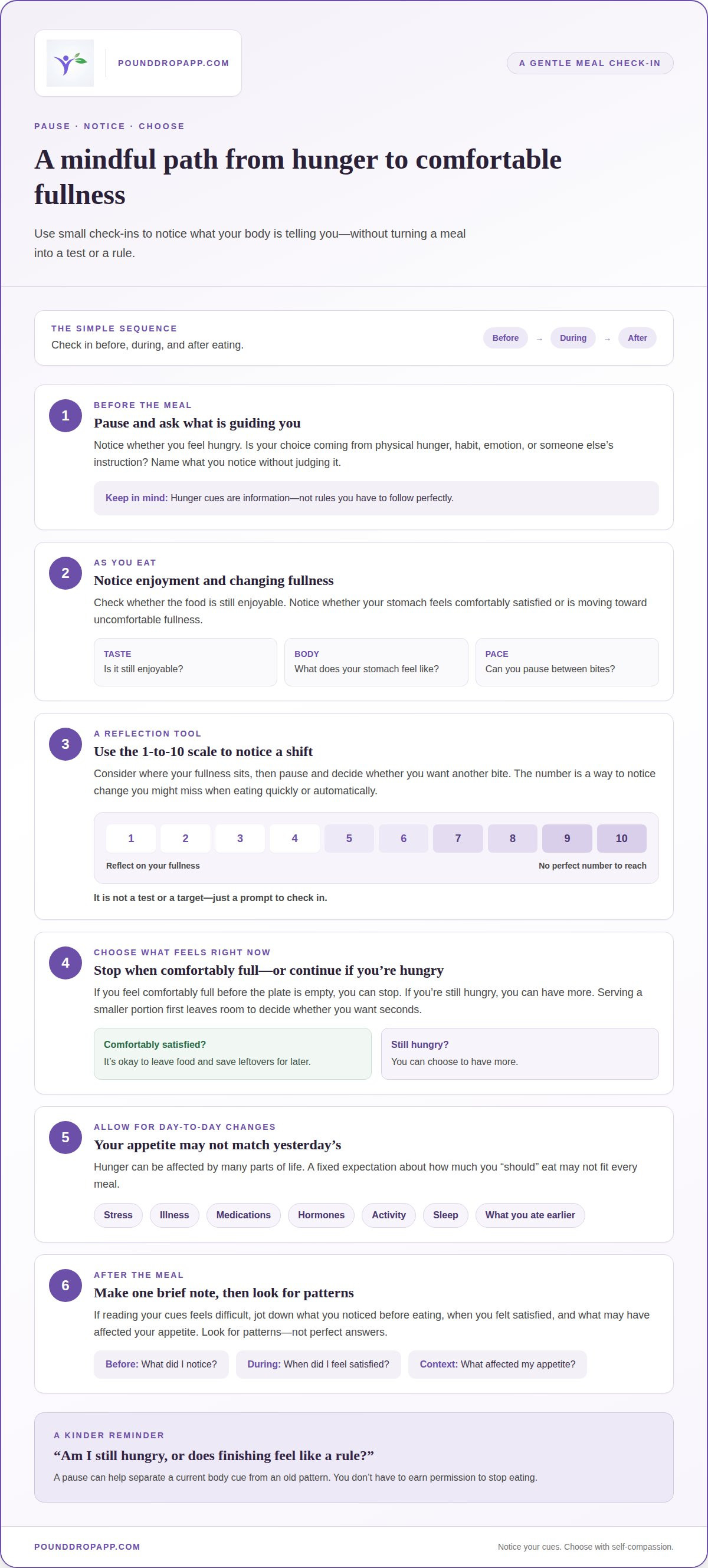
Before eating, pause and notice whether you feel hungry. Ask yourself what’s guiding you: physical hunger, habit, emotion, or someone else’s instruction. For example, dinner may be ready even though you still feel full from a late lunch. Naming the reason without judging it gives you useful information. Hunger cues are information, not rules you must follow perfectly.
Check in again during the meal. Is the food still enjoyable? Does your stomach feel comfortably satisfied, or are you moving toward uncomfortable fullness? You can use a 1-to-10 scale as a simple reflection tool: consider where your fullness sits, then pause and decide whether you want another bite. The number isn’t a test or a target. It helps you notice a change you might otherwise miss while eating quickly or automatically.
Your appetite can change from day to day, so yesterday’s portion may not suit you today. Stress, illness, medications, hormones, activity, sleep, and what you ate earlier can all affect hunger. After a restless night, for instance, you may feel different at breakfast than after a good night’s sleep. A busy, active day may also leave you hungrier than a quiet one. That’s why a fixed expectation about how much you “should” eat may not fit every meal.
Past dieting or restriction can also make stopping feel difficult. If you’ve been limiting food, you may feel driven to finish what’s available, even after your physical hunger has eased. Try asking, “Am I still hungry, or does finishing feel like a rule?” This question can help distinguish a current body cue from an old pattern. Giving yourself permission to eat food you want, and to stop when comfortable, supports nourishment without requiring you to justify either choice.
Make check-ins easier by putting your phone away and choosing a calmer place to eat when possible. Slow down enough to notice a few bites: their flavor, texture, and how your body feels as you eat. Eating without distractions gives you more space to recognize fullness as it develops. If you feel comfortably full before the plate is empty, you can stop. Eating past that point just to clear the plate may leave you uncomfortable, bloated, or with heartburn.
If you’re still finding it hard to read your cues, make one brief note after a meal: what you noticed before eating, when you felt satisfied, and what affected your appetite. Look for patterns, not perfect answers. A note such as “more hungry after a poor night’s sleep” can help you approach the next meal with curiosity. Each pause is practice in listening, and every meal can feel different.
2. Clean Plate Club habits and childhood influences
The “Clean Plate Club” describes finishing everything served, even after feeling full. For some people, the rule began at family meals, where an adult praised an empty plate or insisted on “one more bite.” A child may learn that leaving food disappoints someone or shows poor manners. Years later, that expectation can still shape eating, even when the original family rule is no longer present.
The phrase also has a history in the United States. A Clean Plate campaign began in 1917, encouraging people to finish their food as an act of patriotism and avoid eating between meals. The campaign was restarted as the Clean Plates Club in 1947. Knowing this history can help separate a learned cultural message from a personal need: finishing a plate is not automatically the same as getting the nutrition your body needs.
To explore what you learned, recall a specific childhood meal. Were children expected to finish their vegetables before leaving the table? Did an adult decide when everyone had eaten enough? Write down the words you remember, then consider what they taught you. For example, “wasting food is always wrong” may have become “I must eat past comfort.” Recognizing that connection doesn’t erase the feeling, but it gives you a chance to choose how you respond now.
Pressure around food can affect children in different ways. Being urged to eat may be associated with eating fewer vegetables, increased picky eating, emotional eating, or reduced overall food intake. That doesn’t mean every family meal leads to these outcomes. It does show why allowing children to stop when they feel full can support a more responsive mealtime. Caregivers can offer food without making a clean plate the condition for praise, dessert, or leaving the table.
If you’re a caregiver, try replacing “finish your vegetables” with a neutral option, such as “You can stop when your body feels full.” Let children decide whether they want more while adults continue offering varied foods. If you’re revisiting your own habits, practice a small change at one meal: leave a bite when you feel physically satisfied, and notice what comes up. The goal isn’t to follow a new strict rule about leaving food. It’s to make a choice that belongs to you, rather than automatically obeying an old instruction.
Food memories can also carry feelings of care, scarcity, or family connection. A relative who urged you to finish may have been trying to ensure you had enough, not teach you to ignore your body. You can appreciate that intention and still make a different choice today. If leaving food brings guilt, gently name the old message, then remind yourself that an unfinished plate doesn’t cancel gratitude, good manners, or nourishment.
3. Self-compassion around food guilt
Guilt after leaving food can make an ordinary meal feel like a personal failure. Pause and notice the feeling before reacting: is it about waste, family expectations, or a food rule you learned? Try naming the thought plainly, such as, “I feel guilty because I was taught to finish everything.” That describes a feeling, not a verdict. Then remind yourself that stopping when satisfied is a choice, not evidence of ingratitude.
Choose a kinder response in the moment. If you leave food behind, try, “I can appreciate this meal without eating past comfort.” If throwing food away feels upsetting, consider whether you can save it for later or use it another way. When neither option works, you can still let it go without punishing yourself. The aim isn’t to ignore concerns about waste, but to keep them from overriding hunger and fullness every time you eat.
How can you handle pressure from family or hosts to finish your food? Thank them for the meal, then say, “It was lovely, and I’m satisfied,” or ask to save the rest for later. A calm, brief response can acknowledge their care without giving up your choice.
Trace the guilt to its source instead of treating every thought as a command. Maybe a parent praised an empty plate, or a strict food rule says you must finish before having dessert. Ask whether that rule reflects your needs now. Notice what happens when you question it: perhaps discomfort rises and then passes, or you feel more able to choose. You don’t have to replace one rule with another. Practice responding to each meal as its own experience.
Can guilt about food or difficulty stopping eating be a sign of disordered eating? Guilt alone doesn’t establish a diagnosis, but recurring distress or difficulty eating in a way that feels manageable deserves attention. Consider seeking help if food thoughts or eating patterns regularly interfere with daily life, relationships, or wellbeing.
What resources help with food guilt or disordered eating in the United States? Start with a primary care clinician, licensed mental health professional, or registered dietitian experienced in eating concerns. They can discuss support options suited to your situation. You might also look for a support group focused on eating concerns. Before reaching out, write down one example, such as feeling unable to stop despite discomfort, and what kind of help you hope to receive.
Self-compassion is a practice, not a requirement to feel calm immediately. After a difficult meal, write one sentence about what triggered guilt and one kind response to remember next time. For example: “I left food because I was full; I can remind myself that my body’s comfort matters.” Small, honest reflections can help you develop a response that’s gentler than blame.
4. Building a positive relationship with food
A more peaceful relationship with food grows through repeated choices, not one perfect meal. Start by asking why you feel you must finish: is it a family rule, fear of waste, or worry about eating later? Write down the answer after a meal, then consider whether it helps you care for yourself today. For example, “I should finish because food is precious” can become “I can value this food and stop when I’m satisfied.” That shift makes room for gratitude and choice at once.
Try loosening food rules that divide eating into permitted times and forbidden foods. Eating consistently, without strict limits on when or what you can eat, can help interrupt a restriction-and-urge cycle. If you’ve been avoiding a food you enjoy, allow it as part of an ordinary meal or snack rather than treating it as a reward. The aim isn’t to make every choice feel easy. It’s to practice responding to hunger without turning one food into a test of self-control.
Bring your attention back to the experience of eating. Choose a meal, set aside your phone, and slow down enough to notice the flavors and textures. A bite of warm bread, for instance, may taste different from a crisp apple. Take a breath between bites and notice whether you’re still enjoying the food. These small pauses can help you stay present and recognize fullness cues, rather than relying only on an empty plate to decide when a meal ends.
Notice the words you use about food. Calling a meal “bad” or a dessert “cheating” can add judgment to an everyday choice. Try neutral descriptions instead: “This is chocolate cake,” or “I’m having pasta for dinner.” If you hear an old rule in your mind, write it down and ask whether it reflects your needs or someone else’s expectations. Replacing judgment with observation helps build a relationship with food that leaves room for taste, satisfaction, and changing appetite.
A supportive eating environment can make practice feel more manageable. At a shared meal, invite people to talk about the day rather than comment on who has cleared a plate. If you care for children, avoid pressure such as “just one more bite” or “finish your vegetables.” Let them stop when they feel full, and offer foods without making approval depend on eating them. Adults can model the same respect by leaving food when satisfied.
Gratitude doesn’t require eating every bite. You might remember the people, time, and resources involved in preparing a meal, then choose whether to save leftovers, compost scraps where possible, or discard food that can’t be kept. Finishing a plate doesn’t directly solve world hunger. Giving yourself permission to stop can be part of eating in a way that respects both your body and the food in front of you.
5. How can you serve smaller portions and get seconds if still hungry?
A serving that suits one person may feel like too much or too little for another. Appetite also shifts with activity, stress, sleep, and earlier meals, so a fixed portion won’t fit every day. Start with an amount that looks manageable rather than treating a full plate as an obligation. At a restaurant, for example, eat what feels satisfying and take the rest home if that option is available.
Before serving yourself, pause and ask, “How much would feel like enough right now?” Choose a smaller first serving, then sit down and eat at a comfortable pace. This isn’t a limit on what you can have. It’s a way to leave room for another serving if you’re still hungry, rather than feeling pressured to finish more than you want.
At home, you might serve a modest amount of the main dish and add sides you genuinely want. For example, put a smaller scoop of rice on your plate, then take more if you’re still hungry. At a shared meal, you can also take a little of each dish instead of automatically accepting a large helping. The goal is to make serving a choice, not a test of whether you can clear your plate.
Family-style meals can make that choice easier because dishes stay on the table for people to serve themselves. Each person can choose the foods and amounts they want, then take more if needed. If you’re hosting, place serving spoons beside each dish and let guests decide what goes on their plates. This simple setup avoids assuming that everyone has the same appetite or wants the same foods.
After your first serving, check whether you’re still hungry before taking more. If you are, a second serving is a reasonable choice; if you’re satisfied, you can stop without explaining. If you’re unsure, pause briefly and notice whether you want more food or feel nudged by habit, the pace of the meal, or someone else’s expectations. Either answer can guide your next choice.
Keep leftovers in mind when planning a meal, especially if the recipe makes more than you need. Put extra food into a container for later rather than serving it all at once. For example, portion the meal onto plates at the table while keeping the rest in the kitchen. This makes it easier to take seconds intentionally and gives uneaten food a practical next step. With practice, smaller first servings become a flexible starting point, not a new rule.
Pound Drop: Pound Drop App
The Pound Drop App offers a self-guided way to track and manage your progress as you practice more mindful eating habits. It may suit you if you want structure for reflecting on everyday choices while still making room to notice your own hunger and fullness.
The App is part of a broader system that includes The Method, The Book, and The Journal. Together, these offerings provide tools for people who prefer a guided, self-directed approach to lifestyle changes. Progress can include noticing patterns, not expecting every meal to go perfectly. You can use what you learn here at your own pace and build on it gradually.
If you’d like to explore the Pound Drop App, visit pounddropapp.com.
Let Your Next Meal Be Practice
Learning to leave food on your plate without guilt can be less about getting every meal right and more about making space to choose. Let your next meal be an experiment in noticing what feels comfortable, without grading yourself afterward. A choice made with awareness matters, even if the old guilt still appears.
Consider how you want your relationship with food to feel over time: more flexible, less governed by inherited expectations, and more responsive to your needs. You don’t need to prove progress by leaving a certain amount behind. A pause, followed by a choice that feels honest, is meaningful practice. You can build on that experience in your own way.
If you’d like support with your next step, contact Pound Drop for support.
Move gently. You’re allowed to learn at your own pace, one choice at a time.
Frequently Asked Questions
Why do I always feel like I have to finish my food?
The urge to finish can come from learned expectations, anxiety about waste, or wanting to show appreciation. Notice when it’s strongest: perhaps at a family dinner, after a rushed lunch, or when someone comments on your plate. The setting can reveal what’s driving the urge. Try asking yourself, “Would I keep eating if nobody could see my plate?” Your answer may help separate your appetite from pressure or habit.
But What About Food Waste?
Reducing waste matters, but eating past comfort isn’t the only way to value food. If you’ve made too much, put safe leftovers in a container for another meal or share them when practical. For future meals, prepare less or set aside extra food before serving. If scraps can’t be used, composting may be an option where available. Choose a realistic step to reduce waste without making your body responsible for finishing everything.
How can I stop eating past fullness?
Make stopping easier by changing what happens around the meal. Serve food away from the table, put leftovers aside before you begin, and pause when eating starts to feel less comfortable. If you notice pressure or heaviness, set your fork down and check whether another bite appeals to you. You don’t need to wait until you feel uncomfortably full to stop. If this pattern causes ongoing distress, consider discussing it with a qualified professional.
How can you break the habit of feeling like you need to finish everything on your plate?
Interrupt the automatic routine with a simple pause before clearing your plate. Ask, “Am I choosing to continue, or am I following an old instruction?” Then make one deliberate choice, such as saving the remaining food or leaving it. If someone else is clearing dishes, let them know you’re finished before they take your plate. Repeating this small change in familiar situations can help you respond intentionally instead of finishing automatically.
Why do people feel guilty about leaving food on their plate?
Guilt may reflect messages about thrift, politeness, or gratitude rather than your appetite. For example, you might worry that a host will think you disliked dinner, even when you enjoyed it. Try separating the two ideas: appreciating a meal doesn’t require eating every bite. A simple “Thank you, I enjoyed it” can express gratitude while allowing you to stop. Notice which specific belief appears, then decide whether it fits the situation now.
How can you practice leaving food uneaten without guilt?
Learning to leave food on your plate without guilt can begin with a low-pressure meal at home. Before eating, decide what you’ll do with leftovers, such as covering them for tomorrow. During the meal, check whether you want another bite or feel ready to stop. Afterward, write down what you noticed without grading your choice. This gives you a record of real experiences, rather than relying only on the anxious prediction that leaving food will feel wrong.
What are mindful eating cues for knowing when you are full?
Possible cues include a comfortable feeling in your stomach, less interest in another bite, or noticing that the meal is becoming less enjoyable. These signals can be subtle and may vary across meals. Try pausing partway through and checking for changes in comfort, taste, and appetite. A slower pace can make those details easier to notice. Treat cues as information, not a strict stopping rule; you can respond to what feels true in that moment.
How do childhood food rules and clean-plate expectations affect eating habits?
Repeated childhood instructions can become automatic adult habits, such as feeling uneasy when food remains or treating an empty plate as good manners. To explore this, recall a familiar meal and the exact message you heard. Then ask whether following it still supports your needs. Caregivers can also model choice by avoiding pressure and letting children decide when they’ve had enough, rather than making praise depend on a clean plate.


