


Article by
Jesper Sorensen
Jesper Sorensen is a holistic health coach and founder of Pound Drop, a different approach to weight loss built around healthier habits. He has written ebooks and health articles for established publishers and has spent years studying nutrition, healthy eating and sustainable weight management.
Food morality labels turn meals into judgments, casting some foods as “good” and others as “bad.” They can make eating feel like a test of self-control instead of a daily need and a source of enjoyment. Learning how to stop viewing food as good or bad starts with noticing those labels and replacing them with a more neutral, flexible perspective.
If food choices have left you feeling guilty or caught between strict rules and foods you enjoy, you’re not alone. You don’t need to change everything at once. This article explains what food morality labels are, how diet culture can reinforce them, and how to talk about nutrition without judging foods. You’ll also find practical ways to make room for foods you’ve learned to avoid and take small, sustainable steps toward a more peaceful relationship with eating.
Key Takeaways
- Notice a food’s taste, smell, texture, and appearance without turning the experience into a judgment.
- Replace labels like “good” or “bad” with neutral descriptions that explain what a food offers or how it fits your needs.
- Question where your food rules came from and whether they support a flexible, nourishing relationship with eating.
- Practice making space for foods you enjoy, including those you’ve learned to judge.
- Choose small, realistic changes and build on them gradually rather than aiming for perfection.
1. What are food morality labels?
Food morality labels divide eating into “good” and “bad” choices. A salad might be praised as “clean,” while a cookie is called “guilty” or “cheating.” These words judge the person as well as the food. But a meal doesn’t determine someone’s character. A more neutral view considers how a food tastes, how it fits the moment, and whether it meets a need for nourishment, comfort, or enjoyment.
Labels can shape habits. Treating a food as forbidden may bring a sense of control at first. Over time, restriction can create deprivation and make thoughts about that food more persistent. Eating it may then trigger guilt or anxiety, followed by attempts to compensate. Noticing this pattern can be challenging, but it’s a useful step toward a steadier relationship with food. It helps separate the choice itself from the judgment attached to it.
Try observing your eating patterns for one week without changing them. In a journal, record what you ate, the situation, and any thoughts or feelings that came up. For example, note whether “I shouldn’t eat this” appeared before or after a snack. Treat your notes as observations, not grades. This can reveal repeated rules, such as avoiding a food at lunch or feeling that a meal must be earned, without asking you to fix everything immediately.
Pay attention to the sensory experience of a meal. Notice a food’s color, smell, texture, temperature, and flavor, then pause to see which details you enjoy. If you’re eating cheesecake, for instance, notice its creamy texture and tangy taste instead of labeling it a “bad” choice. With children, ask open-ended questions such as, “What does this smell like?” or “How does it feel?” Curiosity shifts the conversation toward experience rather than judgment.
Food rules can sometimes become rigid. Orthorexia nervosa is not an officially recognized condition, but people described as experiencing orthorexia may restrict what they eat and avoid foods they consider unhealthy. That restriction can raise the risk of nutritional deficiencies. The NHS says worry about an unhealthy relationship with food may be a sign of an eating disorder. Labels alone don’t establish a diagnosis, but distress and increasingly limited eating deserve attention.
To practice food neutrality in everyday meals, notice one judgmental thought and replace it with a specific observation, such as “This is warm and filling.” Focus on curiosity, not on making every meal feel perfect. Seek help from a dietitian or therapist when food guilt or anxiety repeatedly limits what you eat, disrupts daily life, or leads to restrictive or compensatory behaviors. The NHS identifies concern about an unhealthy relationship with food as a reason to take those feelings seriously.
2. Discussing nutrition without moralizing food
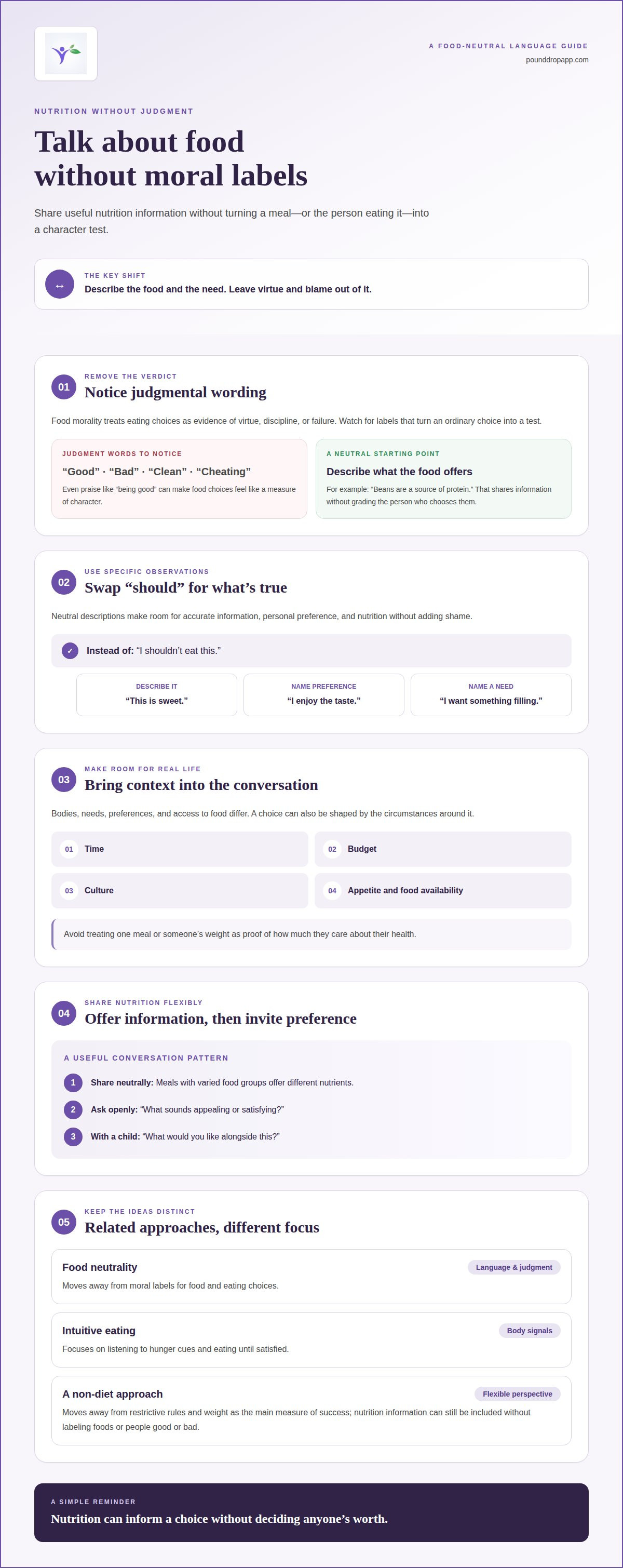
Food morality means treating eating choices as evidence of virtue, discipline, or failure. Nutrition can matter without turning a meal into a character test. For example, describing beans as a source of protein explains something about the food; calling a person “good” for choosing them adds judgment. The distinction matters because bodies, needs, preferences, and access to food differ. Neutral language can share useful information while leaving room for those differences.
Healthism is the idea that health is mainly an individual responsibility and a measure of personal worth. Applied to food, it can make a particular meal seem like proof of whether someone cares about their health. That overlooks real-life context: time, budget, culture, appetite, and food availability can all shape a choice. Compassionate language keeps the focus on practical needs instead of implying that weight or one food choice reveals someone’s values.
Notice how you describe food aloud and in your thoughts over the next few days. Replace “I shouldn’t eat this” with something more specific, such as “This is sweet,” “I enjoy the taste,” or “I want something filling.” These descriptions don’t require you to approve or disapprove of the choice. They make room for accurate information, personal preference, and nutrition without adding shame.
Food neutrality and intuitive eating are related, but they aren’t identical. Food neutrality means moving away from moral labels; intuitive eating involves listening to hunger cues and eating until satisfied. A neutral description can support a less judgmental approach, while intuitive eating focuses on responding to the body’s signals. Both leave room for a person’s circumstances and preferences rather than insisting one set of rules fits everyone.
A non-diet approach to food and eating moves away from restrictive rules and weight as the main measure of success. It can still include nutrition information, presented without calling foods or people good or bad. For example, you can explain that meals with varied food groups offer different nutrients, then ask what sounds appealing or satisfying. With a child, balance nutrition information with an open-ended question such as, “What would you like alongside this?”
When discussing a meal with family, describe what is present and ask what would make it satisfying. Avoid praising one person as “being good” for choosing a food or criticizing another for choosing differently. Practicing this language in ordinary conversations can make nutrition feel less like a rulebook. If keeping track of daily routines helps you practice steady changes, a simple way to track everyday habits may support that process.
3. How diet culture labels foods as good or bad
Diet culture often turns nutrition advice into rules about which foods show discipline. “Clean eating” is one example, but there’s no accepted definition of what counts as clean. One person may include whole grains; another may reject packaged bread. Conflicting standards can make ordinary choices feel like tests, even when someone simply needs a convenient lunch or a familiar meal.
Labeling food can attach guilt to eating. Someone might call a dessert “cheating,” then feel guilty for having it. Shame can contribute to binge-eating episodes and a cycle of shame and disordered eating. That doesn’t mean every uncomfortable feeling leads to disordered eating. It does mean language around a meal can influence what happens afterward, including whether someone enjoys the food or feels compelled to compensate.
These labels can carry classist assumptions. Advice that treats fresh, costly ingredients or time-intensive cooking as the only “good” choices can overlook someone’s budget, schedule, kitchen access, or local food options. For example, calling a packaged meal a failure ignores the practical role it may play on a busy evening. Food judgments often reveal as much about the expectations behind the advice as they do about the food itself.
To question a personal food label, write down about ten phrases you use for foods or eating behaviors. Examples might include “I was good today,” “that’s a guilty pleasure,” or “I need to earn dessert.” For each phrase, ask where you first heard it, whose standards it reflects, and what it leads you to do. This turns a familiar judgment into something you can examine rather than follow automatically.
Then test the label against your actual experience. If you call pasta “bad,” ask what specifically concerns you: its ingredients, portion, or a rule you learned elsewhere? Notice whether the word changes your energy, mood, or willingness to eat later. Replace moral language with a description that gives useful context, such as “This meal is quick to prepare” or “I enjoy this flavor.” A description informs; a verdict ranks.
Parents can avoid labeling foods by describing taste, texture, or ingredients instead of praising children as “good” for eating particular items. Try asking, “What do you notice about the smell?” or “Which part tastes most enjoyable?” If you share nutrition information, pair it with an open-ended question, such as, “What else would you like with this?” This keeps food conversations curious rather than turning a child’s plate into a measure of behavior.
Challenging diet culture doesn’t require rejecting nutrition information. It means noticing when advice becomes a rigid rule and considering whether it fits the person and situation. A label that makes someone feel guilty about a practical choice may deserve a second look. Asking who benefits from the rule, and whose circumstances it leaves out, can help loosen its influence.
4. Including feared or judged foods in everyday life
Foods you’ve learned to fear can feel difficult to include, especially when old rules make them seem forbidden. Start with a food you judge but feel ready to approach, and plan a familiar way to eat it. For example, you might include a portion of chips with lunch rather than waiting until you feel extremely hungry. The aim isn’t to prove anything or eat a particular amount. It’s to practice making a choice without turning it into a verdict.
Access and circumstances matter, too. Cost, limited time to prepare meals, and nearby food options can affect whether vegetables or other foods fit into a day. A frozen meal, canned beans, or a quick sandwich can be a realistic choice when shopping or cooking is difficult. Those circumstances aren’t evidence of poor effort. A flexible approach recognizes that meals need to work within real schedules, budgets, and food access.
Give yourself permission to eat foods you enjoy without first earning them through exercise or restricting other meals. In practice, that could mean choosing a favorite snack because it sounds appealing, then continuing with your usual eating routine. Foods in moderation can be part of a balanced diet; including one doesn’t require a compensatory rule. Intuitive eating also encourages noticing hunger and satisfaction, rather than relying only on rigid instructions about what you’re allowed to choose.
How can you handle guilt after eating a food you consider bad? Pause and name the feeling without treating it as proof that you made a mistake. Then describe what happened neutrally, such as, “I ate the snack I wanted, and now I’m feeling guilty.” Return to your next usual meal instead of skipping it or adding exercise to compensate. This can interrupt the cycle of judgment and reaction, even if the uncomfortable feeling takes time to settle.
If including a judged food feels overwhelming, make the step smaller. You might pair it with a familiar meal, eat it with someone you trust, or begin by challenging one rule about when you’re allowed to have it. Notice what the rule predicts and what actually happens, without demanding that the experience feel easy. If a food causes strong distress or your eating feels increasingly restricted, discussing that pattern with a therapist or another qualified professional can help you find support at a manageable pace.
Progress can look ordinary: adding a preferred food to a grocery list, having a snack when hungry, or choosing a convenient meal without self-criticism. These choices don’t need to be perfect or follow a set schedule. Each practice gives you a chance to relate to food with less judgment and more flexibility.
5. Making gradual, sustainable changes
Changing a food rule is easier when you focus on one behavior at a time. Choose a specific moment, such as adding a snack you enjoy to your afternoon, and notice what thoughts arise. You might feel anxious or expect guilt. Record the thought, then decide what you want to do next without treating discomfort as proof that you chose badly. Repeating one manageable practice can make a new response feel more familiar.
Use consistency as a guide, not perfection. For example, if you often skip lunch after eating a food you judge, aim to return to your usual next meal. If that feels like too much, start by noticing the urge to compensate and pausing before acting on it. Small changes in eating behaviors matter because they interrupt old routines without demanding a complete change to your meals, schedule, or thinking all at once.
Make each step realistic for your day. Account for work, food access, cooking time, appetite, and the foods you enjoy. You might keep a convenient snack available for a busy afternoon or add a food you like to a familiar meal. If a plan repeatedly creates stress, adjust the step rather than blaming yourself. Sustainable practice fits real life, including days when routines change.
During eating-disorder recovery, hunger cues may be disrupted, so a dietitian may help someone follow a meal plan. Scheduled meals and snacks about every 2-3 hours may also help reduce stomach discomfort during recovery. When appropriate in recovery, tuning into hunger and fullness can matter more than strictly following serving sizes on food labels. The useful step depends on recovery needs, not a general rule that everyone must follow.
Notice what supports the change, too. After trying a new response, write down what happened, how you felt, and what you might repeat next time. For instance, note whether eating a planned snack helped you stay focused through an afternoon task. This isn’t a scorecard. It’s a way to learn which actions support nourishment, pleasure, and daily life, then build on those observations at a steady pace.
Learning how to stop viewing food as good or bad doesn’t require instant certainty. It can mean practicing one neutral choice, returning to your routine after a difficult moment, and making the next step small enough to try again. For a structured companion to gradual lifestyle changes, explore the Pound Drop App.
Pound Drop: Pound Drop App
Pound Drop offers the Pound Drop App as part of a structured, self-guided weight-loss system. If you’re ready to turn gradual lifestyle changes into a steady practice, the app can help you track and manage your progress. The Method provides the program’s approach, while The Book and The Journal offer additional tools for working through the process. These resources can support reflection on everyday choices and routines without making perfection the goal. They aren’t a substitute for professional support when food guilt or restrictive eating is causing distress. Choose the structure that feels useful for your next step and move at a pace that works for you.
Visit pounddropapp.com to explore the Pound Drop App.
Choose a Next Step That Feels Sustainable
Changing your relationship with food doesn’t require a dramatic reset. It can begin with noticing one familiar judgment and choosing how you want to respond. Learning how to stop viewing food as good or bad is a practice, not a test you need to pass. Some days, a new perspective may come easily; other days, an old rule may feel louder. Either way, you can return to the next small choice without turning a difficult moment into a reason to give up.
Choose one intention for the coming week, such as speaking about food more neutrally or noticing what feels satisfying. Keep it flexible enough to work on an ordinary, imperfect day. The point isn’t to control every meal. It’s to make space for choices that support your life and feel more like your own.
If you’d like to explore a self-guided next step, contact Pound Drop. Start where you are, and let steady practice build from there.
Frequently Asked Questions
What are food morality labels?
Food morality labels turn eating choices into judgments about character, such as calling someone “disciplined” for choosing a salad. They can also make a food sound like a reward or a failure. To spot them, listen for praise or blame attached to a meal rather than a description of its taste, ingredients, or convenience. This distinction can reveal when ordinary food talk has become self-criticism.
What about superfoods?
“Superfood” is a promotional label, not a complete description of how a food fits into someone’s eating pattern. The term is not allowed in food advertising or on packaging under rules governing health and nutrition claims. If you see it in a headline or conversation, look for specific information instead: which nutrients are being discussed, and what the claim actually says. No single label tells you what to eat or how to feel about a food.
What is “clean eating,” and why is it problematic?
“Clean eating” has no accepted definition, so people can use it to mean very different things. One person may mean cooking more at home; another may avoid whole categories of food. That ambiguity can make the phrase hard to apply and turn personal preferences into strict standards. If the label creates anxiety, ask what concrete action it describes. “I enjoy cooking vegetables” is clearer and less judgmental than “I need to eat clean.”
Why is labeling food as good or bad harmful?
Judgmental labels can make a meal feel like evidence of personal success or failure, affecting what someone chooses next. A person who thinks they have “ruined” the day after eating a snack might skip a later meal or feel pressure to compensate. That can make eating more stressful. Replacing a verdict with a specific observation, such as “I ate a snack while working,” gives context without assigning blame.
How can I stop moralizing food choices?
Try changing one phrase you use regularly. Instead of saying, “I was good because I skipped dessert,” describe what happened: “I didn’t want dessert tonight.” If you’re talking with someone else, avoid praising or criticizing their plate; ask what they thought of the meal instead. These small changes can make everyday food conversations more neutral, without requiring perfect language or asking you to resolve every belief at once.
How can I challenge food rules and all-or-nothing thinking?
Write down a rule you notice, then identify what it asks you to do and how it affects your choices. For example, if a missed routine makes you think the whole day is a failure, pause and consider one next action that still supports your needs. All-or-nothing thinking is a common cognitive distortion among people with eating disorders, particularly bulimia nervosa and binge eating disorder.
Can rigid food rules be a sign of disordered eating?
They can be a reason to pay attention, especially if rules are narrowing your food choices or causing distress. The NHS says worry about an unhealthy relationship with food may be a sign of an eating disorder. Rigid restriction or attempts to compensate through vomiting, laxatives, diet pills, or excessive exercise deserve serious attention. A dietitian or therapist can help you discuss these patterns and consider appropriate support.


