


Article by
Jesper Sorensen
Jesper Sorensen is a holistic health coach and founder of Pound Drop, a different approach to weight loss built around healthier habits. He has written ebooks and health articles for established publishers and has spent years studying nutrition, healthy eating and sustainable weight management.
Alcohol can make weight loss harder without making social life off-limits. Managing social alcohol drinking on a weight loss journey starts with understanding the calories involved: alcohol provides 7 calories per gram, and a regular beer can contain about 150 calories. Mixed drinks may add more from ingredients such as juice, syrup, and liqueur.
It’s reasonable to want progress and still enjoy time with friends. You don’t have to choose between your goals and social connection at every gathering.
This article explains how alcohol may affect weight loss and appetite, what changing or stopping your drinking might mean, and how to set realistic goals. You’ll also find practical ways to decide what you want to drink before a gathering and respond to social pressure, without letting the evening revolve around food or alcohol. The aim is to make steady, thoughtful choices while leaving room for the people and moments you value.
Key Takeaways
- Notice how alcohol affects your eating choices and routines, not only what’s in your glass.
- Eating before drinking can help slow alcohol absorption; plan food and drinks together for social occasions.
- Changing or stopping alcohol may support weight loss by changing your overall intake, but progress depends on your wider habits.
- Set a realistic reduction goal by first tracking what you drink and choosing a manageable next step.
- Decide in advance how you want to respond to drink offers so you can protect your goals and stay present with friends.
1. How Does Alcohol Affect Weight Loss?
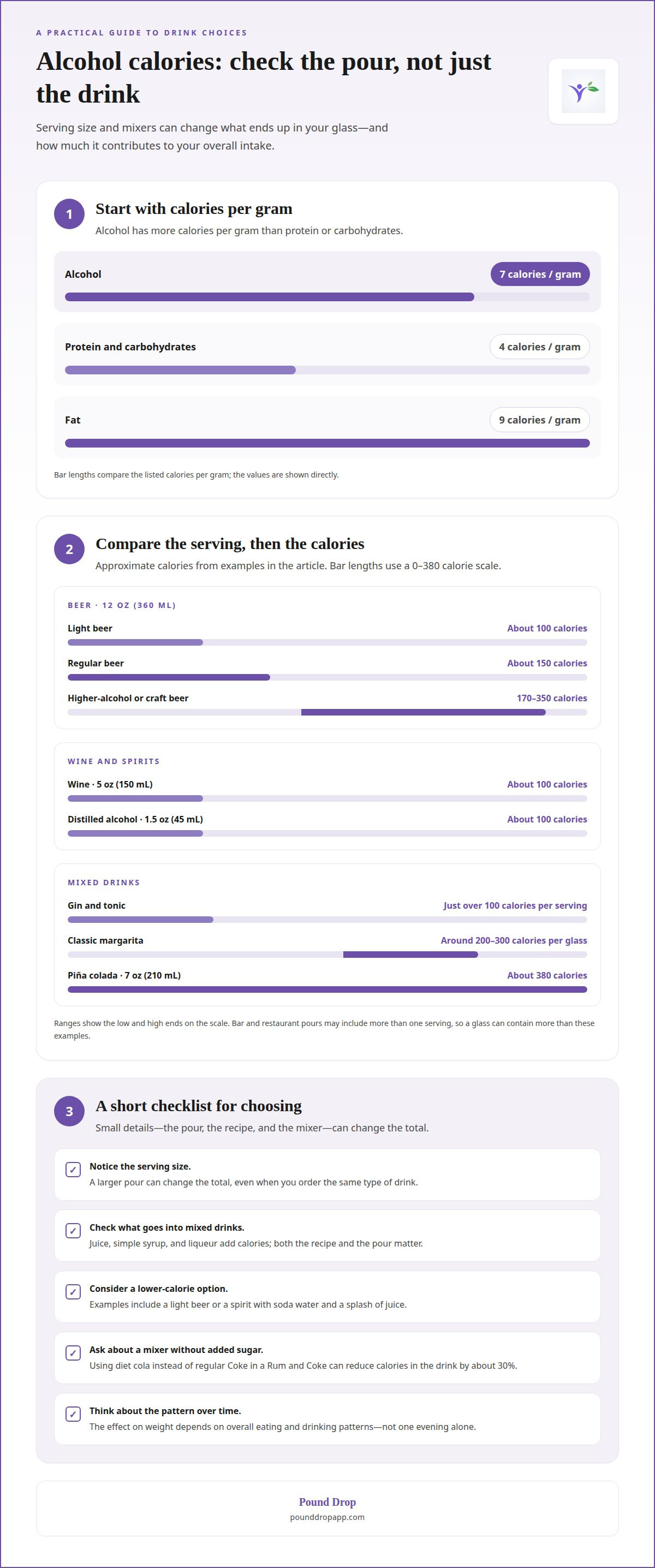
Alcohol adds calories to a drink, and those calories can contribute to your overall intake. Alcohol provides 7 calories per gram, compared with 4 calories per gram for protein and carbohydrates. Fat provides 9 calories per gram. If you’re trying to lose weight, drinks can use part of the calorie budget that might otherwise go toward meals or snacks. The effect depends on your overall eating and drinking patterns, not one evening alone.
Serving size matters. A 12-ounce (360 mL) regular beer contains about 150 calories, while a 12-ounce (360 mL) light beer contains about 100. Higher-alcohol or craft beer can contain 170 to 350 calories per 12-ounce (360 mL) serving. A 5-ounce (150 mL) glass of wine contains about 100 calories. Bar and restaurant pours may include more than one serving, so a glass can contain more than these examples.
Spirits aren’t calorie-free, even without a sweet mixer. A 1.5-ounce (45 mL) serving of distilled alcohol contains about 100 calories. A gin and tonic contains just over 100 calories per serving, while a classic margarita contains around 200–300 calories per glass. A 7-ounce (210 mL) piña colada contains about 380 calories. Juice, simple syrup, and liqueur add calories to mixed drinks, so the recipe and pour both matter.
For a lower-calorie choice, consider a light beer or a spirit mixed with soda water and a splash of juice. A piña colada, by comparison, contains about 380 calories per 7-ounce serving. You can also ask for a mixer without added sugar, such as diet cola instead of regular Coke in a Rum and Coke. That swap can reduce calories in the drink by about 30%. These choices still contain alcohol, and a larger pour can change the total.
Weight change reflects patterns over time. Repeated drinks can add calories across a week, while choosing fewer drinks or lower-calorie options can reduce that contribution. You don’t have to avoid every social event to change your drinking habits. Start by noticing what you order, how much is poured, and whether mixers add calories. For example, compare a measured spirit with a sweet cocktail before deciding what fits your plans.
If alcohol feels difficult to control or you’re concerned about alcohol use disorder, support is available. The Substance Abuse and Mental Health Services Administration says the SAMHSA National Helpline can be reached at 1-800-662-HELP (4357). For everyday weight management, start by observing the drink type and serving size at your next gathering. That gives you a practical basis for a choice that supports your goals and keeps social connection in view.
2. If I stop drinking alcohol, will I lose weight?
Stopping alcohol can support weight loss if it reduces your overall calorie intake. The effect depends on what replaces those drinks and how your eating, movement, and routines change. Someone who stops ordering cocktails but often adds high-calorie snacks may not reduce their overall intake. Someone who chooses water or another nonalcoholic drink instead may leave more room for meals with protein, vegetables, and other nourishing foods. Consider the whole pattern, not just one decision.
Eating before drinking is a practical way to prepare for a social evening. A meal or snack puts food in your stomach, and eating before drinking can slow the stomach’s absorption of alcohol. Choose something satisfying rather than skipping a meal to “save” calories for drinks. A simple meal with protein and other nutrients can help you arrive feeling steadier. Keep water available, too. Water supports fluid intake, but it doesn’t cancel alcohol’s effects or make you sober.
At a gathering, decide what you want before food and drinks are passed around. If you choose to drink, have a nonalcoholic drink after finishing an alcoholic one, then decide whether you want another. For food, serve yourself a smaller portion and pause to notice hunger and fullness before taking seconds. You can still enjoy dessert: choose one small dessert or a small slice of cake, and savor each bite. These steps make moderation more practical without turning the evening into a test.
Plans can change. If you eat more than you intended, acknowledge what happened, forgive yourself, and return to your usual routine at the next meal. Cutting back doesn’t mean skipping breakfast or avoiding nutritious foods the following day. A calm reset is more useful than treating one gathering as a failure. If someone insists you have more food, a kind “No, thank you” is enough. Declining a serving can support your goals without judging the host or the food.
Weight management, alcohol addiction, and disordered eating can overlap in difficult ways. A strict focus on calories may not be safe or helpful for everyone, especially when eating or drinking feels hard to control. People who have been drinking heavily and regularly and may be at risk of alcohol withdrawal should seek medical help; stopping suddenly can require support. Pay attention to physical withdrawal symptoms and seek medical advice before stopping. If alcohol is affecting eating, relationships, or daily life, reaching out for support is a meaningful next step.
3. Alcohol-related food choices and appetite
Alcohol can affect food choices at a gathering by lowering inhibitions, which may make overeating more likely. Someone who planned to have dinner and one snack might find it harder to pause as shared appetizers keep arriving. This isn’t a character flaw. It’s a reason to make a simple plan before drinks, food, and the setting compete for your attention. Decide what you’d genuinely enjoy, then take time to notice whether you’re still hungry before choosing more.
Appetite responses vary, but research offers a useful clue. One study found alcohol may increase cravings for high-fat, savory foods by 24%. That finding doesn’t predict what anyone will choose at a party. It does make it practical to notice whether salty, rich foods feel especially tempting after drinking. For example, pause before reaching for another handful of chips and ask whether you want the taste, feel hungry, or are following the group’s pace. Any answer can guide your next choice without turning food into a test.
An animal study found that mice given ethanol for three days showed a significant increase in food intake. Mice are not people, so this result cannot tell us how much a person will eat after drinking. It does underline why observing your own habits is more useful than assuming alcohol affects everyone in the same way. After a social occasion, note what you drank, which foods appealed to you, and whether your appetite felt different. A short record across several gatherings can reveal situations that shape your choices.
Sleep is another part of your routine worth observing, without assuming the effects are the same for everyone. Note your bedtime, how rested you feel the next morning, and whether your appetite or food choices seem different that day. For instance, compare a night with drinks to a social evening with a nonalcoholic alternative. Look for repeated patterns rather than drawing conclusions from one occasion. This simple observation can help you identify which choices support your routine and which make the next day harder to manage.
At your next gathering, choose an activity or drink that keeps the focus on connection. You might concentrate on a conversation, join a game, or hold a nonalcoholic drink while others socialize. If food is central, choose a portion you’ll enjoy and eat it without rushing. Then check in with your hunger before returning to the table. These small steps create a pause between an urge and a choice, helping you decide deliberately rather than automatically.
Keep the goal modest: learn what happens in your own routine. One evening of overeating doesn’t define your progress, and one observation doesn’t establish a pattern. Over the next few social occasions, notice how drinking, sleep, cravings, and food choices connect. Use what you learn to shape a realistic alternative, whether that means changing what you drink, choosing food more intentionally, or building the evening around shared activities. Social connection can remain central as you make your habits more considered.
4. Setting realistic alcohol-reduction goals
What are the health risks of drinking, and who should avoid alcohol? Alcohol carries health risks, and the NHS states there is no completely safe level of drinking. The NHS advises that the safest approach during pregnancy, or when someone thinks they could become pregnant, is not to drink alcohol.
A realistic goal starts with noticing your current pattern. For a week, track what you drink, when you drink, and what is happening around each occasion. A note such as “two drinks with dinner on Friday” can show whether drinking is mainly social, routine, or connected to stress. Recording the setting can also reveal what affects your choices, such as a particular group, venue, or meal.
Then choose a manageable step. You might have fewer drinks at one gathering, alternate alcoholic drinks with nonalcoholic ones, or choose an alcohol-free social occasion. You don’t need to stop entirely to practice a change. If you’re trying to lose weight, drinking less can reduce calories from alcohol, but weight change also depends on your overall eating and activity habits. Notice whether cutting back affects your appetite, hunger, or eating routines, rather than expecting one change to determine the outcome.
Guidance differs by country. The Dietary Guidelines for Americans define moderate drinking as no more than two standard drinks per day for men and no more than one standard drink per day for women. This is a guideline, not a target to reach. In the UK, guidance recommends no more than 14 units per week, spread across at least 3 days. Choose the guidance relevant to where you live, and remember that a drink poured at a bar may contain more than one serving.
A month without alcohol is another option for anyone who wants a clear experiment. Dry January is a pledge to abstain for an entire month. A 2016 study associated taking part with fewer drinking days, fewer drinks, and greater confidence in refusing drinks. You could also set a shorter personal goal, then reflect on what felt easier or harder. Either way, plan social alternatives in advance, such as meeting for coffee or taking a walk with a friend.
Reducing alcohol may support your weight goals by changing your overall intake and helping you notice how drinking affects your routine. Focus on learning, not punishment. If you’ve been drinking heavily and regularly and may be at risk of withdrawal, seek medical help before stopping. Physical withdrawal symptoms call for medical advice before making a sudden change.
5. How can you handle social pressure to drink less or choose nonalcoholic options?
Managing social alcohol drinking on a weight loss journey can start with deciding in advance whether you want to drink. That choice gives you a plan to return to if someone offers a drink. You might choose not to drink, have a nonalcoholic option, or set a limit that feels realistic. The decision doesn’t need to become the focus of the event. Keep it brief and move the conversation toward the people, food, or activity you came to enjoy.
A short response can make repeated offers easier to handle. Try, “No thanks, I’m having this tonight,” or, “I’m taking a break from alcohol.” If a friend asks why, share only what you’re comfortable with: “I’m working on a few health goals.” You don’t owe anyone a detailed explanation. Rehearsing a sentence before a gathering can help you answer calmly, even if someone offers more than once.
Plan a nonalcoholic option in advance. At a restaurant, ask for a nonalcoholic drink or choose water while others order alcohol. At a home gathering, bring a dish that suits your needs, which also ensures there’s a food option you can enjoy. If holding a drink helps you feel included, choose something you like and focus on the conversation rather than explaining what’s in your glass.
Social connection can take many forms. Suggest meeting a friend for coffee, taking a short walk together, or choosing a group activity such as kickball or ice skating. These plans give everyone something to share beyond a round of drinks. At a party, offer to join a game or help with a task if the conversation keeps returning to alcohol. A small change in activity can make it easier to stay involved on your terms.
If someone keeps pressing, repeat your answer without adding new reasons. For example, say, “Thanks, but I’m good,” then ask about their week. You can also tell a trusted friend your plan beforehand and ask them to support your choice if offers continue. This isn’t about controlling what others drink. It’s a way to make your decision clear while keeping the interaction respectful.
Preparing for social situations is one practical part of managing social alcohol drinking on a weight loss journey. After the gathering, notice what worked. Did deciding in advance help? Did a particular response feel natural, or would another phrase suit you better next time? Write down one useful detail, such as “meeting for a walk kept the focus on catching up.” If you changed your plan, respond with curiosity rather than self-criticism. Use what you learn to shape your next social plan, keeping connection and personal goals in view.
Pound Drop
Pound Drop offers a structured weight-loss system for building and maintaining everyday habits. If you’re ready to turn your alcohol and social plans into practical, consistent choices, The Method provides the guiding approach, while the Pound Drop App and The Journa can help you manage and track your progress. Use them to reflect on the routines that support your goals, including the choices you make around social occasions. Progress doesn’t require perfect evenings; it grows through realistic decisions you can return to over time. For a self-guided way to bring those habits together, explore the Pound Drop App, The Method, and The Journa. You’re welcome to contact Pound Drop to learn more.
Build habits that fit your real life
Managing social alcohol drinking on a weight loss journey is less about making every gathering perfect and more about practicing choices you can return to. Start with one intention for your next occasion, such as deciding in advance whether you’ll drink or choosing an activity that keeps the focus on time together. Notice what feels sustainable, then adjust as you learn.
If you’d like a structured way to support everyday weight-loss habits, Pound Drop offers the Pound Drop App, The Method, and The Book. These tools can help connect your next steps to a broader routine, rather than treating each social occasion as a separate test. Progress can be steady while still leaving room for connection.
Contact Pound Drop to explore a next step that feels right for you. Keep going at a pace you can maintain, one thoughtful choice at a time.
Frequently Asked Questions
How Does Alcohol Affect Weight Loss?
Alcohol can make weight loss harder by adding calories and influencing food choices. For a practical check, note the drink, its pour size, and any mixer at your next social event. A cocktail made with juice or syrup may contribute more than a simple mixed drink. Compare what you order with what you planned, then use that observation to shape a realistic choice next time.
Can You Train Yourself to Cut Back on Alcohol?
Yes, you can build new drinking habits by setting a clear goal and reviewing how it goes. Track your drinks for a week, then choose one change, such as ordering a nonalcoholic option at a regular Friday gathering. Make the plan specific to the situation, rather than simply aiming to “drink less.” If the first approach feels difficult, adjust it and try another manageable step.
How can I increase my chances of success in reducing the amount I drink?
Make your plan before the occasion, when it’s easier to decide without social pressure. For example, choose what you’ll order, prepare a short response to offers, and plan an activity that isn’t centered on drinks. Afterward, note what helped and what made your plan harder. Use those details to refine your next plan, rather than treating one evening as a measure of success.
If I stop drinking alcohol, will I lose weight?
Stopping may support weight loss if it reduces your overall calorie intake, but the result depends on your wider routine. Consider what replaces the drink: switching to water differs from regularly adding calorie-rich snacks. Rather than judging progress after one alcohol-free evening, observe your eating and drinking patterns over time. If you’ve been drinking heavily and regularly and may face withdrawal, seek medical help before stopping.
How many calories are in common alcoholic drinks and cocktails?
Calories vary with drink type, serving size, and recipe. A 2.25-ounce (65 mL) extra-dry martini contains about 140 calories. A 1.5-ounce (45 mL) serving of 90-proof gin contains 115 calories, while a 1.5-ounce serving of tequila contains 100 calories. A bar pour or cocktail recipe can differ, so consider both the amount served and any added ingredients.
How does alcohol affect weight loss, appetite, and fat burning?
Alcohol contributes calories, and at social events it can lower inhibitions around food, making unplanned choices more likely. Its effect on weight depends on your overall pattern of drinks, meals, and activity, not one occasion. Rather than trying to calculate the precise effect of one drink on fat loss, notice whether drinking changes your appetite, food choices, or routine the following day.
What are lower-calorie alcoholic drinks and mixers?
Options with fewer added ingredients can help limit calories from mixers. Try a spirit with soda water and a splash of juice, or choose a lighter beer. The NHS suggests trying lighter beers with an alcohol content below 4% ABV when cutting down. These choices still contain alcohol, and pour size matters. Choose based on your goals and the kind of social occasion you’re attending.
How can you fit alcohol into a calorie deficit without derailing weight loss?
Plan for a drink as part of your overall intake, rather than treating it as separate from your other choices. Decide what you want before arriving, keep the serving in mind, and avoid skipping meals to compensate. At dinner, a measured drink alongside a satisfying meal may fit your plan more easily than unplanned drinks and snacks. Return to your usual routine afterward.


