


Article by
Jesper Sorensen
Jesper Sorensen is a holistic health coach and founder of Pound Drop, a different approach to weight loss built around healthier habits. He has written ebooks and health articles for established publishers and has spent years studying nutrition, healthy eating and sustainable weight management.
Rewarding weight loss milestones without using food can be as simple as choosing a personal reward for a clear achievement. For example, mark 10 planned workouts or 15 pounds lost with something you’ll genuinely enjoy, such as an outdoor activity, a creative class, or a small gift. The reward can recognize both progress on the scale and the habits that help you keep going.
It makes sense to want recognition for steady effort. A celebration doesn’t need to involve food, cost much, or wait until you reach your final goal. Small, meaningful rewards can make progress feel visible while keeping the focus on routines you can continue.
In this guide, you’ll learn why milestones matter, how to make them specific and measurable, and how to choose rewards that feel right for you. You’ll find ideas for personal gifts and outdoor experiences, along with ways to plan celebrations around your interests, budget, and everyday progress.
Key Takeaways
- Celebrate consistent habits as well as changes on the scale, so progress reflects the actions you can keep building on.
- Make milestones clear and achievable by tracking a small number of goals that matter to you.
- Choose rewards that feel personally meaningful, from an experience outdoors to a gift you’ll use and enjoy.
- Set a reward budget that feels comfortable and supports your longer-term priorities.
- Plan celebrations in advance, then adjust your milestones and rewards when life or your priorities change.
1. Why Celebrate Fitness and Weight-Loss Progress?
Celebrating progress makes effort visible, especially when the scale doesn’t capture every change. Maintaining a 30-pound weight loss is one meaningful achievement. So is completing 24 strength workouts over eight weeks or keeping meal-prep habits for a year. These examples show that progress can include weight, fitness, and routines that support your journey.
How can you reward progress without focusing only on the number on the scale? Choose a behavior-based milestone, such as completing 20 workouts or practicing a sleep routine consistently. Record what you did, then pair that achievement with a reward you enjoy. This recognizes actions you can repeat, not just a measurement.
Tracking gives those actions a clear place in your story. Use a journal to note workouts, energy, sleep habits, or personal milestones. Add a simple visual, such as a calendar mark for each completed workout or a chart showing progress over time. Record what went well, too. A specific note like “walked after work” is easier to revisit than a general feeling of success.
Common mistakes can make rewards feel less supportive. One is waiting for a particular scale number before recognizing consistent behavior, such as completing planned workouts. Another is choosing a reward that feels like a penalty or setting a milestone so demanding that one missed day seems to erase progress. Avoid labeling choices as “good” or “bad.” Instead, name the action clearly and decide whether the goal remains meaningful and achievable.
Rewarding weight loss milestones without using food can include experiences and hobbies that fit your life. After completing 20 workouts, you might plan a nature walk, try a creative class, or spend time on a hobby you’ve postponed. These rewards mark the achievement with an enjoyable memory. They can also make room for activities that feel rewarding beyond fitness.
How can you avoid making weight loss rewards feel like punishment or pressure? Choose something you genuinely want, and keep the milestone flexible enough to allow for everyday disruptions. If you miss a target, identify what got in the way and adjust the plan instead of withholding every celebration.
For a practical routine, choose one behavior to track, record it after each workout, and review your notes at the end of the week. Celebrate a completed milestone with a small experience, then set the next achievable step. This steady pattern connects effort, reflection, and recognition without requiring perfection.
2. Setting specific and measurable milestones
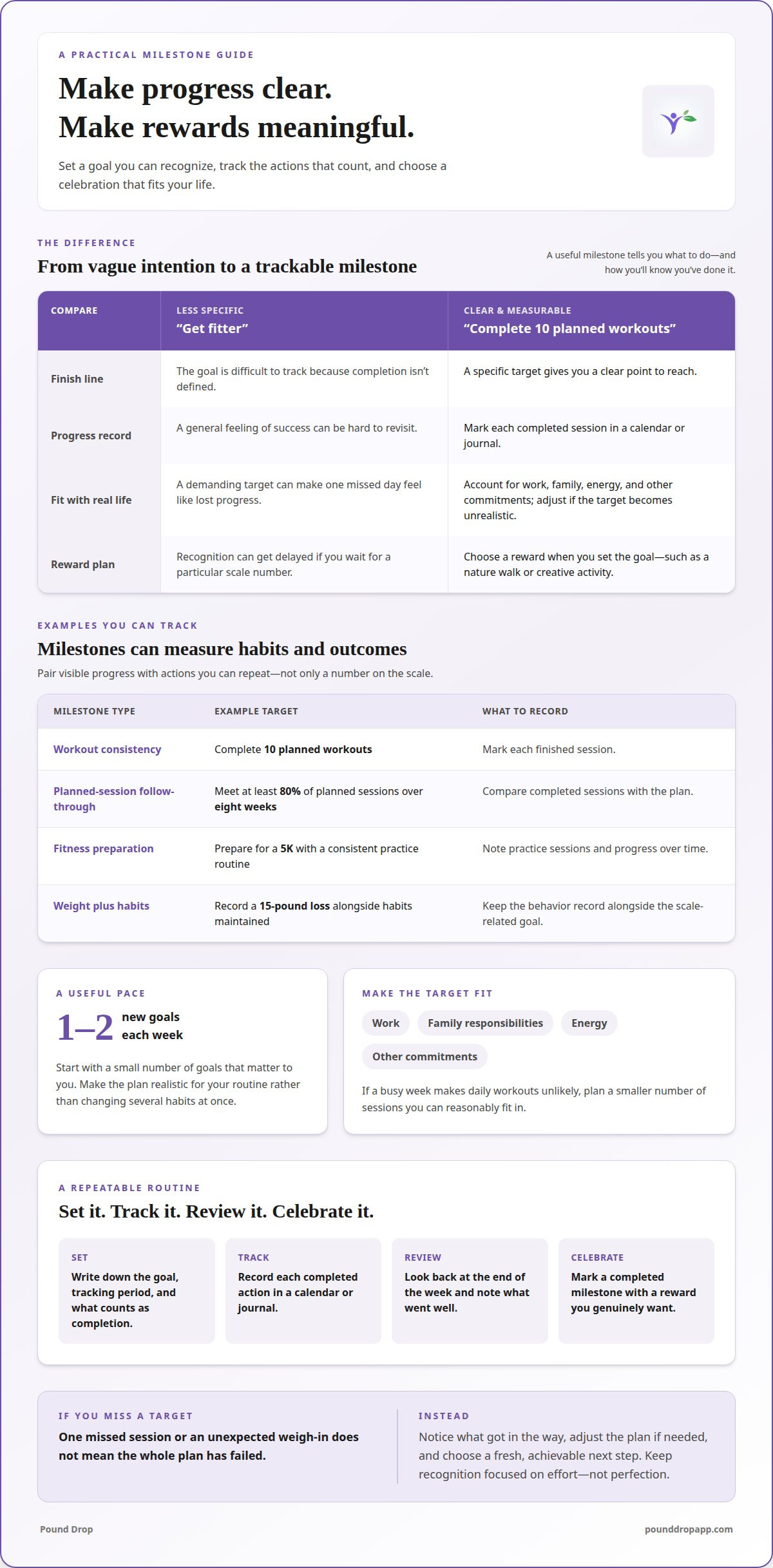
A useful milestone tells you exactly what to do and how you’ll recognize completion. “Get fitter” is difficult to track, while “complete 10 planned workouts” gives you a clear finish line. You can record each session and see whether the behavior is becoming part of your routine. A specific target also helps you choose a reward that matches the effort involved.
Meaning matters as much as measurement. Choose a goal connected to something you value, such as feeling more comfortable during a walk or building a regular movement habit. Losing 15 pounds can be a milestone, but it doesn’t have to be the only one. Consider what you want your healthy habits to make possible, then describe that progress in observable terms.
Keep the plan realistic for your routine. Account for work, family responsibilities, energy, and other commitments when setting a target. If a busy week makes daily workouts unlikely, for example, plan a smaller number of sessions you can reasonably fit in. Aim for one or two new goals each week rather than changing several habits at once. Smaller steps can keep the process motivating without making every day feel like a test.
Make the milestone easy to review. Write down the goal, the period you’ll track, and what counts as completion. Examples include:
- Complete 10 planned workouts and mark each finished session.
- Meet at least 80% of planned sessions over eight weeks.
- Prepare for a 5K by following a consistent practice routine.
- Record a 15-pound loss alongside the habits you’ve maintained.
These examples combine outcomes with behaviors. A scale-related goal may matter to you, while workout consistency tracks actions within your control. You can track both, but don’t treat one missed session or an unexpected weigh-in as proof that the whole plan has failed. Review your record and consider whether the goal still fits your life.
Set the reward milestone when you set the goal. Decide what you’ll do when you reach it, such as taking a nature walk or trying a creative activity. Match the reward to the accomplishment, and choose something that feels like a genuine treat, not approval you have to earn. If the target becomes unrealistic, adjust it and choose a fresh, measurable step.
A written record makes follow-through easier. Use a calendar or journal to note each completed action, then review it at the end of the week. If digital tracking suits your routine, a way to track goals and progress can help keep milestones visible.
4. Material gifts and outdoor activities
A useful gift can support habits you already enjoy rather than add pressure to your weight loss journey. Choose something connected to an activity you want to continue, such as comfortable walking gear, a fitness tracker, or wireless earbuds for workouts. A gift feels more personal when it matches how you prefer to move, whether you walk outdoors, cycle, or exercise at home.
Set a clear connection between the milestone and the gift. For example, completing 24 planned workouts could mark the moment to book a weekend hiking trip. If a larger purchase feels out of reach, establish a clothing budget for each milestone and choose one item when it fits your budget. The reward should recognize success without turning progress into a reason to overspend.
Outdoor activities can make celebration part of an enjoyable day. Plan a sunset walk, visit a garden, or map a cycling route that suits your current routine. If you prefer a defined challenge, consider a 5-kilometer race and make the event meaningful by taking part in support of a cause. These plans connect movement with an experience, instead of making exercise feel like another task.
Choose the activity to fit your needs and interests. A long hike may appeal to someone who enjoys exploring trails, while a short local walk may feel better after a busy week. A 30-minute walk can also serve as a concrete activity milestone. Think about the setting, the time available, and whether you’d rather go alone or share the experience.
Community activities offer another way to celebrate. You could volunteer at a community garden, join a neighborhood clean-up, or help organize a local walk. These choices make the reward about contributing and connecting, not just personal achievement. A 5-kilometer event can also combine a physical goal with participation in a community cause.
Quality time can be a meaningful reward without elaborate plans. Invite a friend for a walk, spend an afternoon exploring a nearby park, or visit a garden with someone whose company you enjoy. Agree on a simple plan, such as choosing a route and setting aside time to relax afterward. Shared activities can make the achievement easier to remember.
Before choosing, ask yourself three practical questions: Will I enjoy this? Does it fit my budget? Does it support a habit I want to keep? A small piece of workout equipment may suit someone who likes exercising at home; a day outdoors may suit someone energized by fresh surroundings. Match the reward to your preferences, and celebrate progress in a way that feels like yours.
5. Personalized rewards for weight-loss milestones
The most memorable reward reflects what makes you feel appreciated. A useful starting point is the five love-language categories: gifts, acts of service, quality time, physical touch, and words of affirmation. Choose the category that feels meaningful to you, then connect it to a milestone. Someone who values quality time might plan an unhurried visit with a friend, while someone who appreciates words could write themselves a note.
Use a small personal detail to make a reward feel like yours. For example, add a charm to a bracelet for every 10 pounds lost, building a wearable reminder of your progress. If reaching a 5-pound milestone matters to you, choose a smaller reward that still feels special. The reward can mark the achievement without making the scale the only sign of effort.
Experiences can reflect your personal preferences, too. A massage or facial may suit someone who enjoys a relaxing appointment. Someone who likes learning might choose a pottery, painting, or dance workshop. Before reaching the milestone, decide which experience you’d genuinely look forward to. Planning ahead makes the reward concrete rather than an afterthought.
Match the reward to the kind of behavior you’re reinforcing. A monthly goal of 600 fitness minutes could lead to an experience you enjoy. If tracking stars feels motivating, choose a personal reward for reaching 100 stars. The number is only useful if the activities counted reflect habits you want to keep. Set a clear rule for earning stars, then use the same rule consistently.
Personalization can shape how you acknowledge progress, not just what you receive. After a gym session, write one positive sentence about showing up. After a week of planned activity, call someone who encourages you. These small gestures connect effort with recognition and help you notice progress when a larger milestone takes longer to reach.
Keep rewards within your budget and avoid tying them to pressure. A meaningful reward doesn’t need to be expensive: a new journal, a favorite creative activity, or dedicated time for a hobby can feel personal. Choose something you can enjoy without turning the goal into a demand. If a planned reward stops appealing, pick another option that celebrates the same achievement.
Try this simple process: name the milestone, choose a reward category, and decide what you’ll enjoy. Write both choices down before starting. For example, pair a movement goal with a dance session, or pair a personal weight milestone with a bracelet charm. This helps you choose a reward that feels positive, specific, and connected to your preferences.
5. How much should you spend on weight loss milestone rewards?
Choose an amount that fits your budget without affecting essentials, planned bills, or savings priorities. The right limit depends on your finances and the kind of reward you value. A meaningful celebration might be a walk with a friend; someone else may prefer a planned purchase. Either way, recognition doesn’t depend on spending more.
First decide what feels comfortable, then choose a reward. Review your available discretionary spending and set a personal limit for milestone treats. If a new item would create pressure, choose a no-cost option, such as an afternoon for a hobby or a visit to a local garden. The aim is to celebrate progress, not add a financial burden.
Match the reward’s scale to the achievement and your priorities. A smaller milestone could call for a relaxing evening, a new journal, or time for a favorite activity. A longer-term goal might suit a planned experience, such as a nature getaway, if it fits your budget. These are options, not price brackets. Your circumstances and preferences determine what feels right.
Consider how often you plan to celebrate. Frequent rewards can work well when they cost little or nothing, such as setting aside time for a creative hobby after a workout. Save a larger experience for a longer-term achievement. Planning the reward in advance lets you consider the full cost and decide whether it will still feel comfortable when you reach the milestone.
Keep a simple reward budget alongside your milestone notes. Record the goal, the reward you chose, and whether the expense felt manageable. If you set aside a clothing budget for each milestone, decide its limit before shopping. If the reward no longer fits your finances, choose a different celebration. Adjusting the plan is practical, not a reason to dismiss your progress.
Consider what makes an experience worthwhile beyond its price. A garden visit with someone you care about may feel more rewarding than an expensive purchase. A creative workshop can offer a new skill and an enjoyable memory. Compare options by how much you’ll value using or experiencing them, not by how impressive they look to others.
Use this quick decision process: choose a comfortable spending limit, list a few rewards within it, then select the option you genuinely anticipate. Keep a no-cost alternative ready for months when spending needs to stay lower. If tracking your milestones would help you plan celebrations, use the Pound Drop App to track your progress.
Pound Drop
Pound Drop can help you build milestone-setting and progress tracking into a structured weight-loss routine. Its self-guided system includes the Pound Drop App, The Method, The Book, and The Journal. These tools can support you as you choose habits to work on, record your progress, and reflect on achievements worth celebrating.
If you’re ready to make goals and rewards part of a consistent approach, explore the Pound Drop tools that fit your routine. The focus is on steady lifestyle changes, not making every milestone depend on a scale reading or an expensive gift. Choose meaningful rewards that suit your preferences and budget, then use your progress records to recognize the steps you’re taking.
Explore Pound Drop’s tools to find a self-guided approach that fits your routine.
Choose a Next Step That Feels Sustainable
Progress can be easier to maintain when recognition fits the life you’re building. Your plan for rewarding weight loss milestones without using food doesn’t need to stay fixed. Your interests, schedule, and priorities can change, so let your approach change with them. Notice which celebrations feel encouraging and which no longer suit you.
For your next step, choose one habit you want to keep practicing and decide how you’ll acknowledge it. A note to yourself, a shared activity, or time for a favorite hobby can make your effort feel seen. The point isn’t to make every day a test or every achievement a major event. It’s to create a steady way to recognize your effort as you move forward.
If you’d like a structured approach to support your weight-loss journey, explore how Pound Drop can support your next steps. Keep your goals personal, your rewards comfortable, and your progress moving at a pace that works for you.
Frequently Asked Questions
Why Celebrate Fitness and Weight-Loss Progress?
Celebrating progress helps you notice effort that can be easy to overlook in everyday routines. A milestone might be maintaining a walking habit through a demanding week or feeling more comfortable with an activity. Recognition can also help you decide which behaviors are worth continuing. Make the celebration specific: name what you accomplished, acknowledge the effort involved, and choose a response that feels encouraging rather than demanding.
What are non-food rewards for weight loss milestones?
Non-food rewards include personal experiences, useful items, and time for something you enjoy. You might book a massage, take a professional progress photo, or set aside time for a hobby. A fitness tracker or wireless earbuds could suit someone who enjoys tracking workouts. Choose based on what you’ll value, not what seems expected. A reward should recognize your achievement without making food the focus.
What are good rewards for small weight loss achievements?
For a small achievement, choose a simple reward that feels enjoyable and fits your routine. Add a favorite song to your workout playlist, take a quiet break with a book, or spend time on a creative hobby. Notice the effort without making the celebration bigger than the milestone. A short note to yourself can also mark what you did well.
What are meaningful rewards for reaching a weight loss goal?
A meaningful reward reflects what you care about and want to remember. Consider arranging a professional photoshoot, choosing a charm with personal significance, or planning an activity with someone close to you. You could also mark the occasion with a community contribution, such as supporting a local food bank. First decide what the achievement means to you, then choose a celebration that expresses it.
What are free or low-cost non-food rewards for weight loss?
Free or low-cost options include taking a favorite route outdoors, spending an afternoon with a friend, or setting aside uninterrupted time for a hobby. You can also write a short message recognizing the effort you made. If you want a physical reminder, choose a small keepsake that fits your budget. Decide your spending limit before selecting a reward, so the celebration stays comfortable rather than becoming a financial strain.
How can you track and celebrate healthy habit milestones?
Choose a habit you can describe clearly, then record each time you practice it in a calendar or journal. For example, note whether you prepared for a planned walk or completed a strength session, and briefly record what helped. Review your entries at the end of the month to spot patterns. Celebrate a milestone by recognizing the behavior you repeated, not just the outcome you hoped to reach.
What rewards can help motivate exercise and healthy routines?
Choose rewards that make your routine more pleasant or help you enjoy it. New workout earbuds may suit someone who likes listening to music, while a fitness tracker may appeal to someone who enjoys recording activity. You could also plan a relaxing activity after completing your routine. Connect the reward to a behavior you want to practice, and choose something inviting rather than another obligation.


