


Article by
Jesper Sorensen
Jesper Sorensen is a holistic health coach and founder of Pound Drop, a different approach to weight loss built around healthier habits. He has written ebooks and health articles for established publishers and has spent years studying nutrition, healthy eating and sustainable weight management.
What if sustainable weight loss for women isn’t about finding the perfect plan, but building habits that can flex with real life? If you’ve heard conflicting advice about food and exercise, or found a strict approach hard to maintain, it makes sense to feel unsure about what to try next.
Your body, schedule, and priorities can change over time. A routine that once felt manageable may need adjusting when work, family life, stress, or a new life stage shifts your days. That isn’t a personal failure. It’s a reason to make your approach more flexible.
This guide looks at how everyday habits and life stage can shape your experience, and how to build a routine you can return to when life gets busy. You’ll find practical ways to approach food, movement, and consistency without all-or-nothing rules. You’ll also learn how reflection and simple habit tracking can help you notice what’s working and choose a useful next step. The goal isn’t perfection. It’s a process you can keep adapting.
Key Takeaways
- Sustainable weight loss for women is built around repeatable habits that fit everyday life, not a short-term set of strict rules.
- Weight-management needs can vary across life stages, so leave room for individual differences in your routine.
- Use flexibility, feasibility, and wellbeing to judge whether an approach may fit your life over time.
- Start with your current routines, choose one manageable change, and review how it’s working before adding more.
- Self-guided tools such as the Pound Drop App, The Method, The Book, and The Journal can support reflection and habit practice.
What makes sustainable weight loss for women different from another short-term plan?
Sustainable weight loss for women means building repeatable habits that support wellbeing and fit into everyday life. Instead of following strict rules for a fixed period, you develop routines you can adapt and return to. The aim is progress that works alongside your responsibilities, preferences, and health needs, not a promise of a particular result by a particular date.
If past attempts were difficult to maintain, that doesn’t mean you lacked willpower. A plan may simply have asked too much of your time, energy, or circumstances. Food choices, body weight, and setbacks aren’t measures of character. They’re part of a bigger picture shaped by habits, health, environment, and the changes life brings.
Why short-term rules can be hard to maintain
Rigid routines can leave little room for a late workday, caregiving, social plans, or a week when sleep and energy are limited. A schedule that depends on everything going as planned can be hard to resume when something changes. That doesn’t mean every structured or restrictive approach affects everyone in the same way. It does mean it’s useful to test whether a routine works beyond ideal conditions.
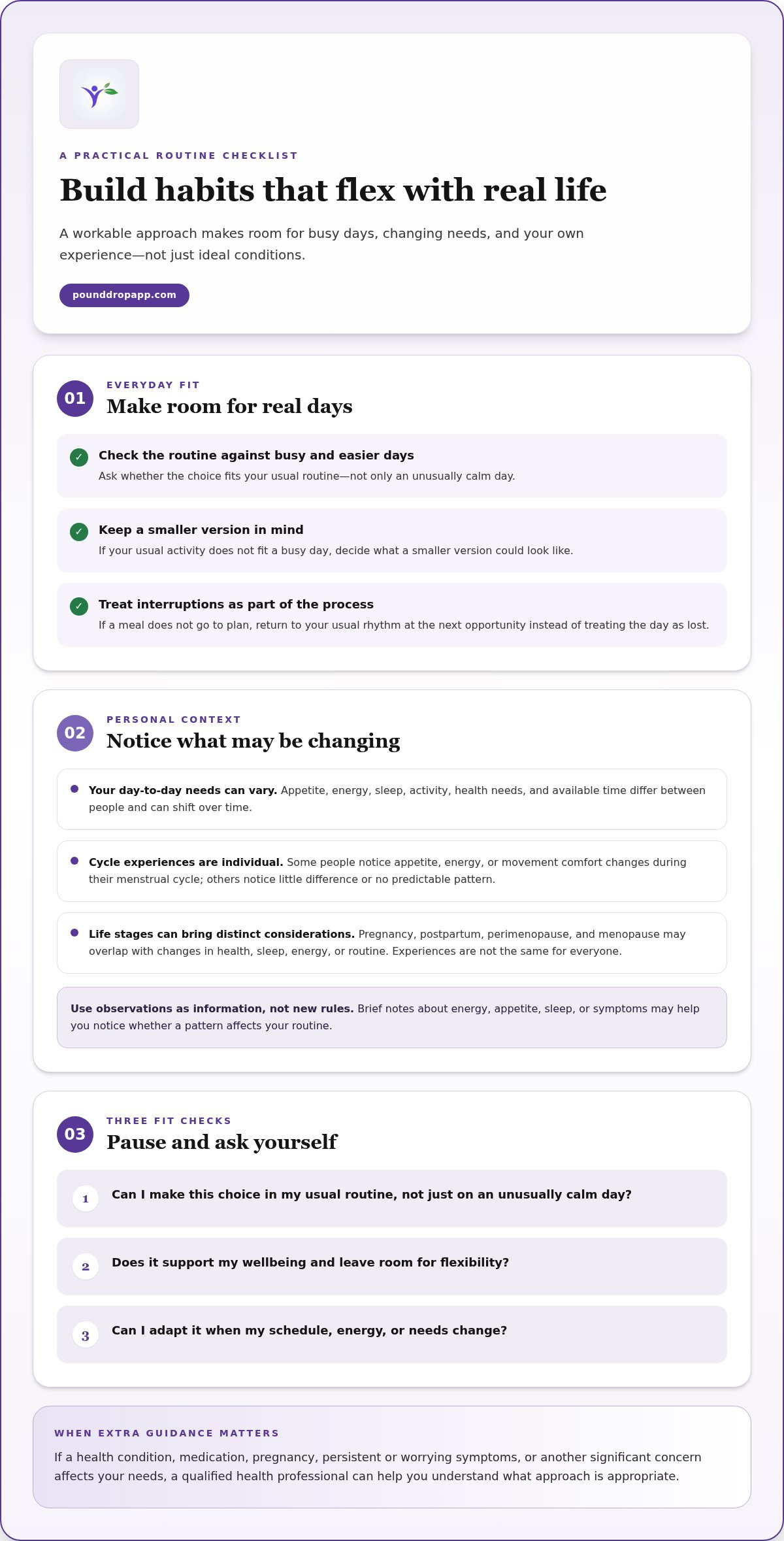
For example, if your usual activity doesn’t fit a busy day, decide what a smaller version could look like. If a meal doesn’t go to plan, return to your usual rhythm at the next opportunity instead of treating the day as lost. A flexible approach expects ordinary interruptions and makes it easier to continue.
What a realistic approach should make room for
No single routine accounts for every woman’s health, schedule, preferences, or life stage. Appetite, energy, and daily demands vary between people and can change over time. Menstrual cycles or menopause may be relevant to someone’s experience, but their effects aren’t identical for everyone. Sustainable progress is personal, and it can’t be guaranteed on a fixed timeline. General weight management strategies often focus on long-term lifestyle changes, but how those changes fit into your life matters too.
A realistic approach makes space for nourishment, enjoyable movement, rest, and changing circumstances. To assess whether a routine is workable, consider how it fits both busy days and easier ones. Ask yourself:
- Can I make this choice in my usual routine, not just on an unusually calm day?
- Does it support my wellbeing and leave room for flexibility?
- Can I adapt it when my schedule, energy, or needs change?
If a health condition, medication, pregnancy, or another significant concern affects your needs, a qualified health professional can help you understand what approach is appropriate. Seeking guidance is a practical way to account for your circumstances, not a sign that you’ve done anything wrong.
How life stage and health context can shape women's weight-management needs
There isn’t one pattern that applies to every woman. Appetite, energy, sleep, activity, health needs, and available time vary between individuals and can shift over a lifetime. That context influences which routines feel manageable. An approach to sustainable weight loss for women should leave room to notice what’s changing rather than assume one formula fits everyone.
Some general information is well established, while individual experiences differ. The U.S. Office on Women’s Health explains that menopause can coincide with changes in body weight and fat distribution. This doesn’t mean hormones explain every change or that everyone experiences the same effects. Health, activity, eating patterns, sleep, and daily demands also matter. The Office on Women’s Health’s overview of weight gain and menopause offers further context.
Menstrual cycles and changing routines
Some people notice changes in appetite, energy, or comfort with movement during their menstrual cycle. Others notice little difference, or find that changes don’t follow a predictable pattern. Rather than following a prescribed cycle-based diet or exercise schedule, pay attention to your own experience. A brief note about energy, appetite, sleep, or symptoms may help you see whether a pattern affects your routine.
Use those observations as information, not as new rules. They might help you choose a different kind of movement on a lower-energy day, for example. If symptoms are persistent, severe, or worrying, discuss them with a qualified healthcare professional.
Pregnancy, postpartum, perimenopause, and menopause
Pregnancy and the postpartum period bring distinct health considerations. Weight-management advice intended for other circumstances may not apply, and nutritional or activity needs can change. If you’re pregnant, recently gave birth, or planning changes during this time, seek guidance from a qualified healthcare professional who understands your needs.
Perimenopause and menopause can also overlap with changes in sleep, energy, health, and everyday routines. Hormonal changes may be part of the picture, but they aren’t a complete explanation for every shift in weight or wellbeing. A demanding schedule, changes in movement, health conditions, and other factors can matter too. Individual variation is expected, not a sign that you’re doing something wrong.
For a practical starting point, consider what’s true for you right now. Has your schedule changed? Is sleep affecting your energy? Are symptoms making a usual activity harder? These observations can help you shape a realistic routine without assuming you need to copy someone else’s. If a health change or condition affects your choices, professional guidance can help you understand what’s appropriate. If you find structure useful, the Pound Drop App can support self-guided habit practice.
Sustainable habits versus quick fixes: how to tell what may last
A quick fix can sound appealing because it offers clear rules and a fast way forward. But a plan’s usefulness isn’t measured only by how it works during a short, unusually focused stretch. Consider whether its routines fit ordinary days, support your wellbeing, and can adjust as your circumstances change. That’s a practical way to assess what may last.
Sustainable weight loss for women isn’t passive. It can involve thoughtful choices, steady practice, and regular adjustments. The difference is that those efforts are designed to work with your life, rather than depend on perfect conditions. Progress can vary, too. One short-term measurement can’t tell the whole story about how a routine affects your energy, habits, or wellbeing.
| Consider | A routine with room to last | A routine to examine carefully |
|---|---|---|
| Flexibility | Allows adjustments for busy days and social plans | Depends on following the same rules in every situation |
| Everyday fit | Feels manageable on ordinary workdays and weekends | Requires time, planning, or effort you can’t reliably give |
| Wellbeing | Makes space for nourishment, rest, and enjoyable movement | Leaves you feeling persistently depleted or preoccupied |
| Continuity | Offers a way to resume after interruptions | Feels like one missed step means starting over |
Questions to ask before trying a weight-loss approach
Before committing, picture the routine across a regular week, not just an ideal one. Can it fit workdays, weekends, social occasions, and disruptions? Does it support adequate nourishment and a respectful relationship with food? Can you adapt it if your health, schedule, or personal needs change? Your answers can show whether a plan is practical for you, without requiring you to judge yourself for past attempts.
Why flexibility is not the same as giving up
Flexibility means keeping the intention while changing the next step. If a planned walk doesn’t fit a packed day, a shorter walk or another comfortable way to move may be more realistic. If dinner plans change, make a choice that suits the moment and return to your usual rhythm afterward. There’s no need to compensate or wait for a perfect Monday.
Small adjustments are active decisions. They help a routine respond to real life instead of breaking at the first interruption. If food rules have felt stressful or hard to live with, rebuilding your relationship with food can begin with noticing how your current habits affect you, without labeling a meal or a day as a success or failure.
A practical way to build a sustainable weight-loss routine around real life
A routine is easier to work with when it starts from what your days actually look like. Instead of changing everything at once, use a simple cycle: notice, choose, practice, and review. This keeps sustainable weight loss for women grounded in manageable actions and gives you a way to learn from what happens along the way.
- Notice your current routines. For a few days, observe how meals, movement, sleep, and planning fit your schedule. Look for natural cues, such as preparing lunch after breakfast or taking a short walk after work. You’re gathering information, not grading yourself.
- Choose one manageable change. Pick an action that feels useful and realistic this week. You might add a fruit or vegetable to a meal you already eat, stretch during a work break, or set a reminder to begin winding down before bed.
- Practice it in context. Attach the action to an existing routine so it’s easier to remember. Try it when your usual cue occurs, then adjust if the timing or effort doesn’t suit your day.
- Review and adapt. Notice what helped, what got in the way, and whether the action felt supportive. Keep it, make it smaller, or choose a different step. Wait to add another habit until the current one feels workable.
Start with one change that fits your current week
Choose a cue that already happens, then connect it to one specific action. After your morning coffee, for example, you might prepare a snack to take along. When you finish work, you could step outside for a few minutes of movement. These are options, not requirements or promises of a particular result. Start small enough to practice, then adjust based on your experience. For more everyday ideas, explore these practical weight-loss tips for real life.
Some days will be more demanding than others. Decide on a smaller version of your habit in advance: a brief stretch instead of a longer activity, or a simple meal-planning check-in instead of preparing several meals. If even that doesn’t fit, let the day pass and return when you can. Scaling down keeps the habit flexible. It isn’t a failure to follow through.
Review progress without turning it into a test
At a regular time that works for you, reflect on more than a single measure. Consider how often you practiced, whether your routine felt manageable, and what you noticed about your energy and wellbeing. A journal or tracker can help you spot patterns, but it doesn’t need an entry every day to be useful. Use what you learn to guide your next adjustment, not to judge yourself.
If movement is part of your chosen habit, adapt it to your comfort and circumstances. This guide to weight loss without extreme exercise offers related ideas. For added structure in practicing and reflecting on habits, the Pound Drop App provides a self-guided option.
How self-guided tools can support sustainable weight loss for women
Building habits takes attention, and a little structure can make it easier to see what you’re practicing and how it fits your life. A tool might help you reflect, keep a routine visible, or return to an intention after a busy stretch. It’s optional, though. A notebook, a familiar daily cue, or no tracking at all may suit you better.
The useful question is whether a tool supports your choices without adding pressure. It should help you practice habits, not turn every meal or movement choice into a scorecard. Tools don’t replace clinical care. If a health condition or significant concern shapes your needs, a qualified healthcare professional can offer guidance suited to your circumstances. For readers exploring approaches that don’t rely on supplements, this guide to weight loss without supplements offers related perspective.
Choosing a level of structure that feels supportive
Think about what you’re most likely to use. A digital tool may feel convenient if you already reach for your phone to organize your day. Written reflection may suit you if putting thoughts on paper helps you notice patterns. Or you may prefer one simple routine, such as pausing at the end of the week to consider what felt manageable. Choose a format that encourages curiosity, not pressure to record everything perfectly.
Try your chosen format, then ask: Is it helping me understand my habits? Does it feel easy enough to return to? If it creates stress or distracts from how you feel, simplify it or set it aside. Your tool should serve your practice, not become another rule to meet.
A gentle next step with Pound Drop
Pound Drop’s self-guided system brings together The Method, the Pound Drop App, The Book, and The Journal. The Method provides a structured approach to habit formation; the digital and physical resources give you ways to organize self-guided practice and reflection. Use the tools that suit the habit you’re working on, while keeping your individual health needs in mind.
Start simply: choose one habit you want to practice and decide how you’ll notice your progress, whether through a brief written reflection or another comfortable approach. Then give yourself room to adjust. That’s the spirit of sustainable weight loss for women: building a process around real life, one manageable step at a time. If you’d like structure for self-guided habit practice, Explore Pound Drop.
Choose a next step that feels possible
You don’t need to redesign your whole routine today. Choose one small action that feels useful in your current life, then give yourself permission to learn from it. If it fits, keep practicing. If it doesn’t, adjust the step rather than judging yourself. A flexible approach can make sustainable weight loss for women feel less like a test to pass and more like a practice you can return to.
Some people find that structure makes it easier to turn an intention into regular practice. Pound Drop’s self-guided tools offer a way to support that process, with space to build habits at your own pace. The right next step is one that feels supportive, not demanding.
Explore Pound Drop’s self-guided tools to find structure for putting a manageable habit into practice. Progress doesn’t require perfection. You can begin where you are and take the next step when you’re ready.
Frequently Asked Questions
Is sustainable weight loss different for women?
Yes, the practical considerations can differ, but there isn’t one weight-loss approach for all women. Health conditions, life stage, work or caregiving schedules, food preferences, and access to movement can all shape what feels workable. That doesn’t mean women need a fundamentally different universal diet. A routine that fits a predictable schedule may need adjusting during shift work. For sustainable weight loss for women, seek qualified professional guidance when a health circumstance affects what’s appropriate.
Can your menstrual cycle affect weight or appetite?
Some people notice changes in appetite, energy, or routines during parts of their menstrual cycle, while others don’t notice a clear pattern. Experiences can also vary from month to month. If you’re curious, jot down brief observations alongside everyday activities, such as sleep or how movement felt, rather than following a prescribed cycle-based eating plan. If symptoms persist, feel severe, or concern you, discuss them with a qualified healthcare professional.
How can women lose weight sustainably without restrictive dieting?
Focus on routines that support nourishment, movement, rest, and wellbeing without making food choices a pass-or-fail test. This general guidance isn’t a personalized meal plan: individual needs and preferences differ. You might begin by making one familiar meal more satisfying or choosing an activity you enjoy enough to repeat. After practicing, consider whether the change suits your day and adjust it if needed. An interruption is information, not proof that you’ve failed.
What does menopause have to do with weight management?
Menopause can coincide with changes in health, sleep, energy, and daily routines, but each person’s experience differs. Weight changes can have several possible influences, so it isn’t helpful to attribute every change to hormones alone. If you have a personal concern, a qualified healthcare professional can help assess it in context. Before an appointment, you might note when the change began and any related shifts in sleep, medication, activity, or wellbeing.
How do I stay consistent with weight loss when life gets busy?
Keep a smaller version of your routine ready for crowded days, such as a short walk between errands or a simple pause to plan tomorrow’s breakfast. Connecting it to an existing cue, like finishing a workday, can make it easier to remember. If plans fall through, return when the next opportunity comes. Consistency doesn’t require a perfect streak. A brief weekly reflection can help you identify which habits fit your actual schedule.
Do I need to count calories to lose weight sustainably?
No single tracking method is right for everyone, and calorie counting isn’t the only way to reflect on habits or progress. Some people prefer noticing patterns in meals, movement, or routines without recording numbers; others may find tracking useful. Choose an approach that feels manageable and doesn’t cause distress. If calorie tracking affects your wellbeing, feels difficult to stop, or conflicts with your health needs, seek guidance from a qualified healthcare professional.


