


Article by
Jesper Sorensen
Jesper Sorensen is a holistic health coach and founder of Pound Drop, a different approach to weight loss built around healthier habits. He has written ebooks and health articles for established publishers and has spent years studying nutrition, healthy eating and sustainable weight management.
What if breaking the yo-yo dieting cycle doesn’t begin with stricter rules, but with a steadier response when life interrupts your routine? If past attempts have left you discouraged, it can be tempting to think you need to start over and try harder. But a lapse doesn’t erase what you’ve learned, and it doesn’t mean you’ve failed.
The restrict, regain, and restart pattern can feel exhausting. A plan may seem manageable at first, then become difficult to follow during busy weeks, changing routines, or unexpected setbacks. When weight returns, shame can make another strict reset feel like the only option. It isn’t. A useful approach should leave room for real life, including days when your plans change.
This guide looks at why the cycle can take hold without blaming you, and how to build habits that feel realistic enough to practice consistently. You’ll find ways to respond after a disruption, return to supportive routines without punishment, and keep your longer-term intentions in view. Progress doesn’t require perfection. It can begin with one steady next step.
Key Takeaways
- Weight cycling can mean different things, but regain isn’t a personal failure. Understanding your pattern can help you choose a kinder next step.
- Rigid rules may be difficult to sustain when work, family, stress, or routines change. Notice when an all-or-nothing response makes it harder to continue.
- Breaking the yo-yo dieting cycle can start with small, repeatable routines rather than a complete lifestyle overhaul.
- After a lapse or regain, review what changed without judgment and return to supportive habits instead of compensating or punishing yourself.
- Self-guided tools may support reflection and routine-building. Professional medical or mental-health support may be appropriate when you need more help.
Breaking the yo-yo dieting cycle starts with understanding the pattern
If dieting has felt like a series of fresh starts, it can be hard not to wonder what you’re doing wrong. But repeated weight loss and regain don’t, by themselves, prove a lack of effort or discipline. A more useful question is: what made the approach difficult to return to when life changed?
People use “yo-yo dieting” and “weight cycling” in different ways. Both usually describe a repeated pattern of losing weight and later regaining some or all of it, often in connection with attempts to change eating or activity habits. A temporary shift in weight isn’t necessarily weight cycling. Weight can fluctuate in the short term, and a single change on the scale doesn’t tell the whole story.
For a broader overview of how the term is used, see Weight cycling.
This video offers another perspective on the yo-yo dieting pattern and ways to think about changing it:
What does yo-yo dieting mean?
There isn’t one definition that captures everyone’s experience. In everyday conversation, the phrase often refers to repeated attempts to lose weight followed by regain. That’s different from noticing a short-term fluctuation: the focus is on a recurring pattern over time, not a single measurement or change. You don’t need to label or diagnose yourself to consider whether the pattern feels familiar.
Why can the cycle feel so discouraging?
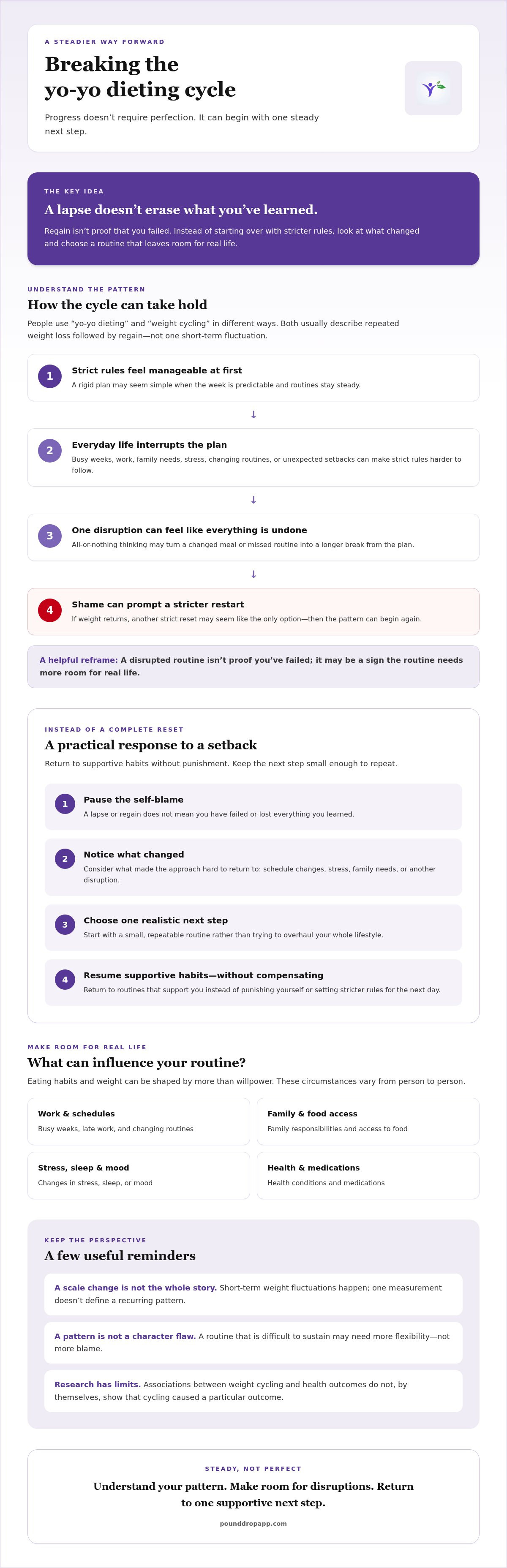
A common pattern might look like this: strict rules bring an early sense of control, but become difficult to follow alongside work, family needs, stress, or a changing routine. A disruption makes the plan harder to stick to. Then one departure from the rules may feel like proof that everything is undone, prompting an even stricter restart. This sequence isn’t universal, and not every diet or regain follows it.
Repeated restarts can wear down confidence. You might begin to doubt your ability to keep any routine going, even when the real problem is that the routine left little room for ordinary disruptions. All-or-nothing thinking can show up here, but it’s a response to a situation that feels unsustainable, not a character flaw.
“A disrupted routine isn’t proof you’ve failed; it may be a sign the routine needs more room for real life.”
That distinction matters when breaking the yo-yo dieting cycle. Instead of treating regain as a verdict, consider what the approach asked of you, what changed, and what might be easier to resume. Your experience doesn’t have to fit a particular label. The aim is to understand your own pattern well enough to choose a steadier next step.
Why restrictive plans and everyday disruptions can reinforce the cycle
A plan can feel simple when the week is predictable. Then work runs late, family needs shift, stress rises, or a social occasion changes the day. If the plan depends on following strict rules at every meal or sticking to a fixed schedule, ordinary changes may leave little room to adapt. That doesn’t mean the plan is wrong for everyone. It does mean its fit with your real life is worth considering.
How all-or-nothing rules may shape eating habits
Imagine following a rule to avoid a particular food, then attending a dinner where that food is part of the meal. You might decide the plan is already “ruined,” stop trying to follow any of it until Monday, or set stricter rules for the next day. That response can turn one changed meal into a longer break from the routine. It isn’t inevitable, and restriction doesn’t always lead to overeating or regain. But when a plan has no flexible option, it may be harder to pick back up.
Rules aren’t the only influence on eating habits. Sleep, stress, health conditions, medications, mood, food access, work schedules, and family responsibilities may all affect eating habits and weight. These factors vary from person to person. Focusing only on willpower can overlook the circumstances shaping someone’s choices.
What the evidence can and cannot tell us
Research on weight cycling includes associations with health outcomes, but an association alone can’t show that cycling caused a particular outcome or explain an individual’s experience. Evidence about metabolism is also mixed: a 2026 review found no consistent evidence that weight cycling causes a lasting metabolic slowdown. This doesn’t mean everyone has the same response. It means broad claims about inevitable effects go beyond what the evidence establishes.
Rather than assume every restrictive plan leads to regain, consider the specific sequence that may be happening: a rule becomes difficult to follow, a disruption occurs, and a lapse is interpreted as a reason to give up or start over. Notice where that sequence tends to happen. It can point toward a more adaptable response, such as having a routine that still feels manageable on a busy day.
If you find structure helpful, self-guided routine tracking can be one way to reflect on patterns and practice manageable habits. It’s an option, not a substitute for medical or mental-health support when individual concerns call for it. Breaking the yo-yo dieting cycle is less about predicting every disruption and more about making it easier to return after one.
What to change when you want to stop yo-yo dieting
Breaking the yo-yo dieting cycle doesn’t require replacing one strict plan with another. Look at how your routine responds to an imperfect day. Rigid rules can offer clarity, but may be hard to maintain when schedules or needs shift. Flexible routines can be easier to adapt, while still providing enough direction to guide everyday choices.
Why flexibility can make routines easier to return to
A flexible routine includes options for different circumstances. If a planned meal isn’t possible, you might choose a convenient alternative that suits your needs and carry on with your usual routine at the next opportunity. If a busy morning disrupts your plans, you could return to a familiar habit later in the day instead of waiting for a fresh start. These are examples, not universal rules. The practical test is whether the routine gives you a way to continue when the day doesn’t go to plan.
Start small. Choose one behavior you can practice repeatedly, such as making time for a regular meal, adding a short walk when it fits, or deciding in advance what might help on a busy day. A complete lifestyle overhaul can sound motivating, but changing many things at once may be difficult to sustain. For related ideas, explore weight loss success through habits.
Flexibility doesn’t mean ignoring health needs. If a clinician has given you specific guidance, check with them before changing it. Your routines should account for your individual circumstances.
Which measures of progress can help beyond the scale?
The scale is one measure, but it can’t show every change that matters to you. You might also notice whether a routine feels easier to repeat, how consistently you’re practicing it, or whether your energy or confidence feels different. These observations won’t mean the same thing for everyone. Choose measures that feel relevant and useful, rather than adding more ways to judge yourself.
Tracking can support learning when it helps answer practical questions: What gets in the way? Which habit fits a busy day? What helps me return to my routine? If logging starts to feel like surveillance or punishment, consider simplifying it or pausing. The point is to understand your patterns, not create a pass-or-fail score. For more context on building behaviors gradually, read the science of weight loss habits.
Progress can be quieter than a dramatic reset. A routine you can adjust and return to may offer a steadier foundation than a demanding plan that only feels possible under perfect conditions.
A practical reset plan for setbacks, lapses, and weight regain
A difficult day or a change in weight doesn’t mean you need to punish yourself or start again with stricter rules. Use this adaptable reset to pause, learn, and choose one manageable next step. Adjust it to your circumstances, and leave out anything that doesn’t feel helpful.
- 1. Describe what happened neutrally. Rather than calling the day a failure, note what changed. Your schedule may have shifted, you may have felt stressed, a usual meal may not have been available, or your routine simply didn’t happen.
- 2. Look for useful context. Ask what made your usual routine harder to follow. This isn’t about finding fault. Notice whether there’s a barrier you can plan around or something beyond your control that calls for a different approach.
- 3. Return to an ordinary next step. You might have your next usual meal or resume a familiar routine when it fits. You don’t need to skip meals, add extra activity as punishment, or wait for a particular day to begin again.
- 4. Choose one small adjustment. Make the next action specific to your situation. If a busy evening disrupted your plans, for example, decide what practical option might work the next time an evening gets busy. Keep the adjustment manageable, not perfect.
How to respond after a difficult day
Give yourself a moment before making new rules. A neutral review can help separate what happened from the feeling that you’ve undone all your progress. Then return to an ordinary routine at the next opportunity. If eating behaviors are causing significant distress, or you have health concerns, consider reaching out to a qualified health professional for support suited to your needs.
How to make the next attempt more realistic
Choose one barrier from your review and think of a practical adjustment. If a fixed meal schedule doesn’t fit a changing workday, consider a routine with options. If you tend to put everything off after missing one planned activity, choose a smaller version that could still fit a busy day. For optional planning ideas, see a flexible daily routine for weight loss.
Breaking the yo-yo dieting cycle can mean practicing a return, not demanding an uninterrupted streak. A brief note about what helped or got in the way may make your next adjustment clearer. If a little structure or reflection would support your efforts, you can explore Pound Drop’s self-guided approach.
Build a steadier path beyond the yo-yo dieting cycle
A steadier path isn’t one where nothing ever interrupts your plans. It’s one where a disruption doesn’t require you to discard everything and begin again. Breaking the yo-yo dieting cycle can mean building routines that are flexible enough to resume, then learning from the moments when they don’t fit. That takes practice, not perfection.
How to choose support that fits your needs
Think about what kind of support would be useful in everyday life. Do you prefer a clear structure, room to adapt, or a way to reflect on what you’re practicing? Consider accessibility and your personal preferences, too. A tool you can realistically return to may be more useful than an elaborate approach that adds pressure.
Self-guided resources can help some people organize their efforts, but they aren’t individualized clinical care or one-on-one coaching. If a health condition, medication, or ongoing distress affects your eating or weight-management choices, speak with a qualified health professional. You deserve guidance that takes your circumstances into account. Seeking help is a practical step, not a sign that you should have managed alone.
How Pound Drop’s self-guided tools fit into the next step
Pound Drop offers the Pound Drop App, The Method, The Book, and The Journal as parts of a self-guided weight-management system. These resources can provide structure for practicing lifestyle changes and opportunities for reflection or progress tracking. They aren’t guaranteed solutions, and they don’t replace professional care when that’s what you need.
You can also move forward without buying anything. Choose one routine that feels relevant, decide how you might adapt it when the day changes, and notice what helps you return to it. If the routine isn’t working, that’s useful information. Adjust the approach rather than treating the disruption as proof that you must start from scratch.
A lasting next step can be modest: a routine that fits your life, support that suits your needs, and permission to resume after a difficult stretch. If a self-guided structure sounds helpful, explore Pound Drop and consider whether its resources feel right for you.
Keep building a routine you can return to
Breaking the yo-yo dieting cycle isn’t about never having a difficult day. It’s about understanding what disrupts your routine, choosing habits that fit your life, and returning to them without punishment or another strict reset. A lapse or regain doesn’t erase what you’ve learned.
Start with one manageable action, then notice what helps you keep practicing it. Progress can include consistency, confidence, and routines that feel easier to resume, not just changes on the scale. If extra structure would be useful, Pound Drop offers self-guided resources including the Pound Drop App, The Method, The Book, and The Journal. They can support reflection and structured practice, but they aren’t a guaranteed solution or a replacement for professional care when you need it.
Explore Pound Drop’s self-guided approach and see whether it feels like a helpful fit. You don’t have to get everything right today. One steady next step is enough to keep moving forward.
Frequently Asked Questions
What is the yo-yo dieting cycle?
The yo-yo dieting cycle usually describes repeated attempts to lose weight, difficulty maintaining a restrictive approach, weight regain, and another attempt to lose weight. People use the phrase in different ways, so it isn’t a diagnosis with one universal definition. A short-term change in weight doesn’t necessarily mean you’re in a cycle. If repeated dieting feels distressing or affects your health, a qualified healthcare professional can help you consider appropriate support.
Can you break the yo-yo dieting cycle?
Yes, you can work toward a steadier approach, though there’s no single method that suits everyone. Breaking the yo-yo dieting cycle may involve replacing pass-or-fail rules with routines that fit your circumstances and learning how to return to them after disruptions. Start with one manageable action rather than changing everything at once. If eating, weight changes, or related distress are affecting your wellbeing, consider seeking guidance from a qualified health professional.
Why do I keep losing weight and gaining it back?
Weight change can reflect several influences, including eating and activity routines, health, stress, environment, and how well a particular plan fits your life. A difficult-to-maintain approach may be one part of the picture, but it isn’t the only possible explanation. Notice what changes around the times your routines become harder to follow. A healthcare professional can help assess personal medical factors and discuss next steps that fit your needs.
Is yo-yo dieting harmful?
There isn’t one answer that applies to everyone. The potential health effects depend on a person’s circumstances and the pattern being considered, and research findings don’t mean every weight fluctuation carries the same risk. Try not to treat a change on the scale as a complete picture of your health. If repeated dieting or regain is affecting your physical or emotional wellbeing, discuss your concerns with a qualified healthcare professional.
What should I do after regaining weight?
Pause before responding with stricter rules. Consider what changed, what might make your routine easier to return to, and one realistic action you can take next. Returning to an ordinary routine is generally more constructive than punishment or compensatory restriction. Regain doesn’t erase what you’ve learned. If it’s unexpected or comes with health concerns, contact a qualified healthcare professional for advice based on your individual circumstances.
How do I stop starting over on diets?
Shift your focus from following a perfect plan to practicing routines you can resume after interruptions. Choose one small next step, notice what gets in the way without blaming yourself, and adjust the routine to fit your circumstances. A disrupted day doesn’t have to become a complete restart. If repeated attempts leave you distressed or unsure what’s safe, seek advice from an appropriately qualified health professional.
Do I need a strict diet to lose weight and keep it off?
Not necessarily. People’s needs and circumstances vary, and strict rules aren’t the only possible approach. Consider whether a routine feels practical, nourishing, and compatible with your health needs over time, including on busy or disrupted days. If you’re unsure what approach is appropriate for you, a registered dietitian or another qualified healthcare professional can help you consider options suited to your situation.


