


Article by
Jesper Sorensen
Jesper Sorensen is a holistic health coach and founder of Pound Drop, a different approach to weight loss built around healthier habits. He has written ebooks and health articles for established publishers and has spent years studying nutrition, healthy eating and sustainable weight management.
What if a daily routine for weight loss didn’t need to look the same every day? A steady rhythm of small, repeatable choices can be more realistic than a strict schedule that falls apart when life gets busy.
If you’ve felt unsure which habits matter most, or found yourself starting over after one off-plan day, you’re not alone. A routine should support your life, not demand perfection. When your schedule changes, you can adjust the plan and keep going.
This guide shows you how to build a simple daily template around your own mornings, meals, movement, and rest. You’ll learn how to start with manageable habits, make room for busy or unpredictable days, and return to your usual rhythm when things don’t go as planned. The goal isn’t to follow every step flawlessly. It’s to create a flexible sequence you can practice, adapt, and return to over time.
Key Takeaways
- Build a daily routine for weight loss around repeatable eating, movement, sleep, and reflection habits, not a rigid timetable.
- Start with one familiar daily event, attach a small action to it, and see how the habit fits before adding more.
- Create a lower-effort version of key habits so busy or low-energy days don’t have to derail your routine.
- Use flexible morning, daytime, and evening anchors to shape a template that works with your schedule.
- Track the actions you practice and notice recurring barriers, without treating a missed habit or a change in progress as a judgment of your worth.
What makes a daily routine for weight loss realistic and sustainable?
A useful routine is a guide, not a test of willpower. Your daily routine for weight loss doesn’t need to be perfect or follow the same clock-based schedule every day. It should offer a few supportive habits you can return to when plans change.
A daily routine for weight loss is a repeatable pattern of eating, movement, sleep, and reflection habits that supports healthier choices without requiring a rigid timetable or guaranteeing a particular result. Think of it as a flexible framework, not a promise of a specific rate of change.
For another perspective on daily routines, you can watch this video. Its focus is extreme fat loss, so treat it as one creator’s approach rather than a standard everyone needs to follow.
Which daily habits belong in a weight-loss routine?
Start with habits that fit your actual day: meals that work for your preferences and circumstances, movement you enjoy, enough opportunity for rest, and a brief moment to notice what’s working. These are possible anchors, not a checklist to complete all at once. For example, you could begin by deciding what you’ll have for one meal or taking a short walk after an activity already in your day.
Weight management can involve a range of approaches and considerations, as outlined in this overview of Weight management. A routine can support useful patterns, but it can’t control every influence on an individual’s results. Choose one or two manageable habits first. Before adding another, check whether the first feels practical on both a typical day and a busy one.
Why does flexibility make a routine easier to maintain?
Work hours, family needs, energy, access to food or space, and personal preferences all shape what feels doable. A habit attached to an event, such as starting lunch or arriving home, can be easier to move than one tied to an exact hour. If your usual plan doesn’t fit, a shorter walk or a simpler meal option may be a workable alternative.
If a day gets disrupted, all-or-nothing thinking can make it seem as though the routine is ruined. It isn’t. Ask, “What’s one supportive next step I can take now?” That might mean returning to your usual rhythm at the next meal or making time for rest. Building weight loss success through habits is about practicing choices that fit real life, not earning your way back after a difficult day.
How to build a daily routine for weight loss around simple habit anchors
Begin with something that already happens in your day. A regular event, such as finishing breakfast or arriving home, can prompt a small action without tying the habit to a specific wake-up time. The aim is to make your routine easier to remember, not to fill every hour with rules.
Use this simple process to shape a daily routine for weight loss:
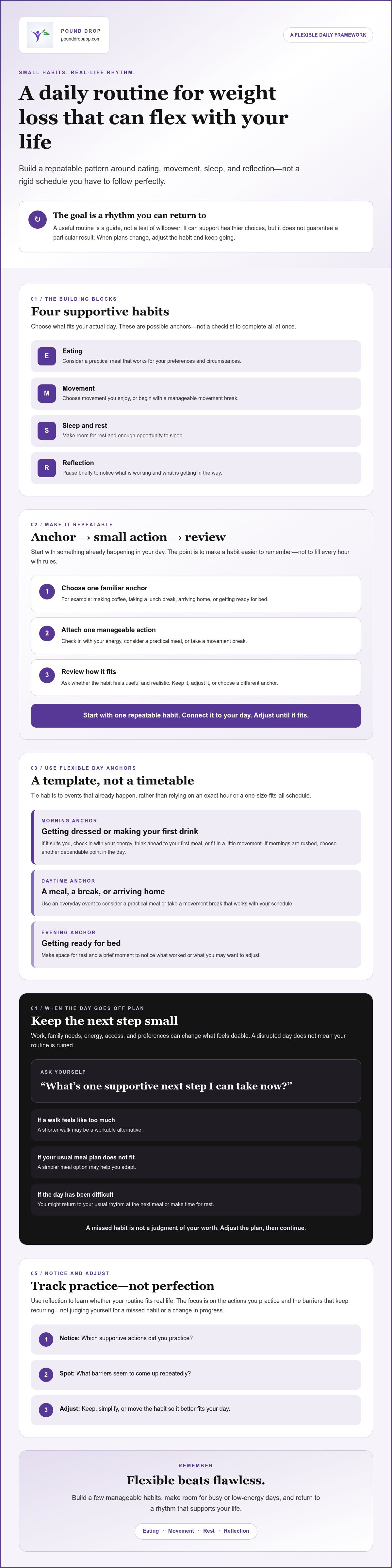
- Choose one anchor. Pick an everyday event that’s likely to happen, such as making coffee, taking a lunch break, or getting ready for bed.
- Attach a small action. After that event, try one manageable habit: check in with how you’re feeling, consider a practical meal, or take a movement break.
- Review how it fits. After practicing it for a while, ask whether the action is useful and realistic. Keep it, adjust it, or choose a different anchor.
Start with one repeatable habit, connect it to an existing part of your day, and adjust it until it fits.
What can a simple morning routine include?
Your morning doesn’t need to start early or follow a special formula. If it suits you, use an ordinary cue, such as getting dressed or making your first drink, to check in with your energy, think ahead to your first meal, or fit in a little movement. Choose one option that feels comfortable. A calm check-in may suit one person, while another may prefer to think about breakfast and get on with the day.
Choose based on the time and energy you have, not on an idea that mornings are essential for building supportive habits. If your mornings are rushed, try attaching the habit to another dependable point in your day.
How can meals and movement fit into the rest of the day?
Look at the shape of your day before deciding where habits belong. If you have a predictable lunch break, you might use it to eat a meal you’ve planned or step outside for a short walk. If your work or caregiving schedule changes often, keep a flexible meal option in mind and choose movement that’s accessible where you are, such as walking between tasks or stretching at home. These are examples, not obligations.
The National Institute of Diabetes and Digestive and Kidney Diseases offers guidance on healthy eating plan and regular physical activity as part of weight management. For more on how small actions can become habits, explore the science of weight loss habits.
If writing down your chosen anchor and action would help you stay organized, Pound Drop App is an optional tool for adding structure to self-guided habit practice.
How to adapt a weight-loss routine when life gets busy or unpredictable
Plans change. A meeting runs late, a family need takes priority, or your energy is lower than expected. Your routine can bend without becoming a failure. The purpose of a daily routine for weight loss is to offer supportive options, not another standard you have to meet perfectly.
Decide in advance what a smaller version of a habit could look like. On a day with more time, you might prepare a meal for later. On a rushed day, your minimum could be a quick check of which practical options are available. A smaller action keeps the habit within reach without requiring you to make up for anything later.
What is a minimum version of a daily habit?
A minimum version is a realistic, lower-effort action you can choose when time or energy is limited. It should feel accessible, not like a new rule. If a longer walk doesn’t fit, a short walk may be an option. If meal preparation feels like too much, you might pause briefly to consider what simple meal would work for you. These are possibilities, not requirements. Pick versions that suit your circumstances.
Consider preparing a backup for each habit you’re practicing:
- Meals: Keep a simple, familiar option in mind for days when your usual plan isn’t practical.
- Movement: Choose an accessible alternative, such as moving briefly at home when you can’t get to your usual activity.
- Rest: If your usual wind-down is interrupted, try a small calming cue that fits the moment.
- Reflection: If you don’t have time to write, take a moment to notice what might help tomorrow feel easier.
Plan for a missing cue, too. If a schedule change means you no longer have your usual lunch break, connect the habit to another reliable event, or keep the action flexible enough to do when an opening appears. The backup doesn’t need to look identical to the original plan.
What should you do after missing a planned habit?
Return at the next natural opportunity, not next Monday or the start of a new week. Missing one planned action doesn’t erase what you’ve practiced, and it isn’t a reason to restart from zero. Continue with the next meal, movement opportunity, or evening routine that works for you.
If the same barrier keeps appearing, treat it as useful information. Was the cue easy to miss? Was the action too demanding for that part of the day? Adjust the reminder or make the action smaller, without criticizing yourself. For a broader habit-first perspective, read the simple weight loss methodology. A routine that can adapt is easier to return to when life shifts.
A flexible daily routine for weight loss you can personalize
Use this example as a menu of ideas, not a prescribed plan or medical recommendation. Choose a few actions that fit your day and leave the rest. The aim is to create a rhythm you can adjust, rather than a schedule that only works under ideal conditions.
How could a balanced day be organized?
Think in terms of morning, daytime, and evening anchors instead of exact times. Your day may start early, late, or in the middle of a shift. Use these options to picture where supportive habits might fit:
| Part of the day | Standard option | Lower-effort alternative |
|---|---|---|
| Morning or start of your day | Take a calm moment to check in, then consider what meals or activities are ahead. | Pause briefly to choose one practical next step, such as deciding what you’ll eat first. |
| Daytime | Make room for satisfying meals, keep water accessible if useful, and fit in movement you enjoy. | Choose an easy meal option or take a short movement break when an opportunity comes up. |
| Evening or end of your day | Prepare one helpful cue for tomorrow, then reflect on what felt manageable. | Set out one useful item or simply notice one thing you’d like to make easier next time. |
You don’t need to complete every option each day. The table shows a range, not a checklist. For meals, think about choices that feel satisfying and work with your preferences and circumstances. For movement, consider what’s accessible and enjoyable in your setting. Hydration can be a helpful reminder for some people, but it doesn’t need to become another measure of success.
How can you tailor the template to your own schedule?
If you work shifts, care for someone, or have days that rarely follow the same pattern, use events instead of clock times. “After I wake up,” “once I’ve finished work,” or “when the house gets quiet” may be more reliable anchors than a set hour. On changing days, move the habit to the next natural opening or use its lower-effort version.
Test just one or two actions first. Once you’ve tried them in your real routine, keep what fits and revise what doesn’t. A brief note about barriers can help you make the template more practical, without turning reflection into judgment.
If a little structure would help you practice habits, Pound Drop’s self-guided tools are an optional resource. Explore Pound Drop’s habit-support tools to see whether they suit the way you want to build your routine.
How to track your daily routine and keep making steady adjustments
Tracking can help you learn about your routine, not grade yourself. A brief check-in may show which habits fit naturally, what tends to interrupt them, and what small change could make the next attempt easier. The goal is useful information, not a flawless record or proof of personal worth.
What is worth tracking in a daily routine?
Keep it simple. In a note, journal, or digital tool, record the habit you tried, the situation around it, and one observation. For example: “Planned a walk after work, but the weather changed. I could choose an indoor option next time.” This captures the action and a practical barrier without requiring a detailed account of everything you ate.
After you’ve gathered a few notes, look for patterns. Is a particular cue easy to miss? Does an action fit better on certain kinds of days? Choose one adjustment to test, such as changing the reminder or making the habit smaller. Changing one part at a time can make it easier to see whether the new approach suits you.
Tracking weight, health details, or food isn’t right for everyone. If recording information makes you anxious, overly focused on numbers, or self-critical, skip it and reflect on habits in a way that feels more supportive. A daily routine for weight loss should help you make informed choices, not become another source of pressure.
When might additional support be helpful?
Consider speaking with a qualified health professional if a health condition, medication, pregnancy, or concerns about eating affect how you approach weight management. They can help you understand what guidance is appropriate for your circumstances. Self-guided habit resources aren’t a substitute for individual medical advice.
For a personal reflection, ask: “What felt manageable? What got in the way? What’s one adjustment I want to try?” An off-plan day doesn’t erase what you’ve practiced. Return to your next chosen habit when it fits, and use what you noticed to shape a routine that works better for real life.
Pound Drop’s app, The Method, The Book, and The Journal are self-guided resources that may offer structure for habit practice and reflection. If that kind of support suits your approach, Explore Pound Drop's structured, self-guided tools.
Start with one habit you can return to
A sustainable daily routine for weight loss doesn’t depend on perfect days. It grows from a few supportive habits that fit your schedule, flexible alternatives for busy moments, and a kind way to pick things up after a disruption.
Choose one action to practice first. Link it to a familiar part of your day, then notice what helps or gets in the way. Your reflections can guide small adjustments over time. You don’t need to track everything or change your whole routine at once.
If you’d like more structure for practicing habits on your own, Pound Drop brings together the Pound Drop App, The Method, The Book, and The Journal. These self-guided tools can support reflection and habit formation, while leaving room to shape your routine around your life.
Explore Pound Drop's structured, self-guided tools and consider which kind of support feels right for you. Start small, stay curious, and remember: a routine can change with you.
Frequently Asked Questions
What is a good daily routine for weight loss?
A good daily routine for weight loss includes repeatable habits that fit your life, such as choosing satisfying meals, making room for movement, getting enough rest, and briefly reflecting on what’s working. Start with one or two actions linked to familiar parts of your day. You don’t need a strict timetable or a perfect record. Adjust the routine as you learn which habits feel practical and sustainable.
What should I do first thing in the morning to lose weight?
There’s no single morning action you must do to lose weight. If it suits your schedule, begin with a calm check-in, consider what practical meals lie ahead, or take a little time to move. Choose one option that fits your energy and circumstances. If mornings are rushed or you work a different shift, attach a supportive habit to another reliable event instead. The exact time matters less than finding a habit you can practice.
Can I lose weight without following a strict daily schedule?
Yes. A strict clock-based schedule isn’t necessary for building supportive habits. Use flexible anchors, such as after waking, during a break, or when you finish work, and adapt them as your day changes. A routine can guide choices around meals, movement, and rest without prescribing exactly when each must happen. If one planned action doesn’t fit, choose a smaller alternative or return to the habit at the next natural opportunity.
How much exercise should I include in a daily weight-loss routine?
There isn’t one required amount of exercise for every day. U.S. adult physical activity recommendations call for 150 to 300 minutes of moderate-intensity aerobic activity per week, or 75 to 150 minutes of vigorous-intensity activity, plus muscle-strengthening activity on two or more days weekly. These are weekly recommendations, not a demand for a daily workout. Choose enjoyable movement that suits your abilities, and ask a health professional for guidance if needed.
What happens if I miss a day in my weight-loss routine?
Missing a planned habit doesn’t erase what you’ve practiced or mean you need to start over. Return at the next natural opportunity, whether that’s your next meal, a later movement break, or your usual evening cue. If the same obstacle keeps coming up, consider whether the reminder or action needs adjusting. A smaller version may fit better on busy days. Treat the interruption as information, not a reason to criticize yourself.
Do I need to track everything to follow a weight-loss routine?
No. You can reflect on habits without logging every meal or detail. Try noting the action you practiced, what was happening around it, and one thing that might make it easier next time. A paper note, journal, or digital tool can work, but none is essential. Tracking food, weight, or health information may not feel helpful for everyone. Choose an approach that supports learning rather than adding stress or self-judgment.
How can I make a weight-loss routine work with a busy schedule?
Build around events you already expect, rather than relying on exact times. A shift worker might use the start of their waking day as a cue; a caregiver could connect a small habit to a regular pause in the day. Keep a lower-effort option in mind, such as a simple meal choice or a brief movement break. Begin with one or two actions, then adjust them to fit your changing schedule and energy.


